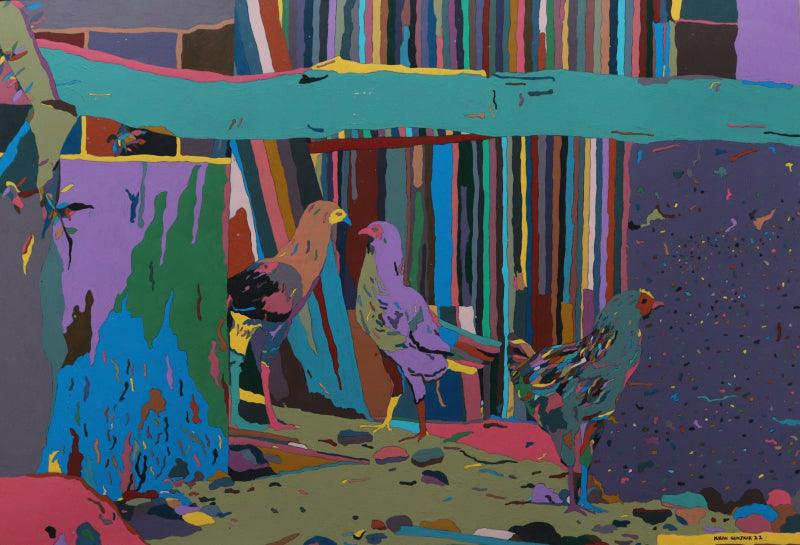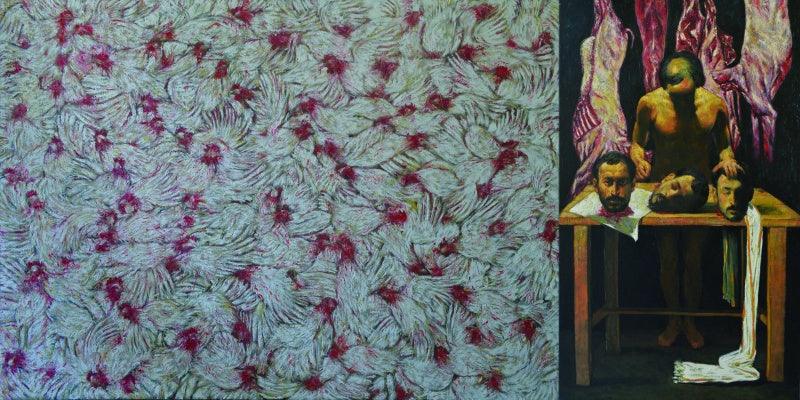
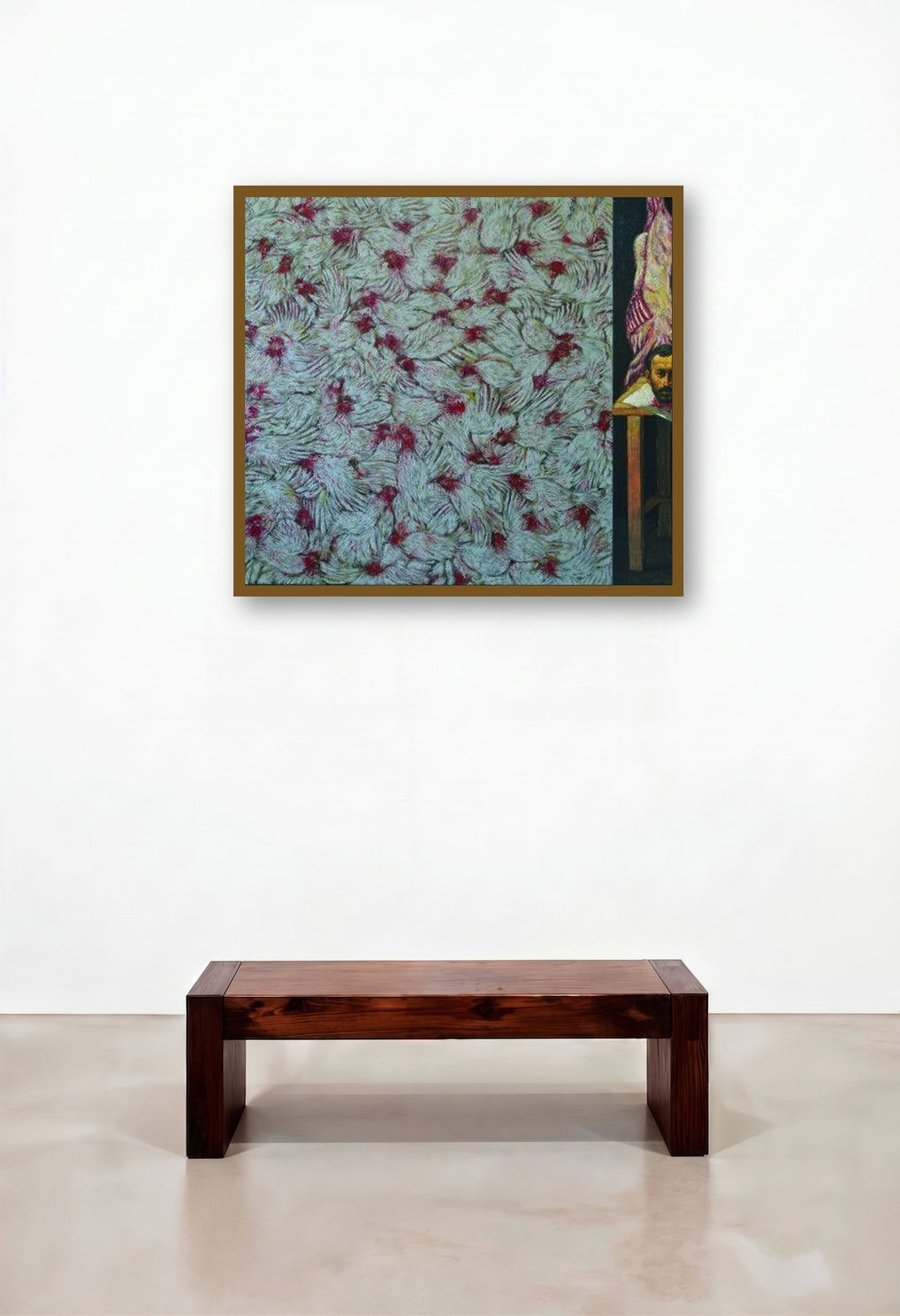
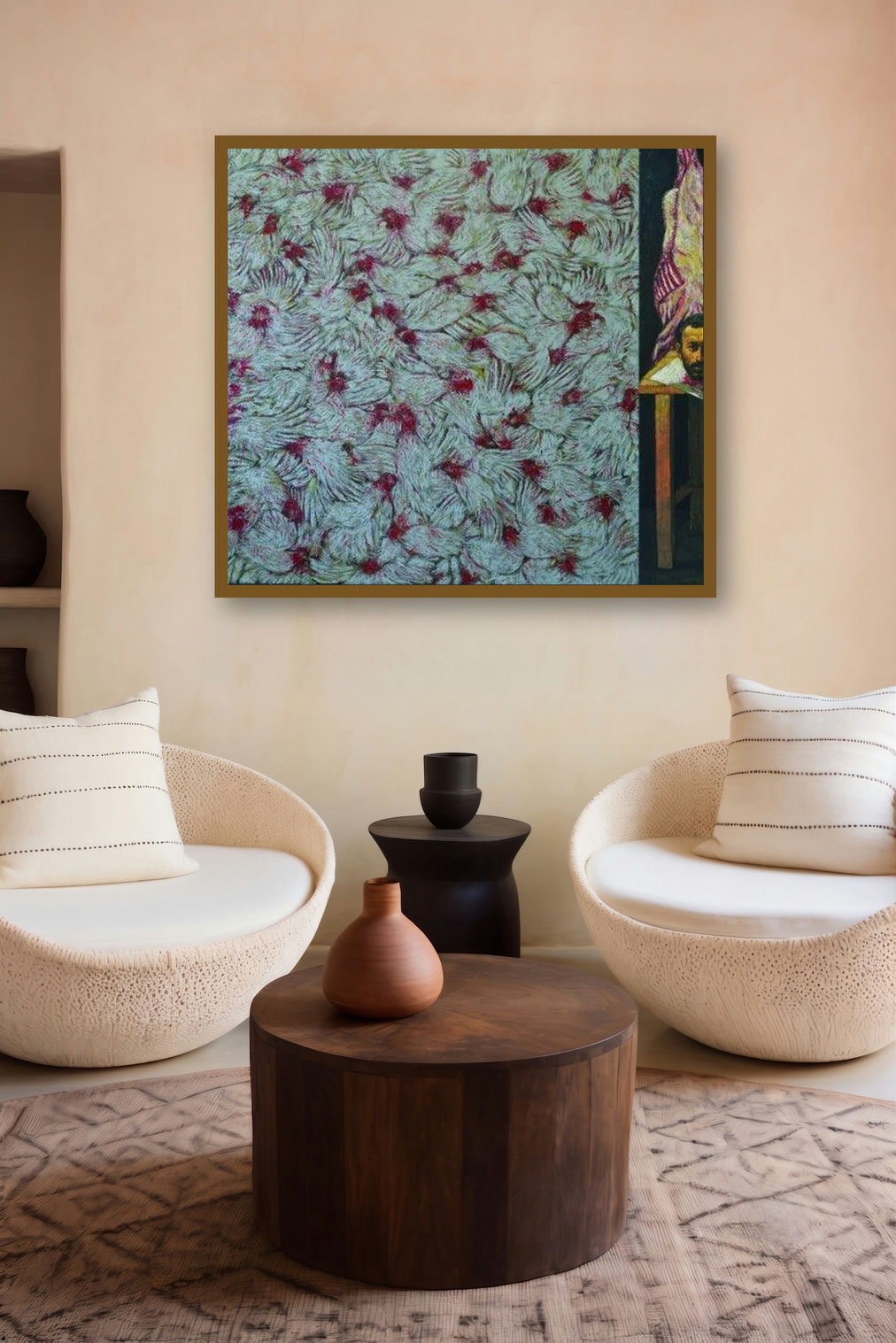
Chickens In A Group (The Burden of Plenty)
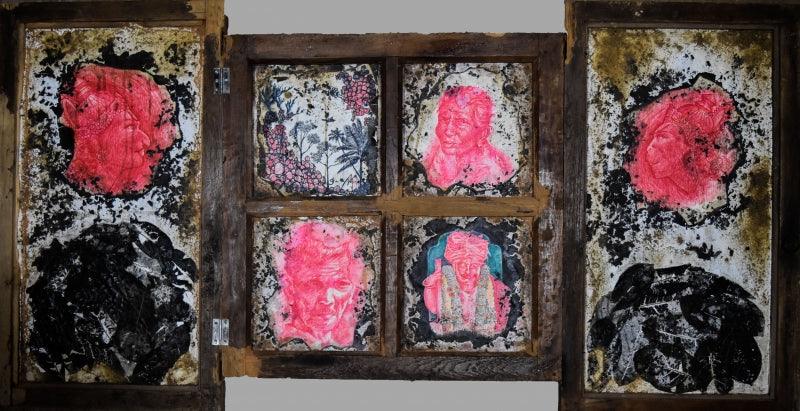
The work splits itself between a field of fevered, flower-like marks—pale petals bruised with crimson—whose restless repetition feels like memory trying to cauterize a wound, and a stark tableau where severed heads rest on a table beneath hanging carcasses. This collision of ornamental surface and brutal still life turns decoration into indictment, suggesting how violence can be normalized, patterned, even absorbed into the everyday fabric of seeing. Chiaroscuro concentrates on the flesh and faces, while the left panel’s anxious, all-over texture denies any refuge of empty space, as if grief multiplies wherever the eye lands. The draped white cloth reads like a failed shroud—an echo of dignity and ritual in a room where bodies are reduced to objects, and witnessing becomes the only remaining form of care.
Delivery
You may also like