Music Series 1
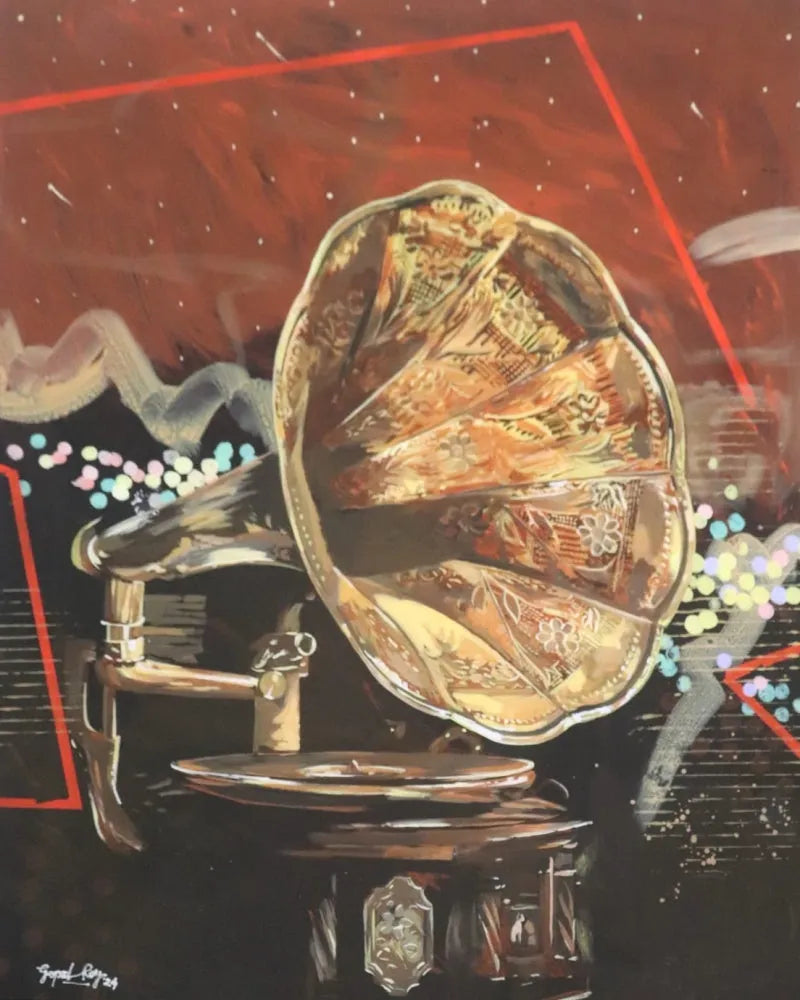
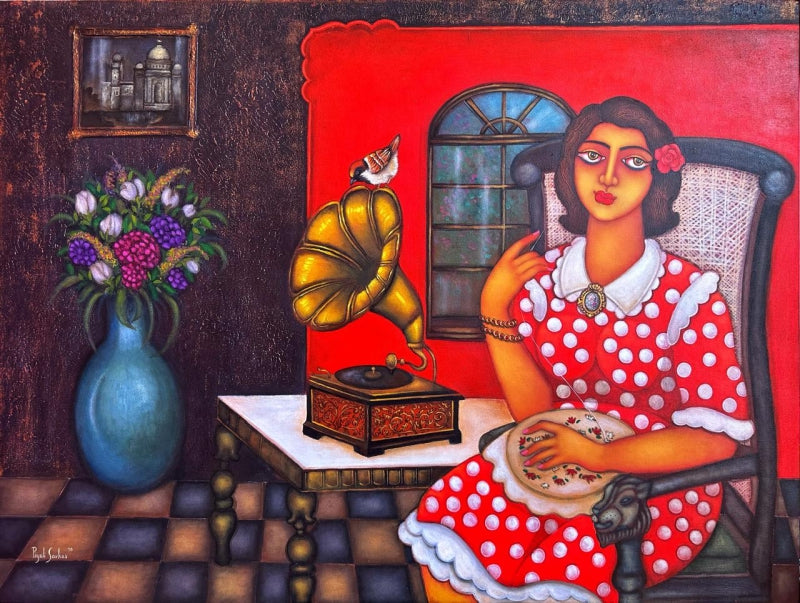
The scene stages a quietly theatrical domestic reverie, where the woman’s polka‑dotted dress becomes a field of rhythm against the saturated red wall—an interior that feels less like a room than a mind turned inward. The gramophone’s gilded horn, poised like a blooming trumpet, suggests sound made visible: memory and longing given ornament, while the small bird perched above it reads as the fragile messenger between stillness and song. Compositional oppositions—cool flowers in a blue vase versus the warm, frontal figure; the dark textured wall versus the luminous window—create a gentle tension between exterior time and private duration. Even the embroidery resting in her lap speaks of patience and self-authorship, a quiet craft that echoes the act of painting itself: stitching identity into the everyday.
Delivery
You may also like