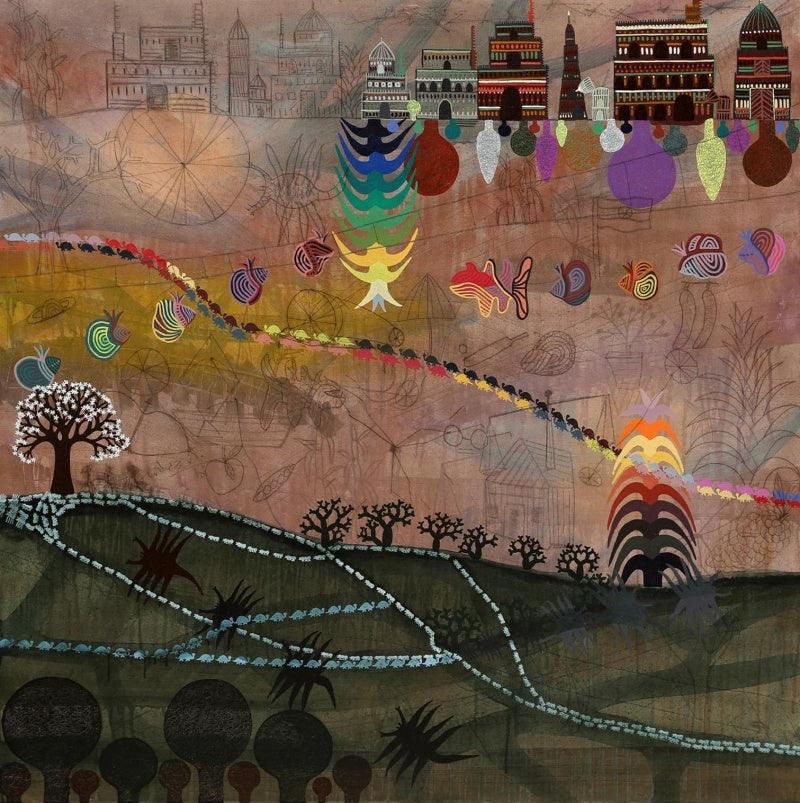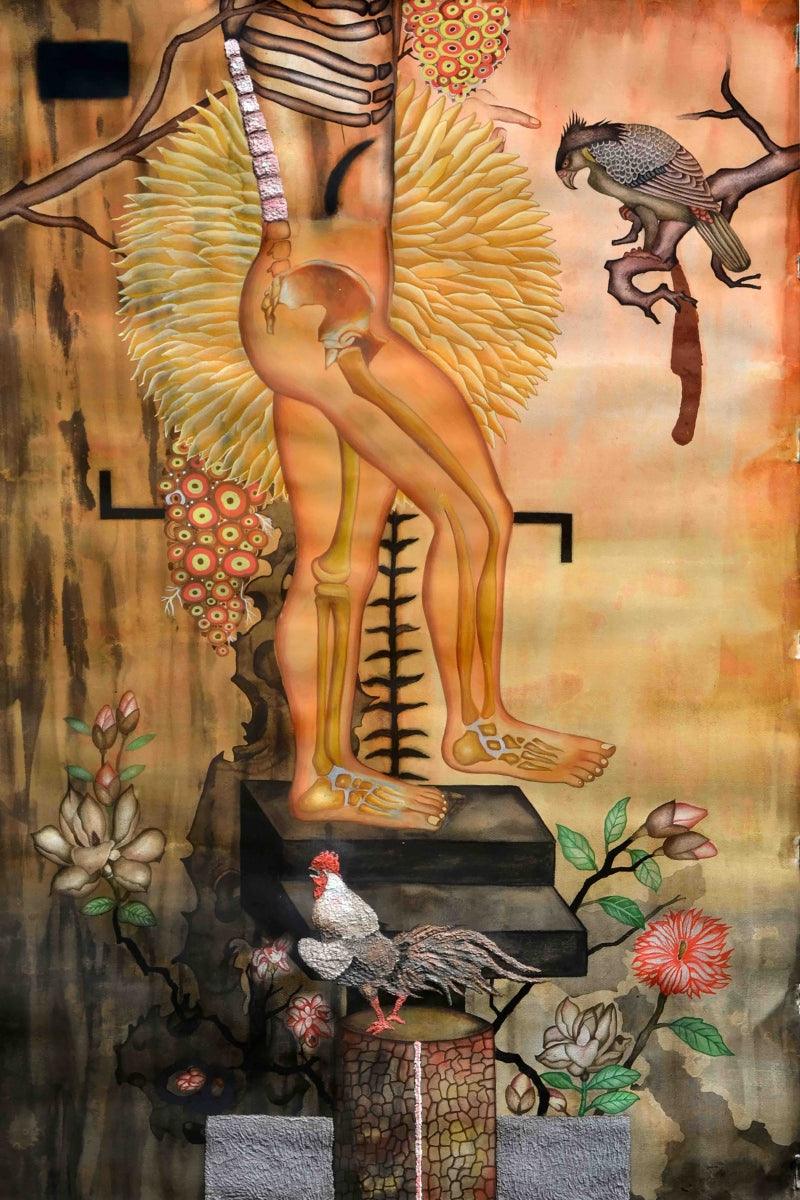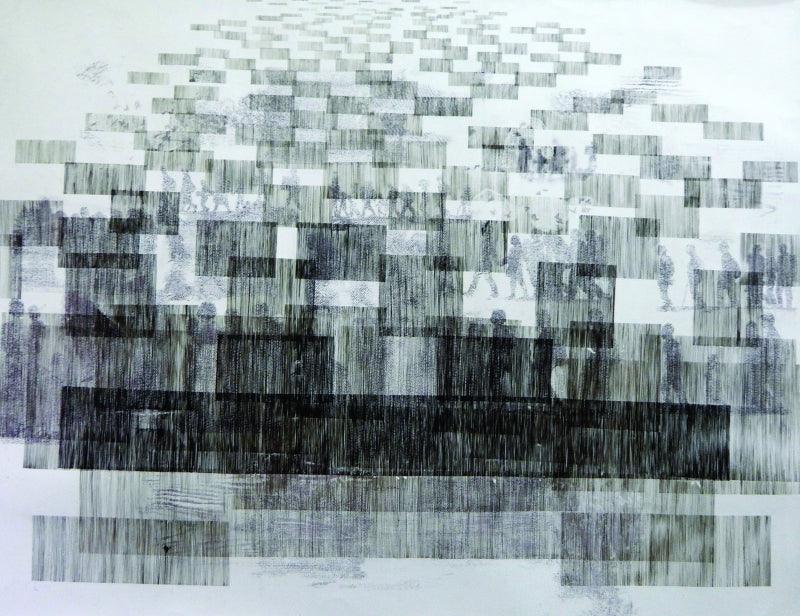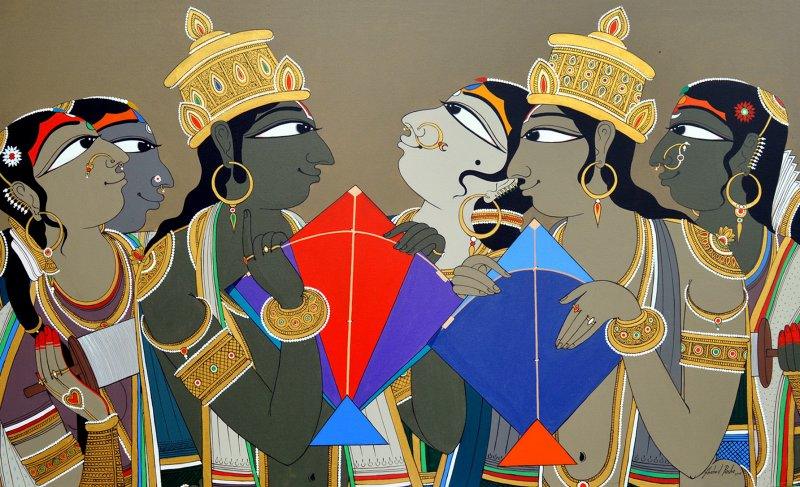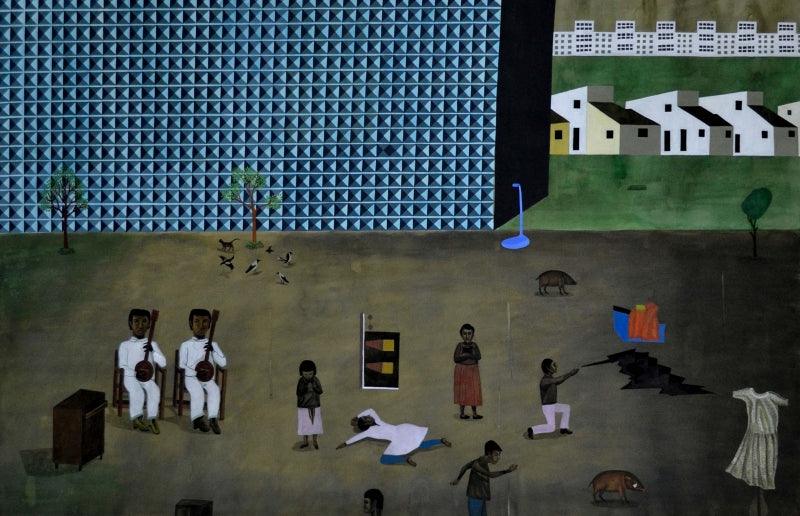
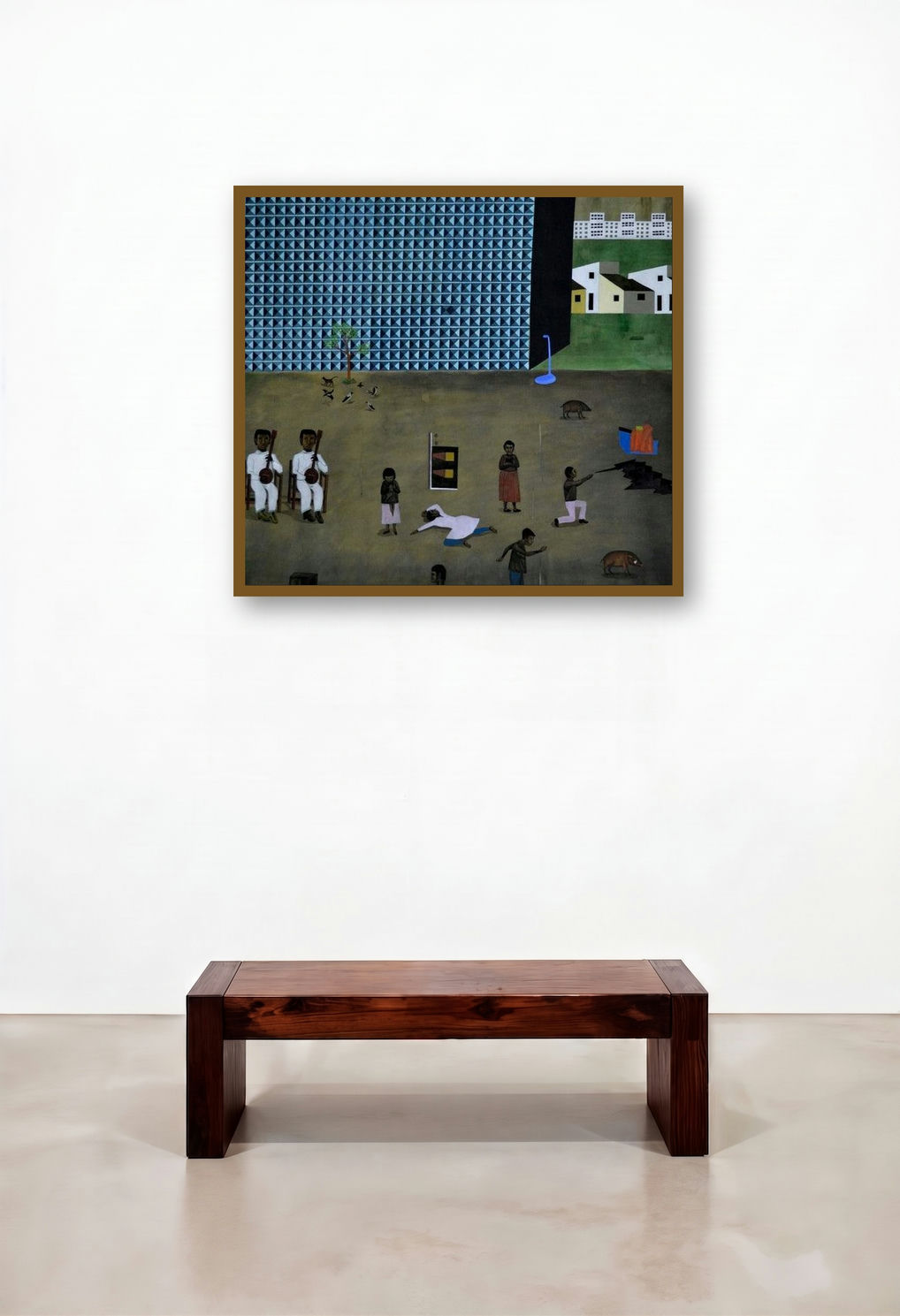
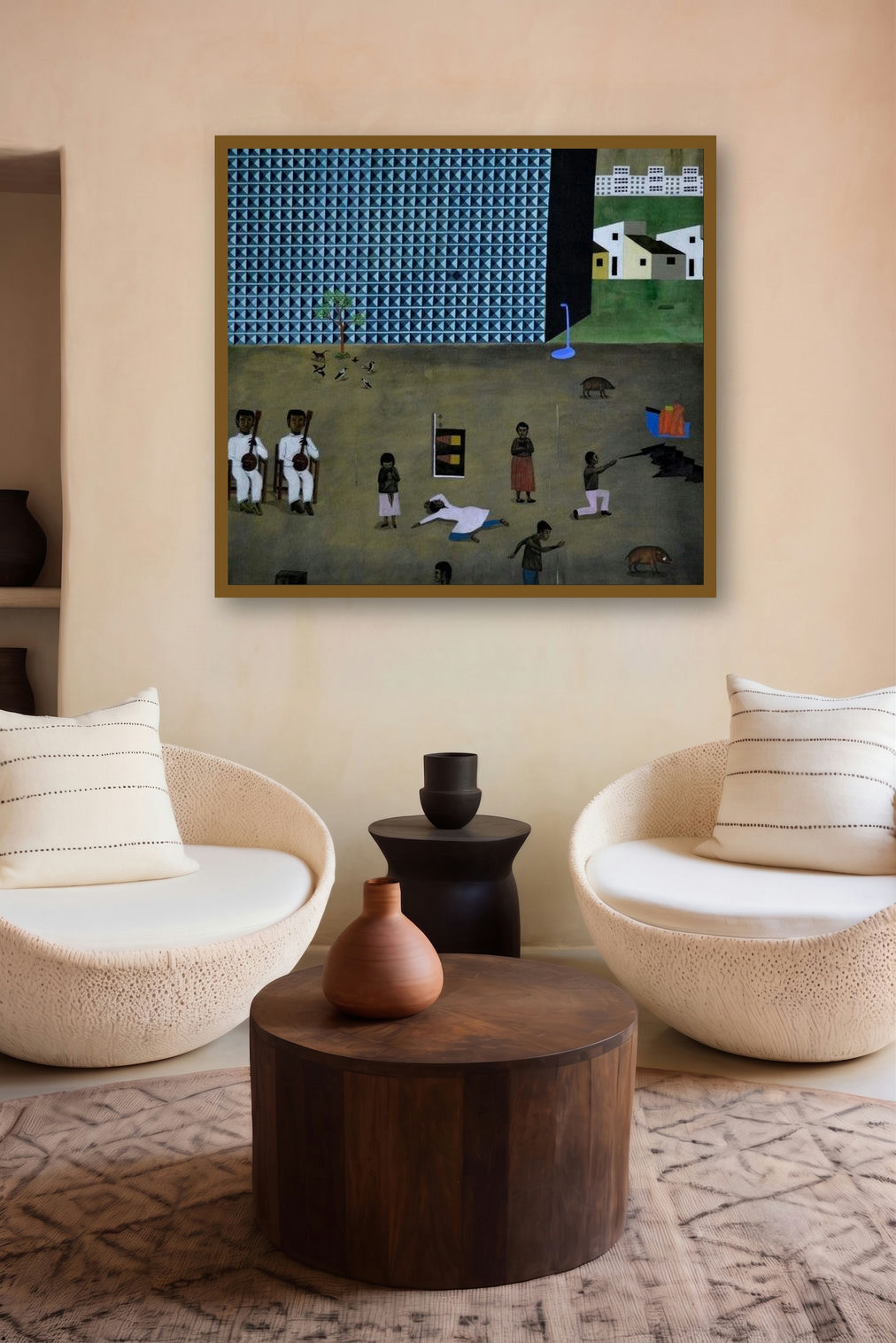
Untitled 3 (The Divided Landscape)
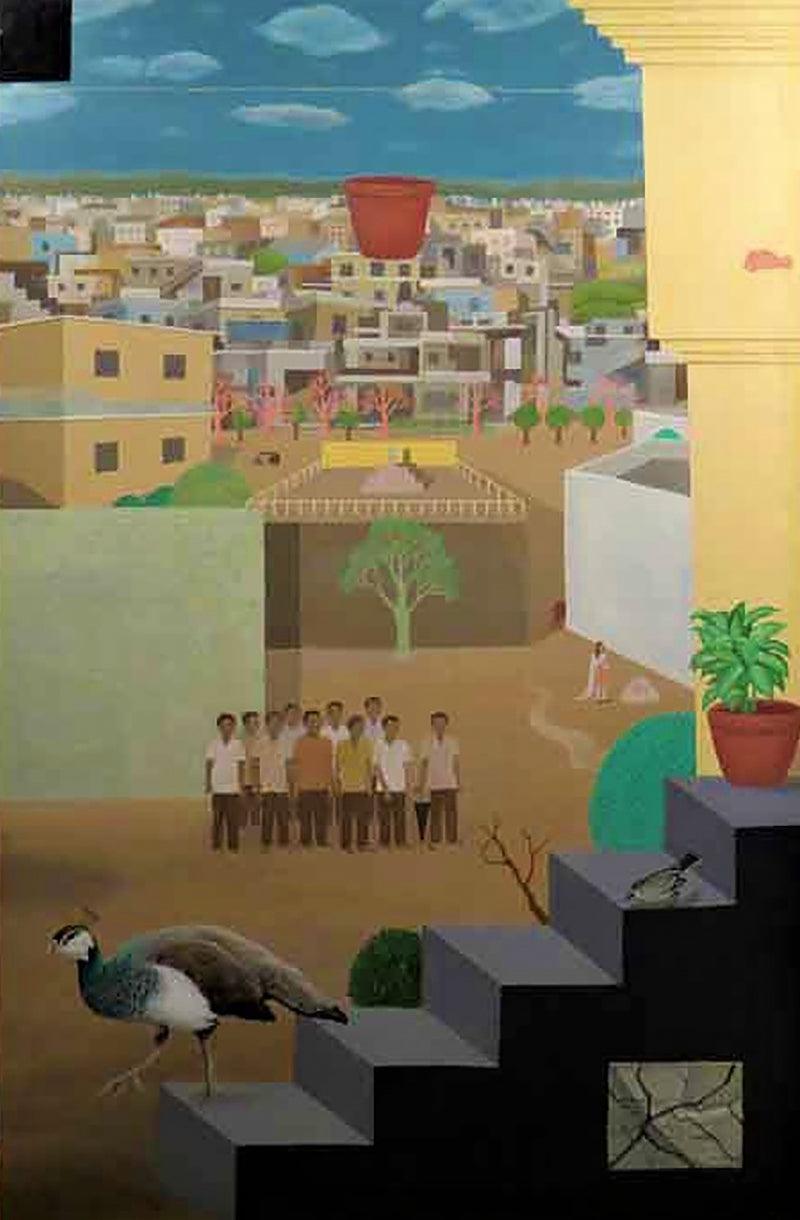
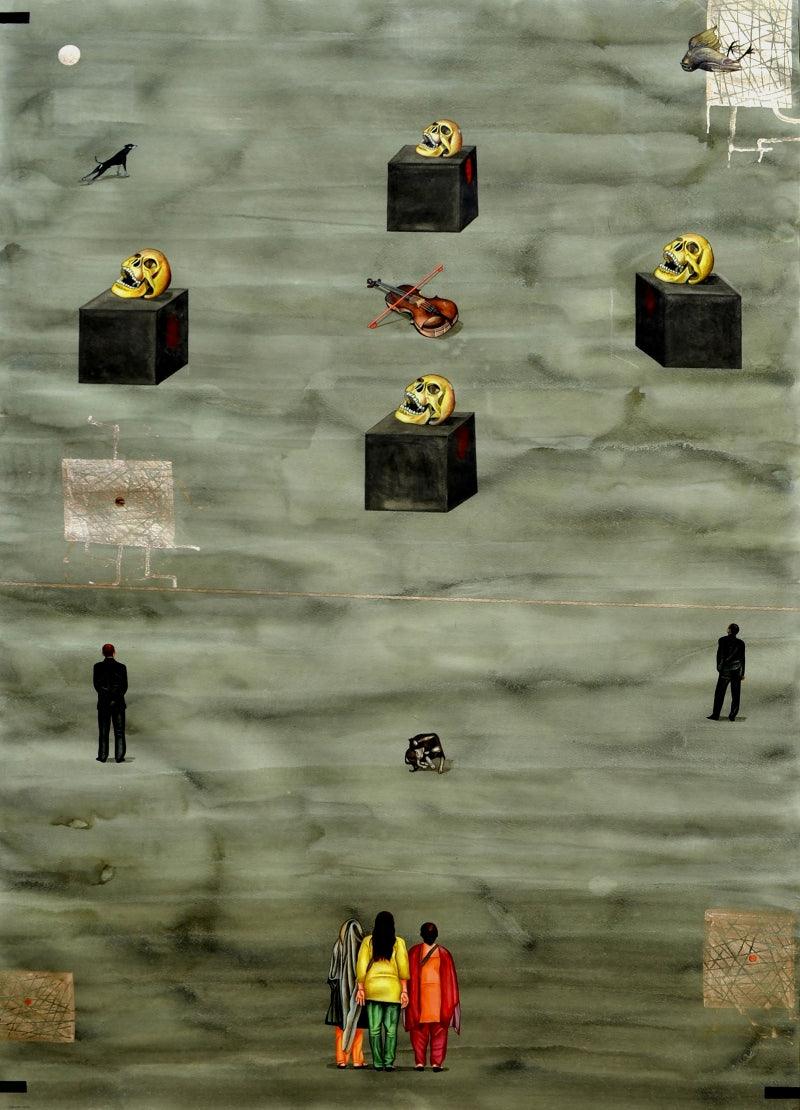
A vast, muted ground becomes a stage where figures and animals drift like scattered thoughts beneath the cool, insistent geometry of a blue, gridded façade—an architecture that feels less like shelter than a system. Small dramas unfold in isolation: music, collapse, pointing, waiting, each action suspended in a light that refuses sentiment, as if the city has drained intimacy into pattern and repetition. The sparse trees and blunt, simplified houses offer only provisional nature and domesticity, while the odd objects—dress, crate, fragments of color—read as residues of personal life trying to persist against an impersonal order. In this uneasy balance of play and precarity, the painting suggests a social landscape where community is present but unstitched, held together by space rather than connection.
Delivery
You may also like