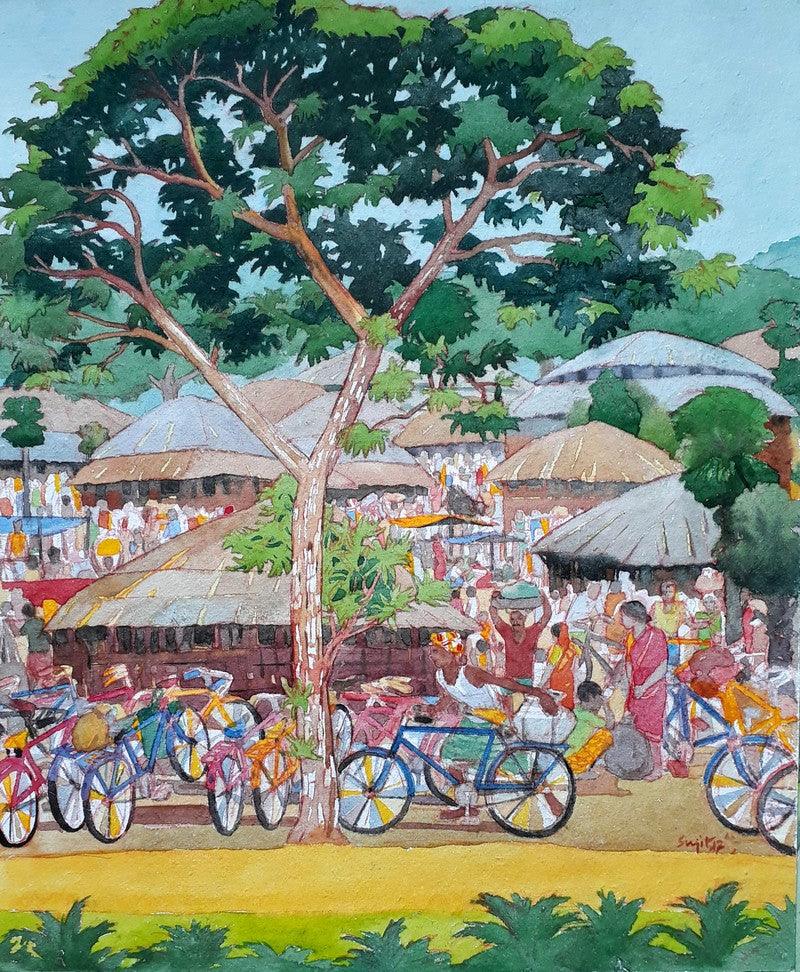
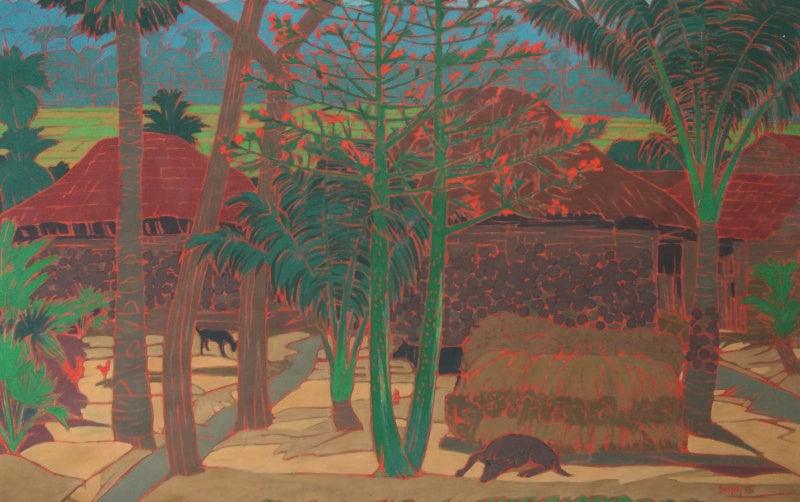
Untitled 34
₹0
Out of stock · ★ 4.0 (5)checking live price…
Size
20x15Type
OriginalMaterial
CanvasAnchored by the broad, sheltering canopy of the central tree, the scene unfolds like a living tapestry where bicycles, thatched roofs, and moving figures interlock in a gentle choreography of everyday exchange. The painter balances lively color accents—wheel rims, garments, and market wares—against earthy browns and softened greens, allowing the bustle to feel communal rather than chaotic. Light is diffused and democratic, settling across bodies and structures alike, suggesting a village economy sustained less by spectacle than by shared rhythm. In the tree’s branching armature, the composition finds its quiet metaphor: a single presence that gathers many lives beneath it, turning motion into belonging.
Delivery
You may also like
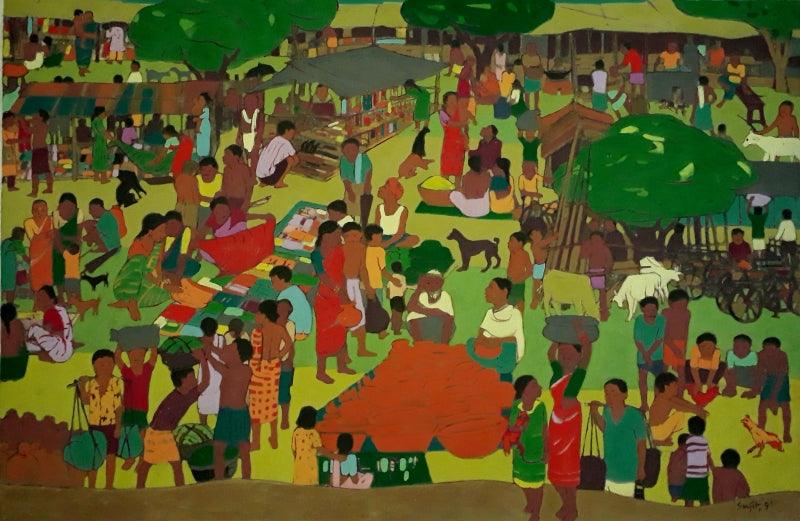
Untitled 14 (Bustling Village Market)
Artzolo
₹45,000
★ 5.0 (15)
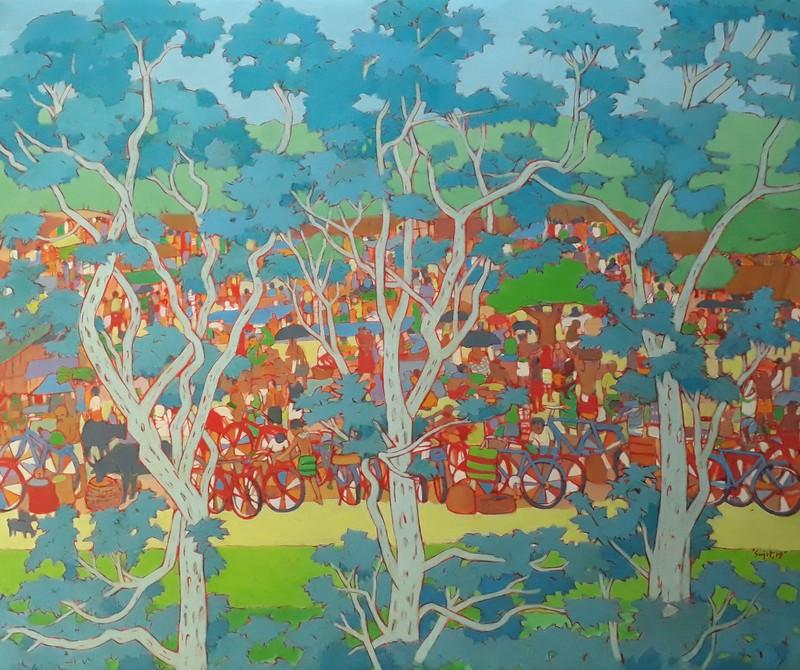
Untitled 31 (A Glimpse of the Bazaar)
Artzolo
₹60,000
out of stock
★ 4.0 (12)
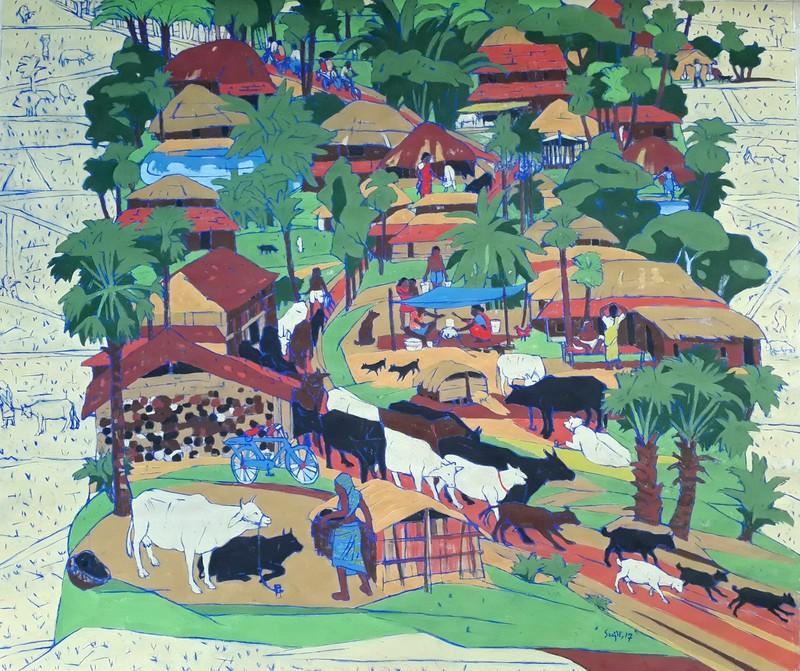
Untitled 33 (A Day in the Village)
Artzolo
₹45,000
★ 5.0 (9)
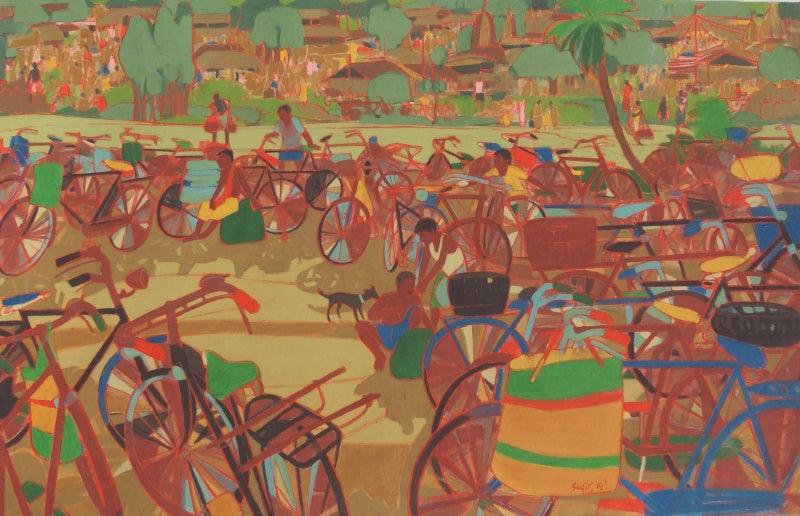
Untitled 6 (Wheels of Change)
Artzolo
₹45,000
★ 4.0 (6)
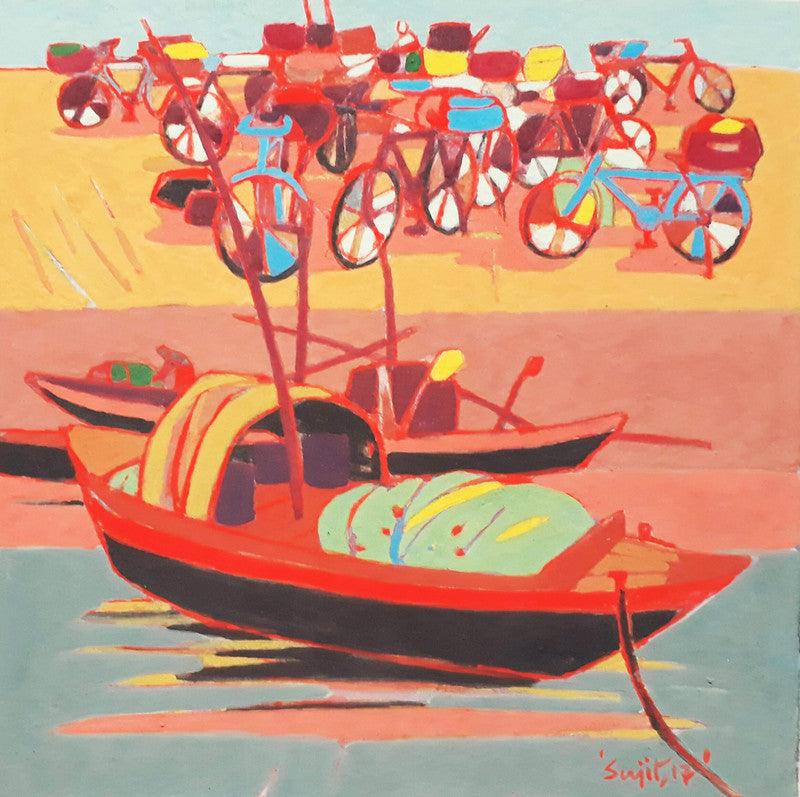
Untitled 28 (Boats and Bicycles)
Artzolo
₹9,000
★ 5.0 (13)
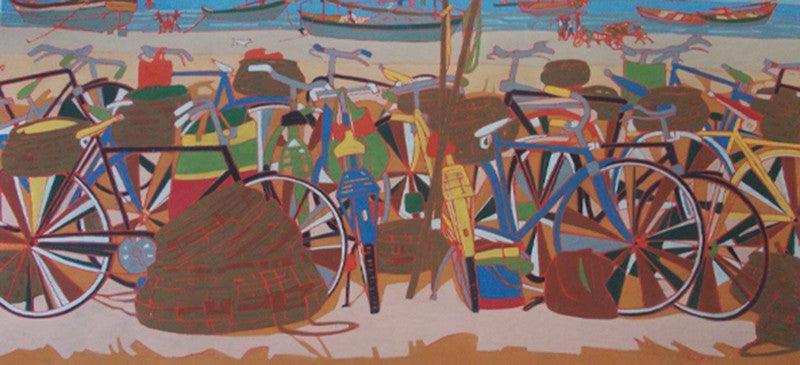
Untitled 27 (A Bicycle Ballet)
Artzolo
₹55,000
★ 4.0 (15)
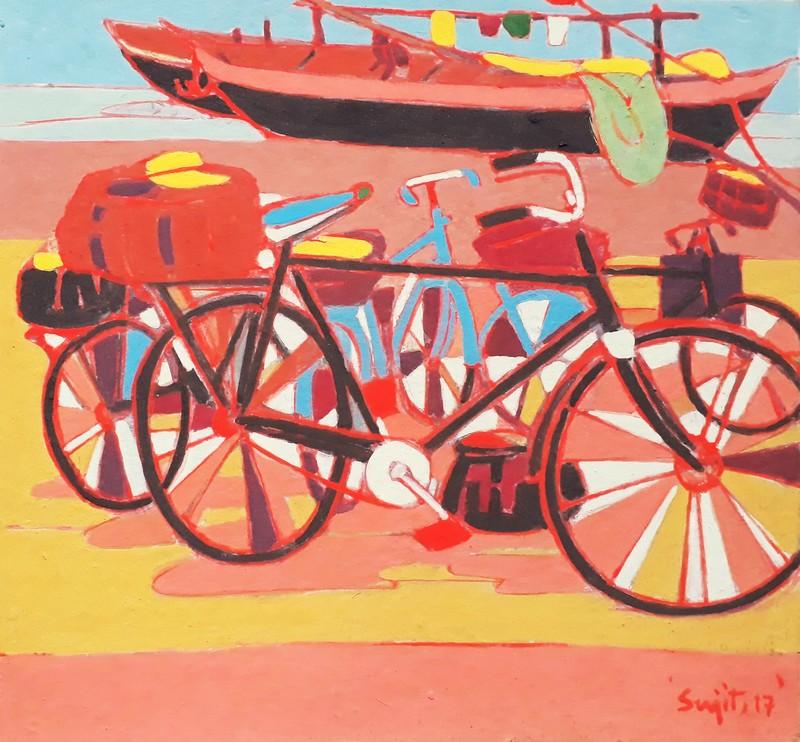
Untitled 30 (Wheels on the Sand)
Artzolo
₹18,000
★ 4.0 (7)
Untitled 5 (Village Life)
Artzolo
₹45,000
★ 4.0 (15)