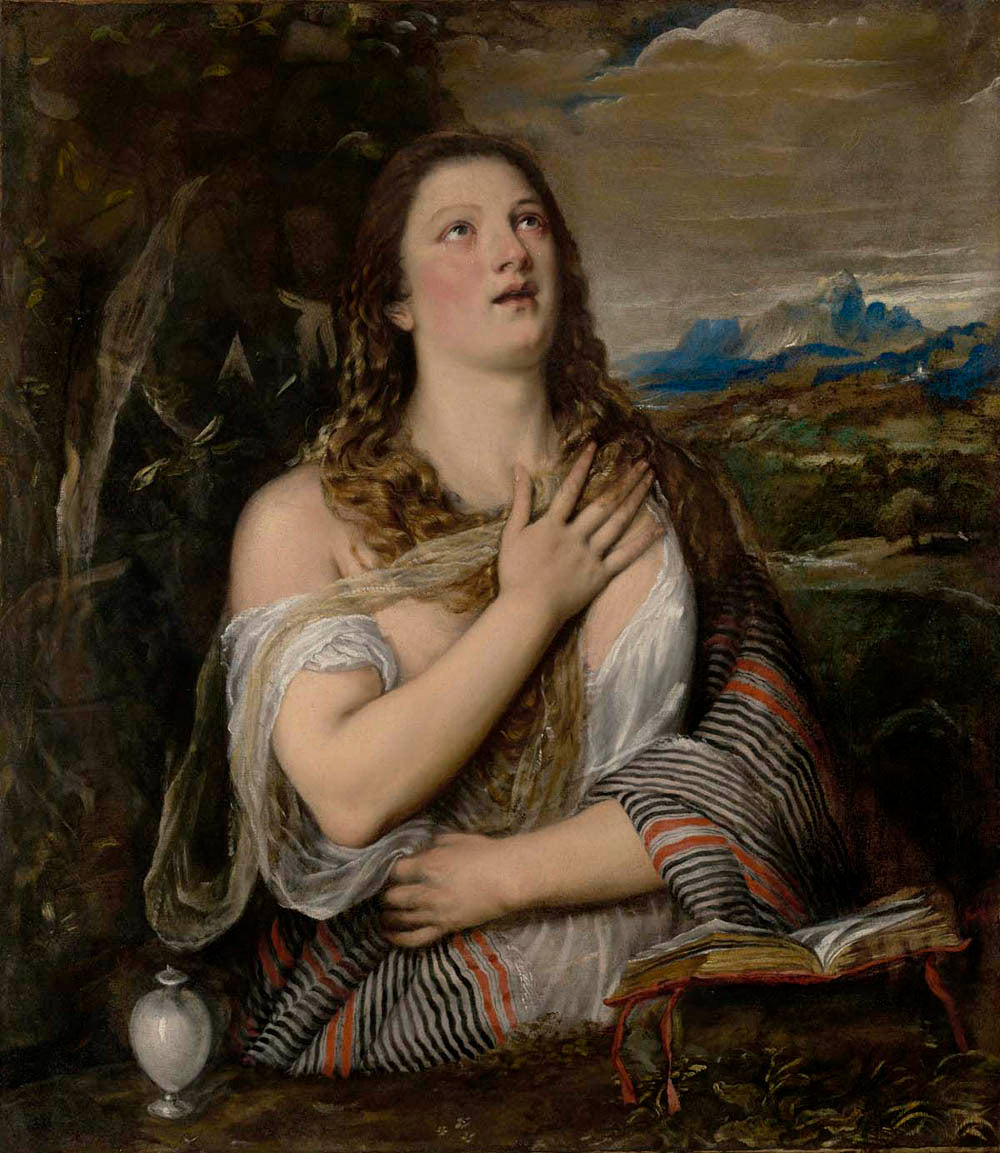
The Penitent Magdalene Gm-00053601
CHF 20
Out of stockchecking live price…
Products
Stretched Canvas (16" x 20") 40 x 50cmStretched Canvas (24" x 36") 60 x 90cmStretched Canvas (28" x 28") 70 x 70cmGiclee Matte Art Paper (24" x 36") 60 x 90cmNote Cards (4.7" x 6.5") 12 x 16.5cm Pack of 4Stretched Canvas (18" x 24") 45 x 60cmGiclee Matte Art Paper (18" x 24") 45 x 60cmStretched Canvas (24" x 48") 60 x 122cmGiclee Matte Art Paper (44" x 60") 112 x 152cmGiclee Matte Art Paper (30" x 40") 75 x 100cmStretched Canvas (32" x 48") 80 x 122cmTitian (Tiziano Vecellio) (Italian, about 1487–1576) The subject of the penitent Mary Magdalene lifting her teary eyes to heaven gained great popularity in sixteenth-century Italy amongst aristocrats, religious figures and the wealthy middle class alike. Titian and his workshop created many copies and variations of this composition, at least seven of which are known today. This work is likely to have been executed with some workshop assistance. In this variation, the artist omits the skull which appears in other compositions, and instead depicts the Magdalene's Bible resting on a cloth-covered support. Such minor alterations to compositions were often made at the request of a patron, who wanted a work similar to one which already existed, but unique in some way.
The sacrament of Penance had important significance in Counter-Reformation spirituality, and artists frequently portrayed penitent saints as exemplars of religious fervor. Such works were meant to inspire a greater devotion at a time when Catholicism was being challenged by Protestant reform. On the other hand, the popularity of The Magdalene as a subject is also associated with her implied sexuality. Her passive gaze and partially naked body appealed to male viewers, for whom such paintings offered a moralizing context through which to engage with the sensuality of the female form. The Magdalene’s partly exposed breasts and long, flowing hair, would have held erotic connotations for the sixteenth-century viewer. Upon encountering one of Titian’s conceptions of the Penitent Magdalene, biographer Giorgio Vasari (1511–1574) denied such sexual undertones, and declared that the picture “profoundly stirs the emotions of all who look at it; and, moreover, although the figure Mary Magdalene is extremely lovely it moves one to thoughts of pity rather than desire.”
X-rays of the painting reveal that the artist made numerous changes to the composition, known as pentimenti, suggesting that the composition was developed and altered during its execution.
The sacrament of Penance had important significance in Counter-Reformation spirituality, and artists frequently portrayed penitent saints as exemplars of religious fervor. Such works were meant to inspire a greater devotion at a time when Catholicism was being challenged by Protestant reform. On the other hand, the popularity of The Magdalene as a subject is also associated with her implied sexuality. Her passive gaze and partially naked body appealed to male viewers, for whom such paintings offered a moralizing context through which to engage with the sensuality of the female form. The Magdalene’s partly exposed breasts and long, flowing hair, would have held erotic connotations for the sixteenth-century viewer. Upon encountering one of Titian’s conceptions of the Penitent Magdalene, biographer Giorgio Vasari (1511–1574) denied such sexual undertones, and declared that the picture “profoundly stirs the emotions of all who look at it; and, moreover, although the figure Mary Magdalene is extremely lovely it moves one to thoughts of pity rather than desire.”
X-rays of the painting reveal that the artist made numerous changes to the composition, known as pentimenti, suggesting that the composition was developed and altered during its execution.
Delivery
You may also like
Penitent Mary Magdalene
ArteHouse
CHF 20
out of stock
Penitent Magdalene Gm-00073801
ArteHouse
CHF 20
out of stock
The Penitent Mary Magdalene
ArteHouse
CHF 20
out of stock
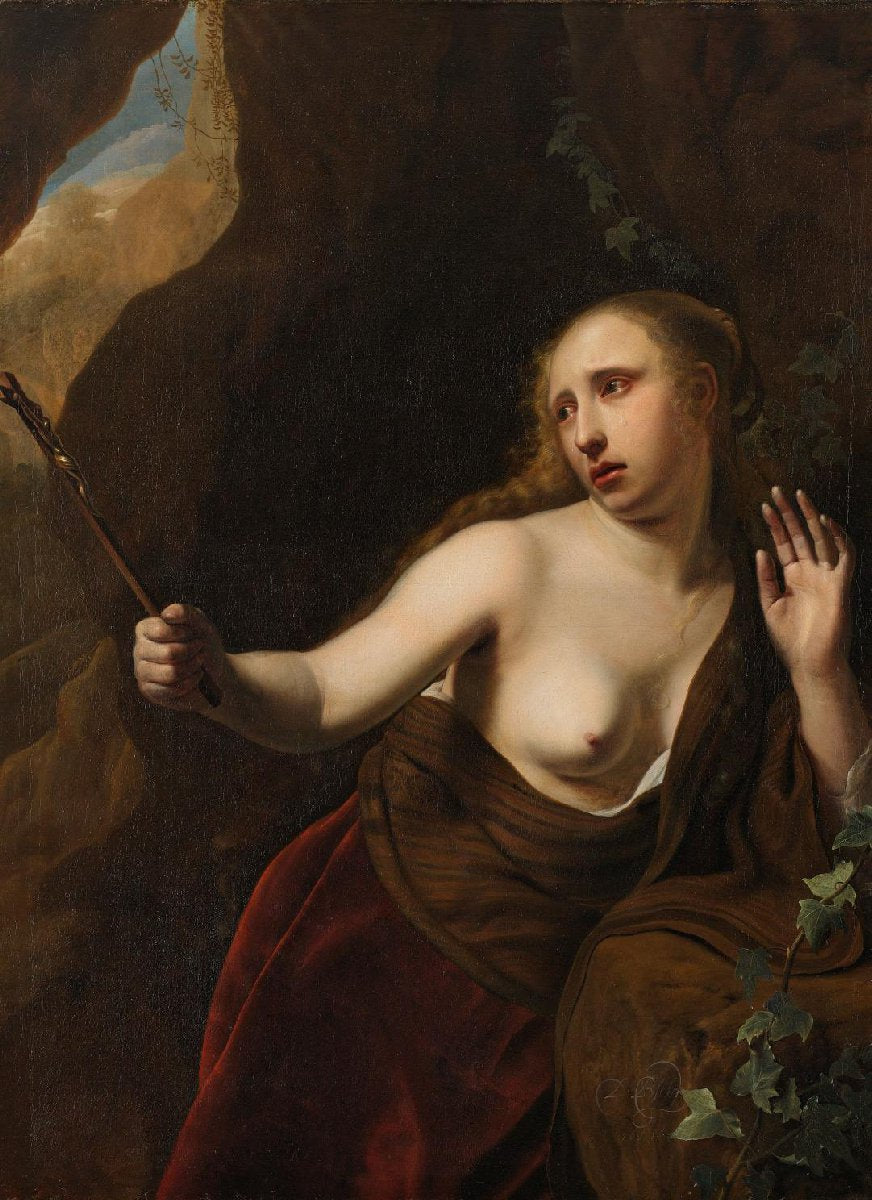
The Penitent Mary Magdalene
ArteHouse
CHF 20
out of stock
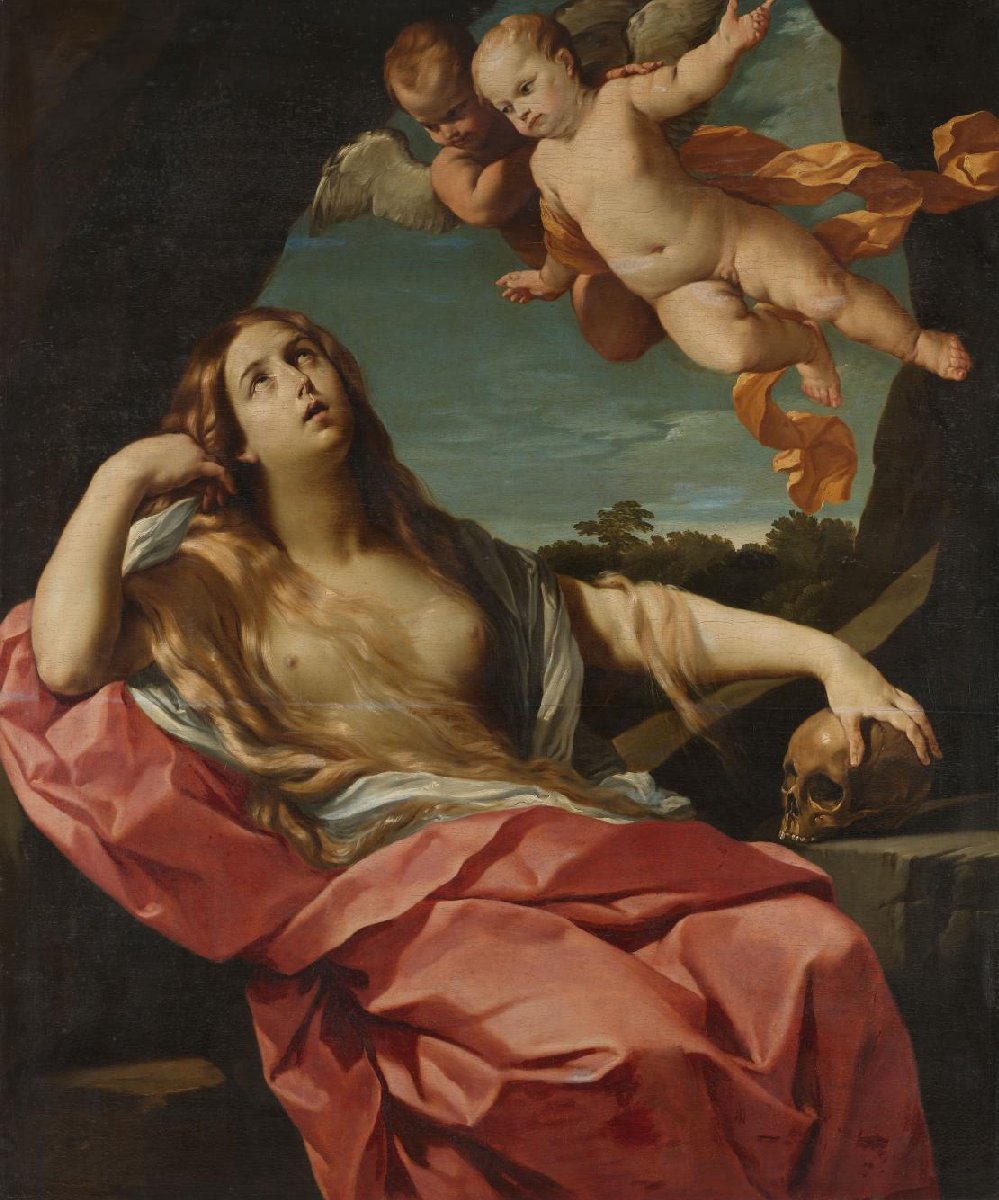
Mary Magdalene
ArteHouse
CHF 20
out of stock
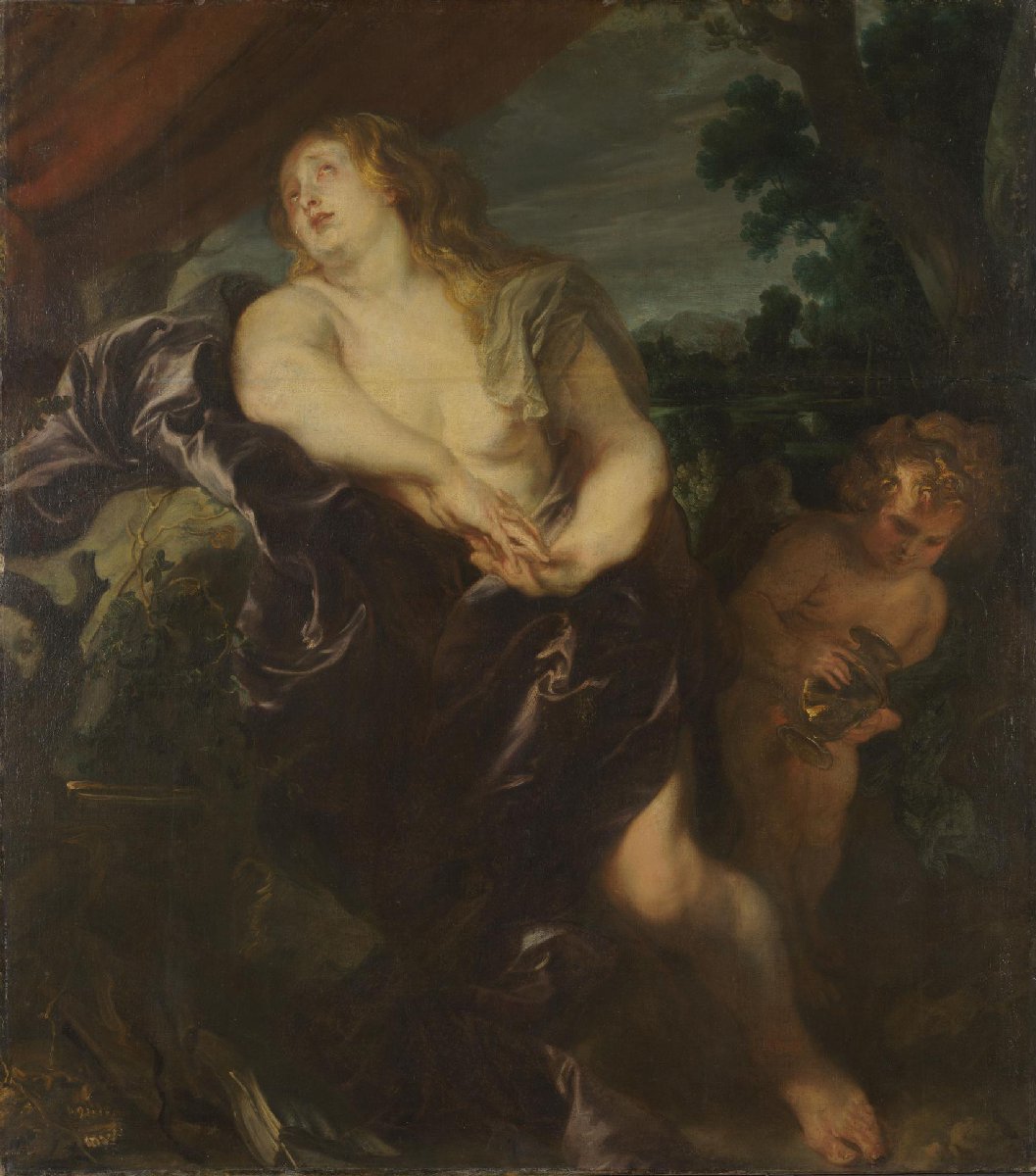
The Penitent Magdalen
ArteHouse
CHF 20
out of stock
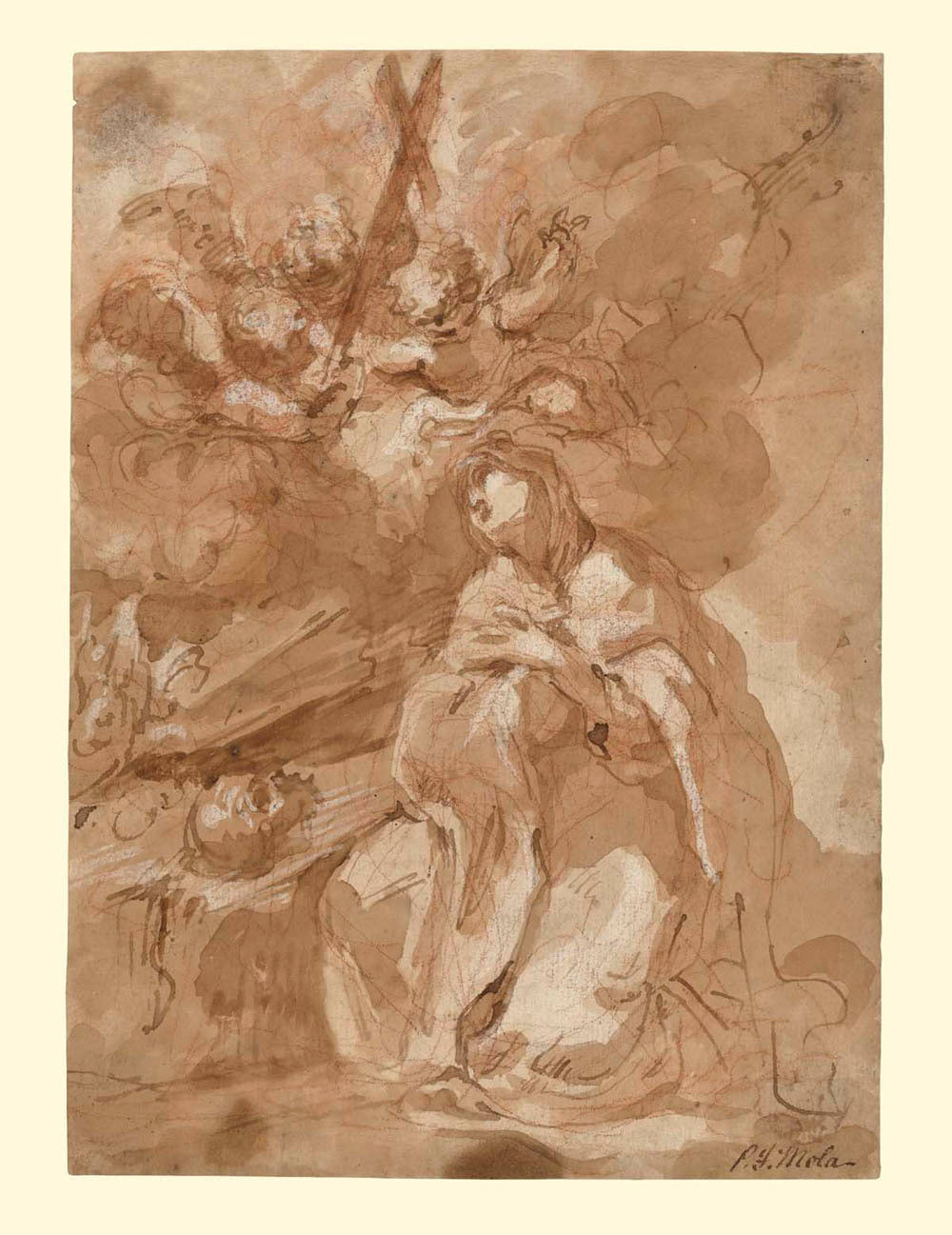
A Female Saint Contemplating a Crucifix Gm-00050701
ArteHouse
CHF 20
out of stock
Pastoral Scene Gm-00012001
ArteHouse
CHF 20
out of stock