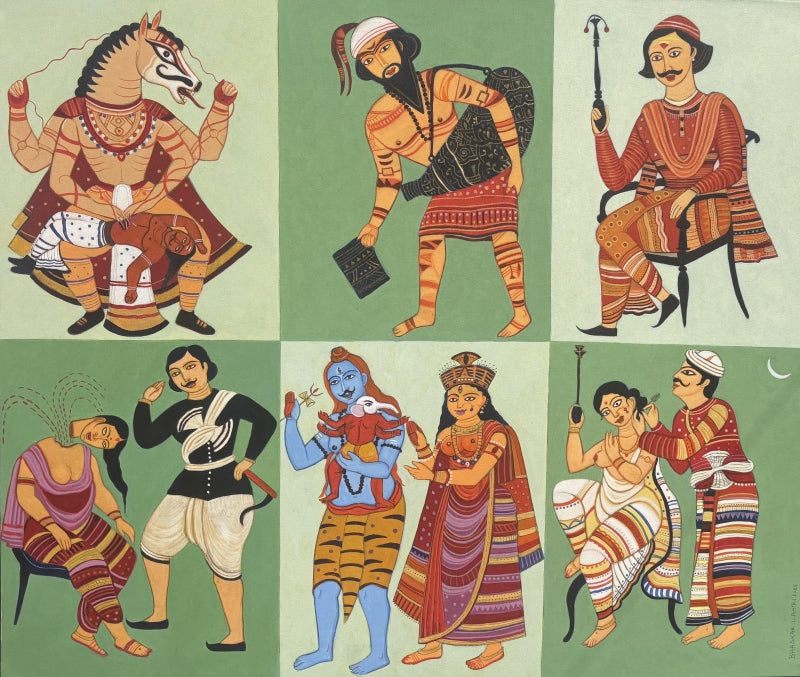
Essence Of Kalighat 2
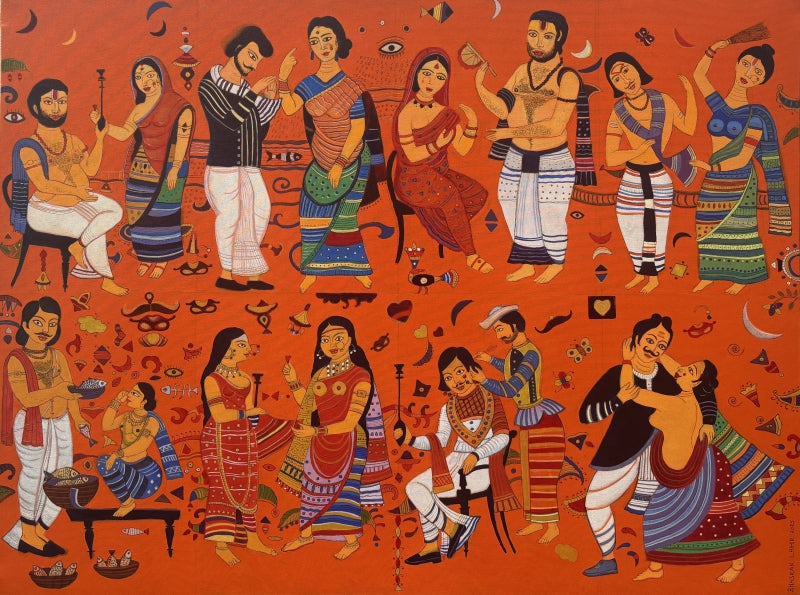
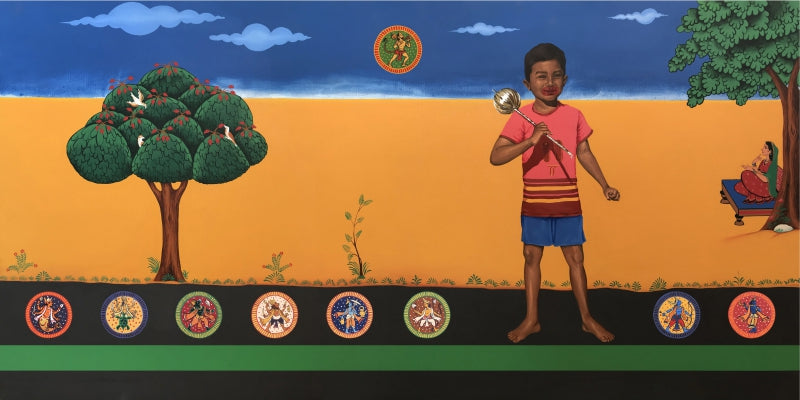
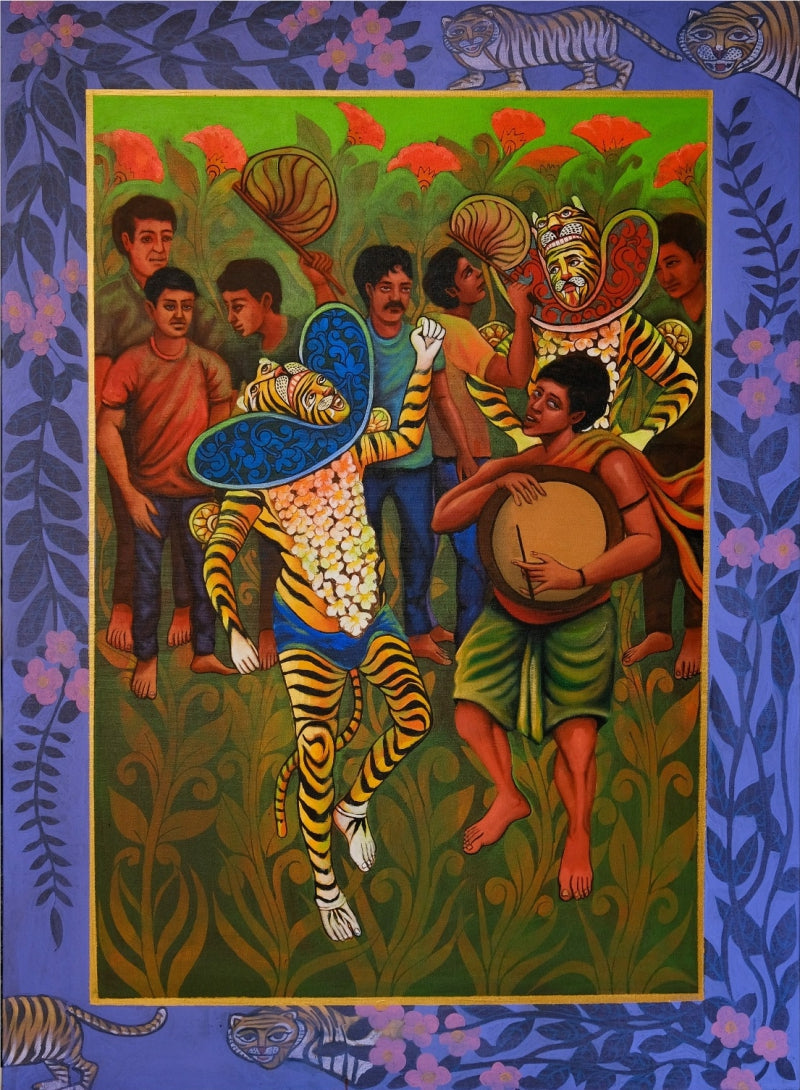
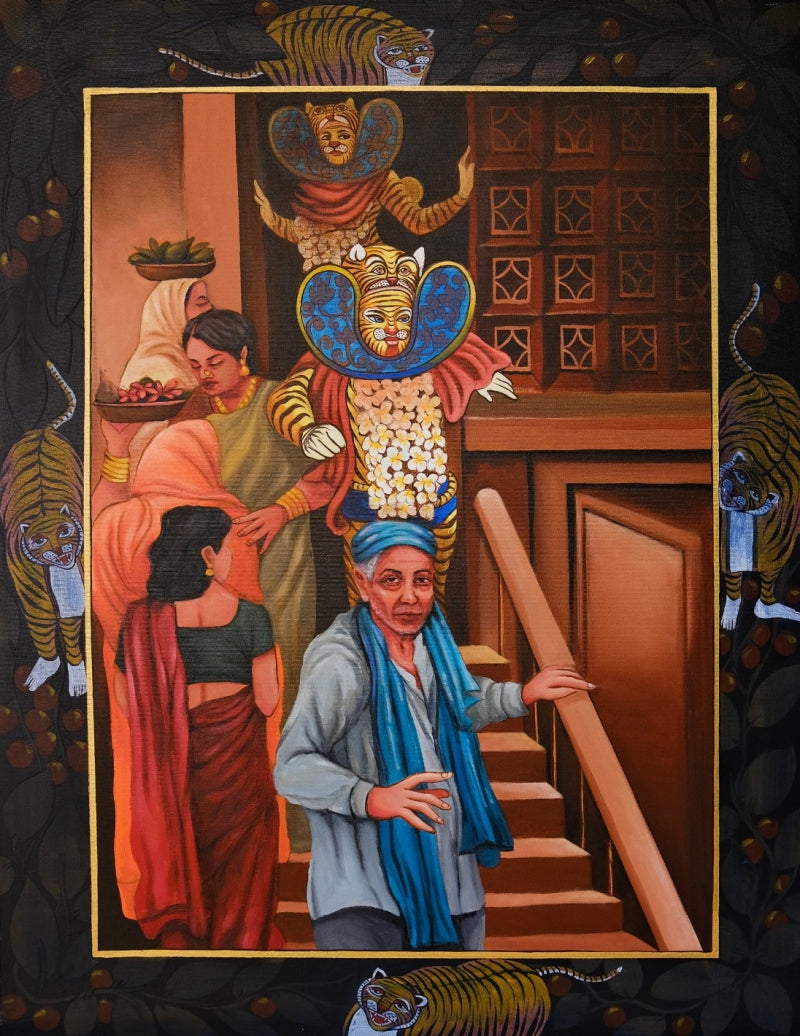
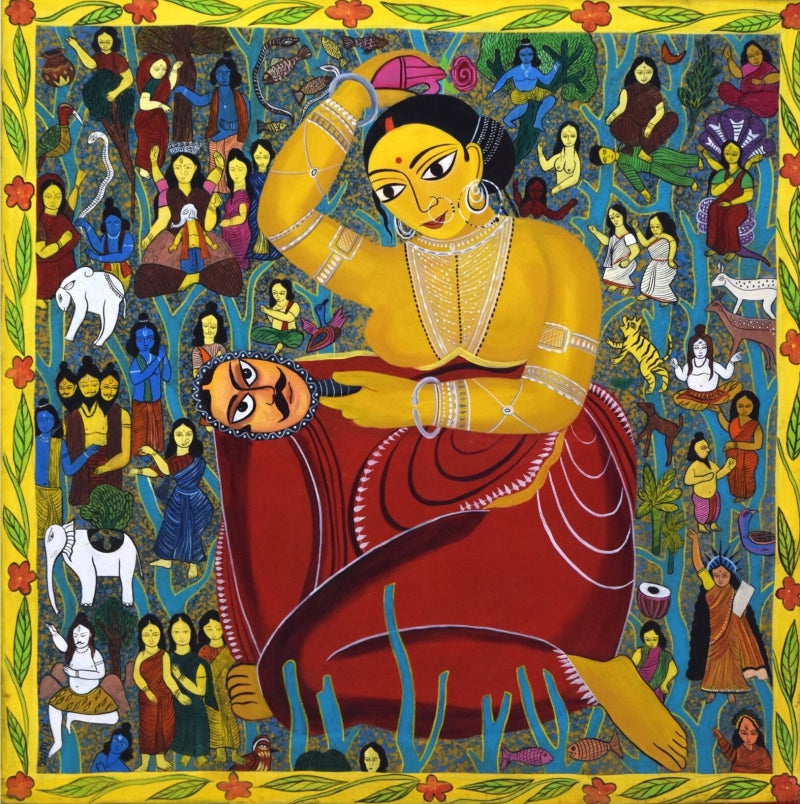
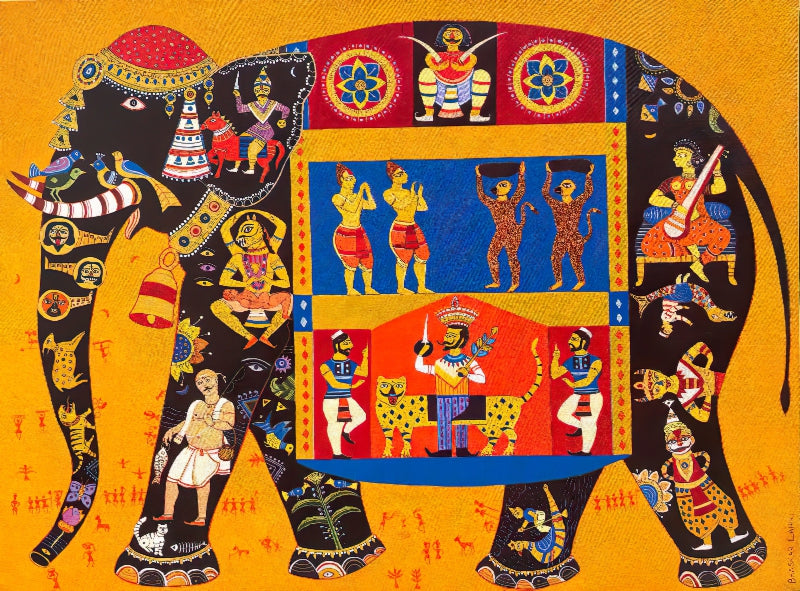
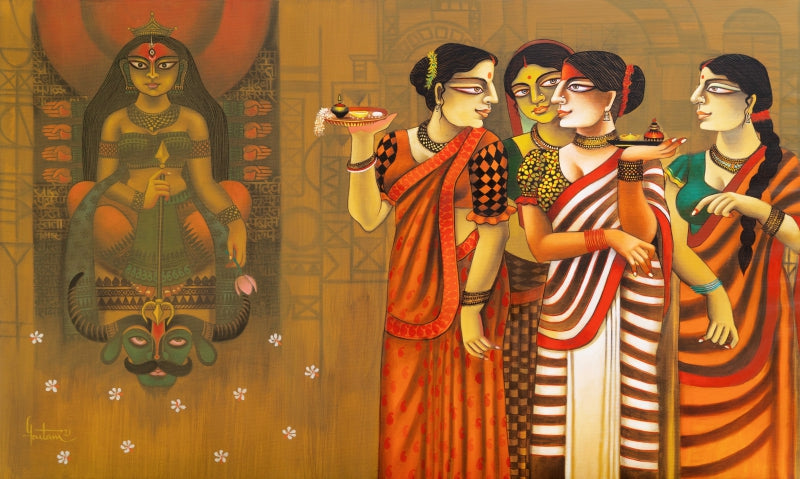
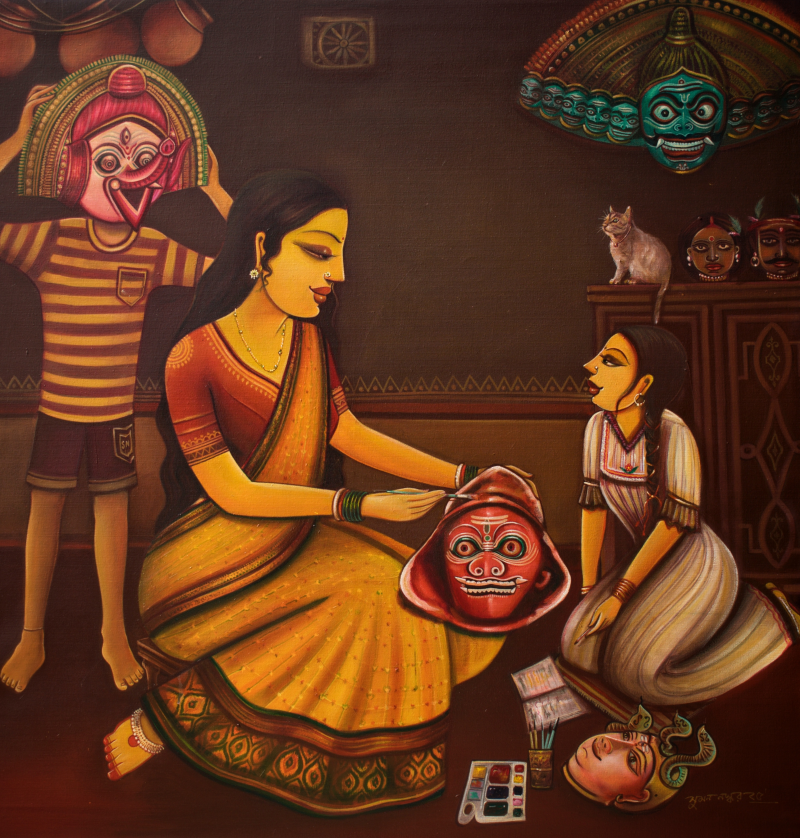
Arranged like a sequence of painted vignettes, this work stages folklore and everyday theater within a strict grid, where each compartment becomes a small proscenium for power, desire, devotion, and farce. Flat, saturated color and ornamental patterning suppress illusionistic depth, yet the figures’ emphatic gestures and tilted poses generate a lively psychological space—part ritual, part gossip, part myth. The oscillation between the divine (iconic, frontal, haloed in aura) and the human (comic, vulnerable, conspiratorial) suggests a culture where transcendence and domestic drama share the same breath. In its disciplined symmetry and playful narrative discontinuities, the painting reads as a visual archive of communal memory—stories preserved not by realism, but by rhythm, costume, and symbol.