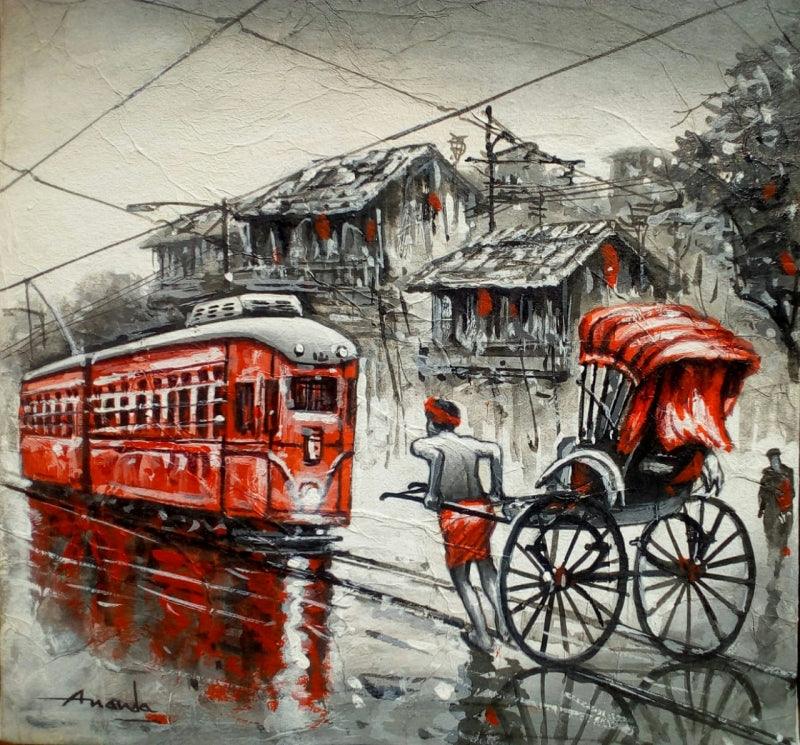
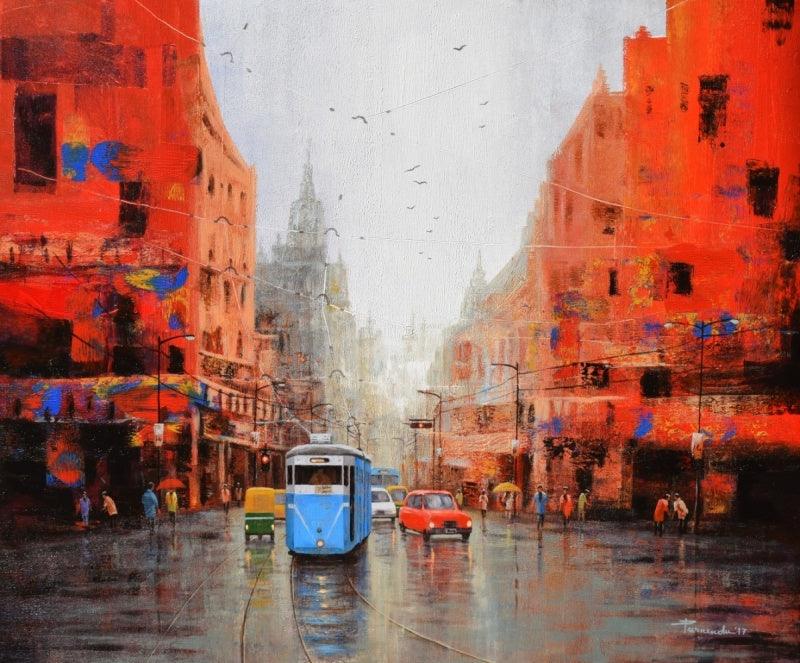
City Of Kolkata (A Glimpse of Kolkata)
₹12,000
Out of stock · ★ 4.0 (7)checking live price…
Size
12x12Type
OriginalMaterial
CanvasIn a rain-lacquered street where the world seems rinsed to essentials, the painting stages a quiet collision between eras: a vivid red tram gliding forward and a hand-drawn rickshaw lingering in the foreground like an echo of older rhythms. The artist drains the city into greys and soft dissolves, letting the scarlet accents—vehicles, scattered windows, and reflections—pulse as the lone heartbeat of urban memory. Wires stitch the sky into a restless geometry, while the wet pavement mirrors the scene as if asking whether progress is passage or repetition. The figures remain small and faceless, suggesting that in the machinery of movement, the most intimate human labor is often the least seen.
Delivery
You may also like
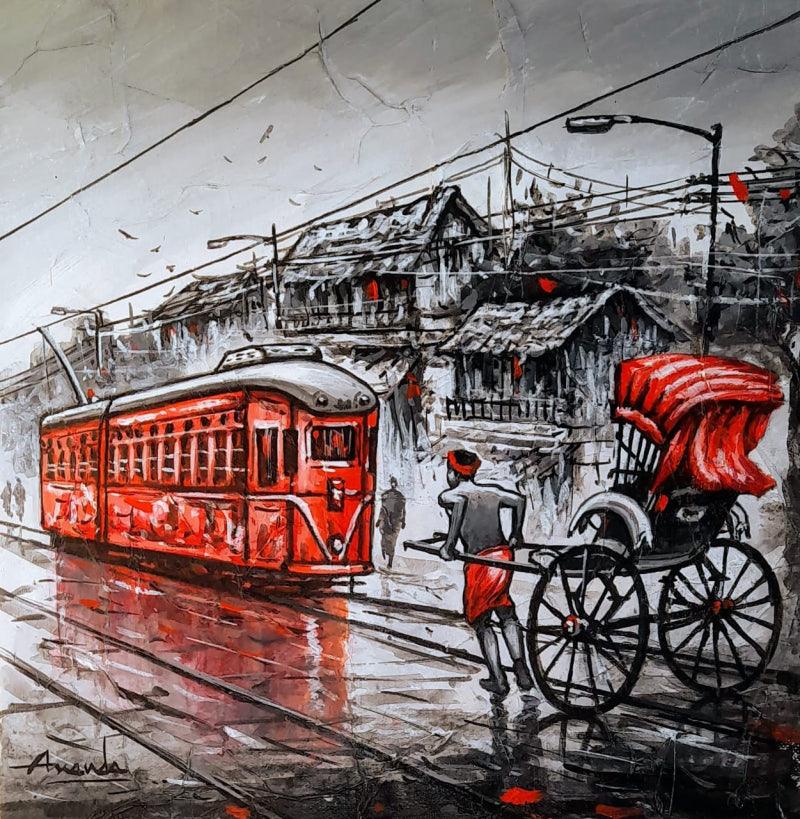
City Of Kolkata (Contrasting Eras)
Artzolo
₹17,500
★ 5.0 (12)
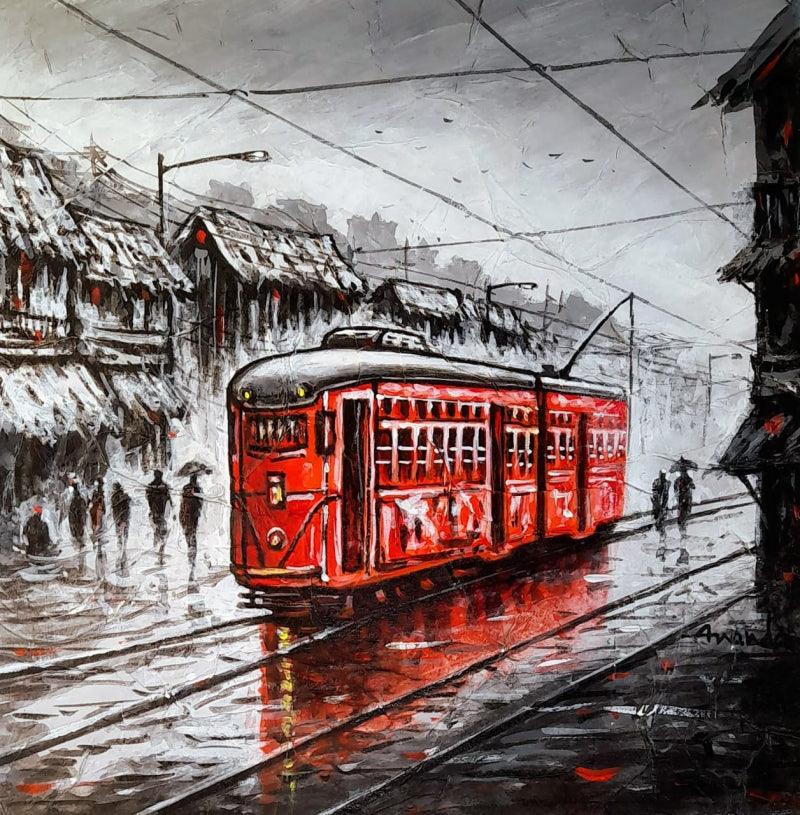
Tram In Calcutta Street 2 (Nostalgic Journey**)
Artzolo
₹15,000
out of stock
★ 4.0 (8)
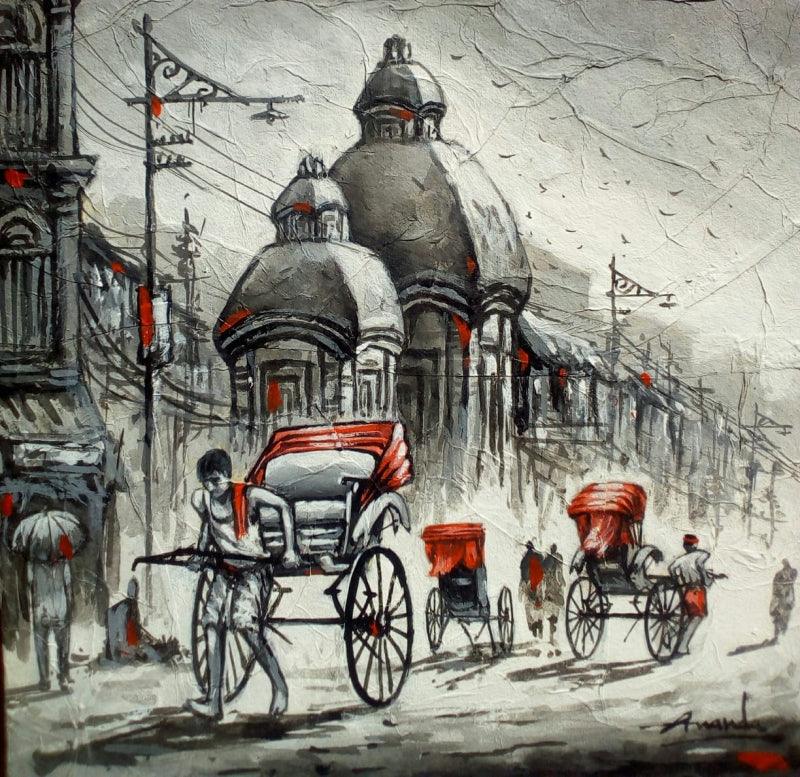
Busy Kolkata (A Rainy Day in Kolkata)
Artzolo
₹12,000
out of stock
★ 5.0 (7)
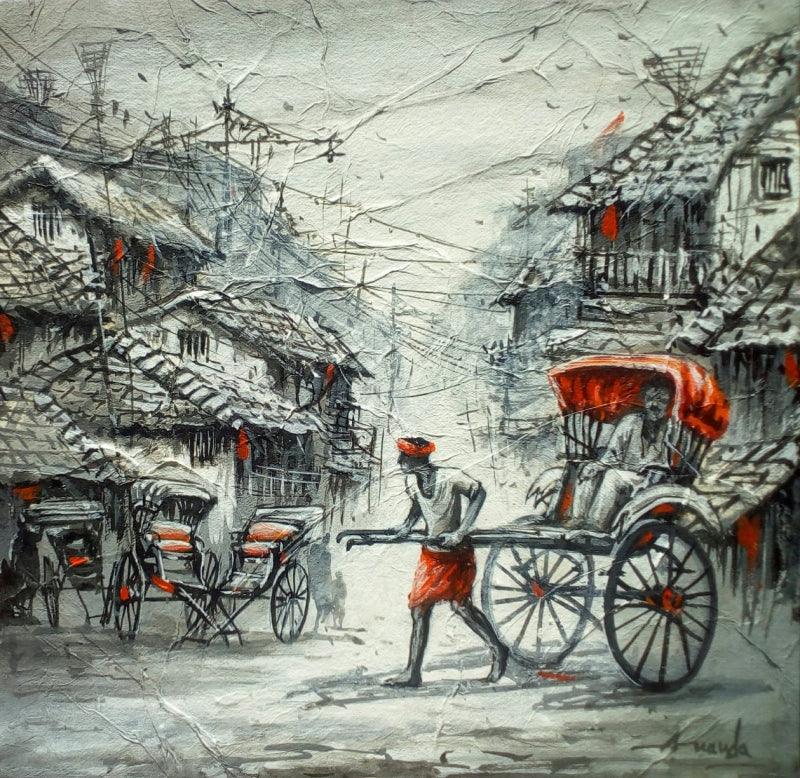
Rickshaw Puller In Kolkata 2 (A Day in the City)
Artzolo
₹12,000
out of stock
★ 4.0 (10)
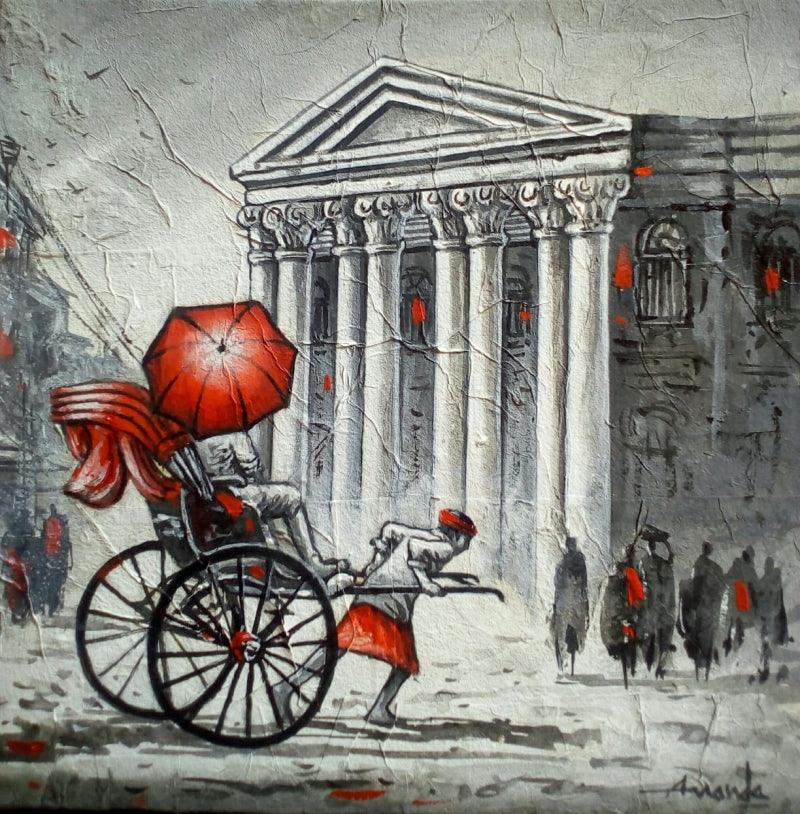
Rickshaw Puller In Kolkata (A Glimpse of Kolkata)
Artzolo
₹12,000
out of stock
★ 5.0 (5)
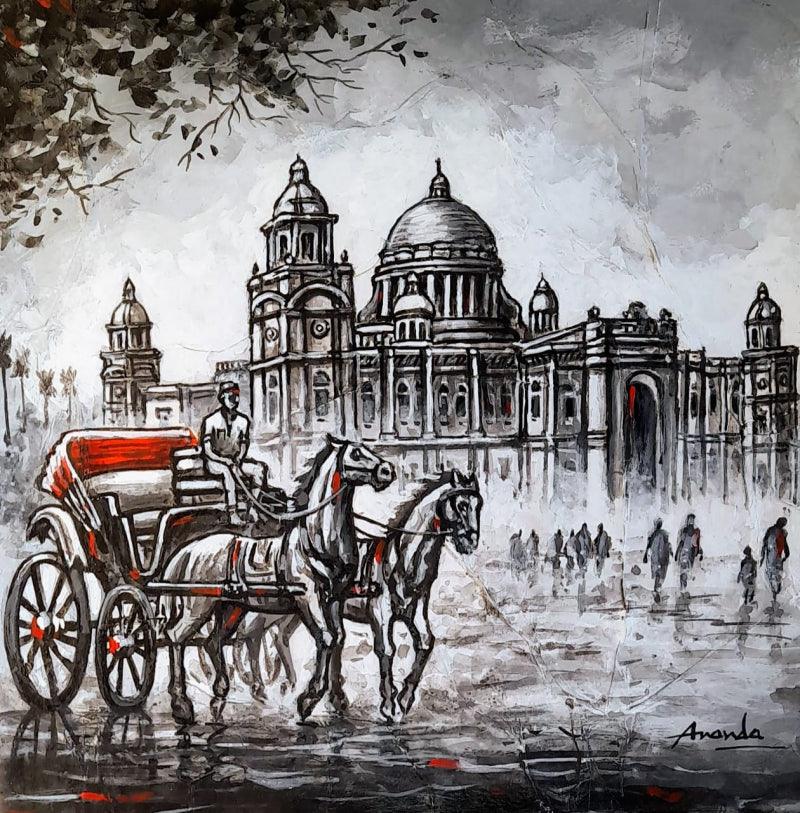
Rickshaw Puller In Kolkata (A Glimpse of Kolkata's Past**)
Artzolo
₹15,000
out of stock
★ 5.0 (9)
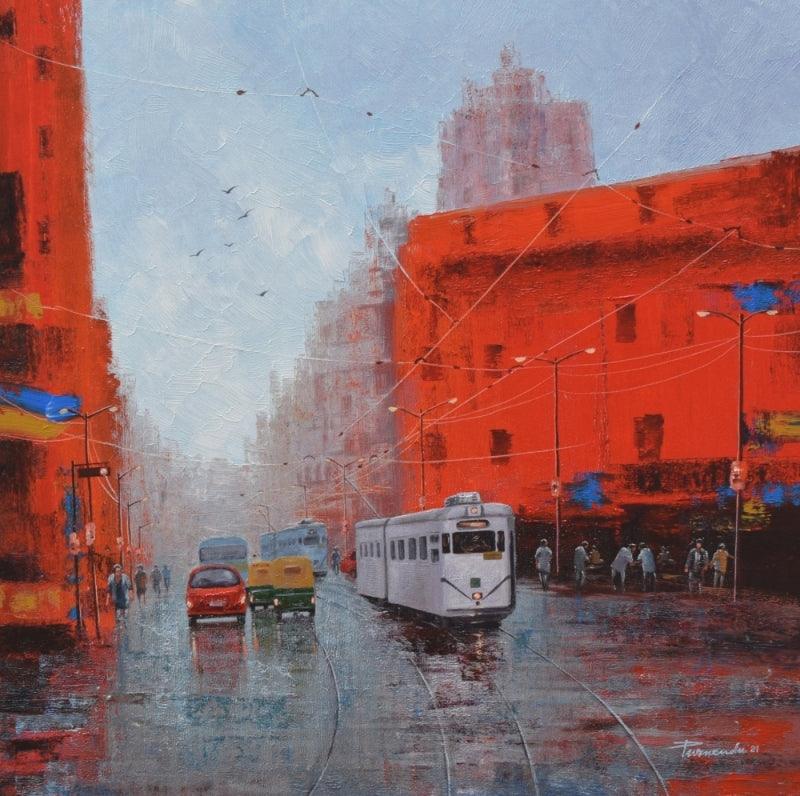
After Rain In Kolkata (A Glimpse of Kolkata)
Artzolo
₹125,000
out of stock
★ 4.0 (11)
After Rain In Kolkata (Rainy Day in the City)
Artzolo
₹150,000
out of stock
★ 5.0 (15)