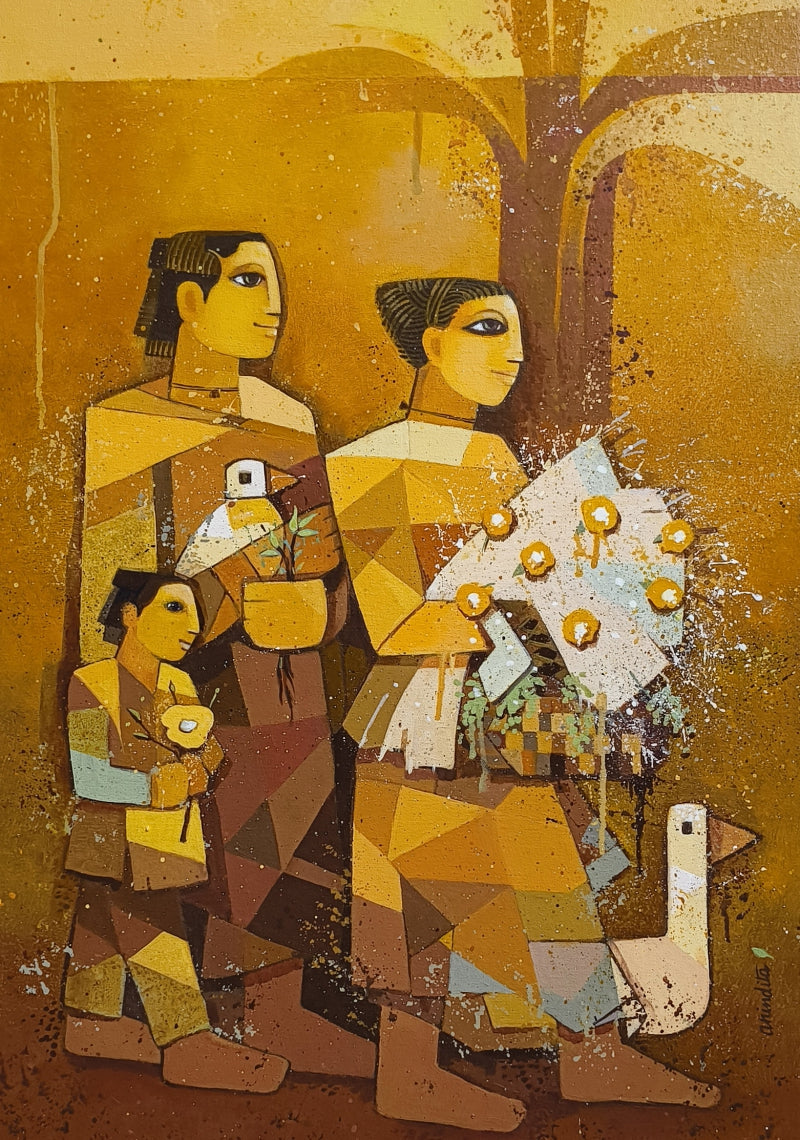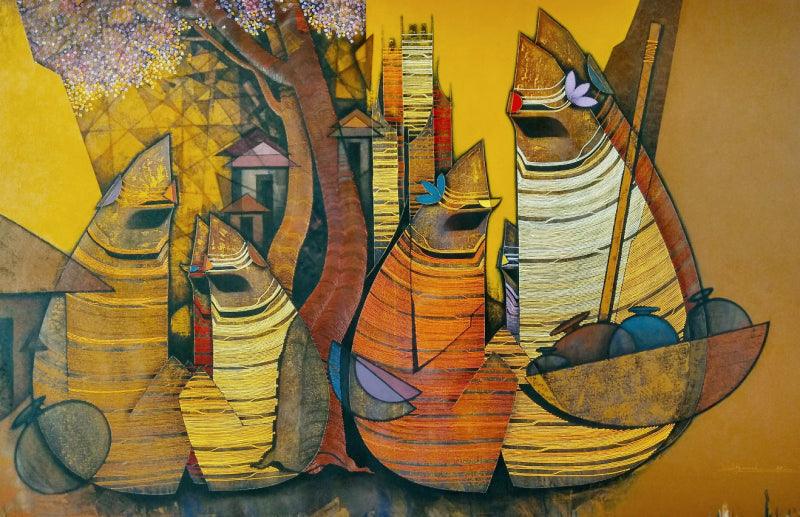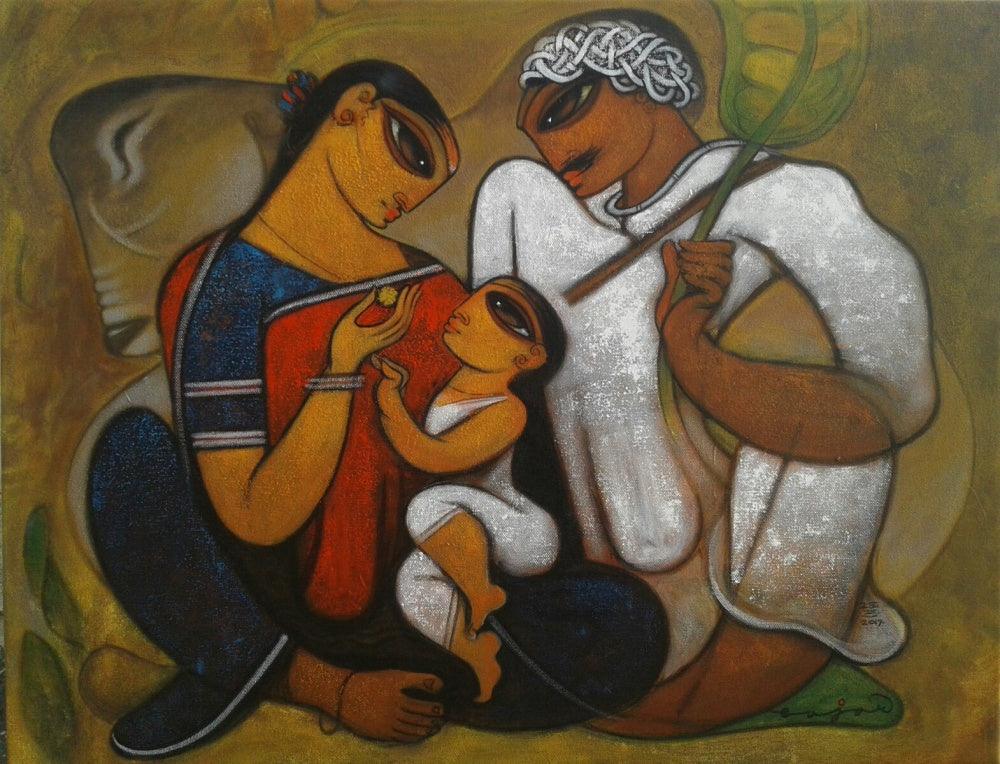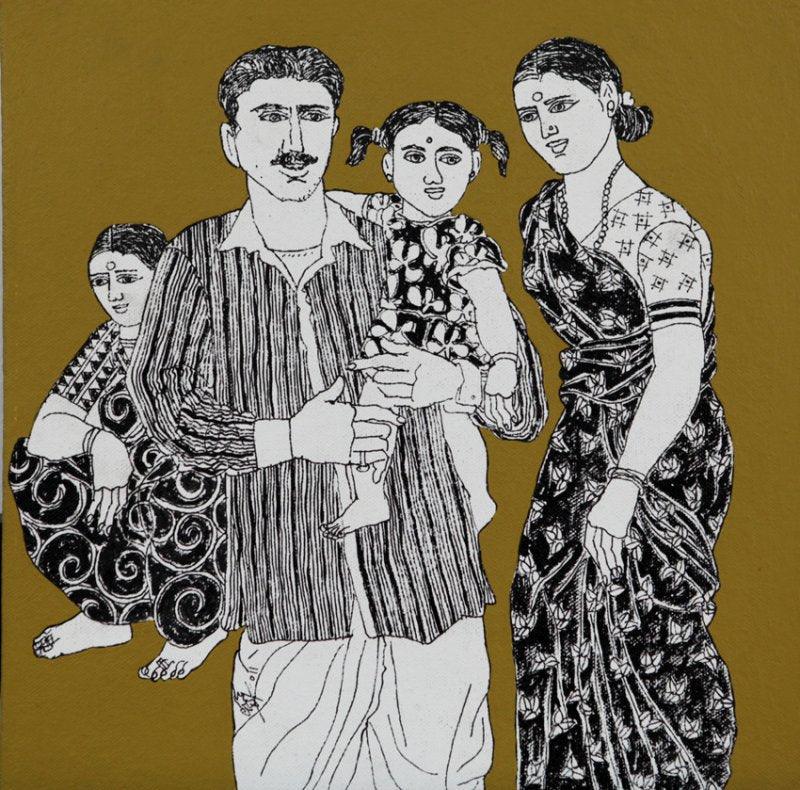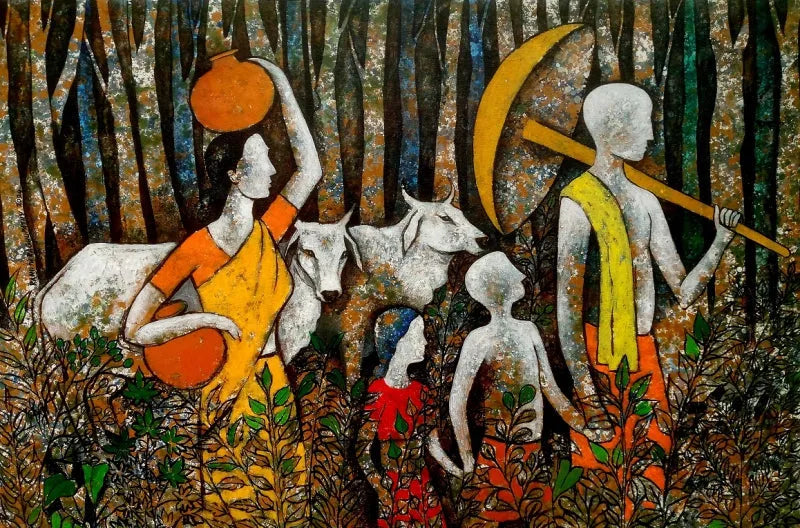
Before Sunset (A Family's Journey)
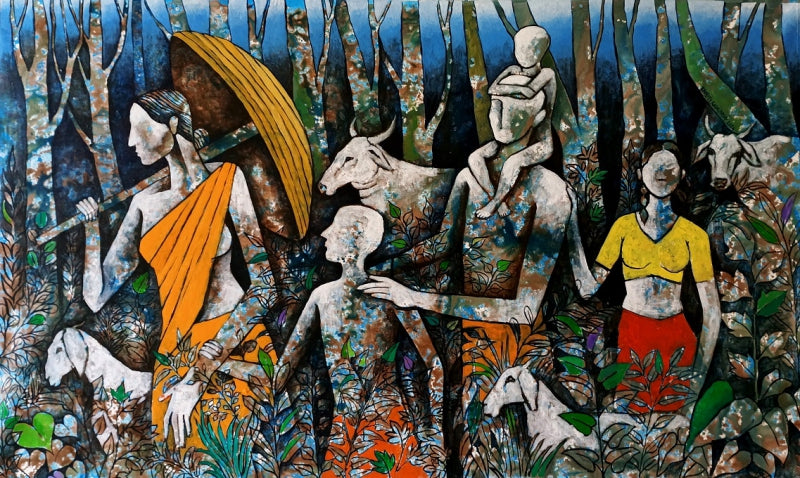
This rural procession unfolds like a quiet hymn to sustenance, where the figures—rendered in pale, almost spectral silhouettes—move through a dense, vertical forest that presses in like memory. Warm saffron and rust garments glow against the mottled, earth-toned ground, turning ordinary tools and vessels into emblems of continuity: the water pot, the cattle, and the crescent sickle become a shared grammar of labor and care. The compressed space and rhythmic repetition of trunks and foliage create a sense of inevitability, suggesting that livelihood here is not merely work but an inherited choreography between family, land, and season. Beneath its pastoral calm, the painting carries a tender austerity—an acknowledgment that survival is communal, cyclical, and quietly heroic.
Delivery
You may also like