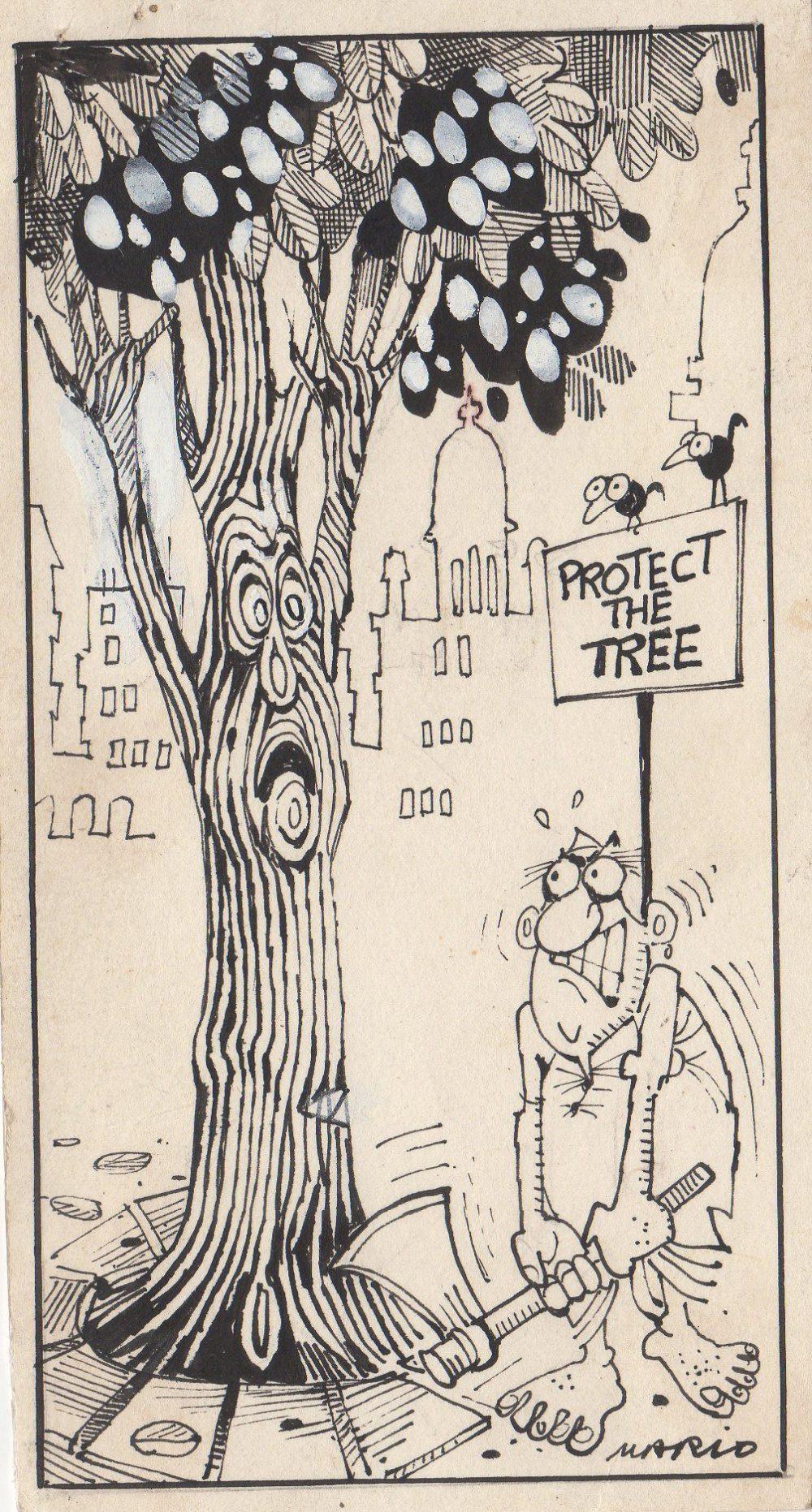
Mario Miranda Original C 177
Rendered in brisk black-and-white linework, the scene turns the tree into a sentient witness—its bark grain reading like a face frozen between alarm and resignation—while the city’s pale silhouettes recede into a hollow, indifferent backdrop. The placard’s blunt directive, “PROTECT THE TREE,” becomes a bitter counterpoint to the man’s raised axe, exposing the gap between public virtue and private violence. Dense hatching and cartoon exaggeration sharpen the satire: nature is monumental yet vulnerable, and the smallest figures—crows perched like cynical commentators—seem to anticipate the inevitable cut. In this compressed urban theater, the work stages environmental conscience as performance, asking whether our gestures of care arrive only as decoration for destruction.
Delivery
You may also like