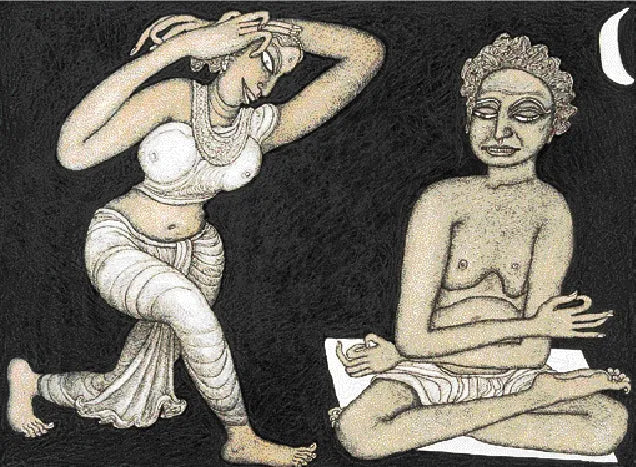
Yogi And The Dancer (Untitled)
₹90,000
● In stockchecking live price…
Size
22x30Type
SerigraphMaterial
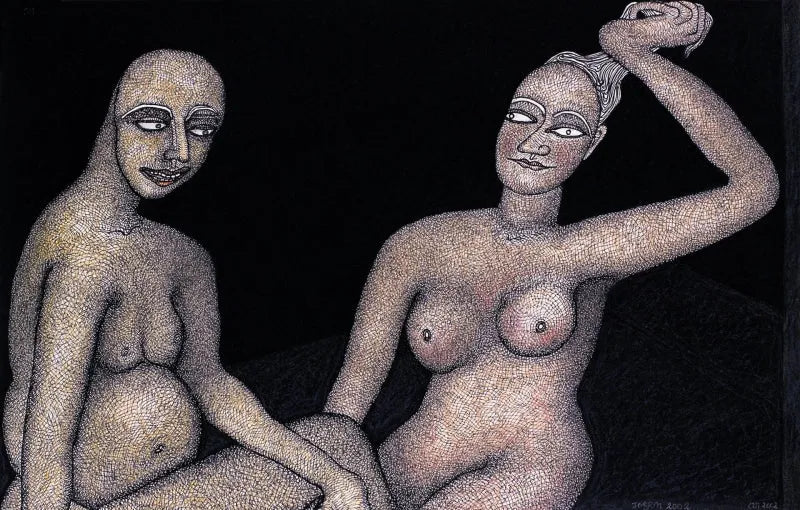
PaperSet against a velvety nocturnal ground, the dancer’s spiraling limbs and bright drapery carve a luminous arc of movement, as if devotion itself has taken bodily form. Opposite her, the seated ascetic—rendered in steadier, quieter tones—anchors the composition in a stillness that feels less passive than sovereign, a practiced interiority immune to spectacle. The stark contrast between kinetic grace and meditative containment becomes a tender dialogue: desire and discipline, world and withdrawal, meeting under a thin crescent moon that suggests time’s silence and the persistence of ritual. In this charged equilibrium, the work proposes that transcendence is not an escape from the senses, but their careful reorientation.
Delivery
You may also like
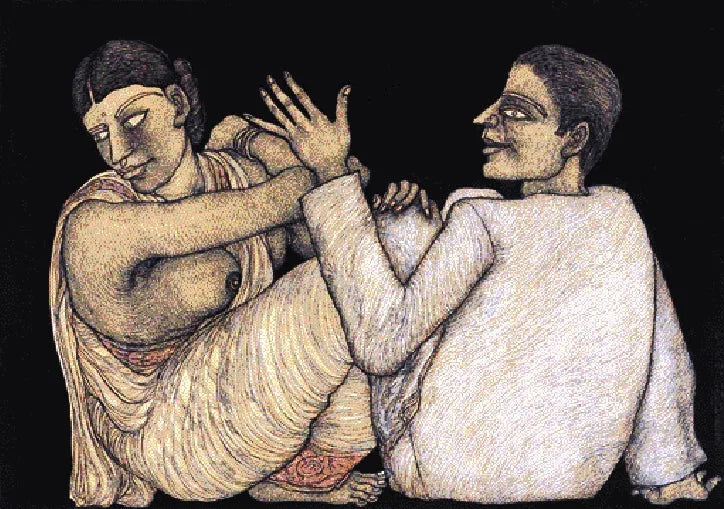
Couple ll (Untitled (Couple))
Artzolo
₹90,000
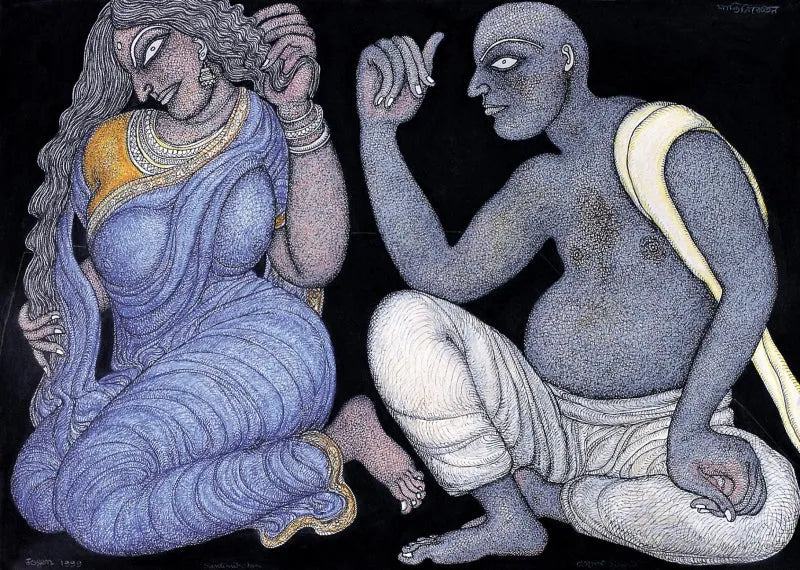
Couple (Untitled (Couple in Conversation))
Artzolo
₹120,000
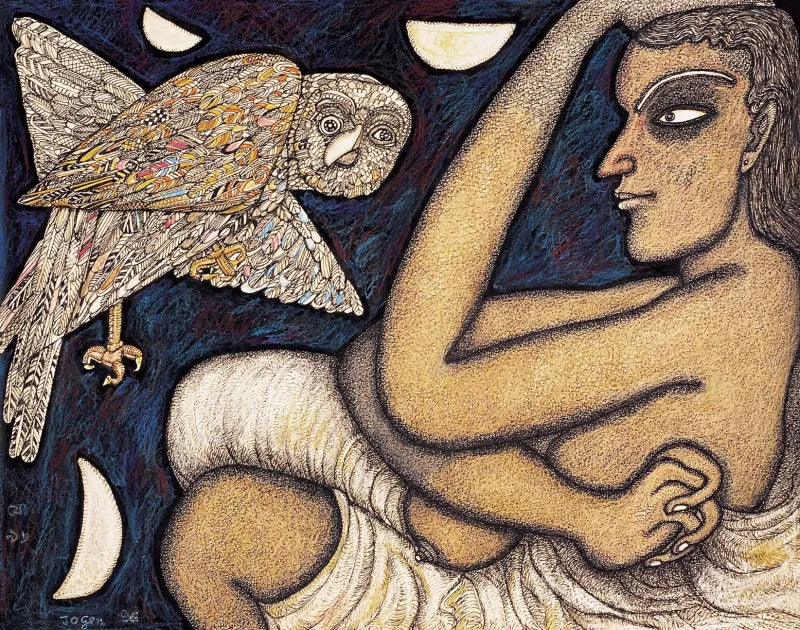
Night Of The Owl (Night of the Owl)
Artzolo
₹90,000
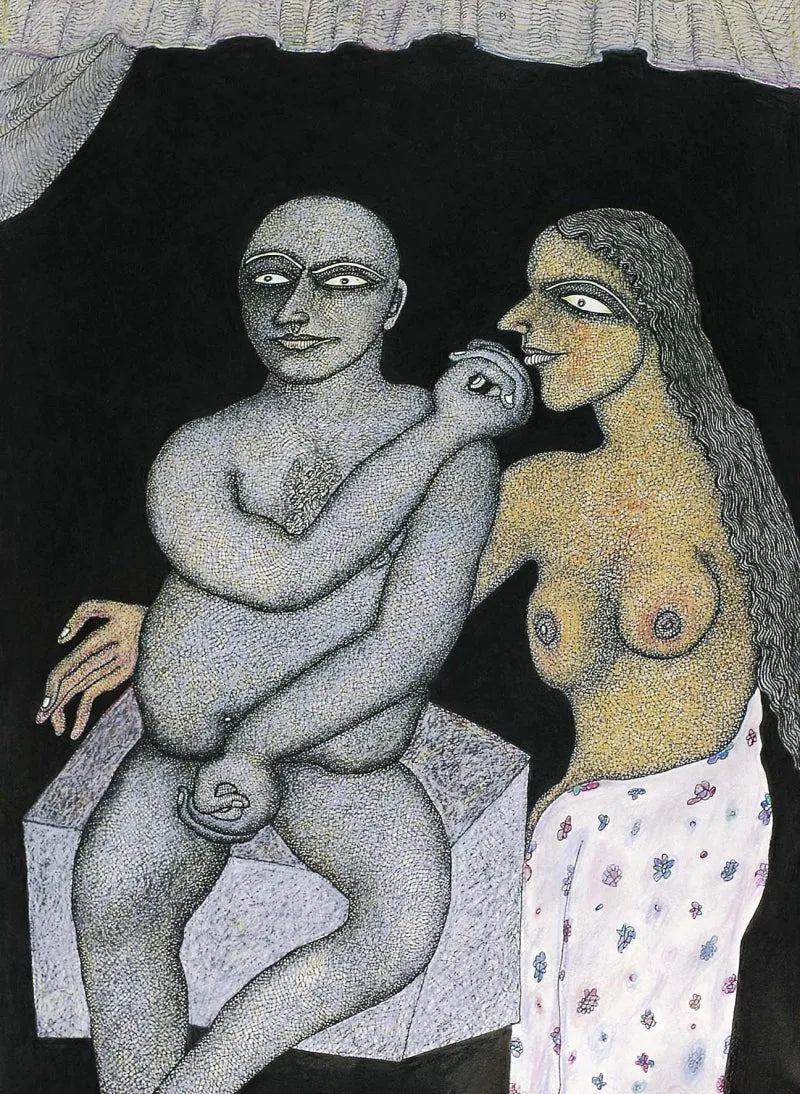
Man Woman 3 (Intimate Moments)
Artzolo
₹60,000
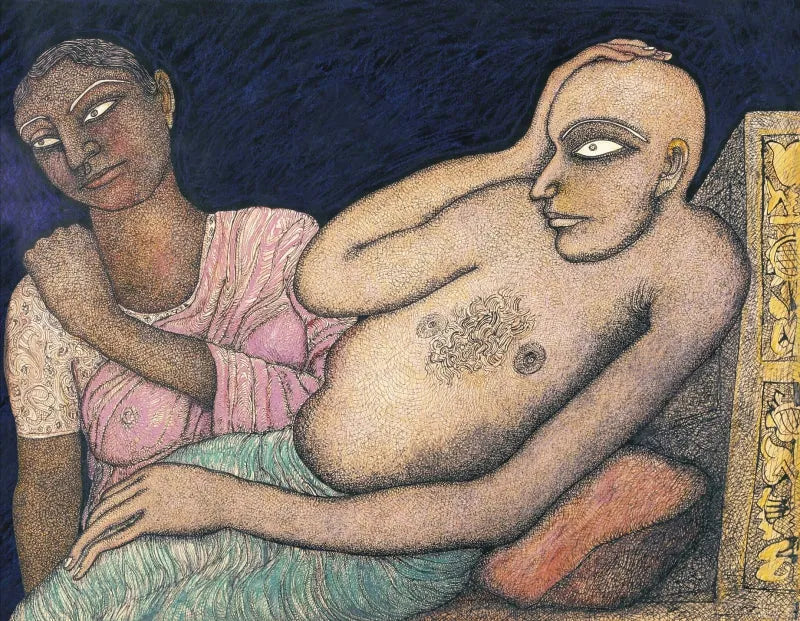
Situation B (Silent Dialogue)
Artzolo
₹90,000
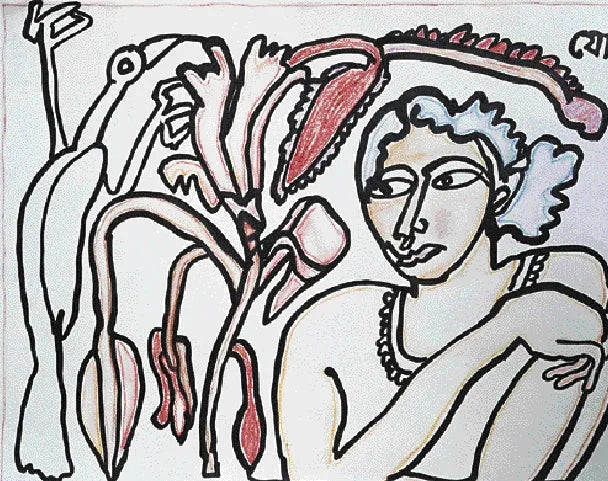
Woman With Flower (Woman Amidst Nature's Embrace)
Artzolo
₹45,000
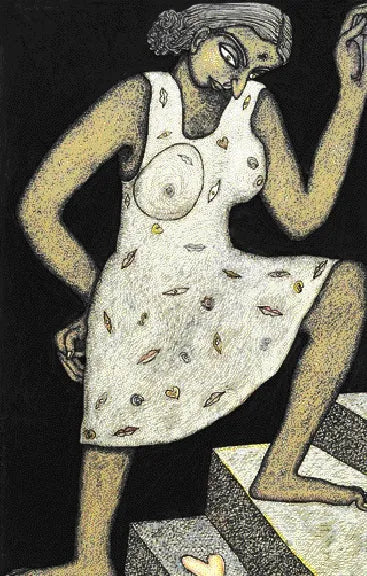
Girl (Ascending or Threshold)
Artzolo
₹90,000
Man In Mask
Artzolo
₹60,000