
Visit To Village
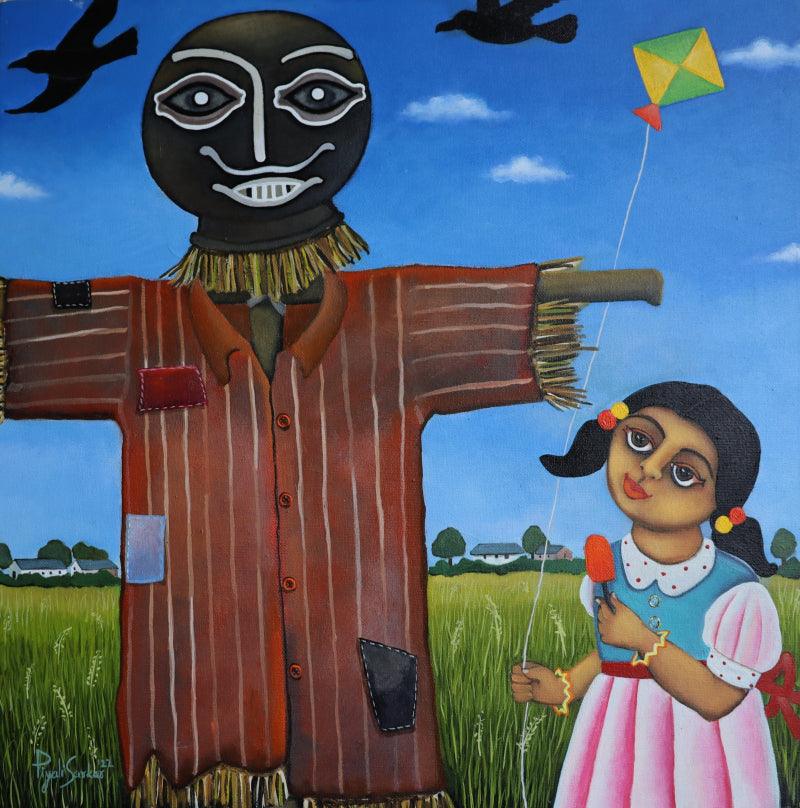
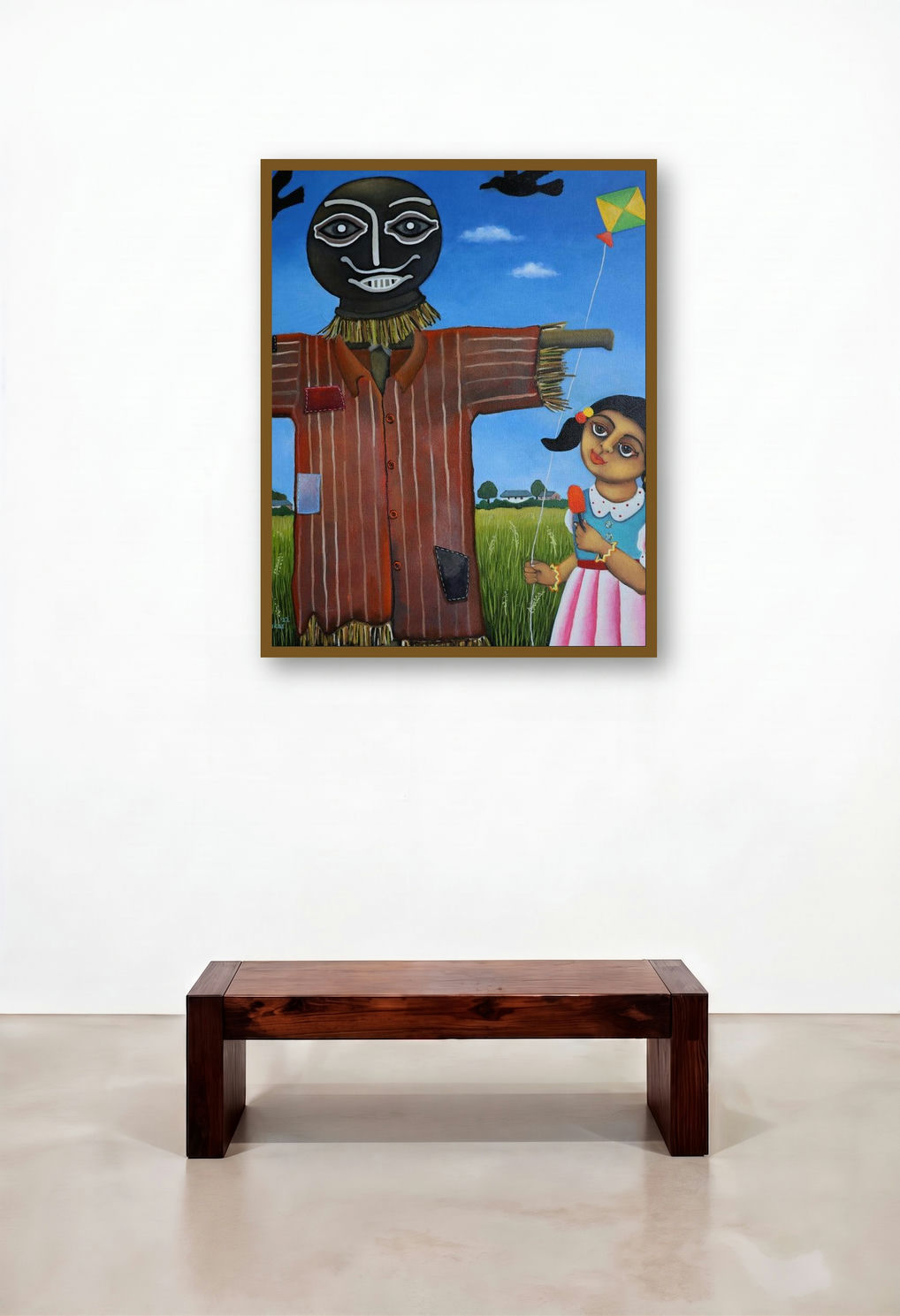
Set against a lucid, open sky, the scarecrow’s mask-like face reads as both guardian and apparition—an emblem of rural labor rendered with a disarming, folkloric directness that turns the field into a stage for memory. The stitched, patched shirt becomes a quiet archive of survival, its tactile seams and muted reds grounding the composition while the girl’s tilted gaze and bright ribbons introduce tenderness that unsettles the figure’s stoic watch. A kite lifts the narrative toward play and possibility, yet the dark silhouettes overhead press a counterweight of menace, suggesting innocence negotiated within the cycles of nature and necessity. In this poised balance of charm and unease, the work proposes childhood as a fragile covenant with the land—protected, tested, and perpetually becoming.
Delivery
You may also like