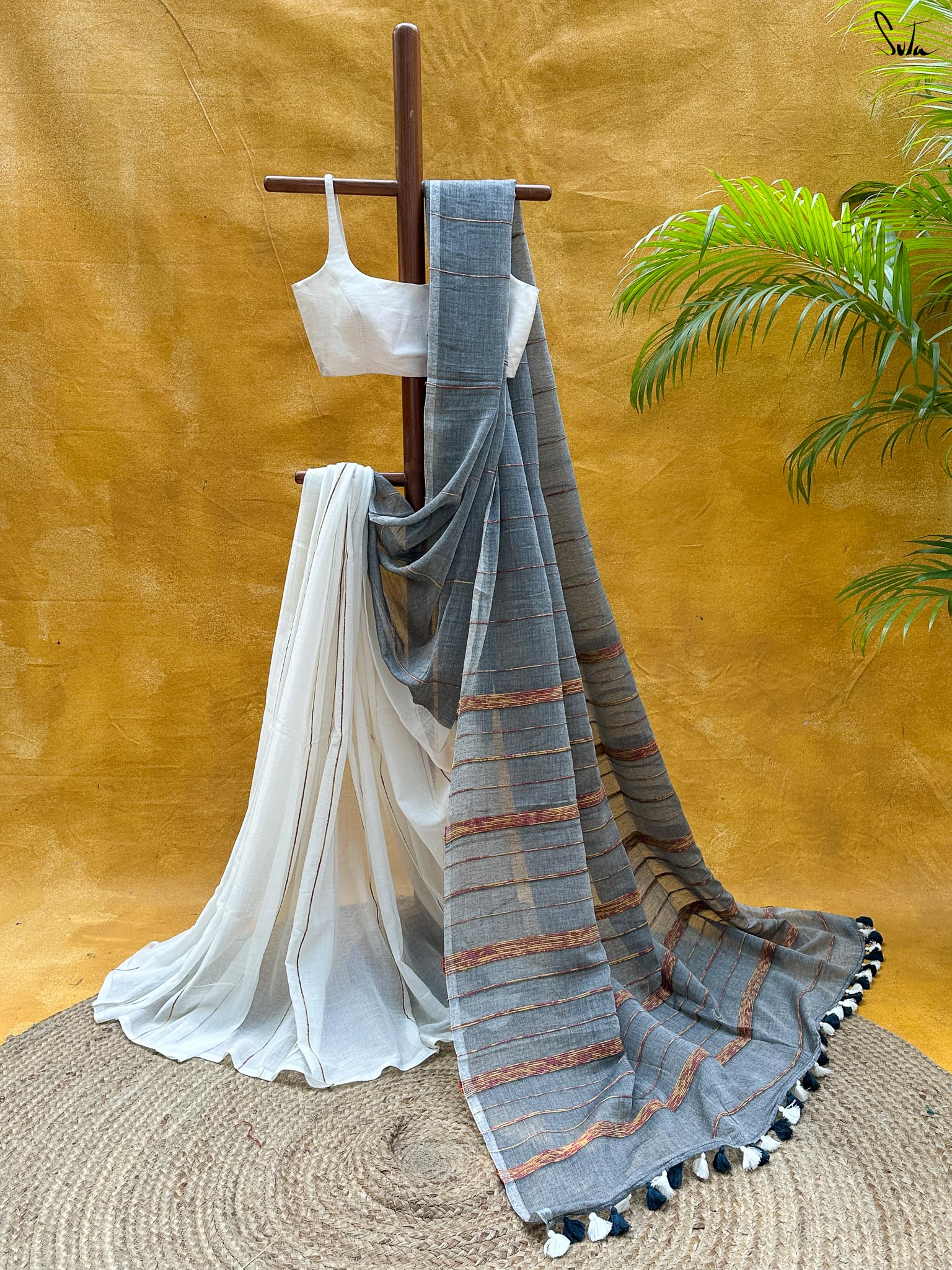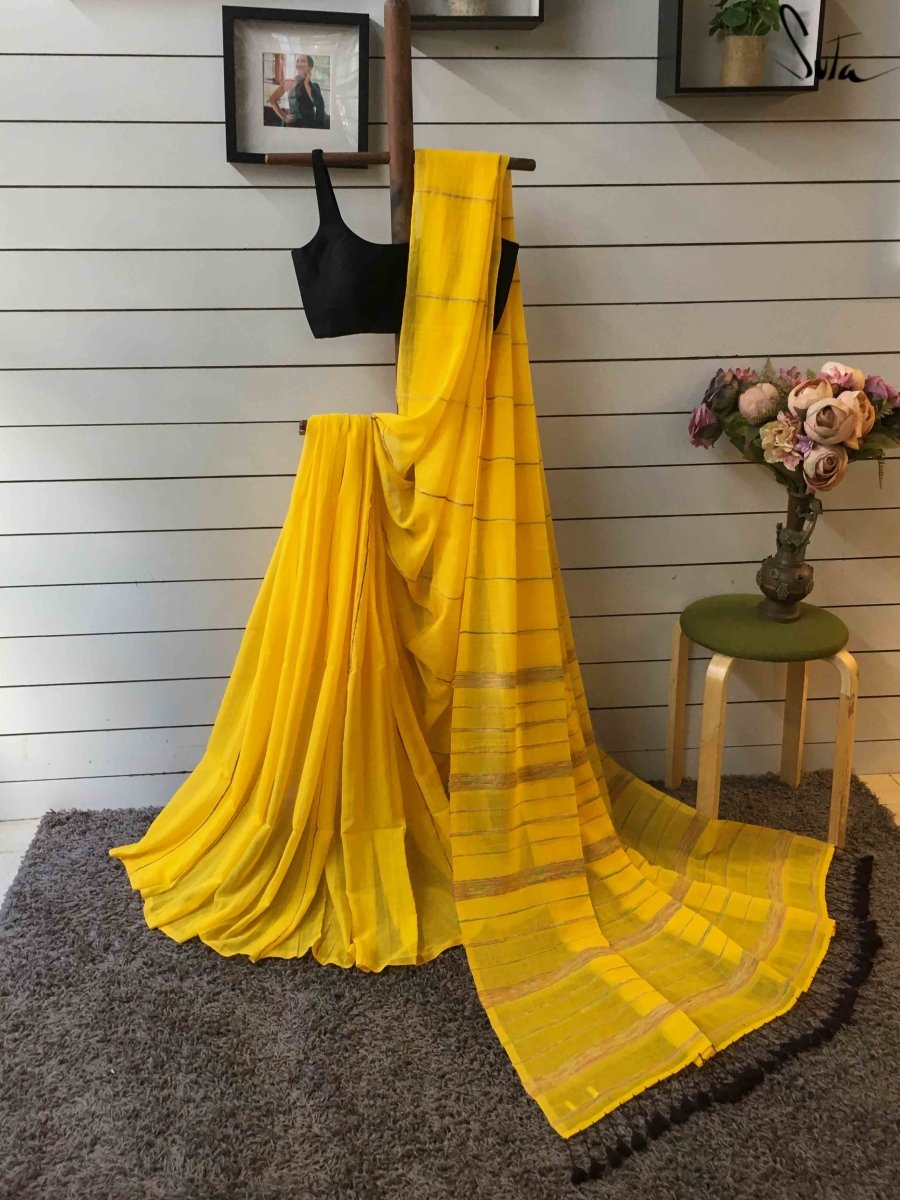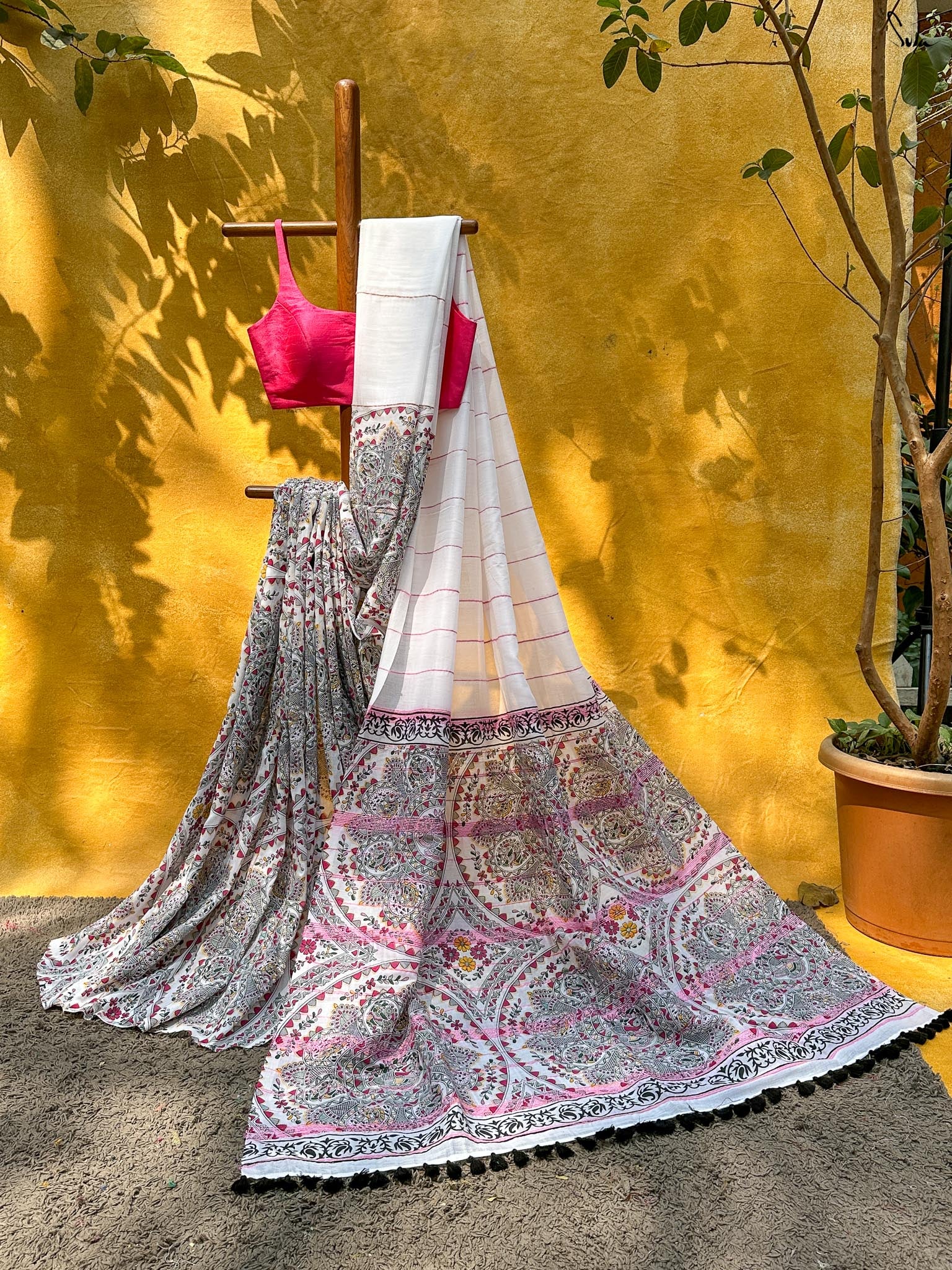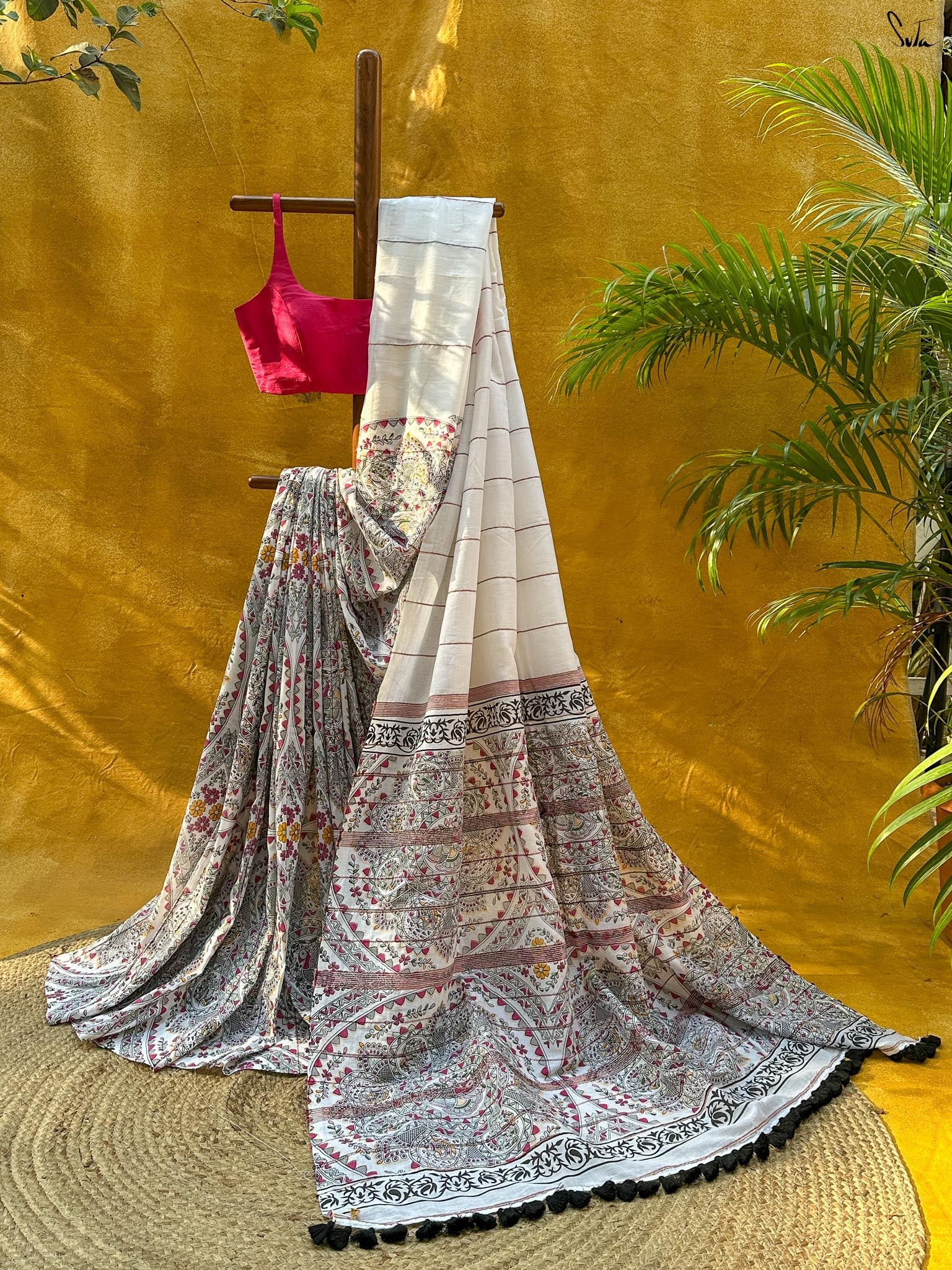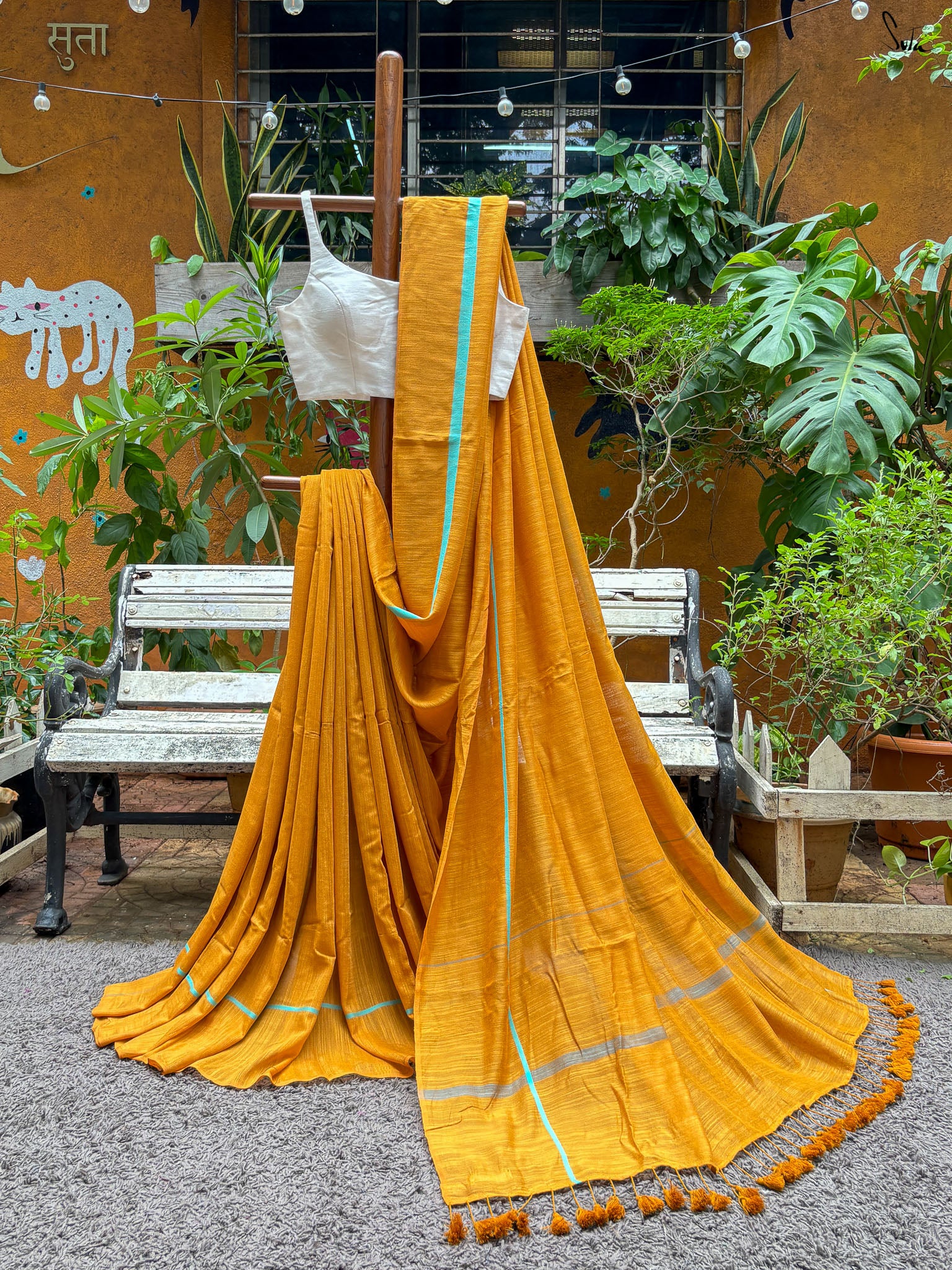
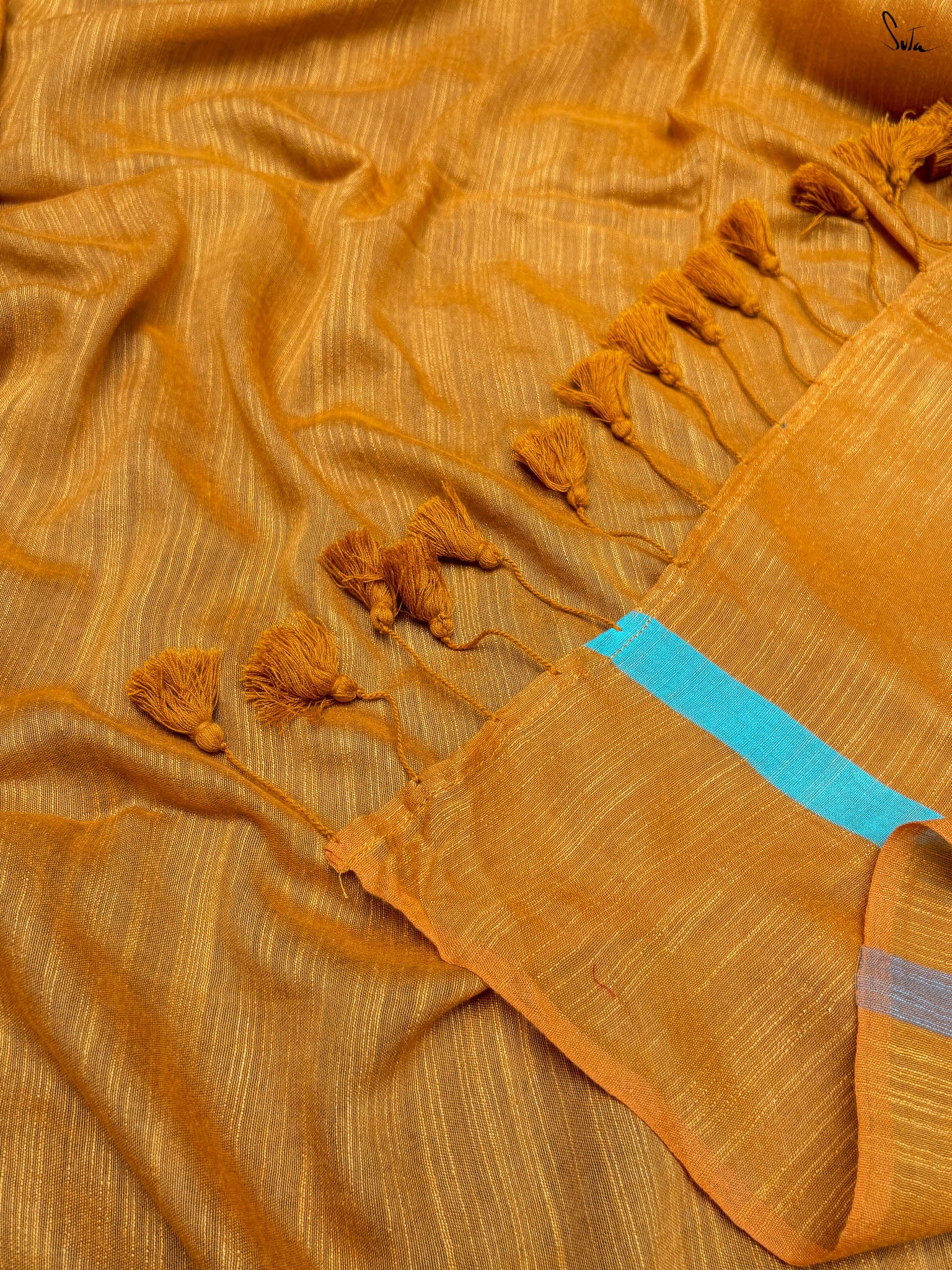
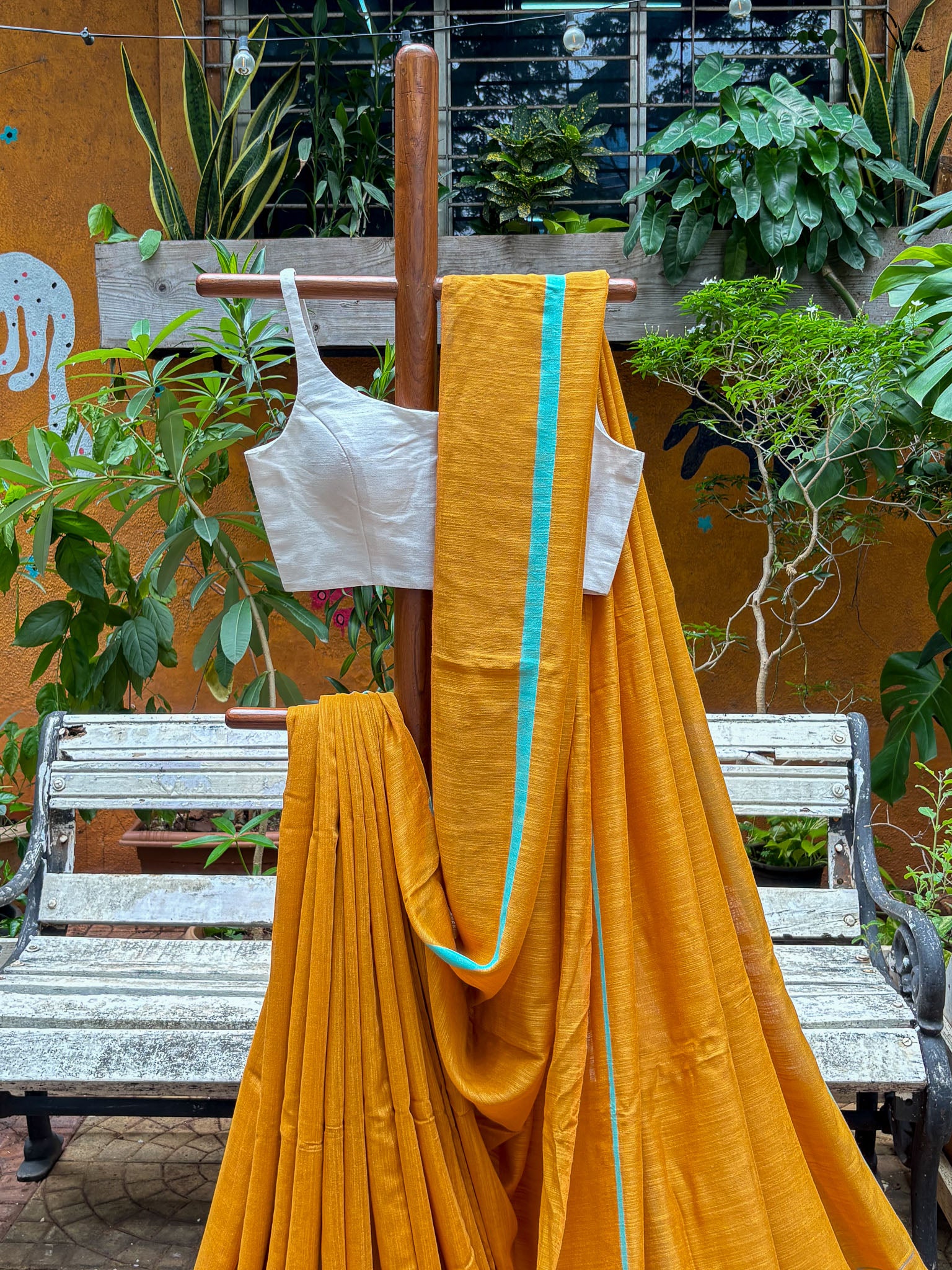
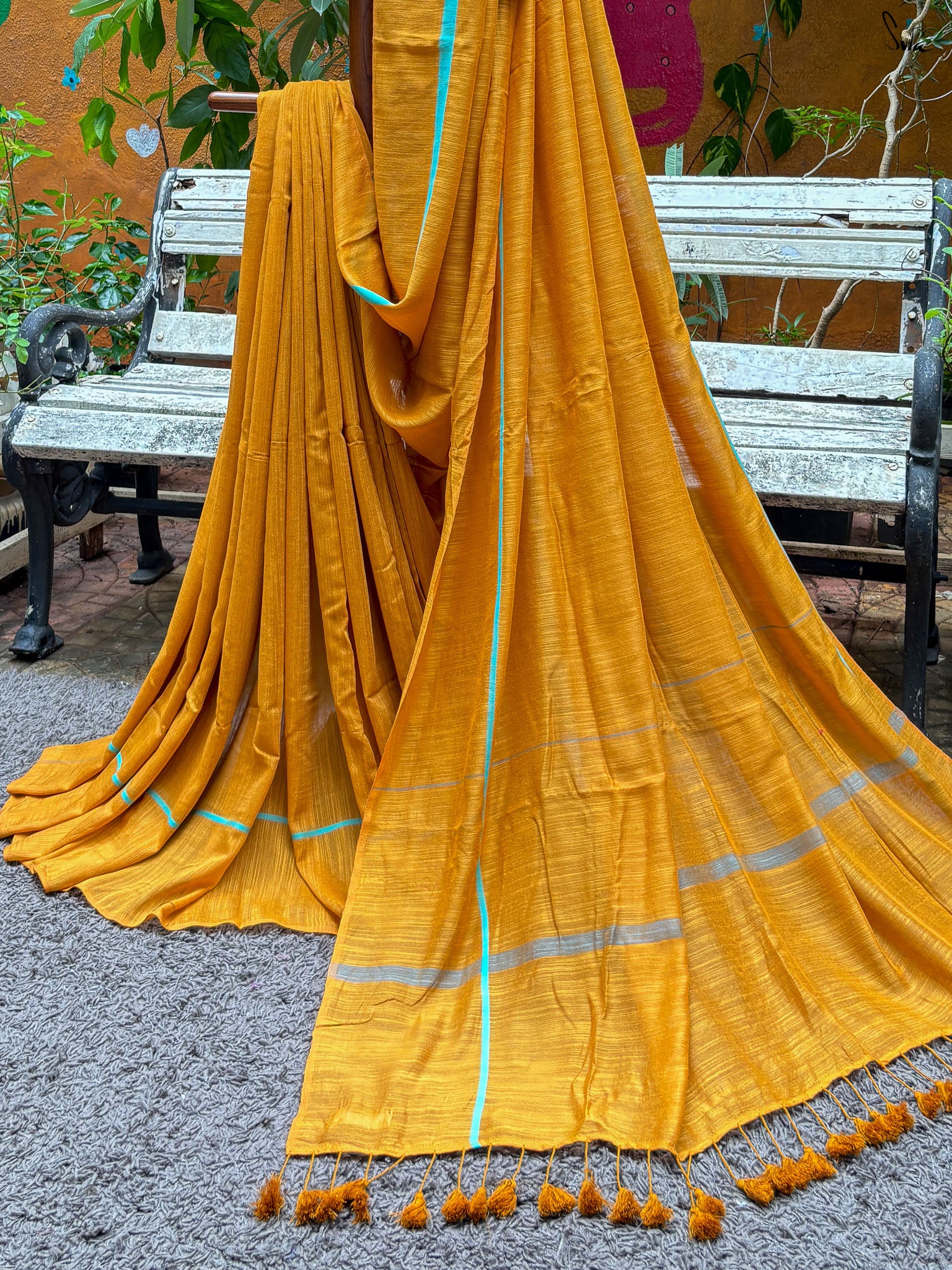
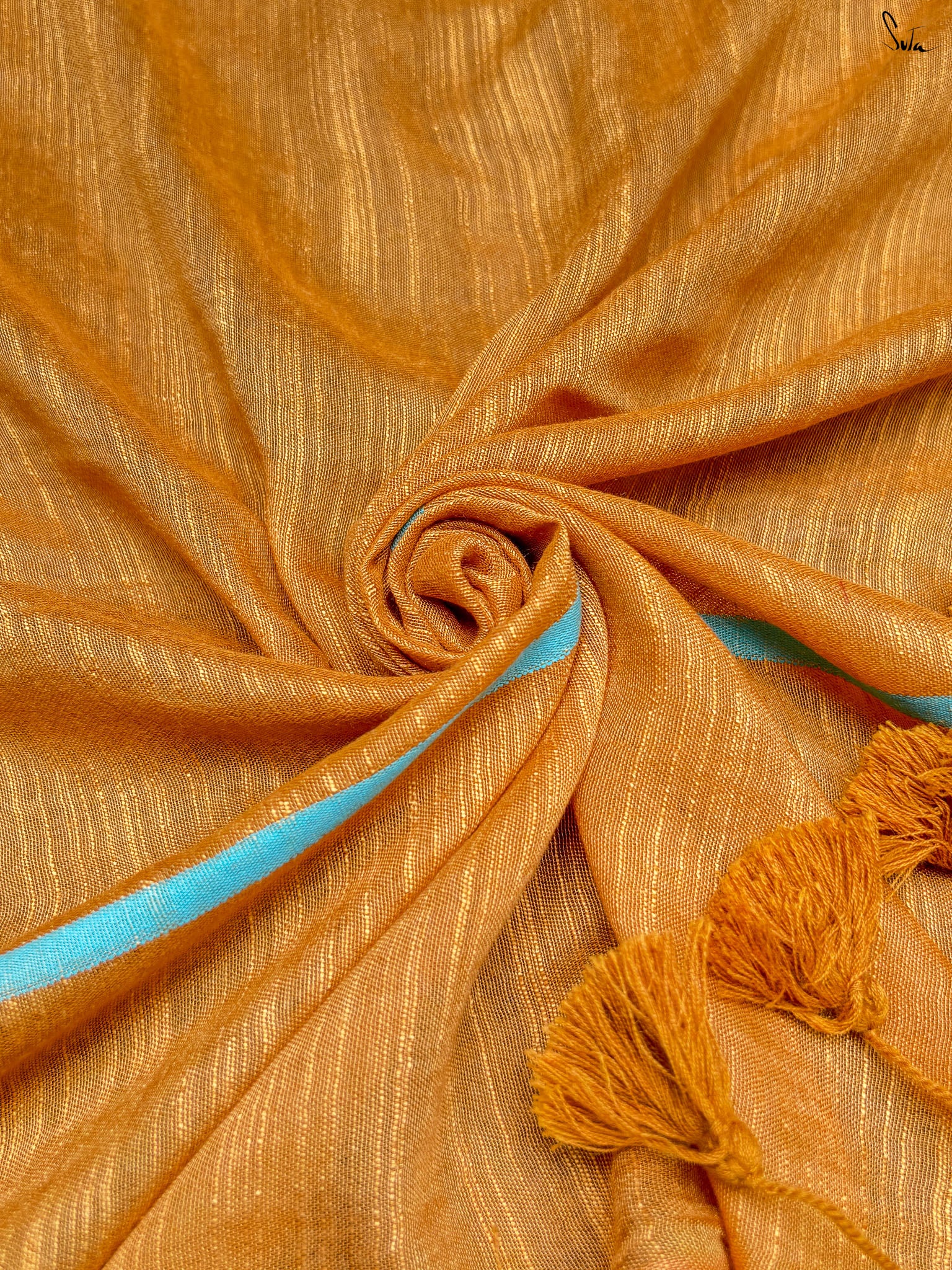
Details
Length: 6.50 m (650.00 cm) which includes a 1.00 m (100 cm) blouse piece
Width: 1.19 m (119.38 cm)
Blouse Piece: Yes
Wash Care: Dry Wash
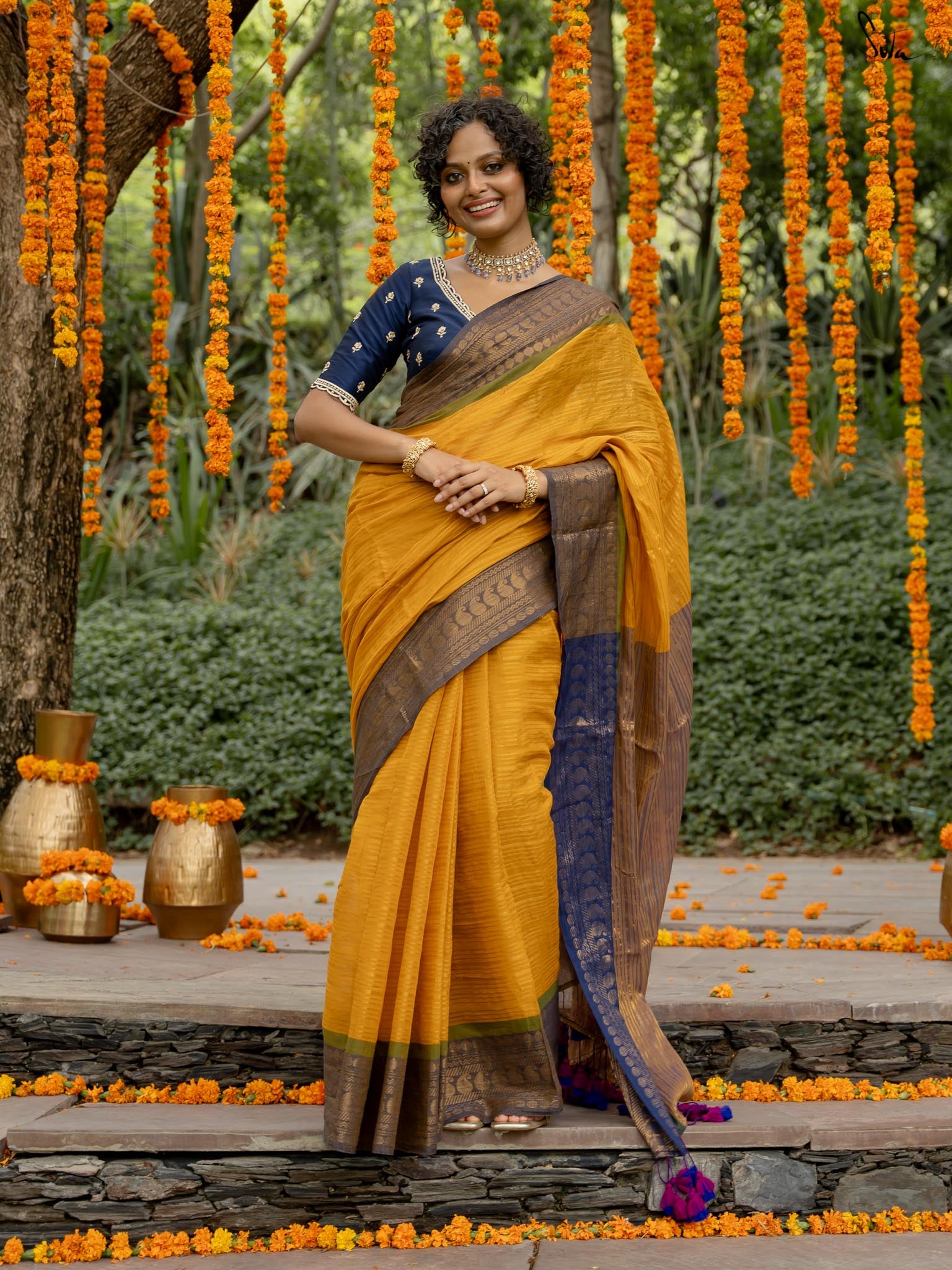
Note: The mannequin is wearing a blouse called Basic Peela
Disclaimer: The pictures are clicked in daylight. Colour may vary slightly from the image due to the screen brightness.
Note: The blouse-piece swatch is shown in the 5th image.
Note: Our mul sarees are slightly transparent, it’s the nature of the fabric and part of its soft, airy charm.
Please note that this saree comes with a fall and edging.
Note: The blouse-piece swatch is shown in the 5th image.
Description
While we speak of sustainable fashion and up-cycling in the present day and age, weavers have been carrying on the tradition of up-cycling for many decades. The beautiful fabric of khesh is an example of old-world charm remaining as ravishing as ever in any form. The process of khesh weaving is pretty simple. On the handloom, new yarn forms the warp and torn strips of old sarees form the weft. However, the stunning amalgamations that this simple process can produce are truly extraordinary. What started in the early 1920s at Shilpa Sadan that was set up by Rabindranath Tagore near Shantiniketan as a vocational training centre is now a design that symbolises the beauty in the simplicity of the Indian way of living. The traditional weavers in Birbhum pass on their craft to consequent generations and keep the spirit alive.
The old sarees that are torn into strips are got either from different collections centres or from the excess of sarees that the weavers have that haven't been sold. Once the old sarees are collected, shredding them into thin strips by hand is a process that is almost as difficult as the weaving. Cotton sarees are preferred because they are easier to tear when compared to synthetic ones. The weavers have developed short-cuts to make the tearing process easier. They first tear the sarees into 6 or 7 broad strips. Then, cuts of the desired breadth are made at the edge of each strip. Following this, they hold the alternate edges on one hand and the rest in the other hand and pull in opposite directions. Once torn, these strips are weaved as khesh fabric. The outcome of the final fabric can never be predicted beforehand. It is always like a beautiful kaleidoscope churning out different combinations of the colours it contains. This surprise element is the beauty of the fabric.