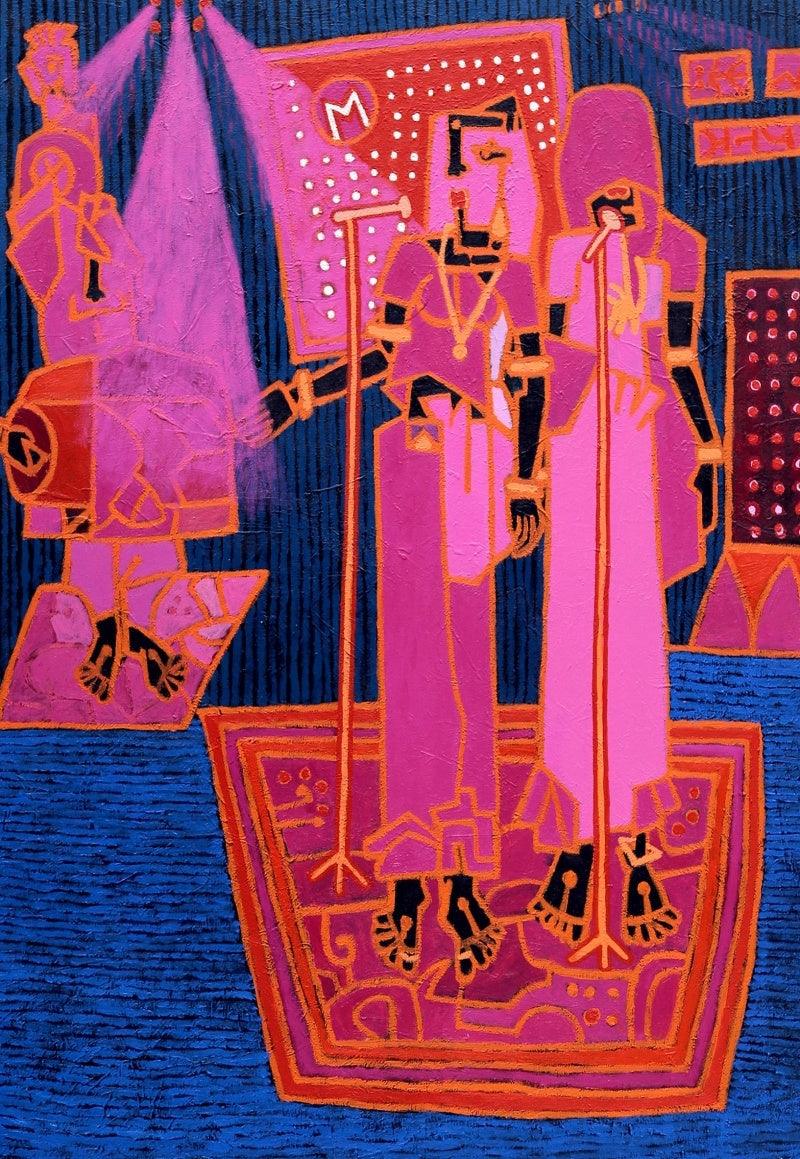
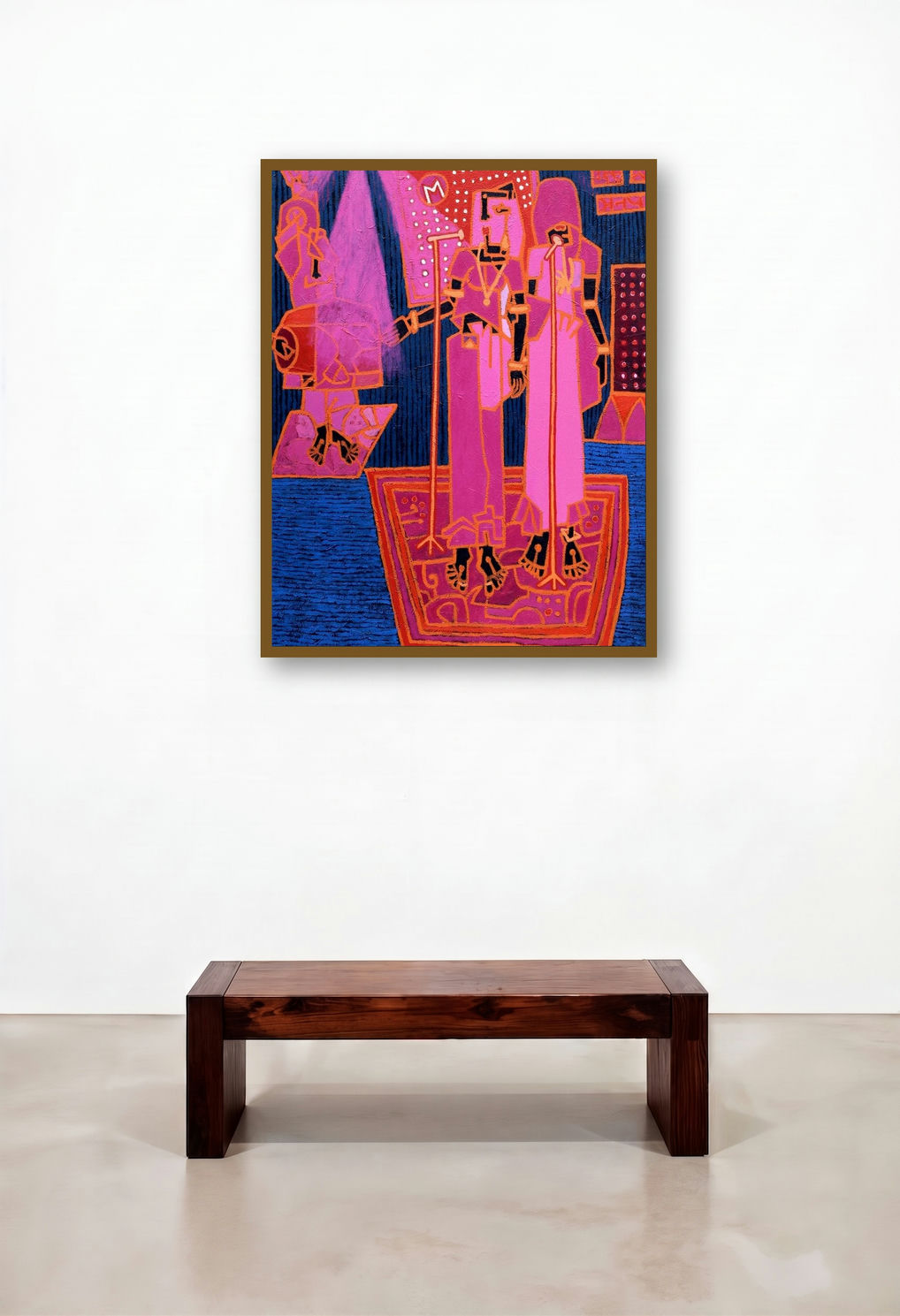
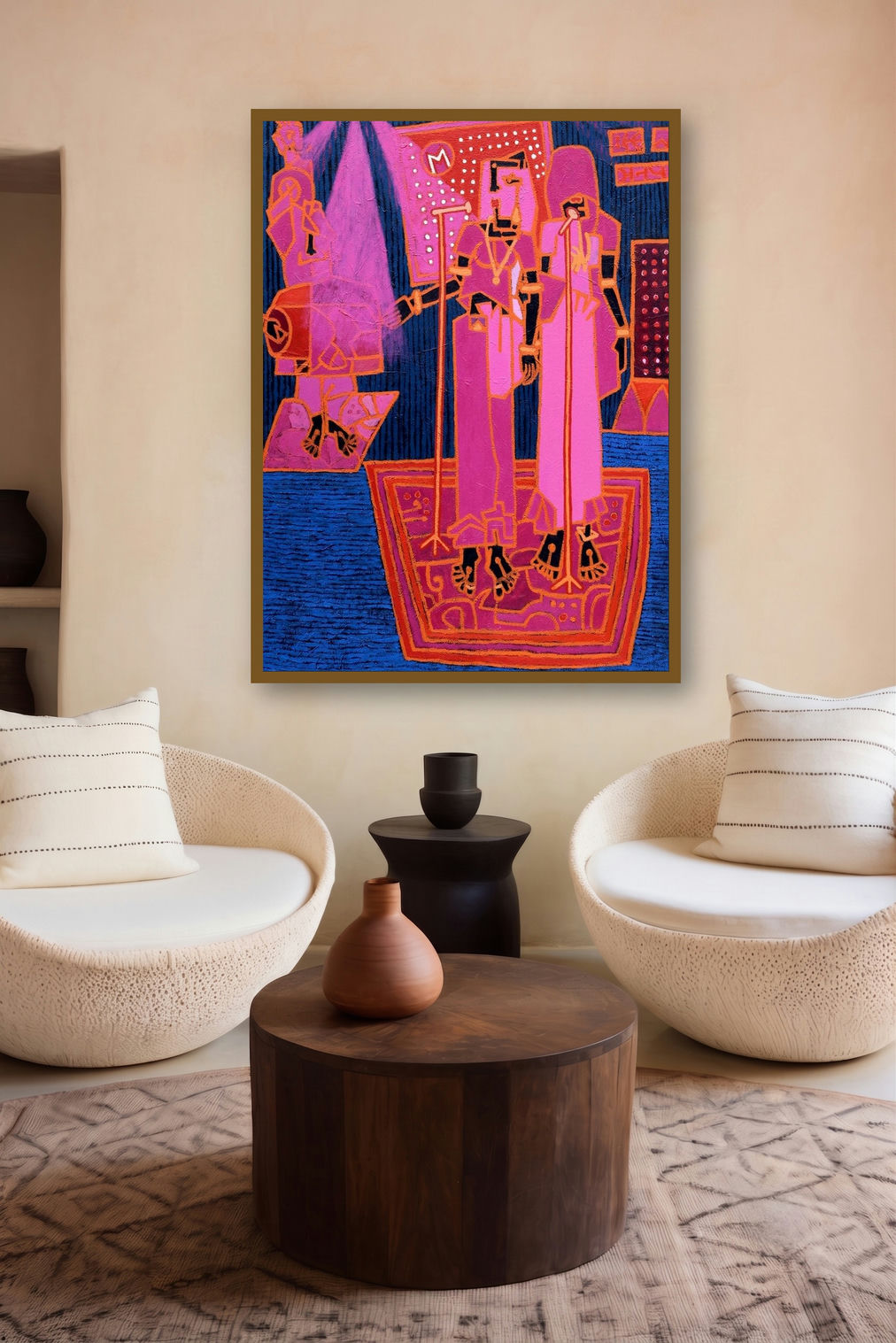
Folk Studio 7 (The M Show)
₹44,000
● In stock · ★ 5.0 (9)checking live price…
Size
42x30Type
OriginalMaterial
CanvasBathed in theatrical magenta light against a nocturnal blue ground, the figures stand like icons on a patterned dais, their angular silhouettes reducing song and ceremony to a purified, almost hieroglyphic language. The dotted panels and blocky signage suggest an electrified stage or street-side shrine, where devotion is mediated by spectacle and the crowd becomes an unseen witness. Warm orange contours act as a pulse line, binding bodies, instruments, and architecture into one rhythmic circuit, so that performance reads as both communal ritual and private assertion of presence. The overall tension—between flatness and glow, stillness and sound—turns the scene into a meditation on how modern celebration manufactures transcendence.
Delivery
You may also like
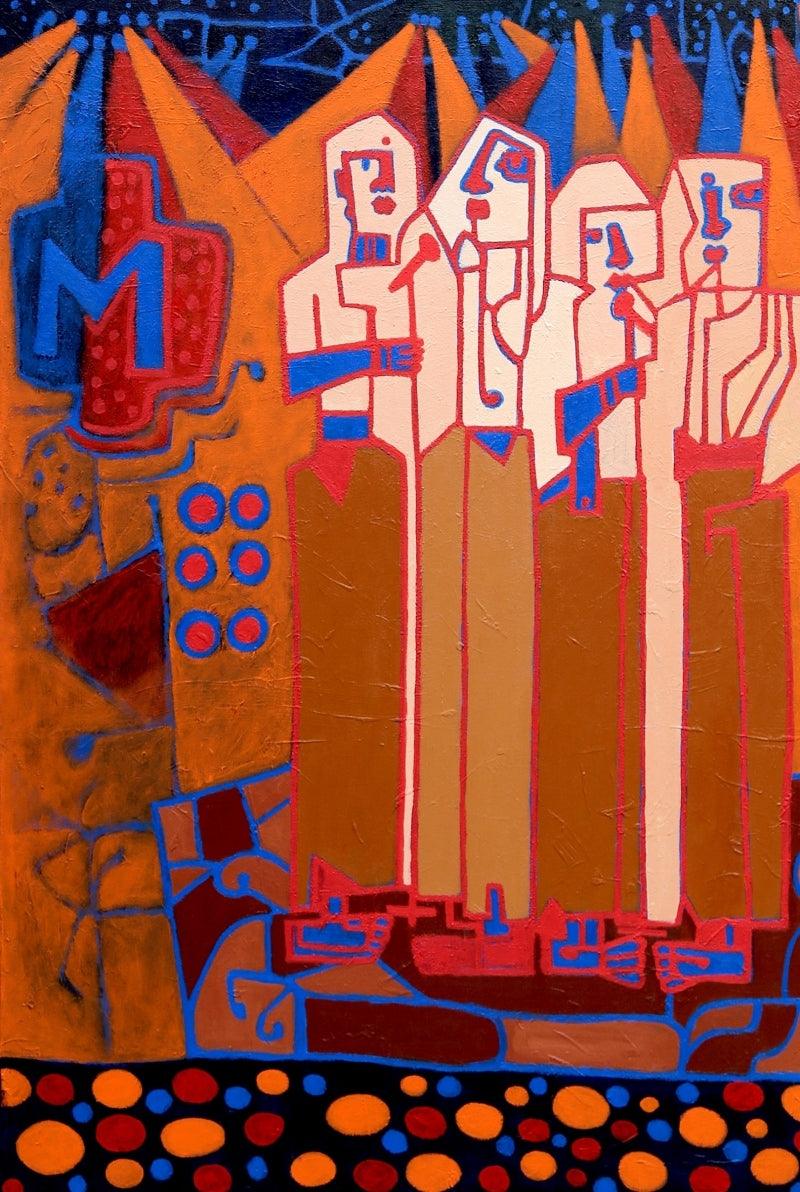
Folk Studio 6 (The M Show)
Artzolo
₹44,000
★ 5.0 (10)
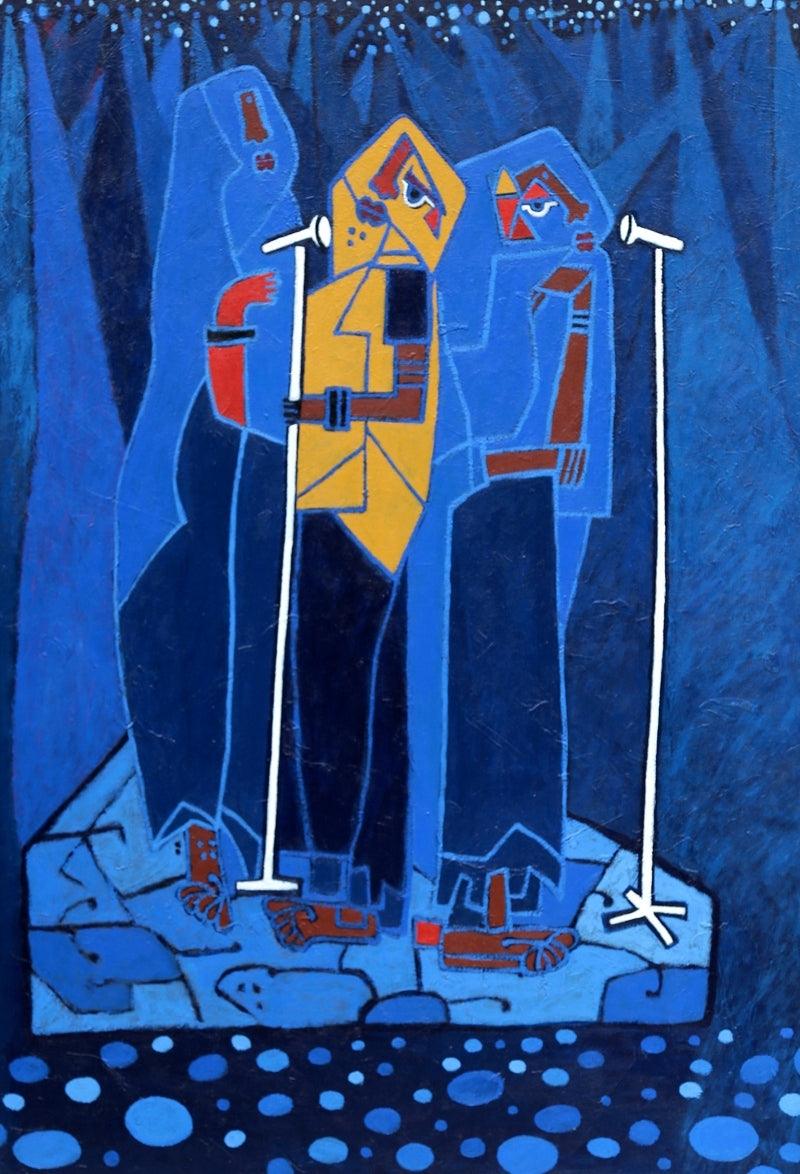
Folk Studio 8 (The M Show)
Artzolo
₹44,000
★ 5.0 (9)
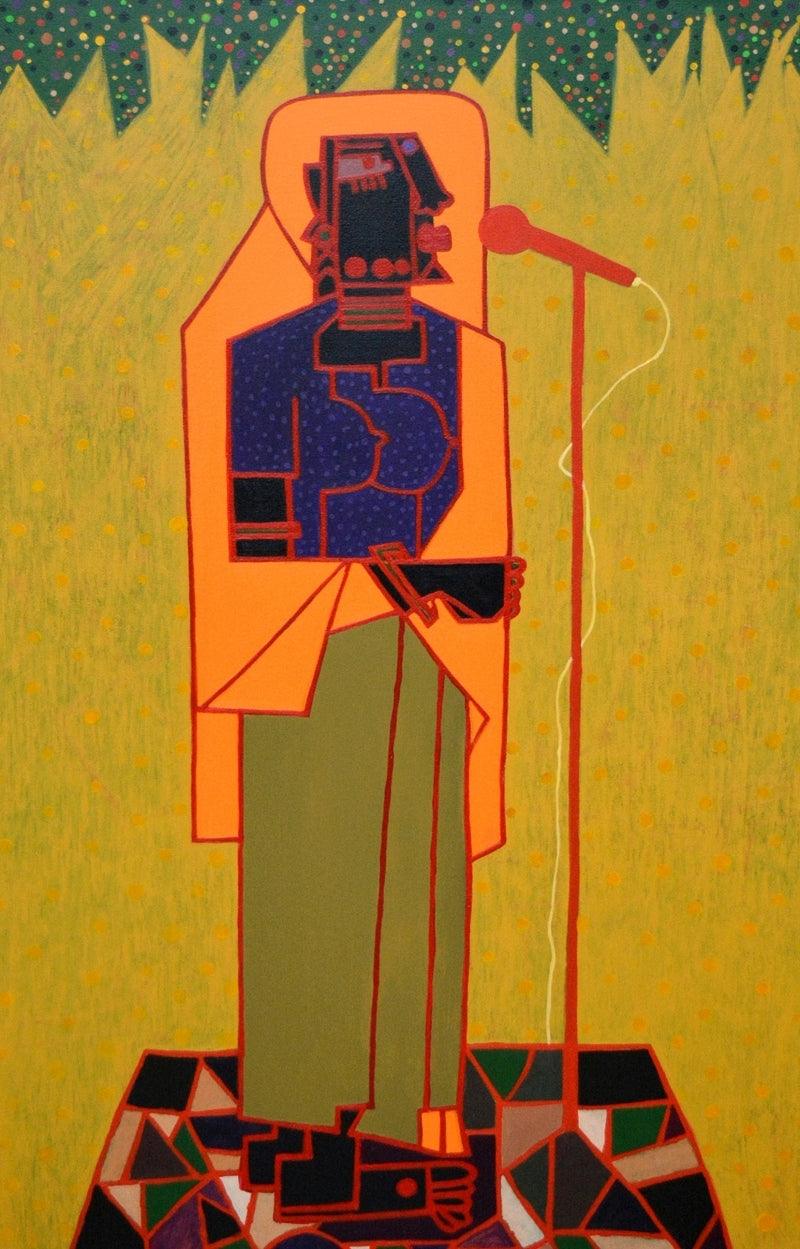
Folk Studio 13 (The M Show)
Artzolo
₹75,000
★ 5.0 (14)
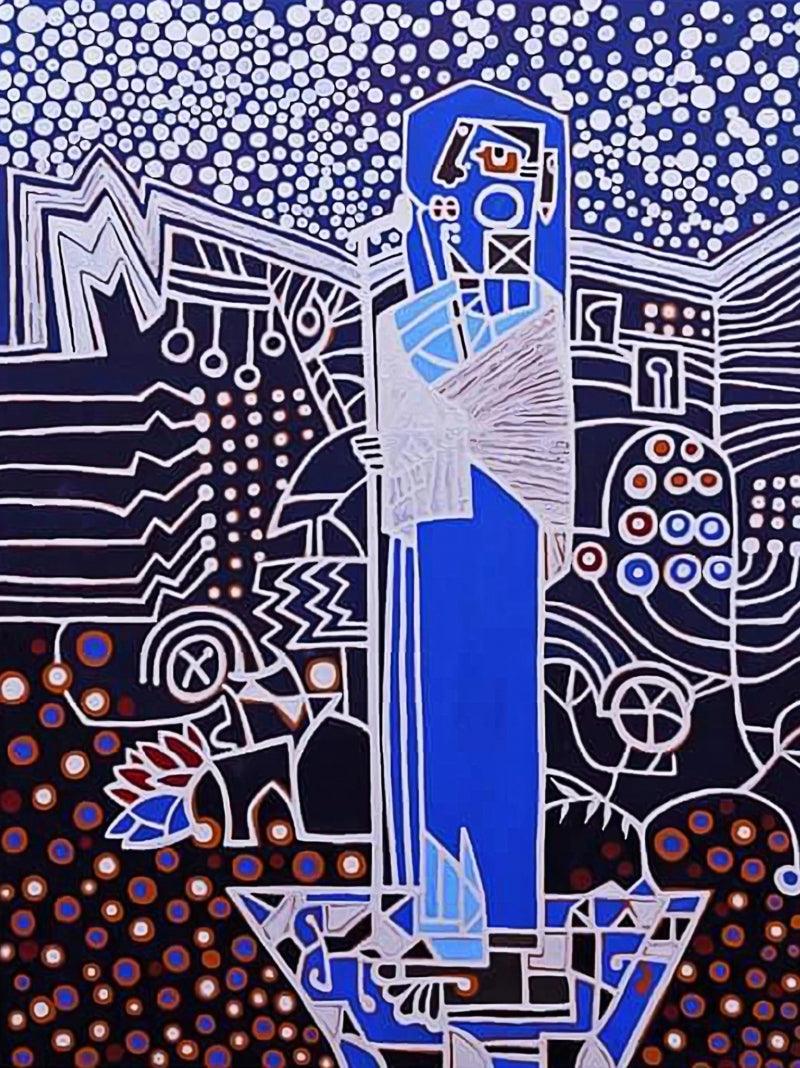
Folk Studio 12 (The M Show)
Artzolo
₹60,000
★ 4.0 (7)
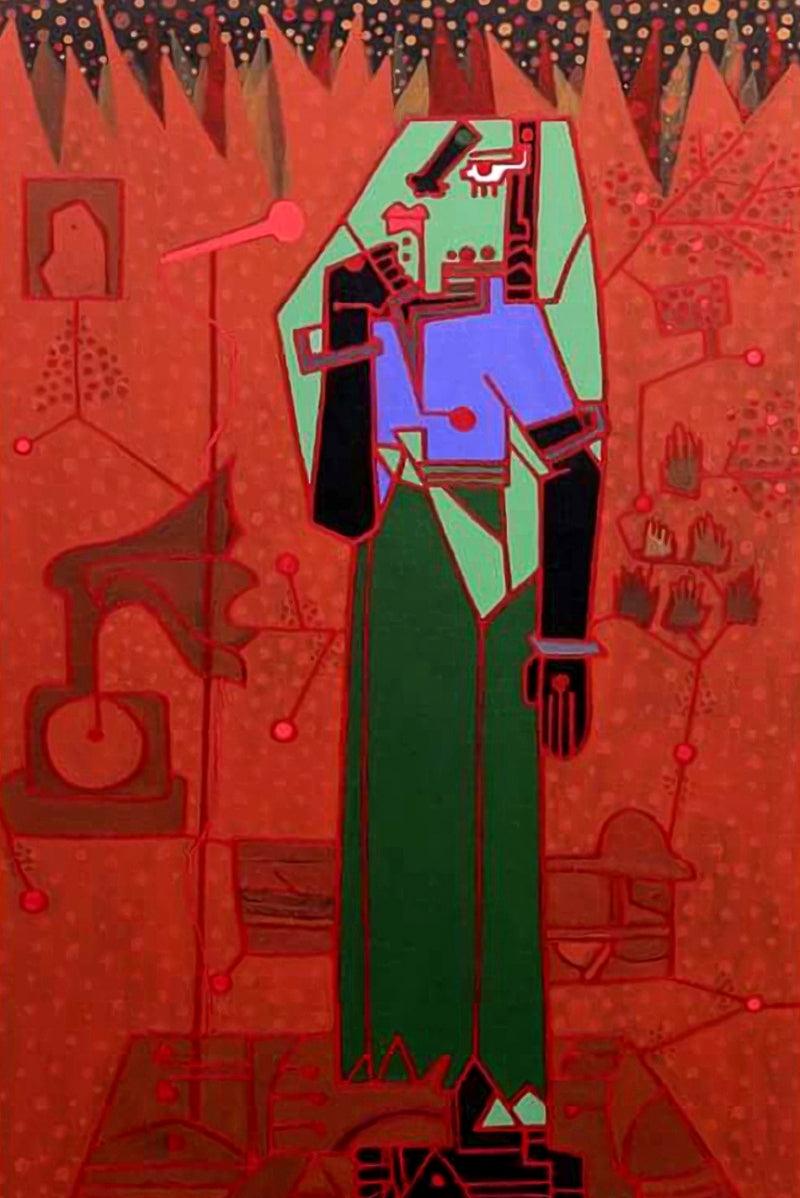
Folk Studio 14 (The M Show)
Artzolo
₹75,000
★ 5.0 (9)
Bhagoriy Series 20 (Crimson Tapestry)
Artzolo
₹360,000
★ 5.0 (9)
Folk Dance 5
Artzolo
₹95,000
out of stock
★ 5.0 (11)
Tribal Women 4
Artzolo
₹20,000
out of stock
★ 4.0 (11)