Nature 1
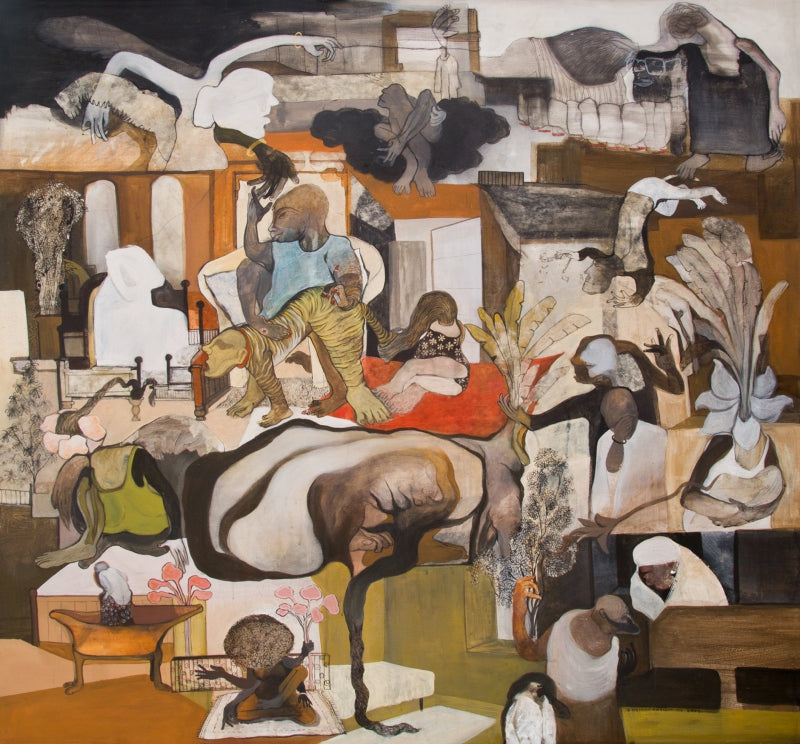
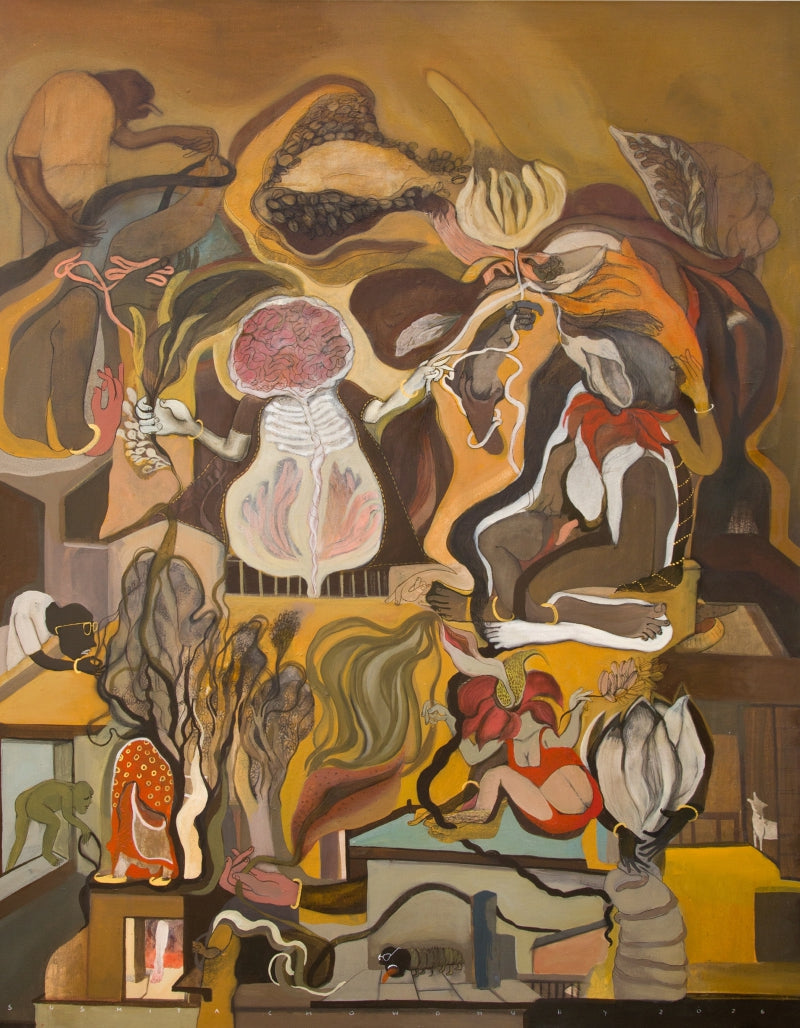
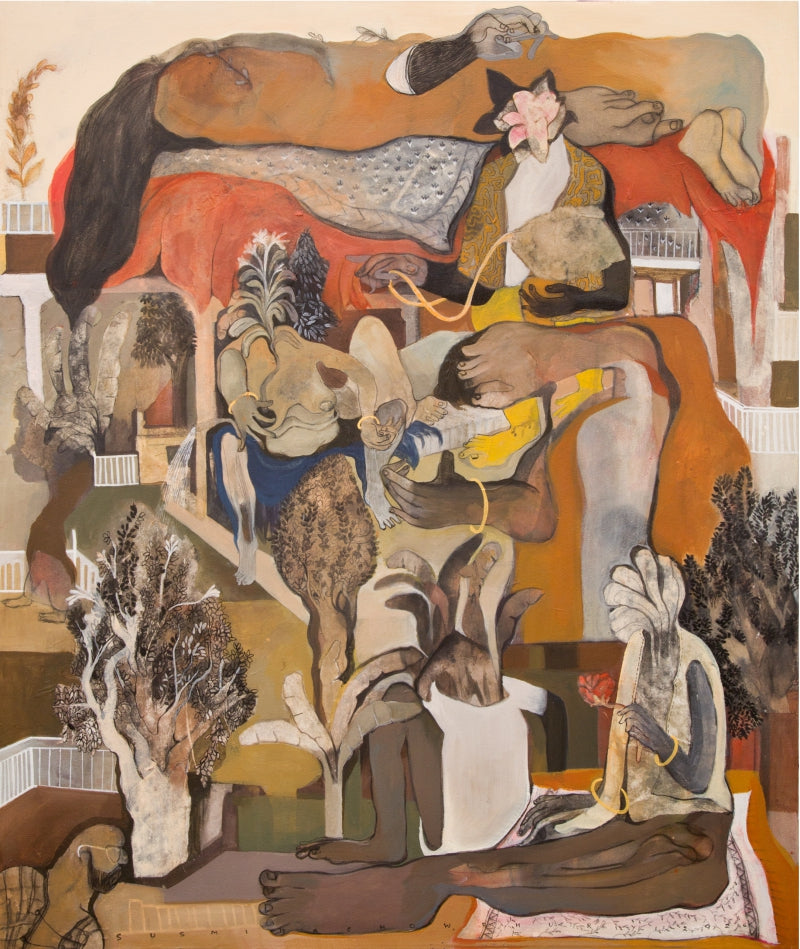
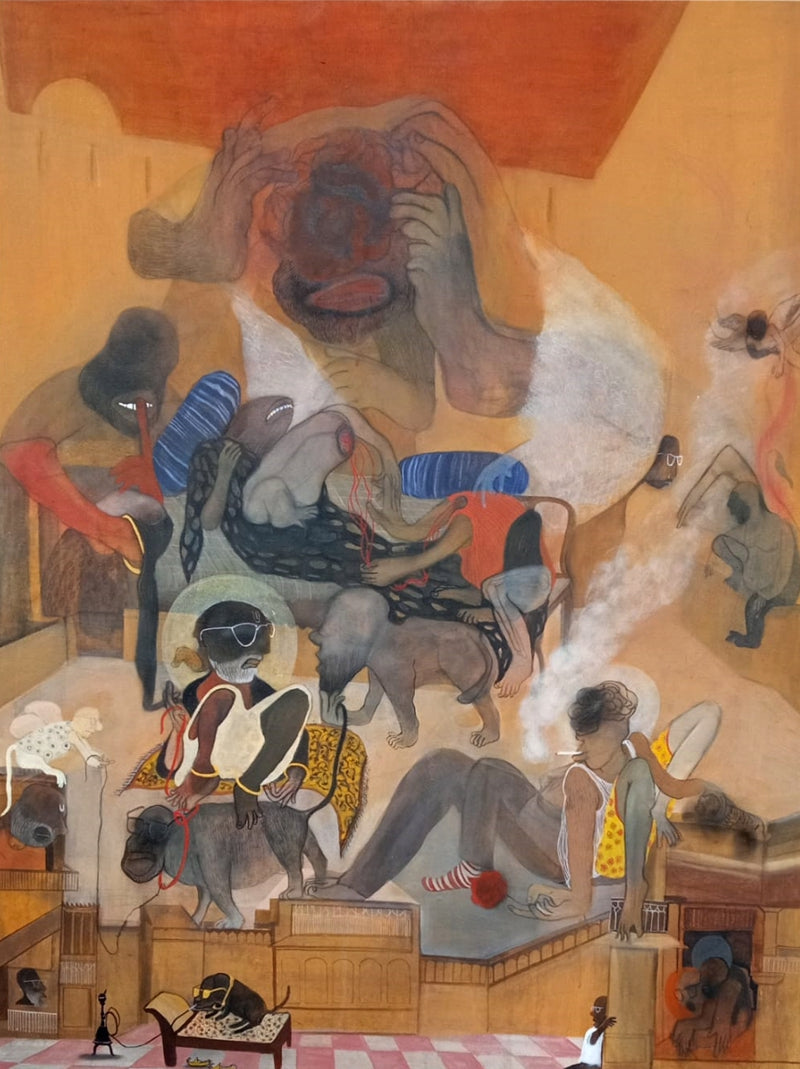
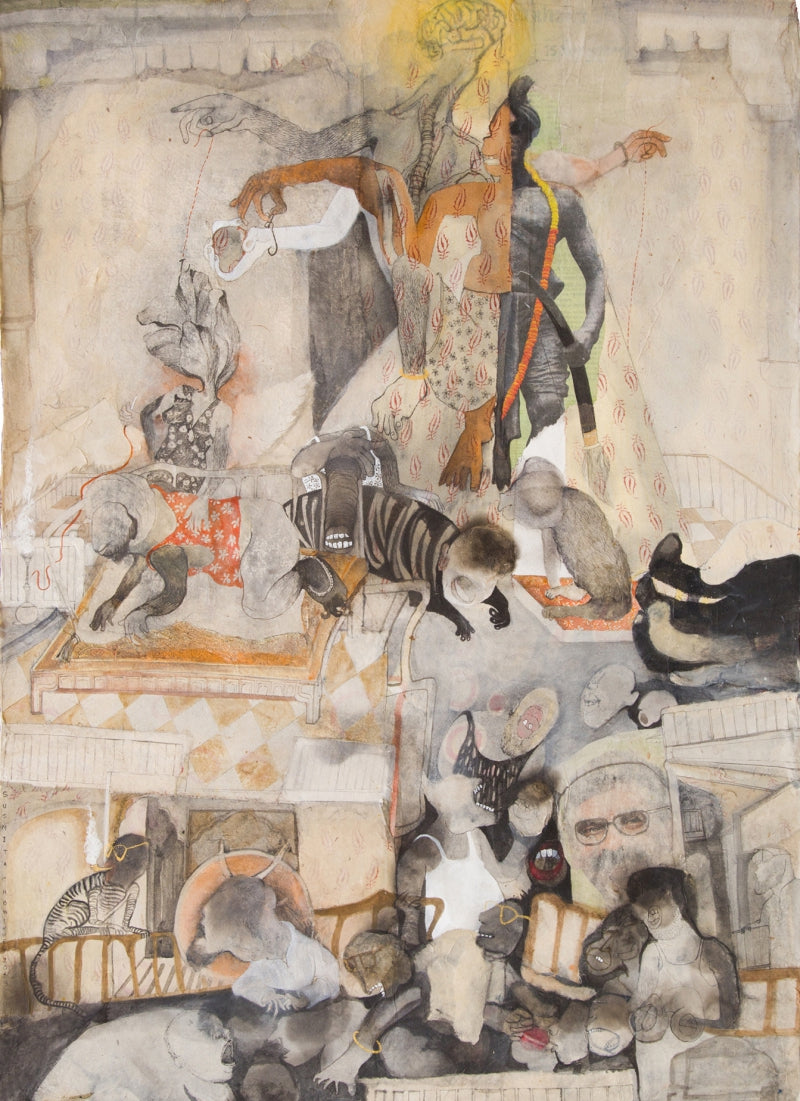
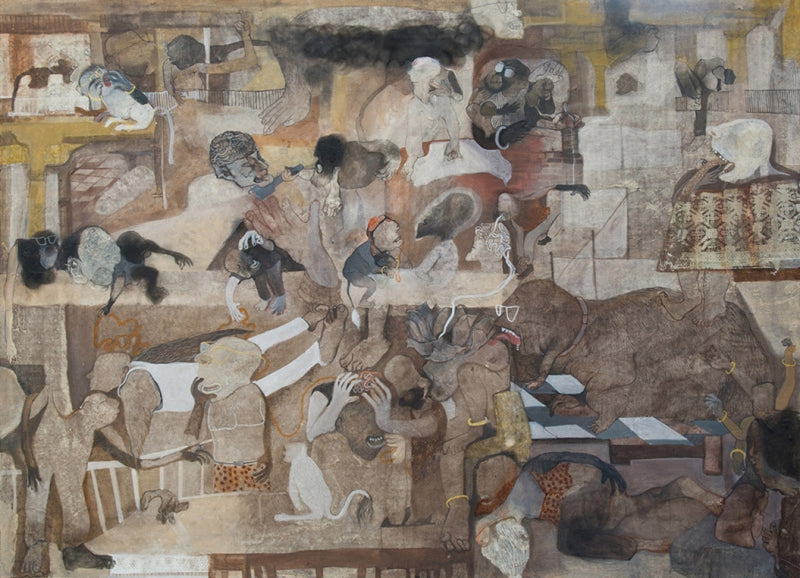
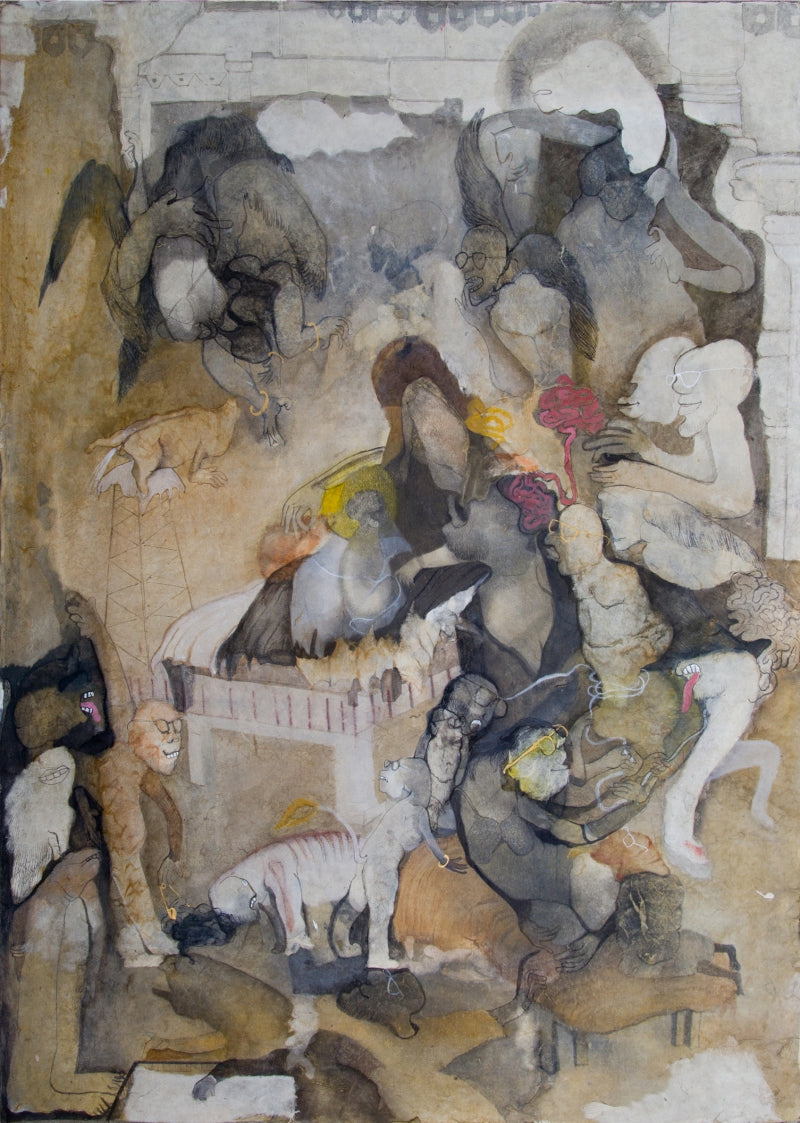
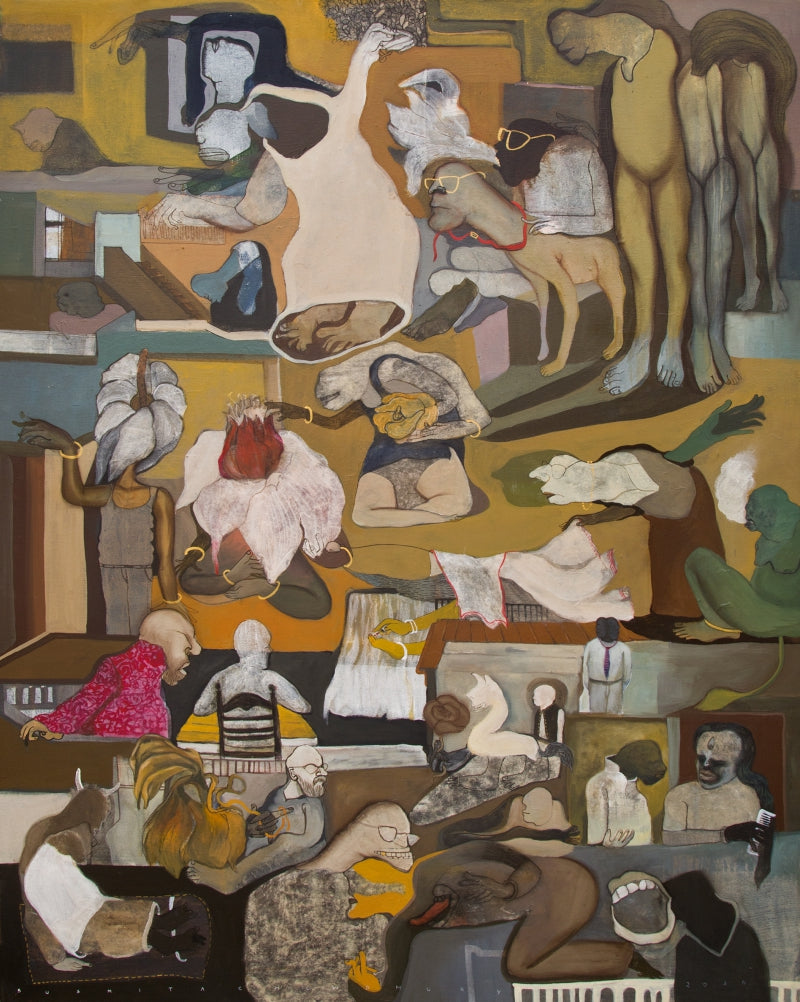
This dense, stage-like tableau stacks fragmented bodies and domestic vignettes into a claustrophobic architecture of memory, where mustard ochres and smoky greys press figures into uneasy proximity. The flattened space and abrupt shifts of scale turn intimacy into dislocation—gestures repeat like echoes, and faces, often masked by profile or shadow, feel more archetypal than individual. Small punctuations of color and odd details (glasses, animals, exposed limbs) read as symbols of observation and vulnerability, suggesting a society of watchers and the watched, caught between tenderness and estrangement. The painting’s narrative refuses a single center, inviting the eye to wander through a moral labyrinth where desire, fatigue, and survival coexist without resolution.