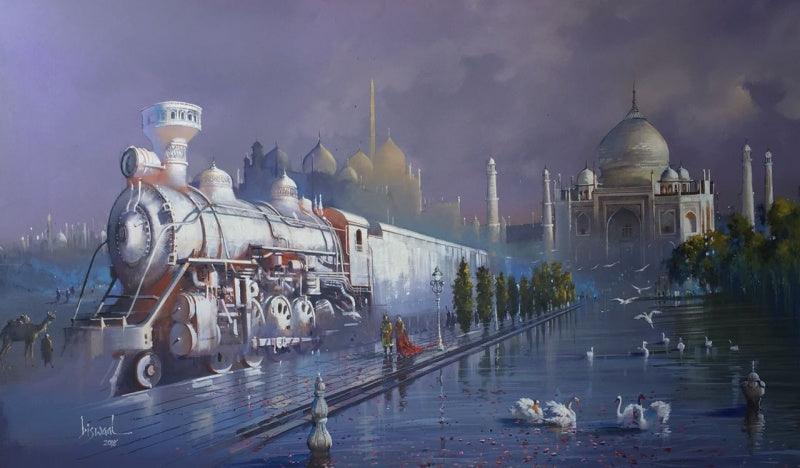
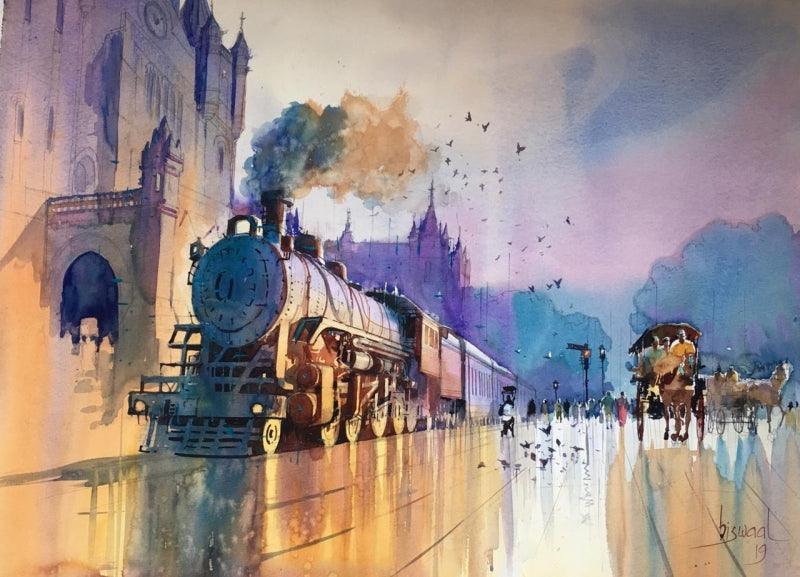
Train To Taj (Train to Taj)
₹400,000
Out of stock · ★ 4.0 (9)checking live price…
Size
36x72Type
OriginalMaterial
CanvasA gleaming locomotive glides along the reflecting causeway like a steel apparition, its industrial bulk softened by mist and the cool, rain-washed palette that dissolves edges into atmosphere. Opposite, the Taj Mahal rises in quiet permanence—its domes and minarets rendered as a luminous counterweight—so that motion and monument, urgency and eternity, are held in a single breath of twilight. The long linear perspective draws the eye forward, while the water’s mirror and drifting birds widen the scene into a meditation on passage: how modern velocity skirts the sanctity of memory without fully disturbing it. In this tension, the painting becomes less a fantasy than a poetic reconciliation of time’s competing rhythms.
Delivery
You may also like
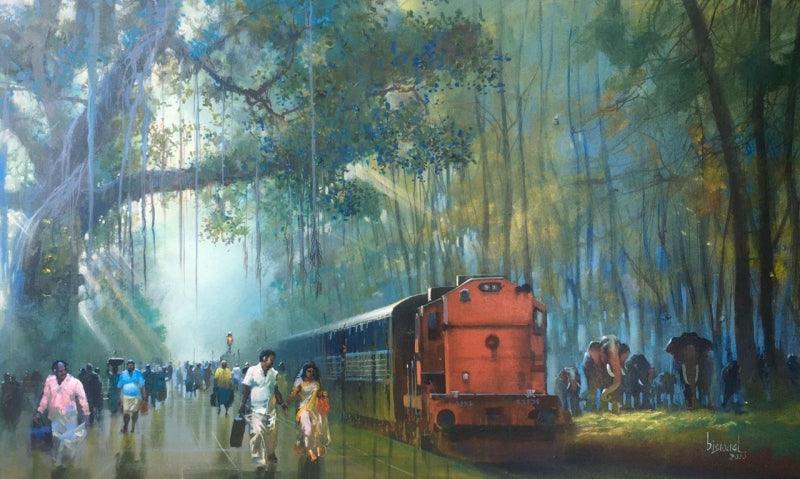
Train Passing Through Nature 2
Artzolo
₹90,000
out of stock
★ 5.0 (7)
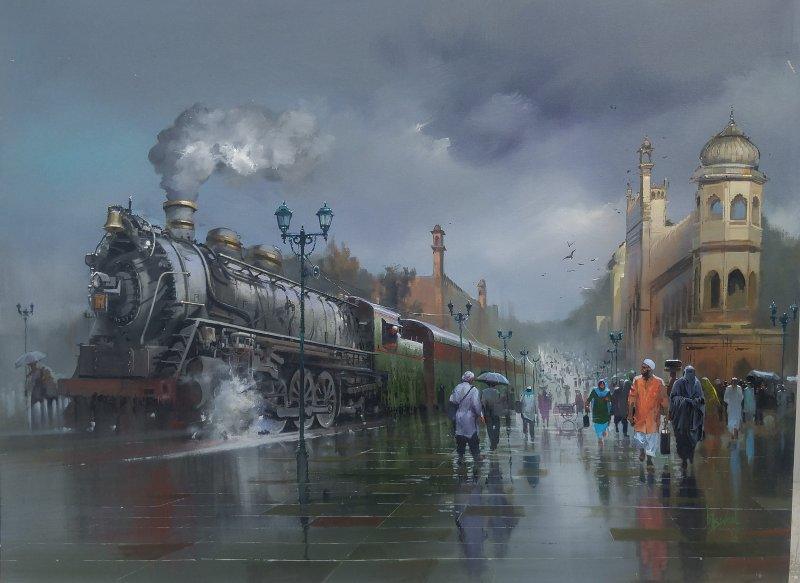
Wet Platform Lucknow
Artzolo
₹200,000
out of stock
★ 5.0 (8)
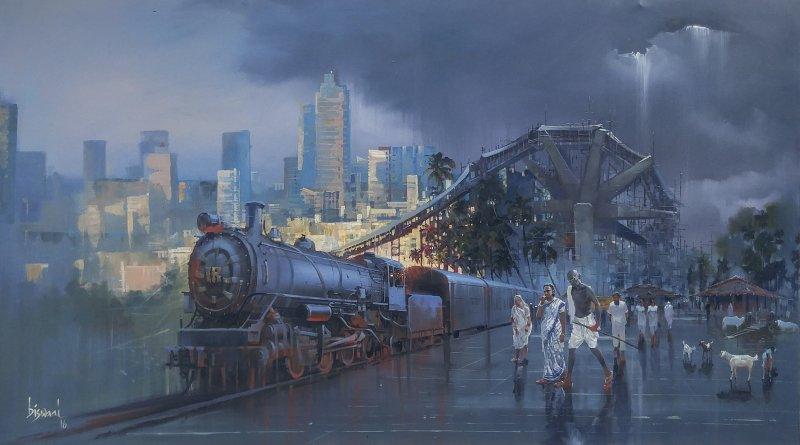
Wet Platform Gandhi
Artzolo
₹400,000
out of stock
★ 4.0 (15)
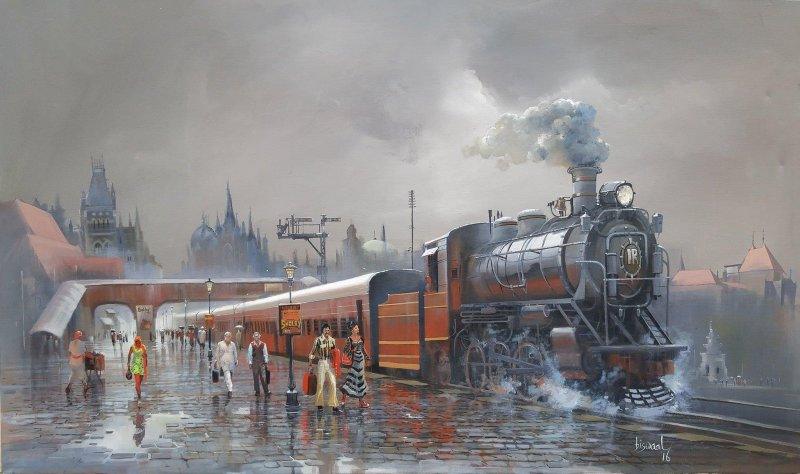
Wet Platform Retro 1970
Artzolo
₹200,000
out of stock
★ 5.0 (15)
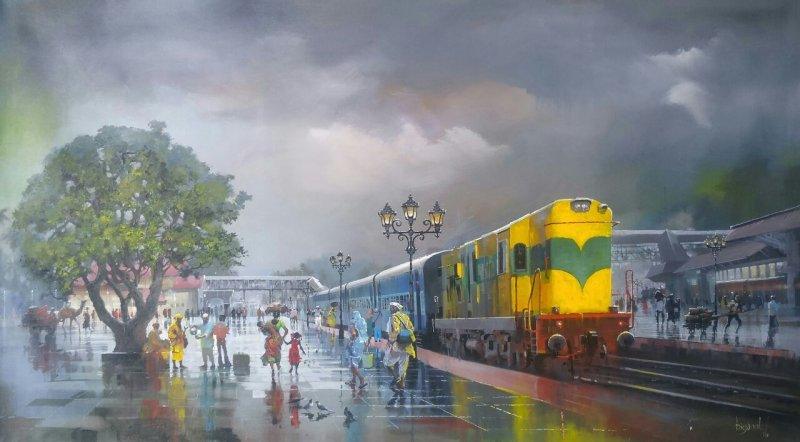
Wet Platform Yellow Train
Artzolo
₹700,000
out of stock
★ 4.0 (6)
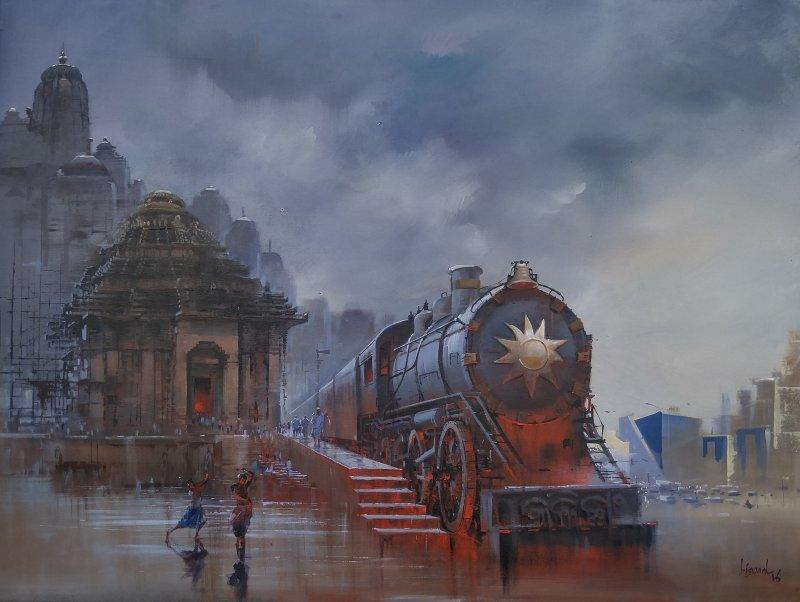
Wet Platform Odhisa
Artzolo
₹200,000
out of stock
★ 4.0 (9)
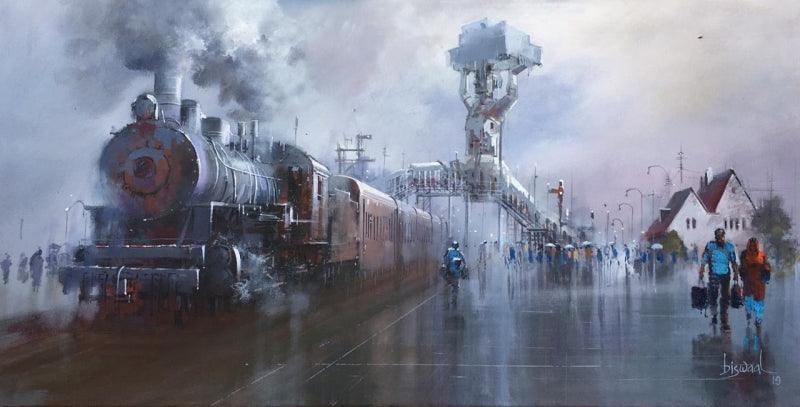
Platform 3
Artzolo
₹125,000
out of stock
★ 4.0 (6)
Mumbai Retro
Artzolo
₹36,000
out of stock
★ 4.0 (5)