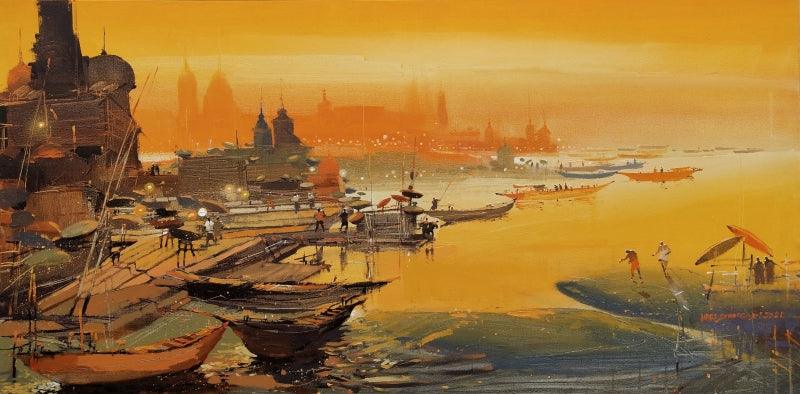
Untitled 22 (Twilight on the Ganges)
₹160,000
● In stock · ★ 4.0 (8)checking live price…
Size
24x48Type
OriginalMaterial
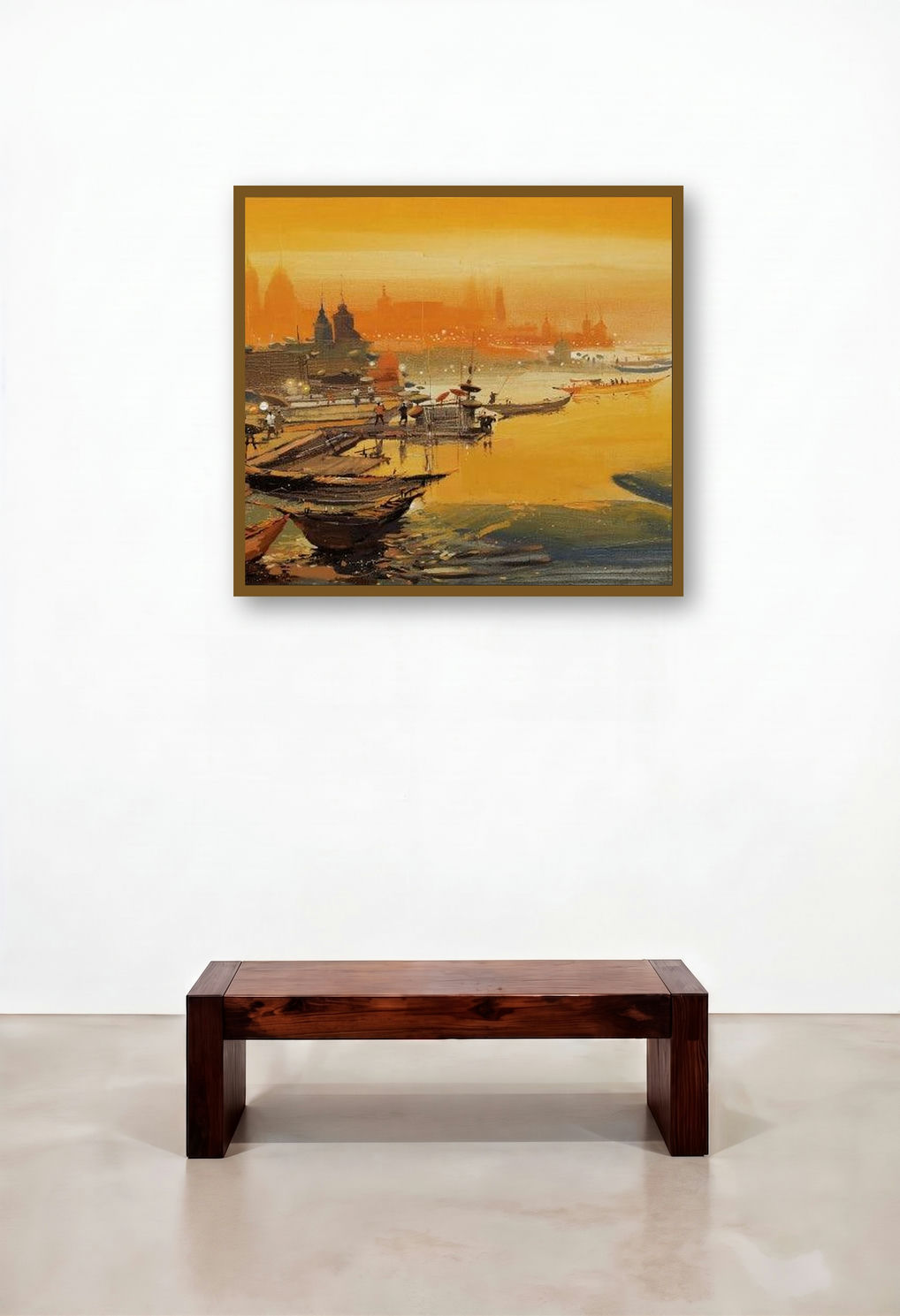
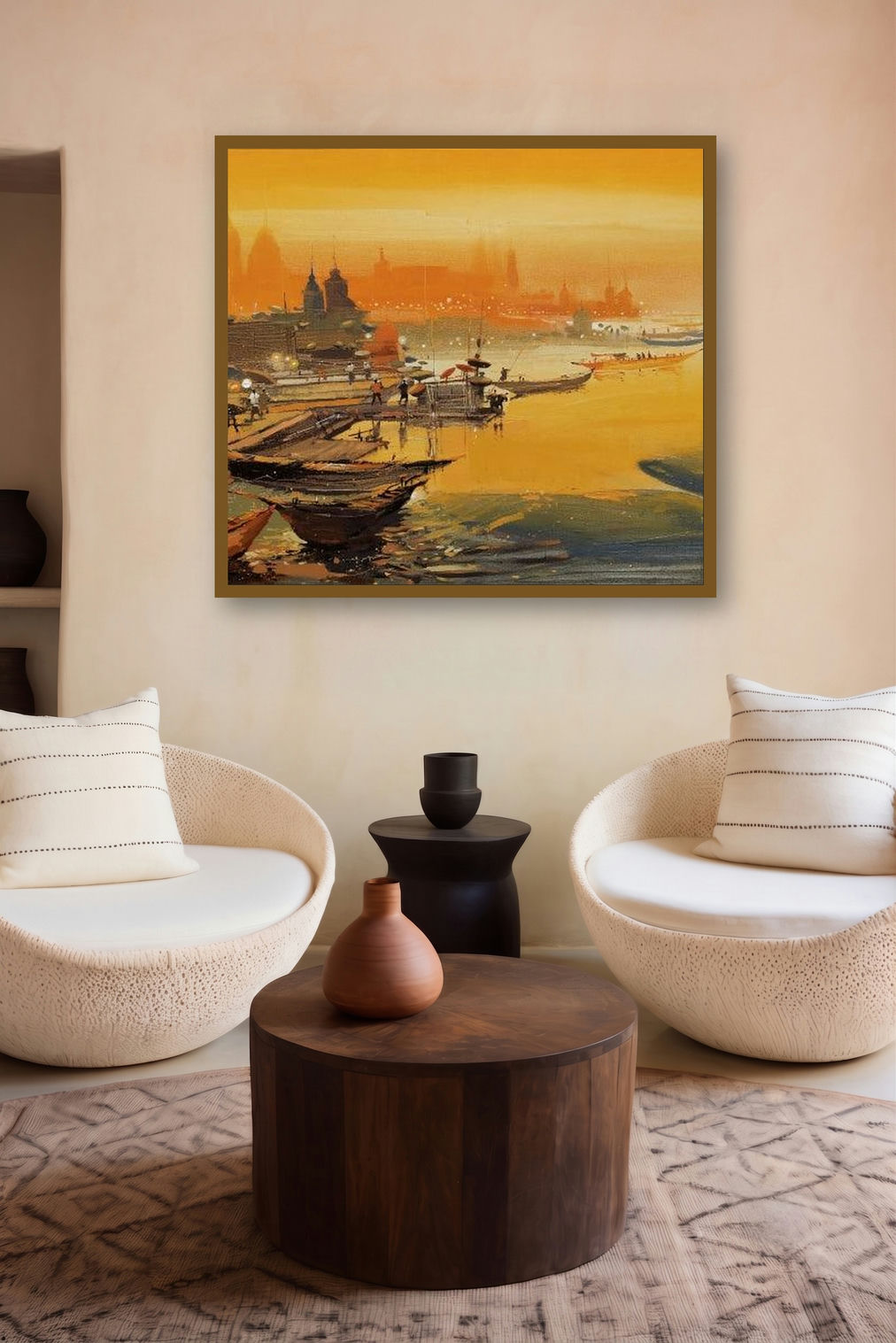
CanvasBathed in a molten saffron haze, the riverfront unfolds as a threshold between the tangible weight of boats and ghats and the dissolving mirage of a distant city, where architecture becomes memory rather than fact. The composition pulls the eye along diagonals of moorings and gangplanks into a luminous void, letting negative space carry the quiet authority of atmosphere and time. Figures appear as fleeting marks—pilgrims, workers, wanderers—suggesting lives in transit, while the shimmer of reflected light turns the water into a living ledger of devotion and daily labor. In this suspended dusk, the scene reads less as a topography than as an elegy for impermanence, where industry, ritual, and longing share the same gold-tinged breath.
Delivery
You may also like
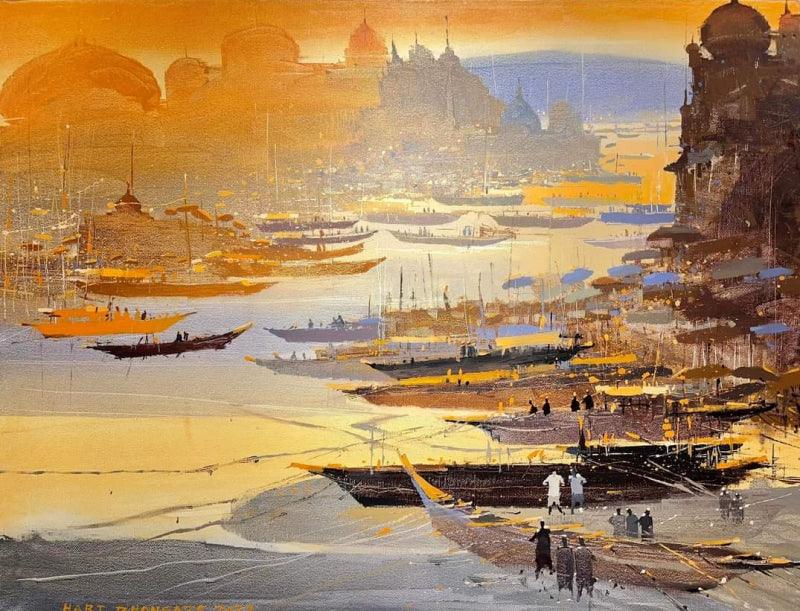
Untitled (Varanasi Ghats)
Artzolo
₹100,000
★ 5.0 (5)
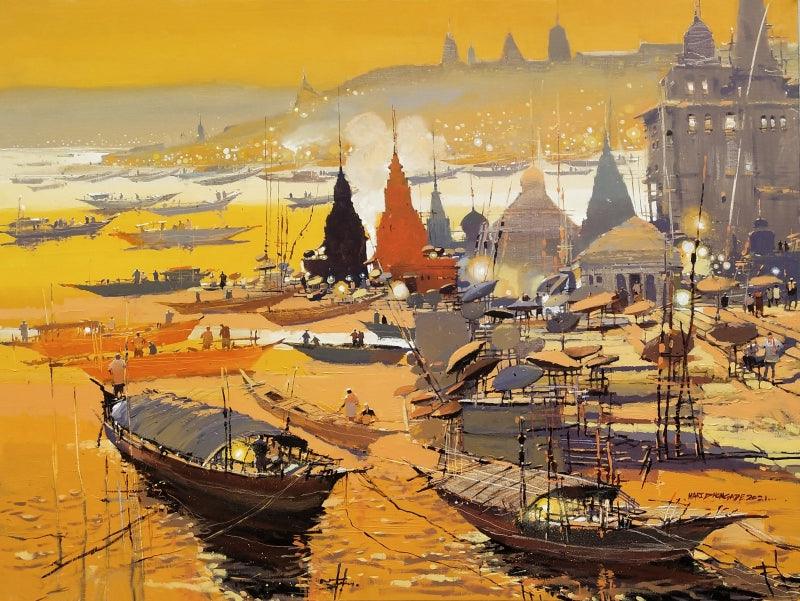
Untitled 21 (Dawn on the Ganges)
Artzolo
₹240,000
out of stock
★ 4.0 (6)
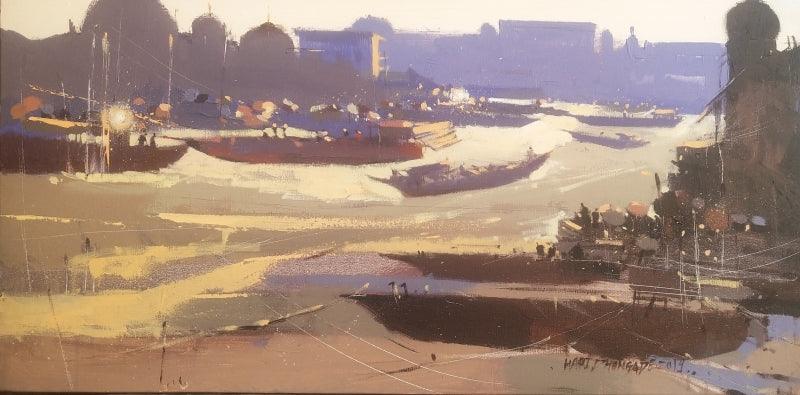
Untitled 1 (Dawn on the Ganges)
Artzolo
₹90,000
★ 4.0 (14)
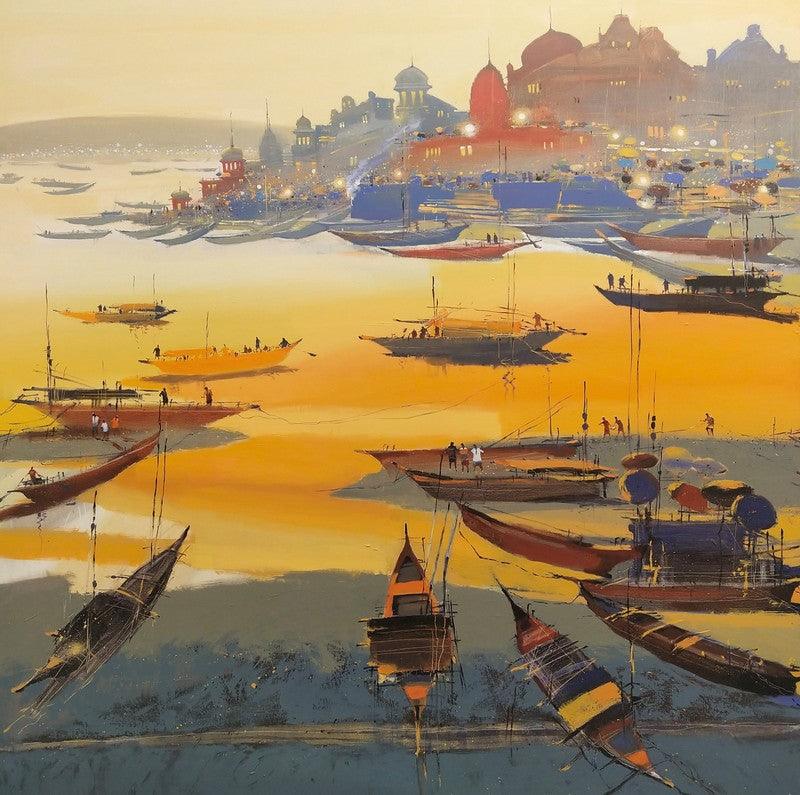
Untitled 3 (Ganga's Golden Hour)
Artzolo
₹720,000
★ 5.0 (7)
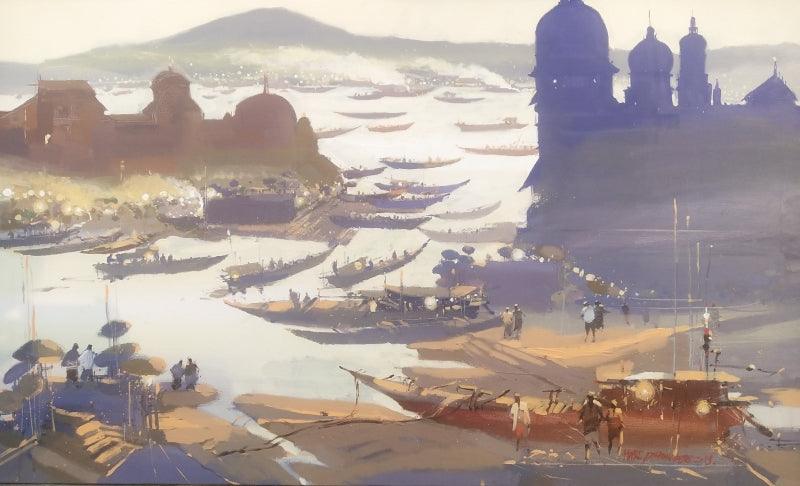
Untitled 6 (Varanasi Riverfront)
Artzolo
₹360,000
★ 5.0 (5)
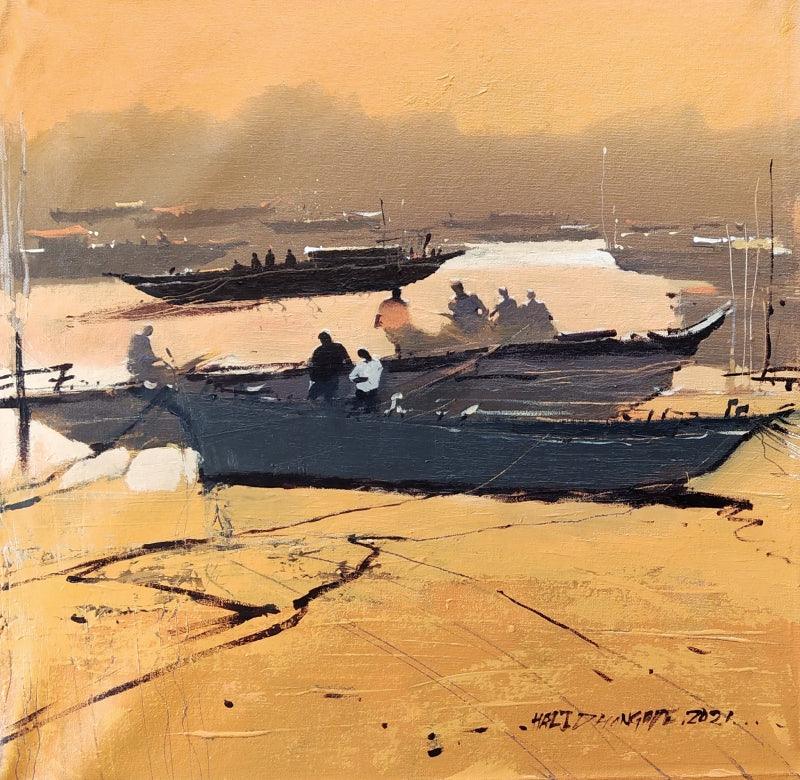
Untitled 14 (Riverbank Reflections)
Artzolo
₹52,000
★ 5.0 (12)
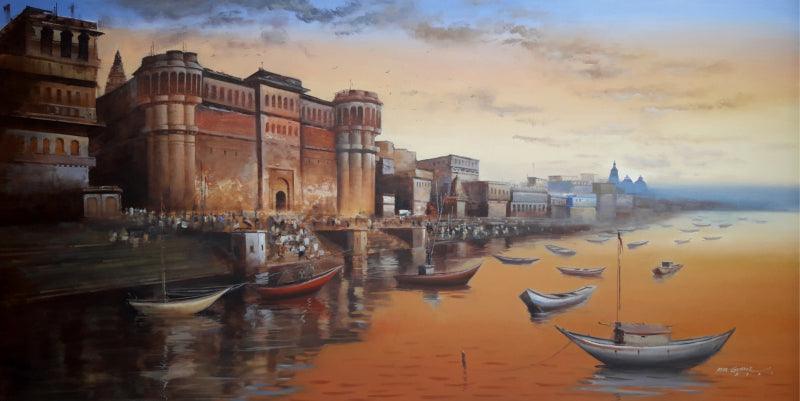
Varanasi 6 (Varanasi Ghat at Sunset) (Sunrise over Varanasi Ghat)
Artzolo
₹165,000
out of stock
★ 4.0 (7)
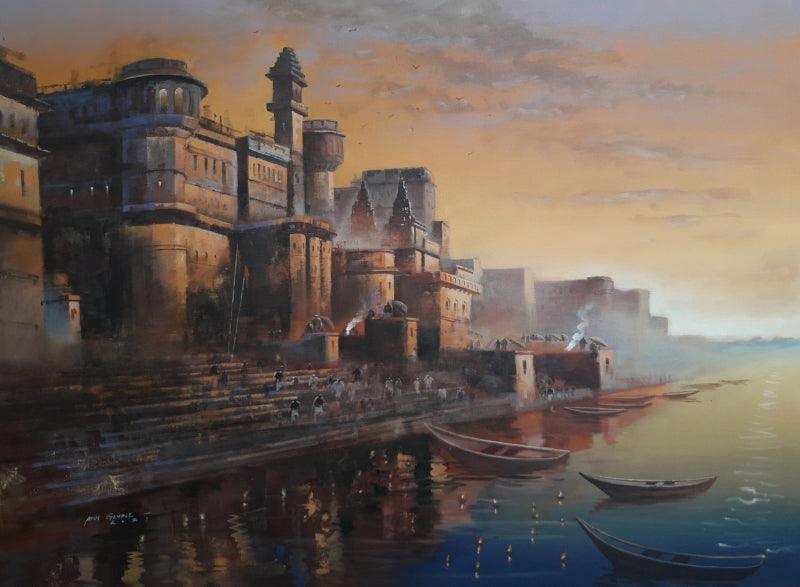
Varanasi 2 (Varanasi Ghat Evening) (Ganges Sunset Rituals)
Artzolo
₹110,000
★ 5.0 (13)