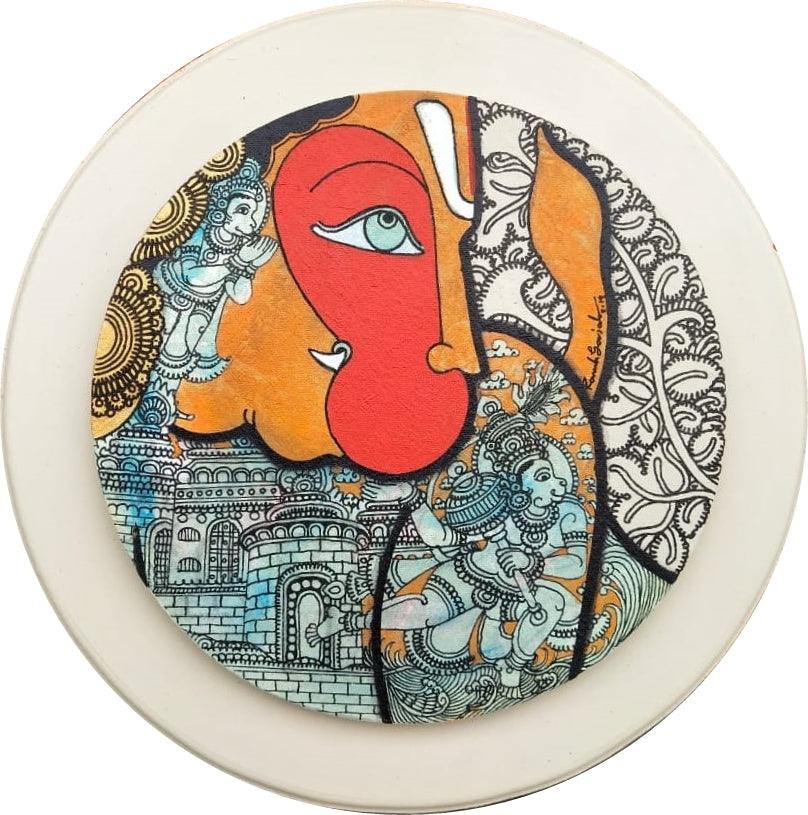
Hanuman 4 (Hanuman, the Divine Monkey)
₹120,000
Out of stock · ★ 4.0 (8)checking live price…
Size
16x16Type
OriginalMaterial
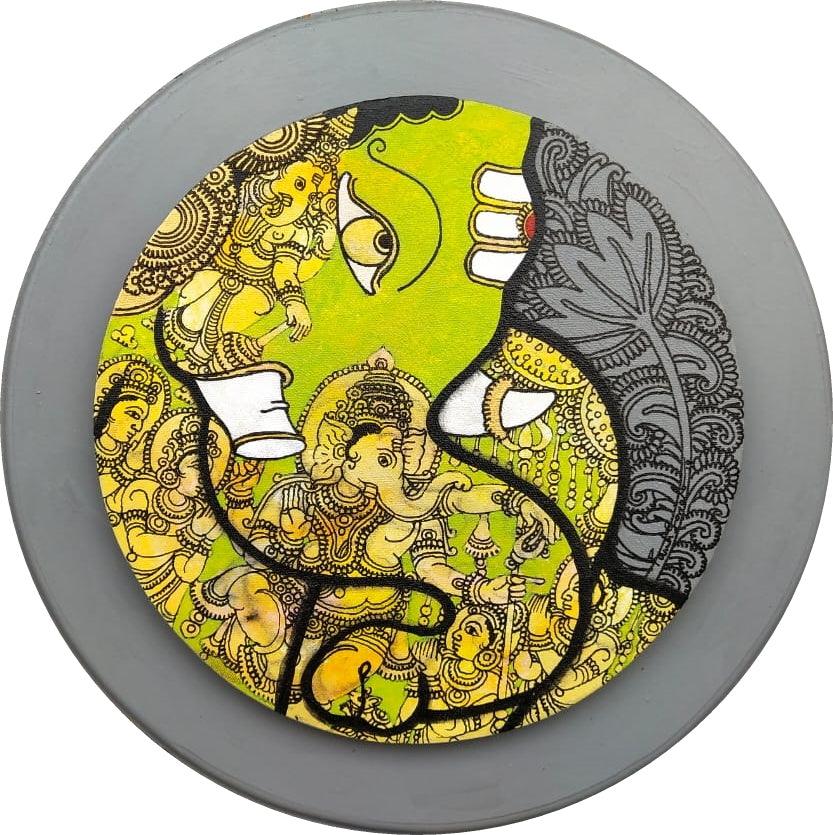
CanvasSet within the quiet authority of a circular field, the visage of Ganesha is split between a saturated red mask and a luminous saffron ground, as if consciousness itself were being revealed in layers. Intricate black linework—temple architecture, devotional figures, and botanical scrolls—presses in like memory and myth, balancing the weight of tradition against the immediacy of a single, watchful eye. The composition turns the divine into a cartography: a sanctuary where the personal and the cosmic interlock, suggesting that protection and passage are not opposites but intertwined thresholds. In this compressed universe, ornament becomes narrative, and stillness carries the pulse of ritual.
Delivery
You may also like
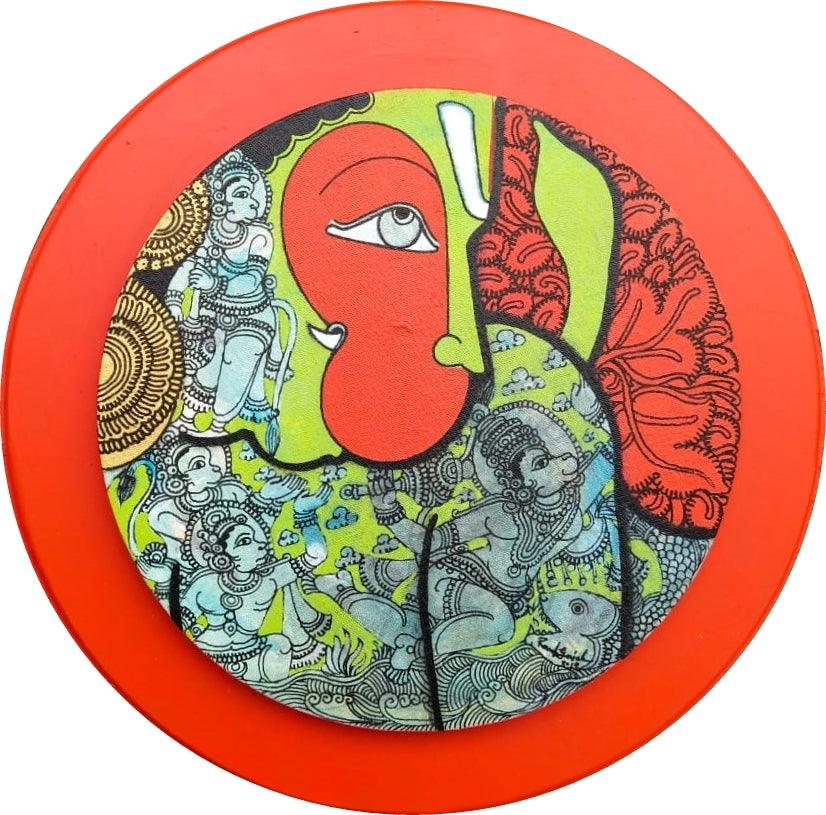
Hanuman 5 (Ganesha)
Artzolo
₹120,000
out of stock
★ 5.0 (15)
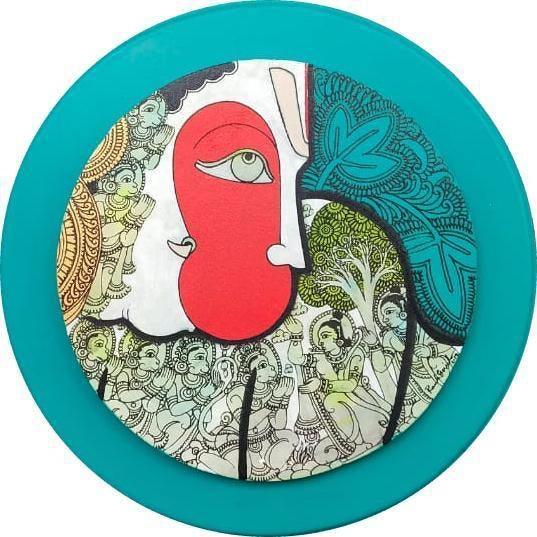
Hanuman 3 (Ganesha, the Remover of Obstacles)
Artzolo
₹70,000
out of stock
★ 4.0 (12)
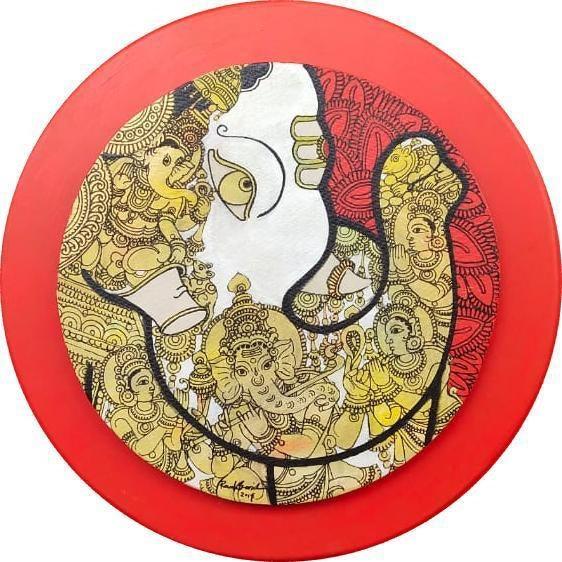
Ganesha 4 (Ganesha 1)
Artzolo
₹70,000
out of stock
★ 4.0 (10)
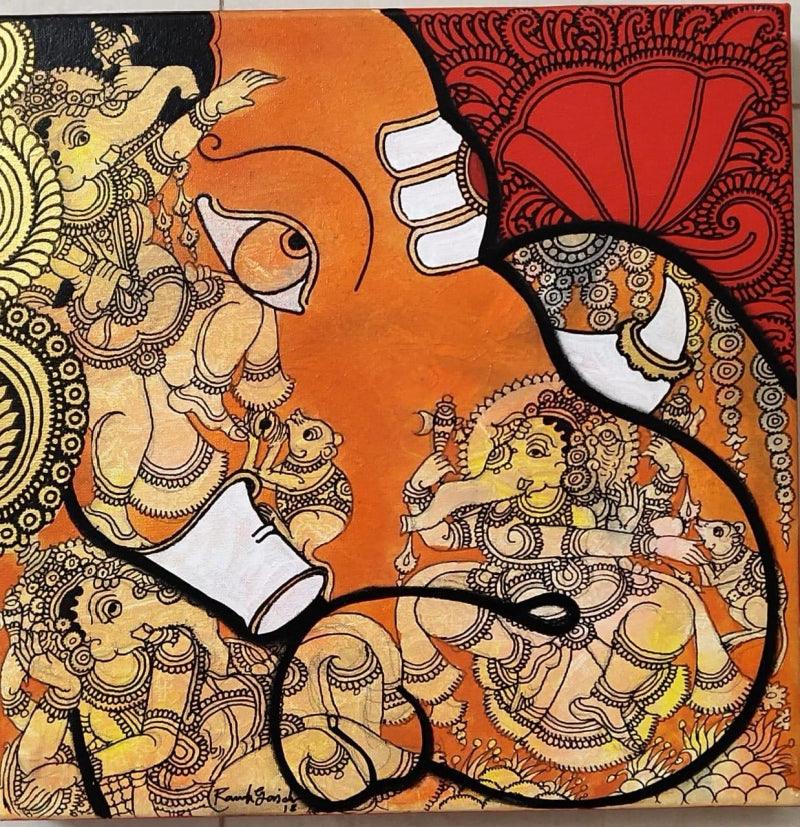
Ganesha 2 (Auspicious Dance)
Artzolo
₹40,000
out of stock
★ 5.0 (12)
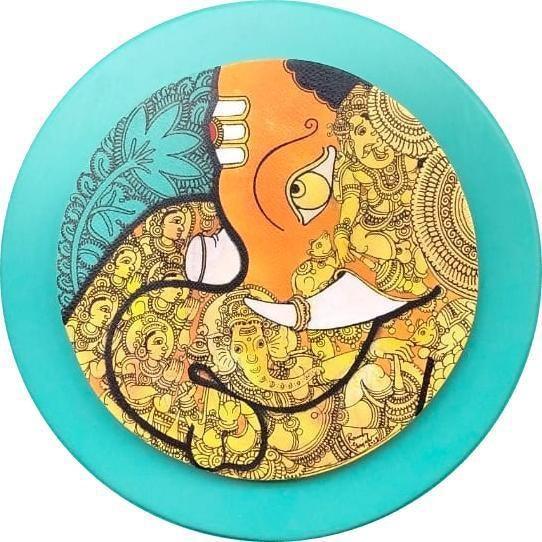
Ganesha 3 (Ganesha, the Remover of Obstacles)
Artzolo
₹70,000
out of stock
★ 4.0 (9)
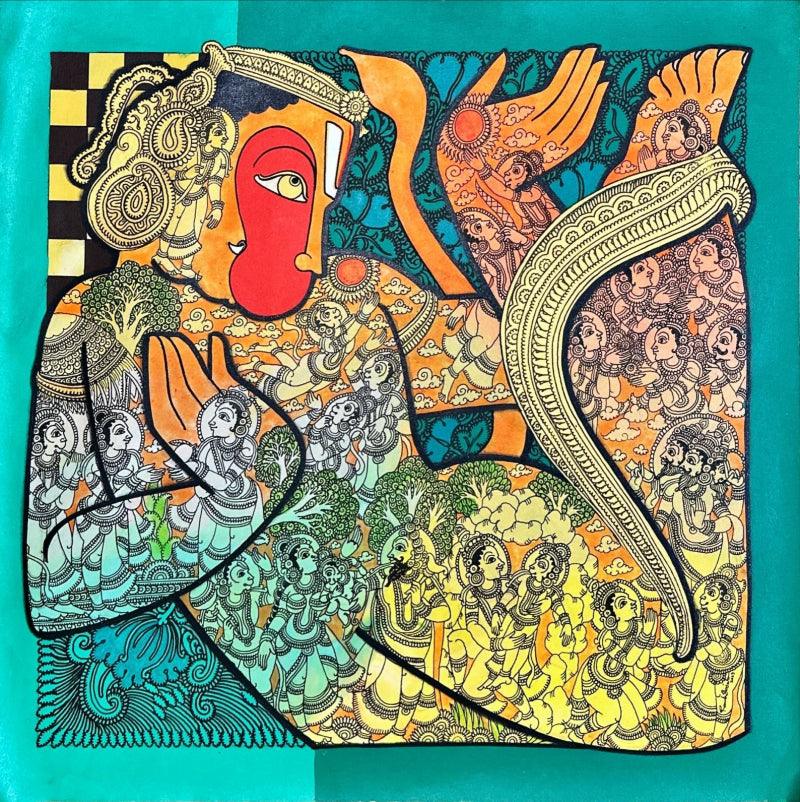
Hanuman (Hanuman's Divine Journey)
Artzolo
₹375,000
out of stock
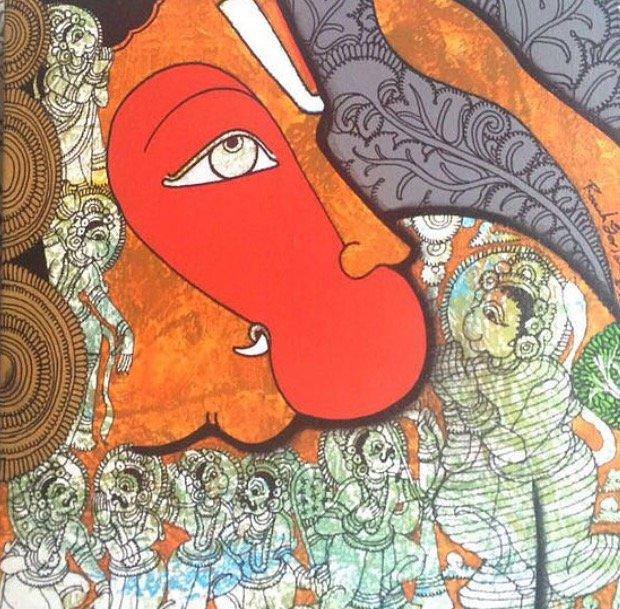
Hanuman (Ganesha with Folk Art Influence) (Ganesha Divine Presence)
Artzolo
₹40,000
out of stock
★ 4.0 (6)
Ganesha 5 (Ganesha)
Artzolo
₹120,000
out of stock
★ 5.0 (7)