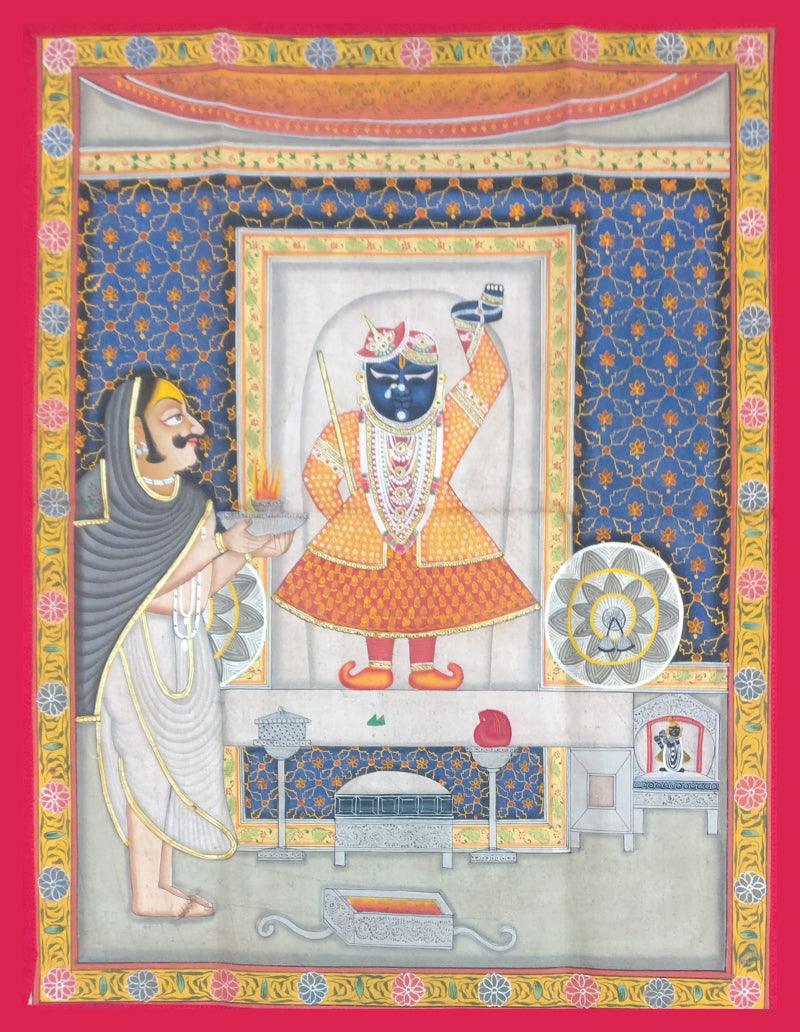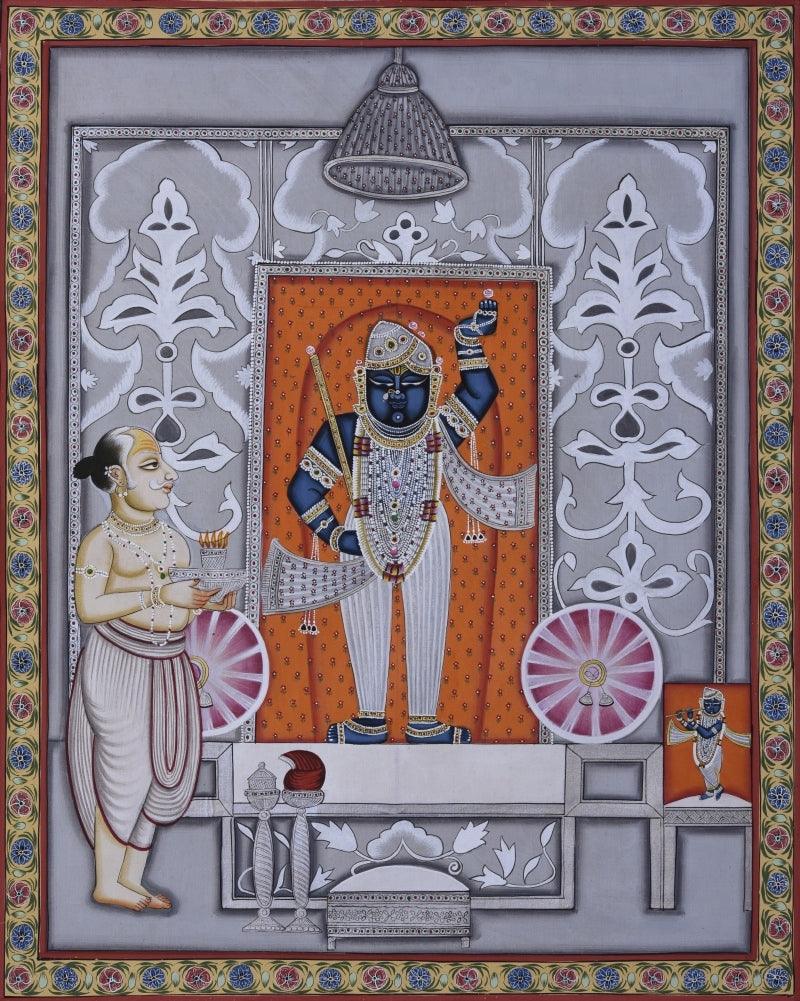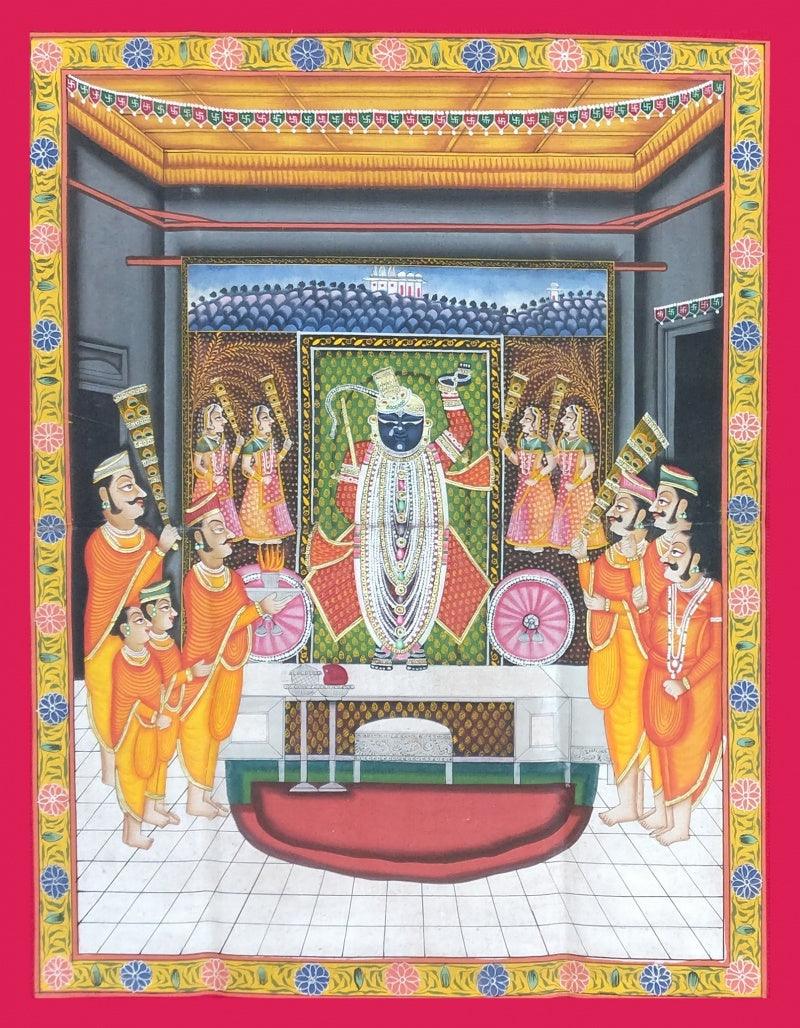
Shrinathji Darshan
This devotional court-scene is orchestrated like a miniature stage, where a dark, icon-like deity stands immovable at the center while concentric ranks of attendants, lamps, and ceremonial emblems funnel the gaze inward. The flat, jewel-toned palette and meticulous ornamentation—borders, textiles, and regalia—transform the interior into a sanctified geometry, suggesting that order itself is a form of reverence. Symmetry here is not merely decorative: it becomes a visual theology, balancing human pageantry against the deity’s quiet, absolute presence. Beyond the narrative of ritual, the work reads as a meditation on community—how collective attention, music, and light are marshaled to make the sacred palpable within everyday architectural space.
Delivery
You may also like