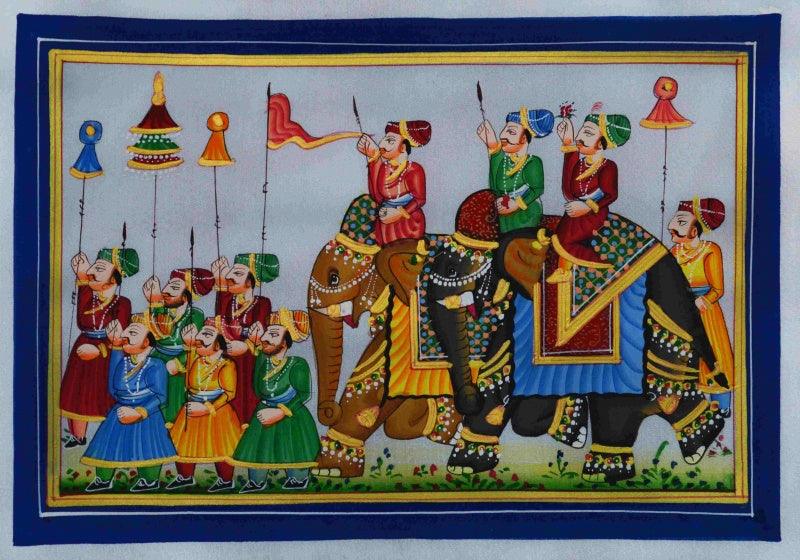
Royal Procession 2
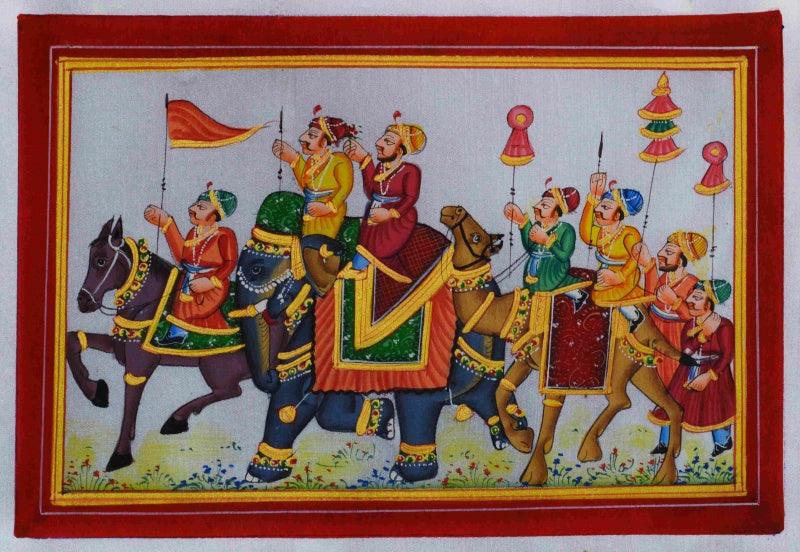
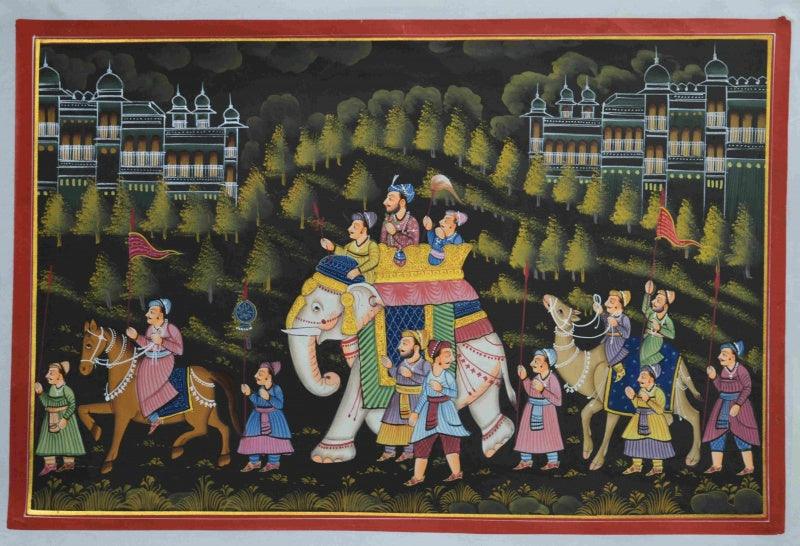
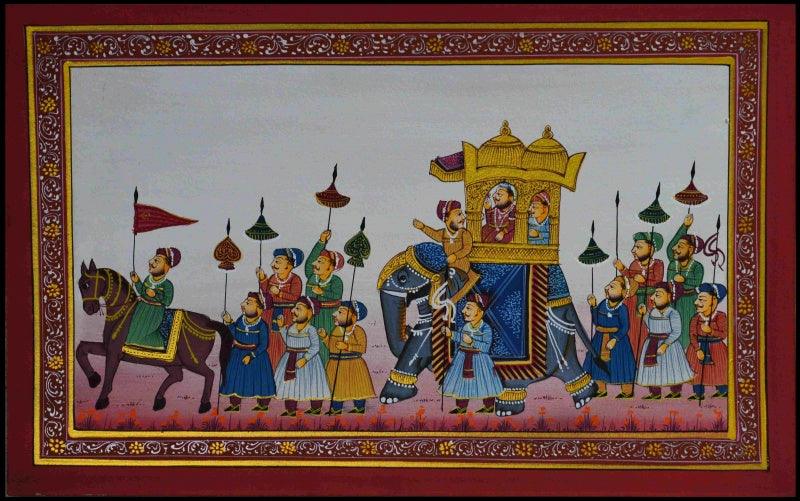
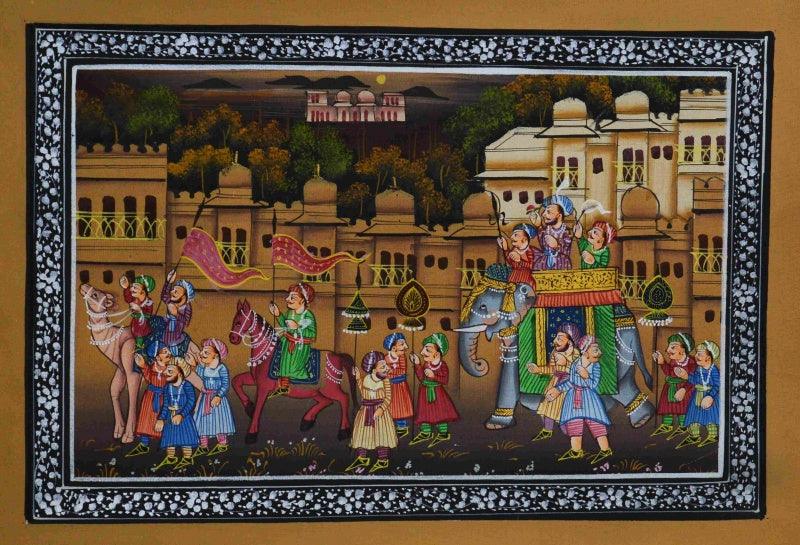
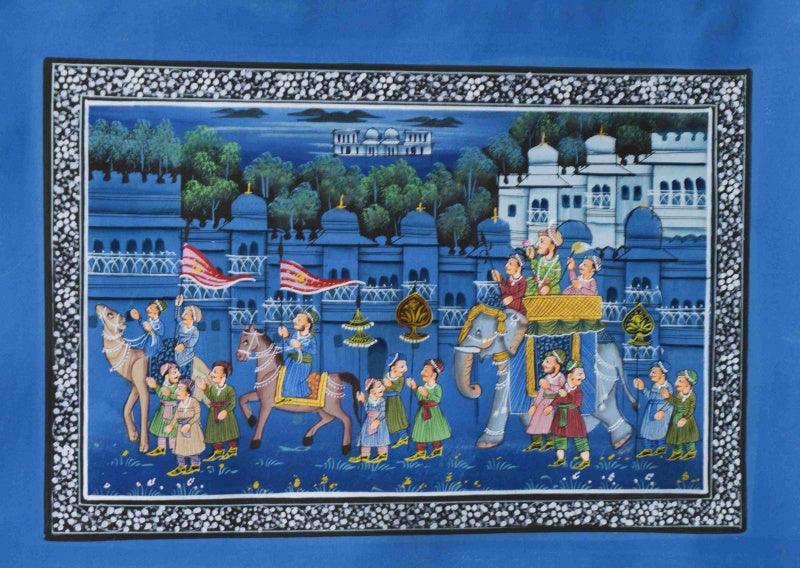
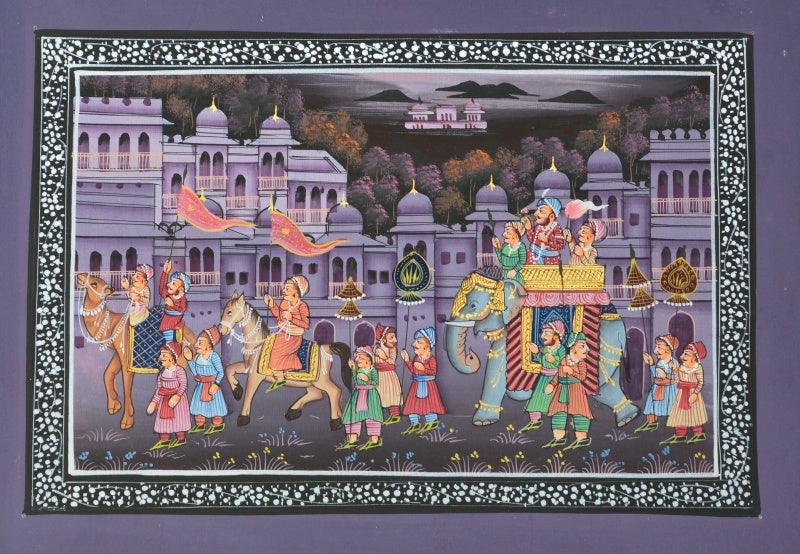
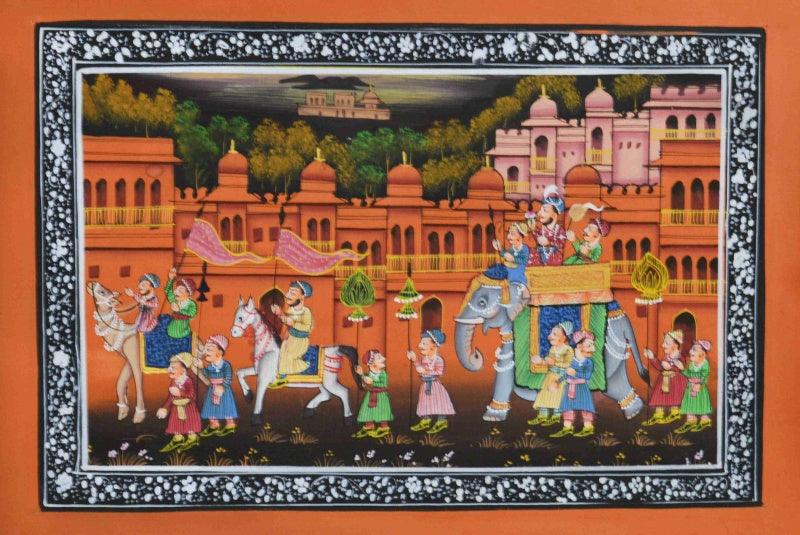
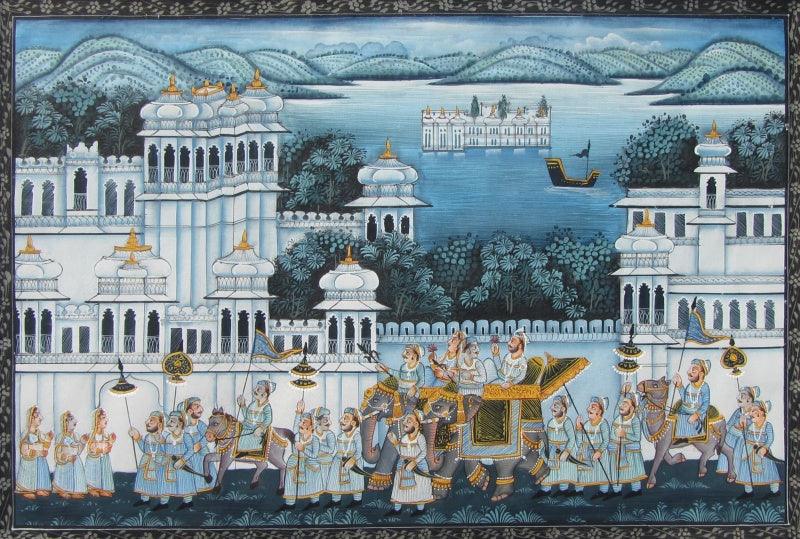
This miniature-like procession stages power as ceremony: an elephant, lavishly patterned and rhythmically articulated, becomes a moving architecture bearing dignitaries whose upright spears and drifting banner turn the scene into a measured cadence of authority. The palette—jewel reds, greens, and saffron against a cool, open ground—flattens space into a decorative field, where every motif reads as both ornament and assertion of rank. Yet beneath the pageantry, the strict profile poses and repeated faces create a quiet tension between individual presence and collective role, suggesting how identity is disciplined within ritual spectacle. The border functions like a proscenium, framing the march not as a moment observed, but as a timeless emblem of tradition performed.
Delivery
You may also like