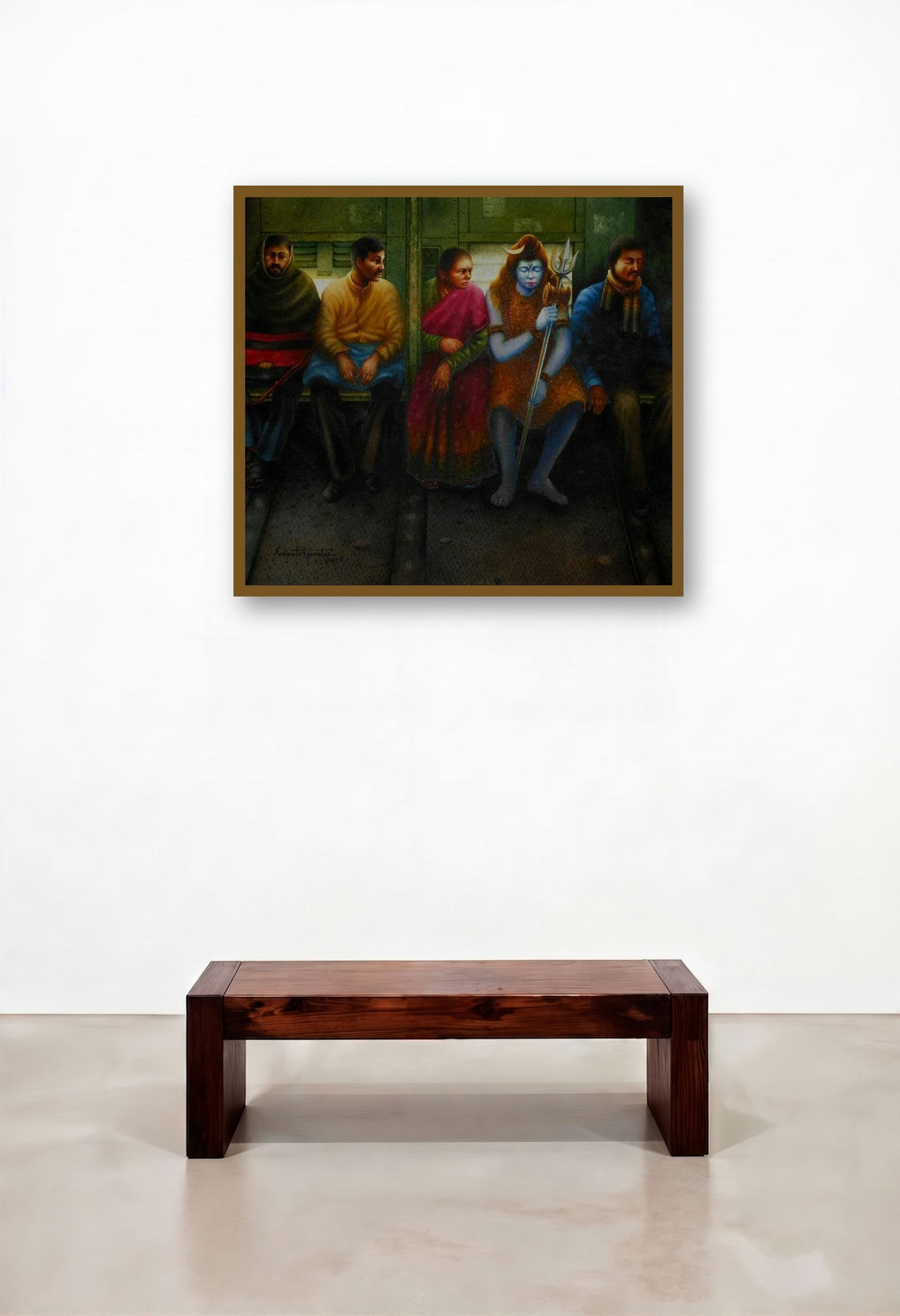
Who Is Going With Us Bahuroopi (Celestial Embrace)
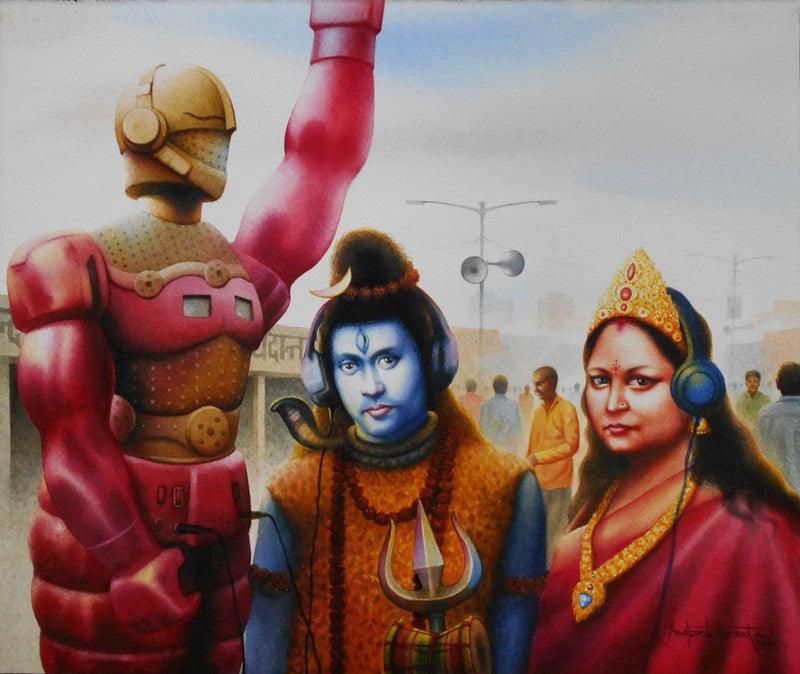
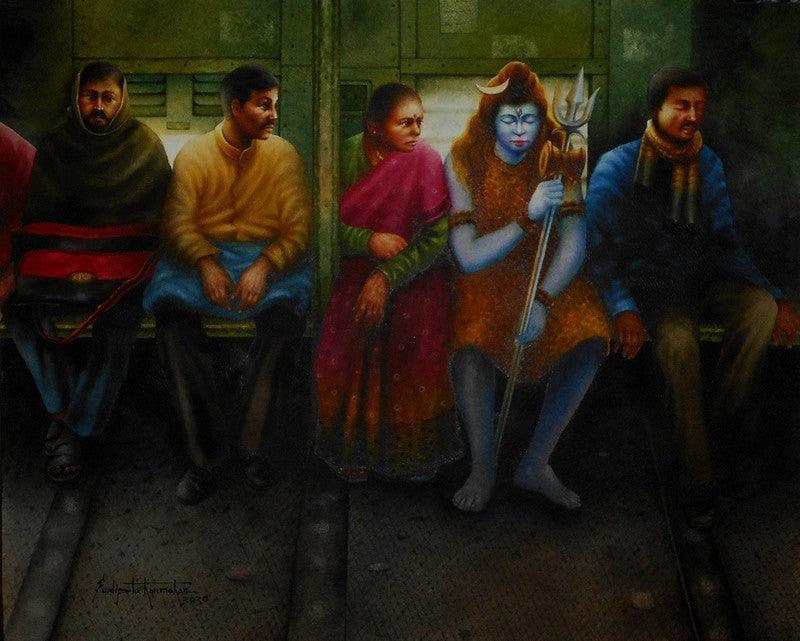
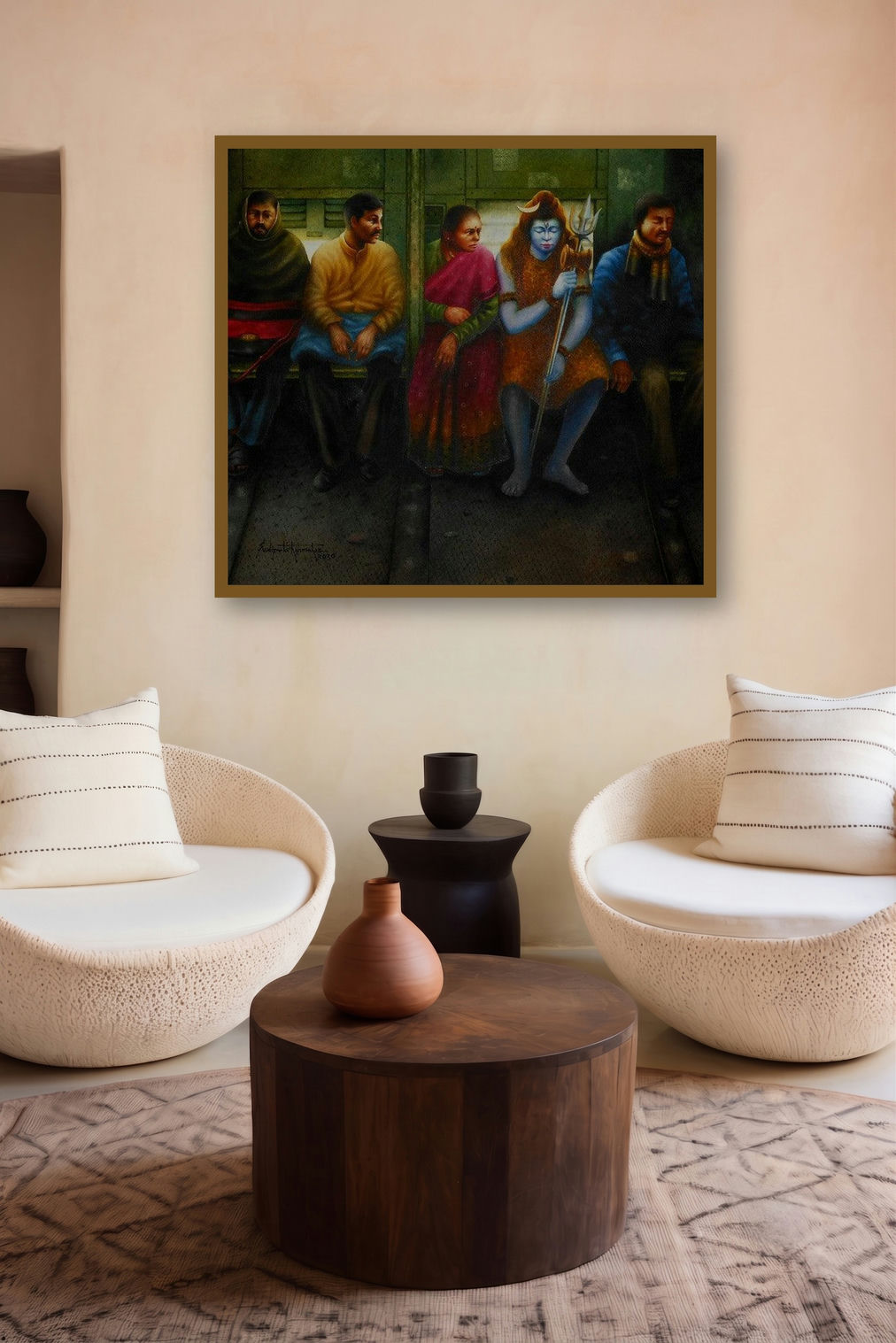
In a dim, compressed compartment of public transit, the painting stages an arresting collision of the ordinary and the eternal: weary commuters slump into their private silences while Shiva, rendered in luminous blue with trident in hand, occupies the same bench as if divinity has quietly taken the last available seat. The muted greens and sooty browns of the carriage swallow most forms into dusk, making the deity’s cool radiance and saffron halo-like textures read as an inner light rather than a theatrical miracle. Gazes slide past one another—some wary, some indifferent—so the true drama becomes not revelation but refusal, a meditation on how the sacred can exist inches away, unrecognized amid routine fatigue. The cramped perspective and heavy shadows turn the scene into a moral interior: a portrait of modern alienation where transcendence persists, patient and unresolved, inside the everyday.
Delivery
You may also like