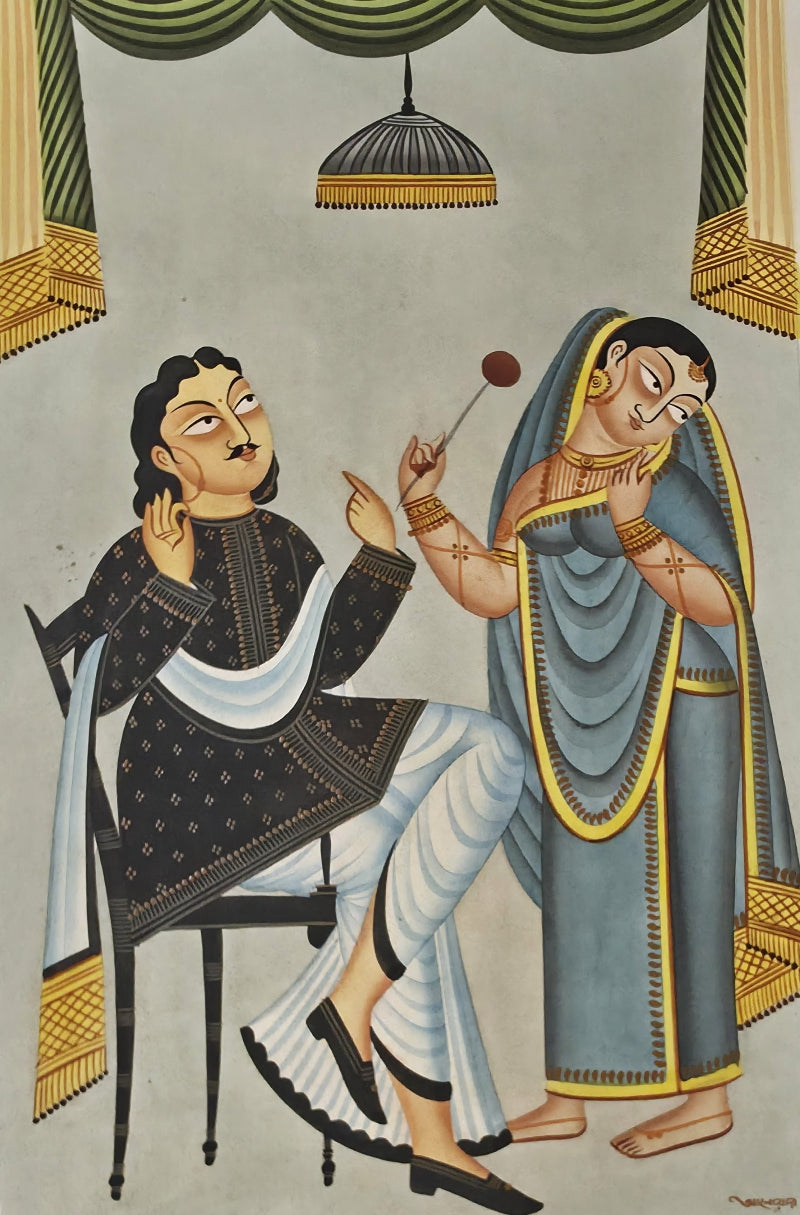
Couple 5
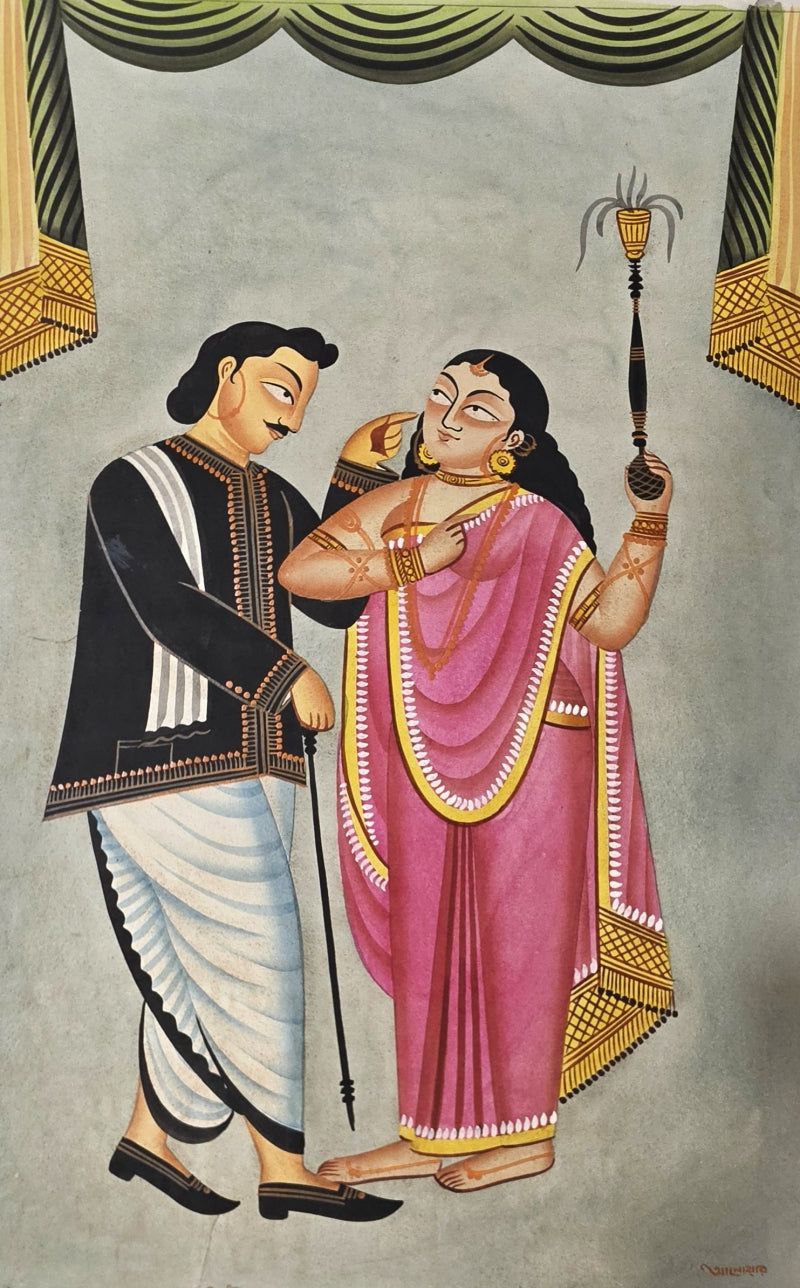
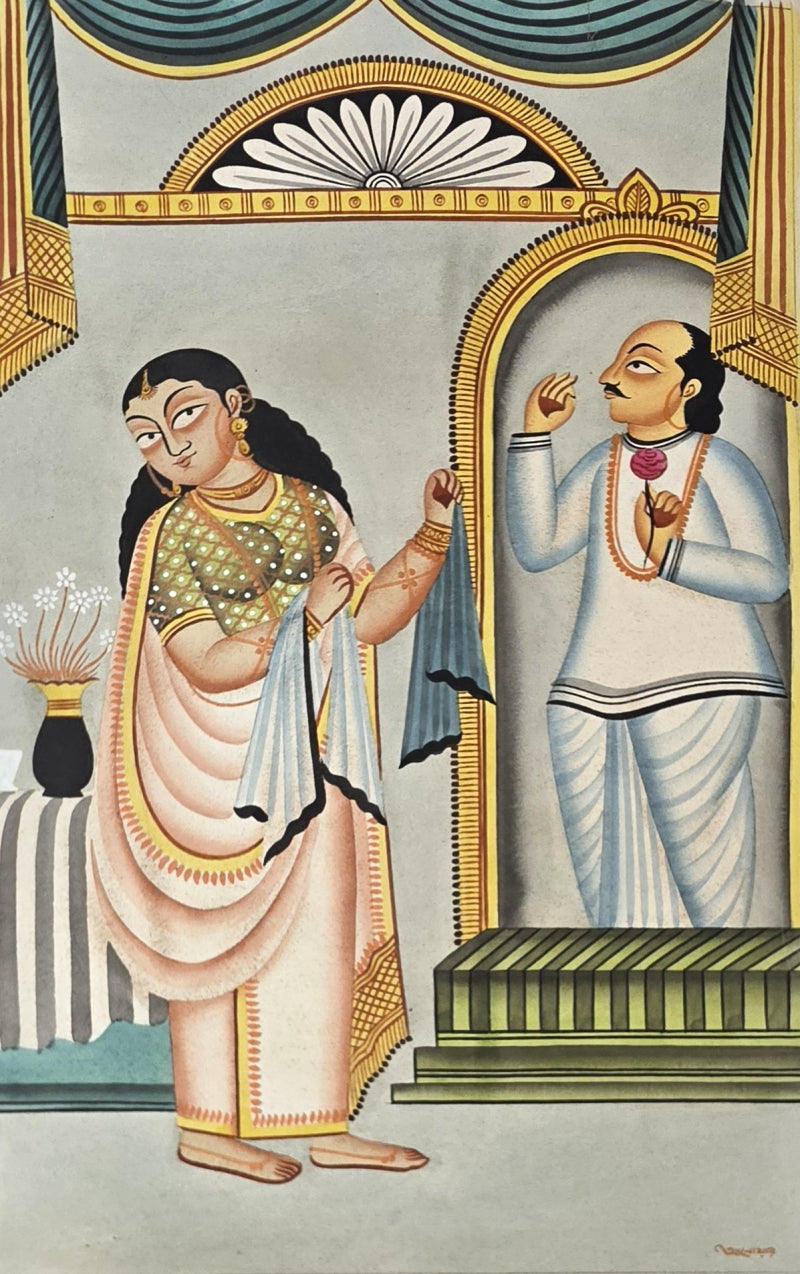
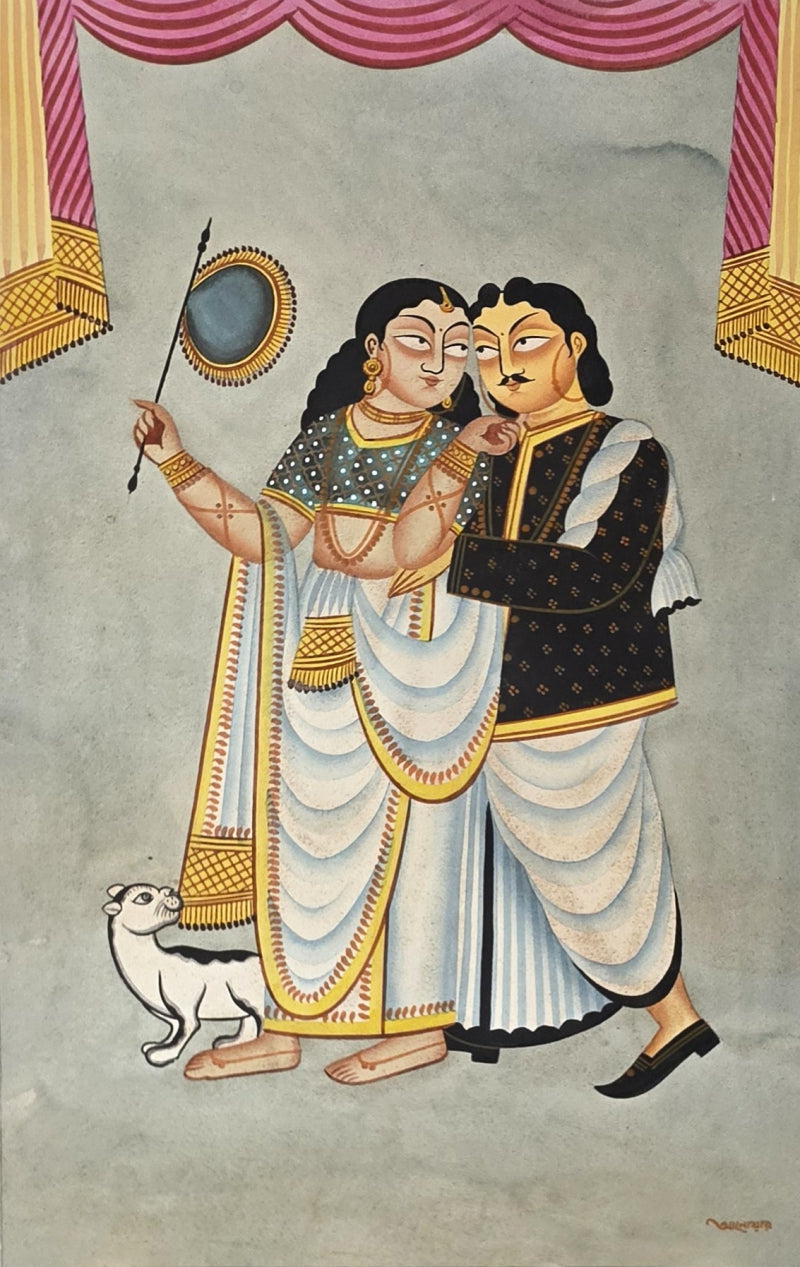
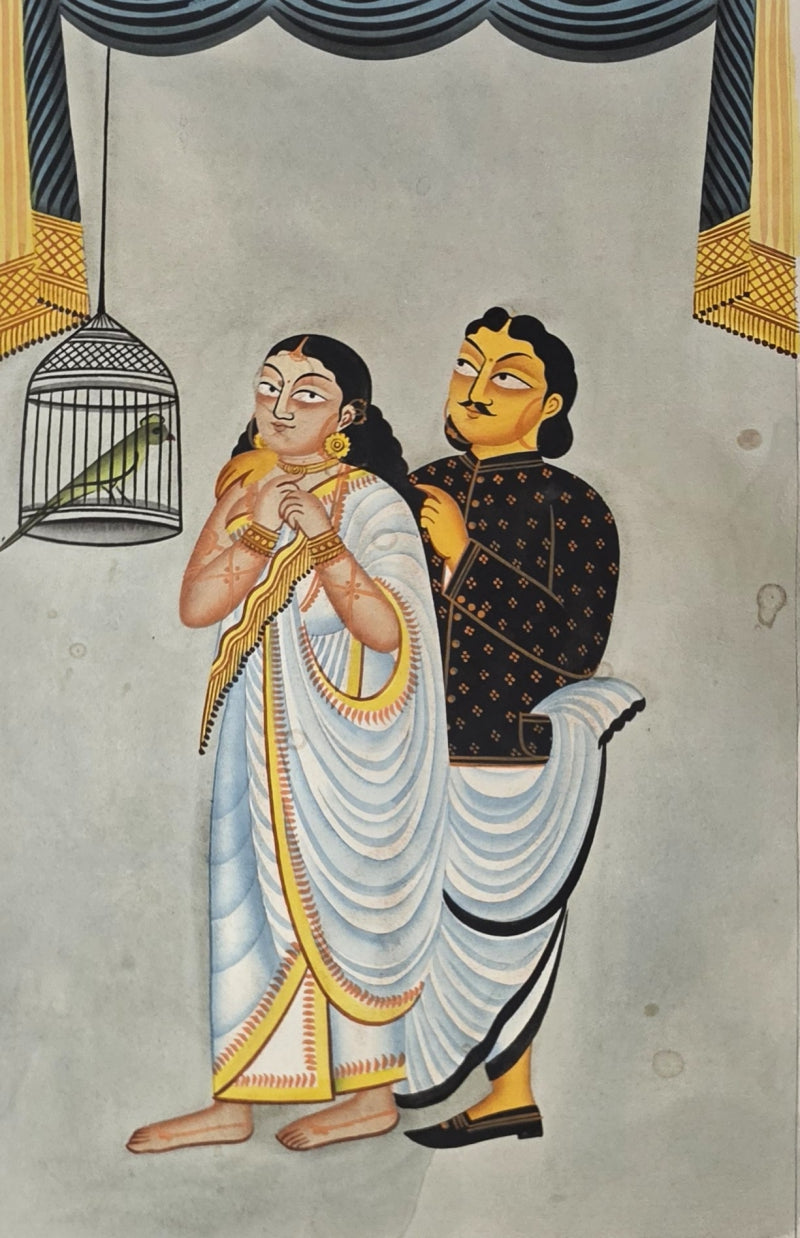
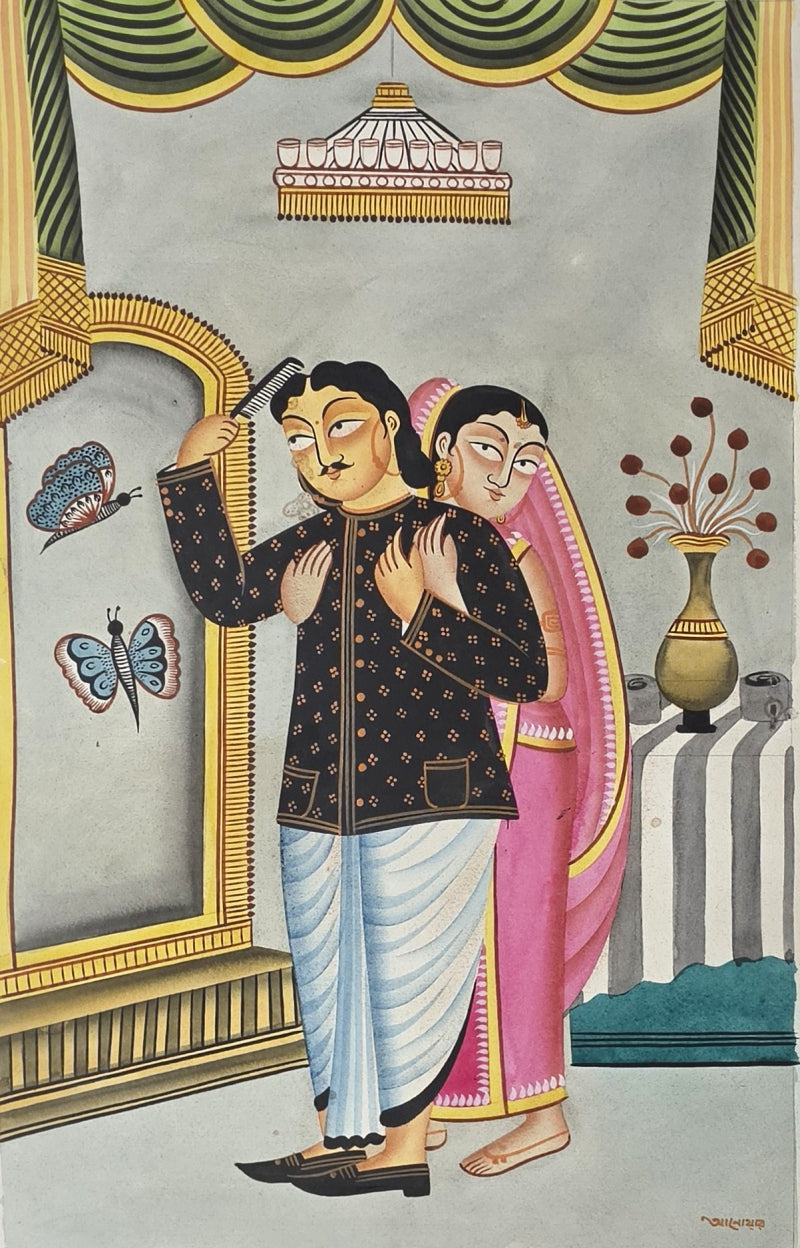
Set within a stage-like interior framed by draped curtains, the scene turns intimacy into performance, where each gesture reads as both invitation and negotiation. The painter’s flat, deliberate planes of color and finely edged contours heighten the psychological distance between the figures: his languid, angled posture asserts leisure and entitlement, while her bowed head and veiled presence suggest a guarded autonomy that resists easy access. Ornament—golden borders, patterned textiles, and the hanging lamp—functions less as décor than as a social grammar, encoding rank, desire, and decorum. In the quiet tension between gaze and averted gaze, the work becomes a portrait of power softened by flirtation, and tenderness complicated by ritual.