Divine Melody
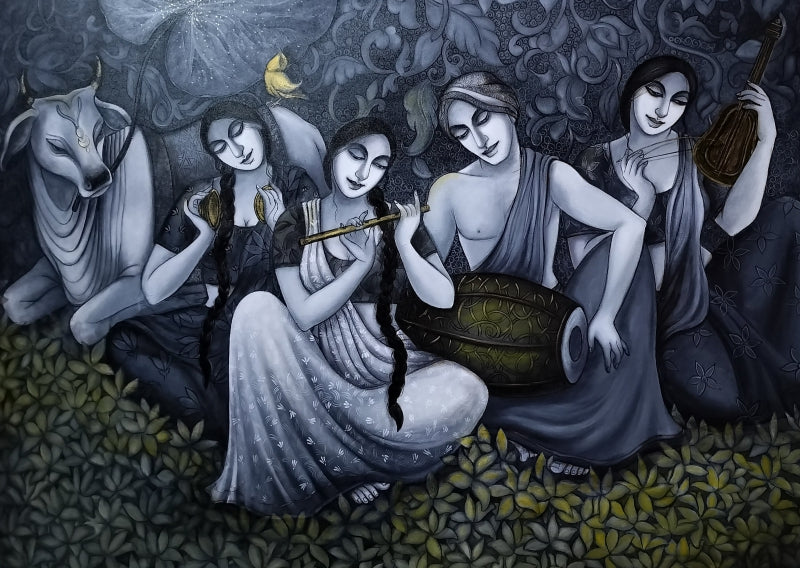
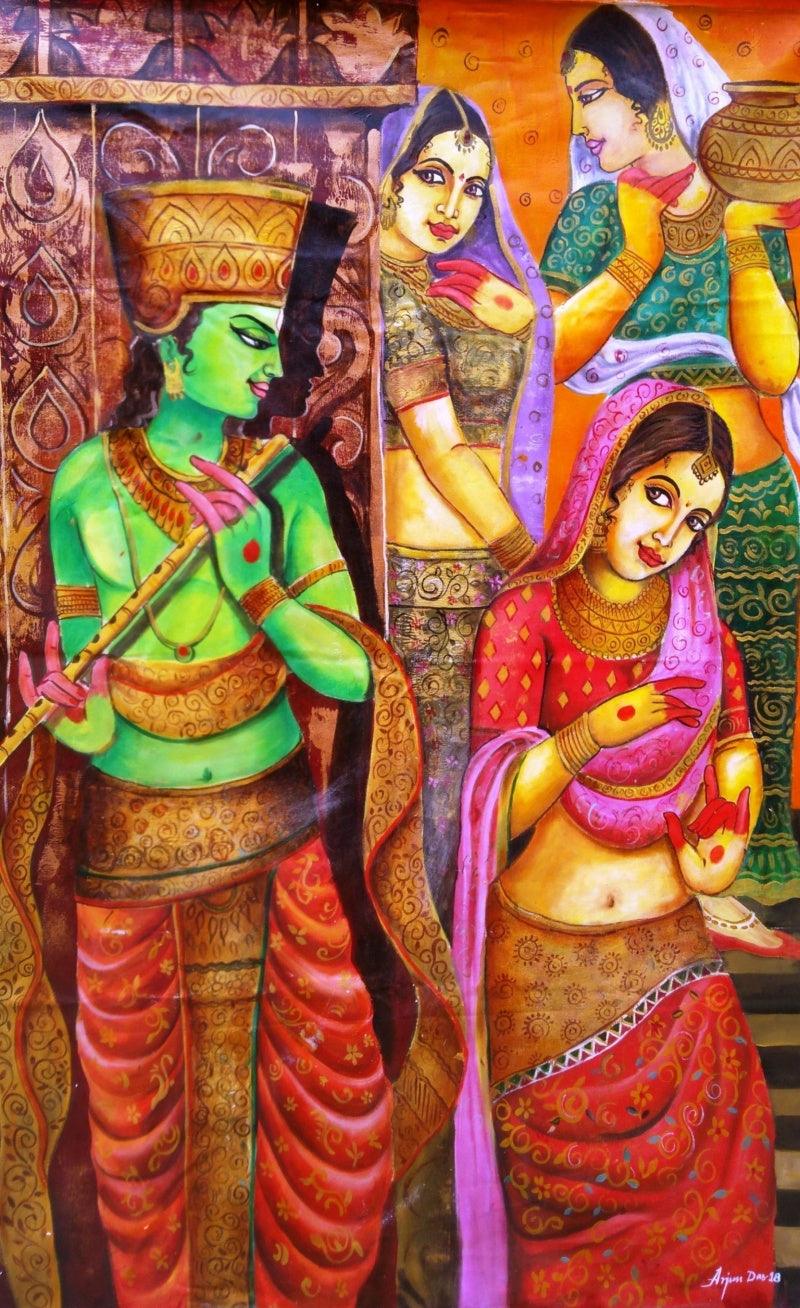
In this radiant mythic tableau, Krishna’s cobalt body becomes a living axis of calm, his flute an invisible thread that draws three women into a shared orbit of longing, devotion, and private reverie. The composition stages desire as a gentle triangulation—glances and tilted heads form a soft choreography—while ornamental textiles and jewelry thicken the air with sensuous detail, turning everyday adornment into spiritual offering. Warm saffron and vermilion skies press forward like emotion itself, yet the pale architectural wash behind the figures opens a breathing space where music can be felt as atmosphere rather than sound. Between lotus leaves, temple walls, and peacock plume, the scene reads as a meditation on attraction as transformation: the earthly gaze refined into bhakti, and the beloved made both intimate and unreachable.
Delivery
You may also like