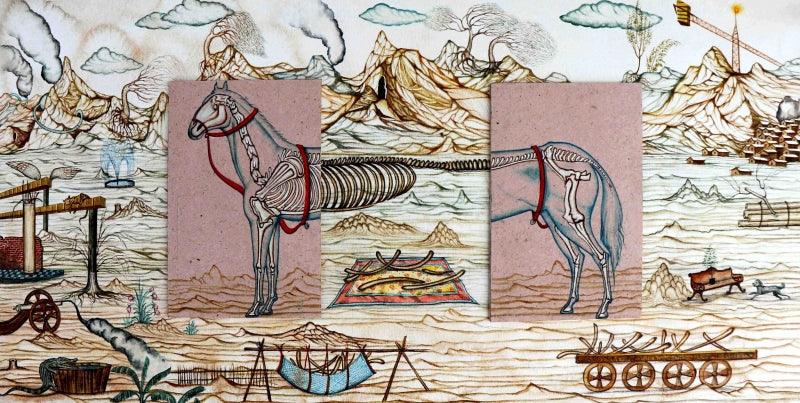
Broken Horse On The Broken Land
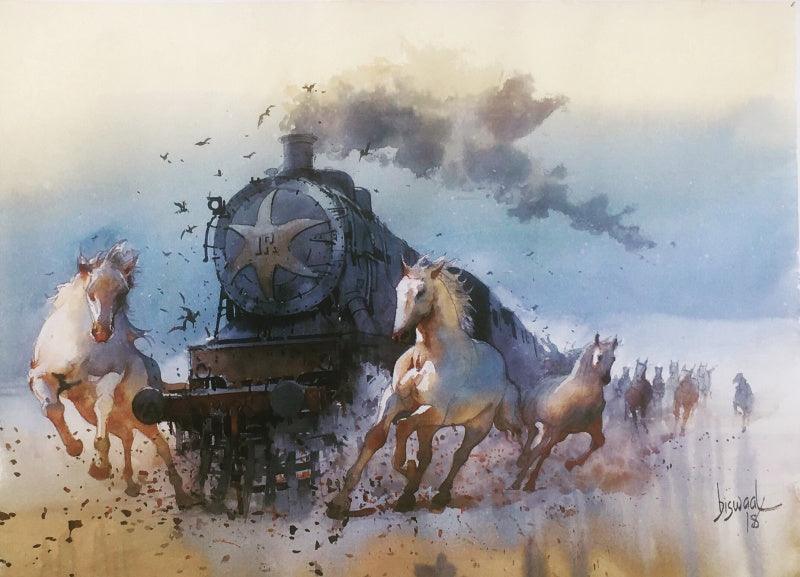
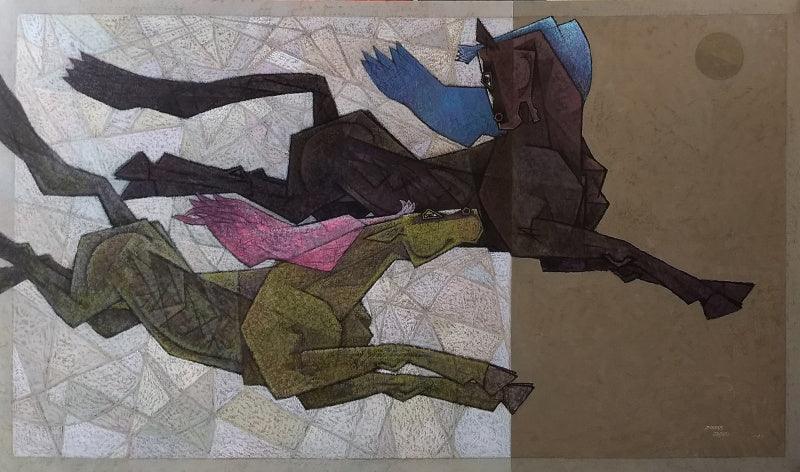
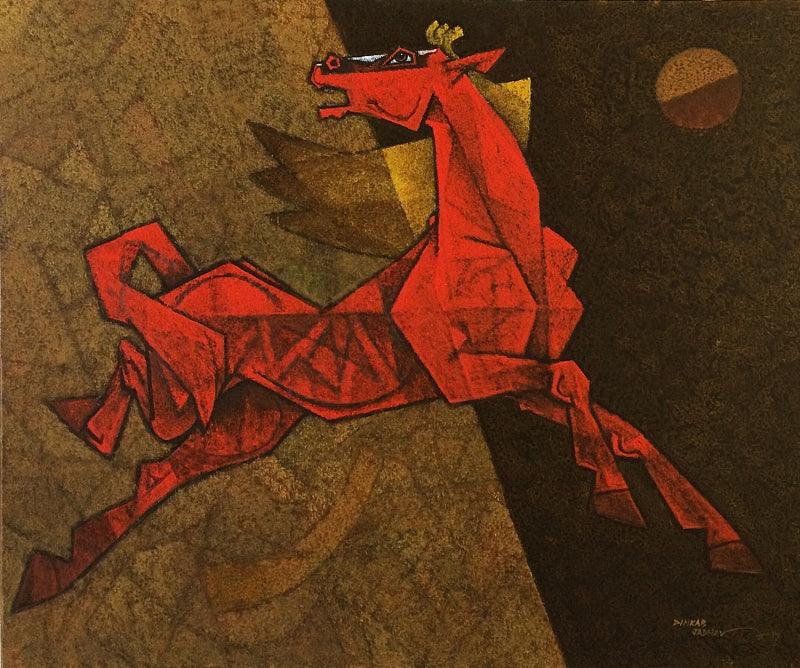
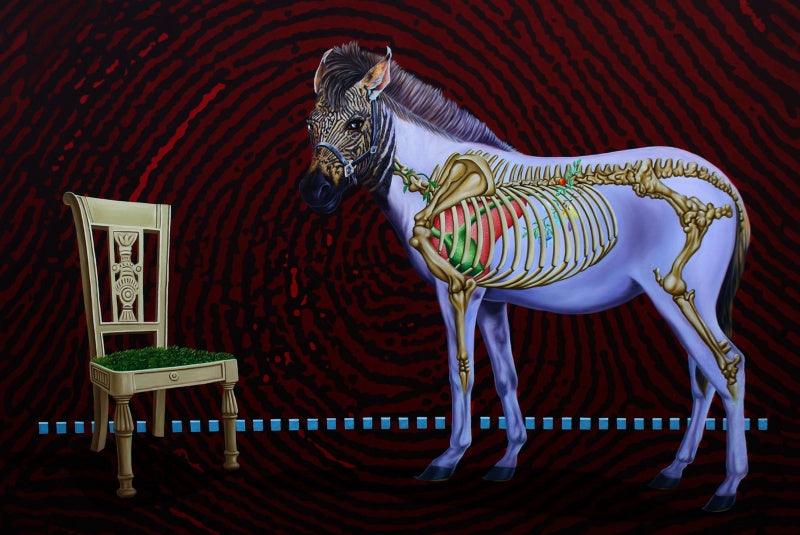
This work stages a wry archaeological theater where the landscape reads like a palimpsest—mountains, sea, and industry etched into one continuous breath—while two skeletal horses stand as emblems of endurance drained to its bare structure. The split panels act like specimens pinned for study, turning living power into evidence, as red reins and blue accents puncture the sepia field with a lingering sense of control, injury, and memory. Around them, scattered infrastructures—smoke plumes, rigs, tracks, and carts—compose a quiet indictment of progress, suggesting a world in which motion persists but vitality has been extracted. The overall mood is both elegiac and clinical, as if nature and labor have been cataloged after the fact, leaving beauty to survive in lines rather than in flesh.
Delivery
You may also like