

Untitled 153
₹75,000
Out of stockchecking live price…
Size
5x3Type
OriginalMaterial
PaperRendered in spare black ink against a worn, sepia ground, the scene turns conversation into a small theater of power where thought is both a posture and a weapon. The man’s looming mass and accusatory finger press into the frame, while the woman’s sidelong gaze and tightened pose register the quiet strain of being spoken over—an intimacy refracted through suspicion. Text and image fuse into a single rhythm of ellipses and glances, suggesting how a name can hang in the air like a verdict, and how “thinking” becomes a public performance rather than a private refuge. The coarse paper and blunt linework amplify the satire, exposing the fragile ego beneath the comic surface.
Delivery
You may also like
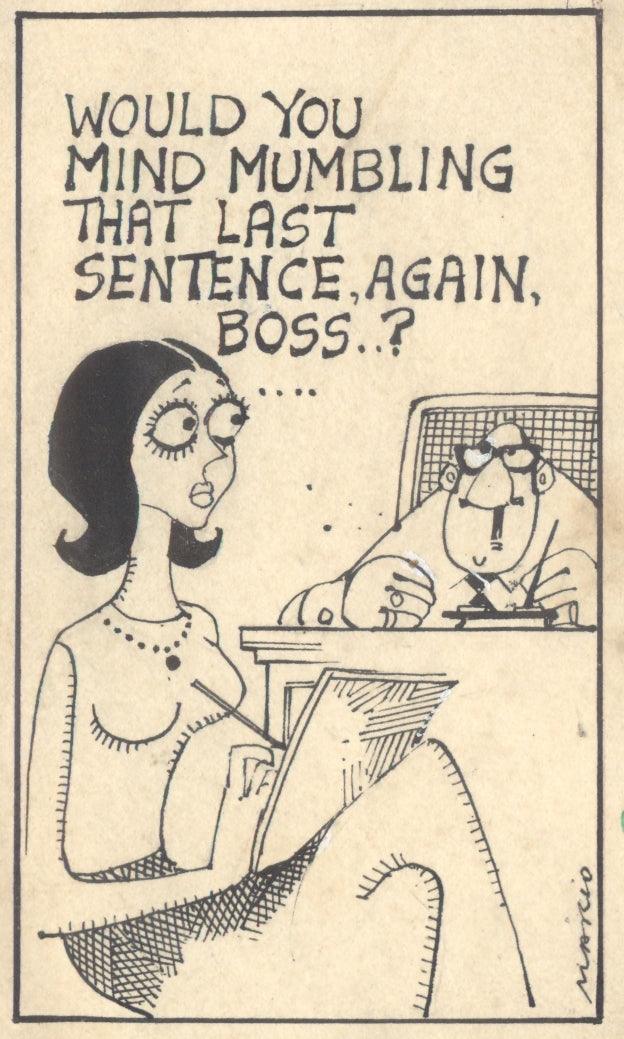
Untitled 251
Artzolo
₹55,000
out of stock

Untitled 225 (Not Loverboy on the Line)
Artzolo
₹75,000
out of stock

Untitled 222 (Is the Boss Out?)
Artzolo
₹78,000

Untitled 71 (Thanks for Nothing!)
Artzolo
₹80,000
out of stock

Untitled 253 (The Real Cause of Double Vision)
Artzolo
₹75,000
out of stock
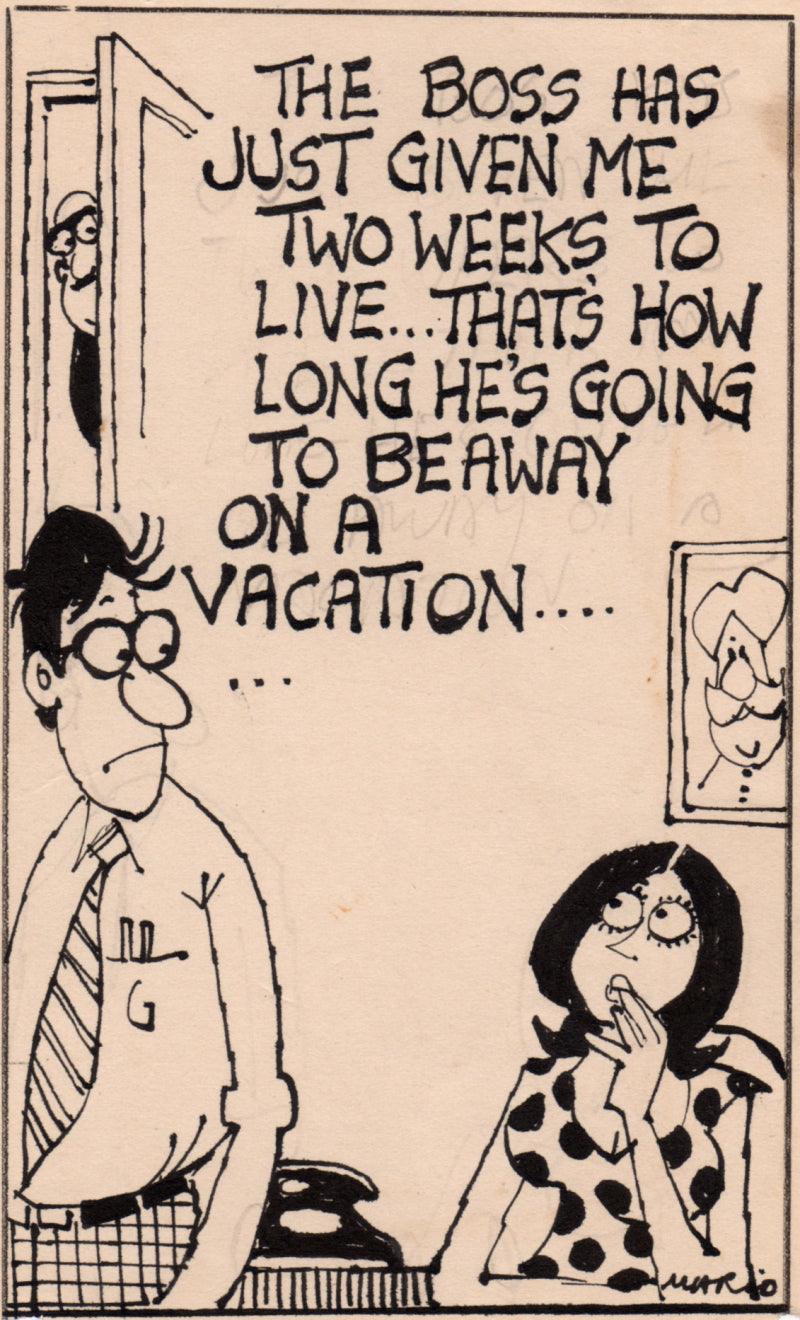
Untitled 156 (Two Weeks to Live)
Artzolo
₹78,000

Untitled 262 (Thank Heavens for Miss Fonseca)
Artzolo
₹75,000
out of stock
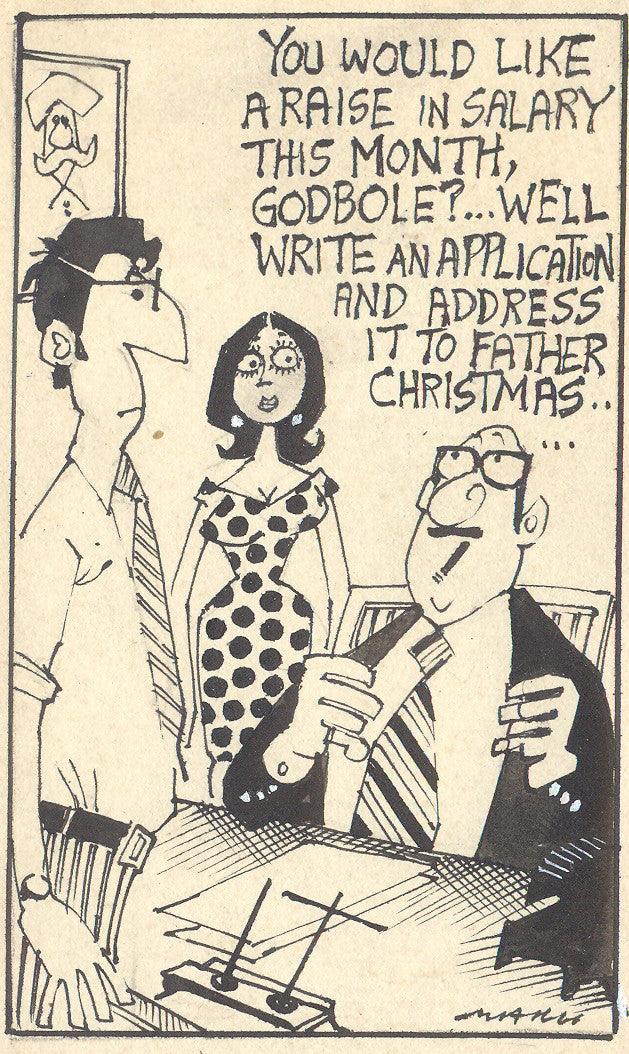
Untitled 188
Artzolo
₹80,000
out of stock