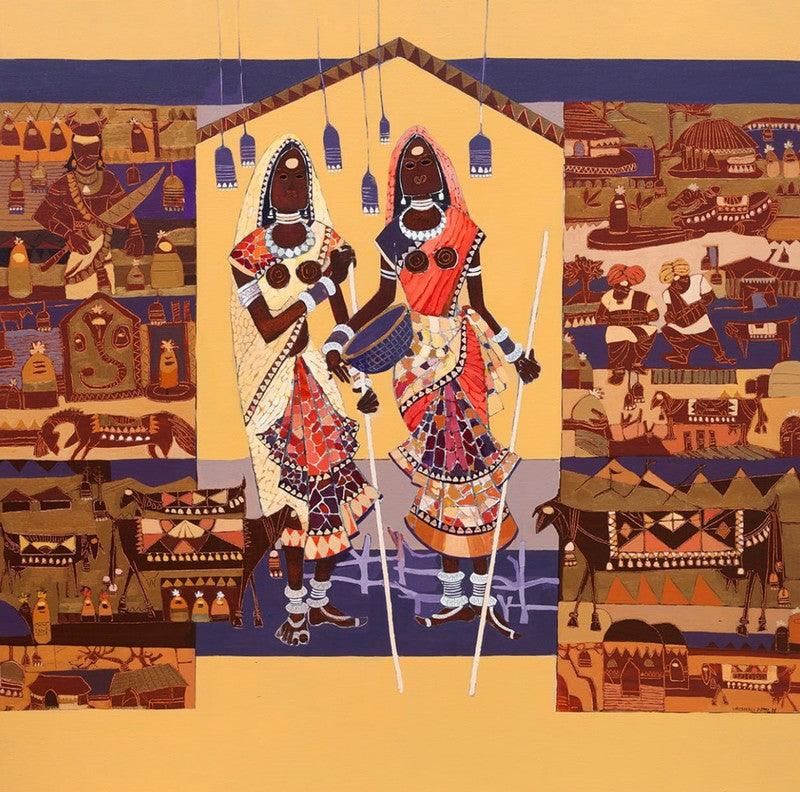
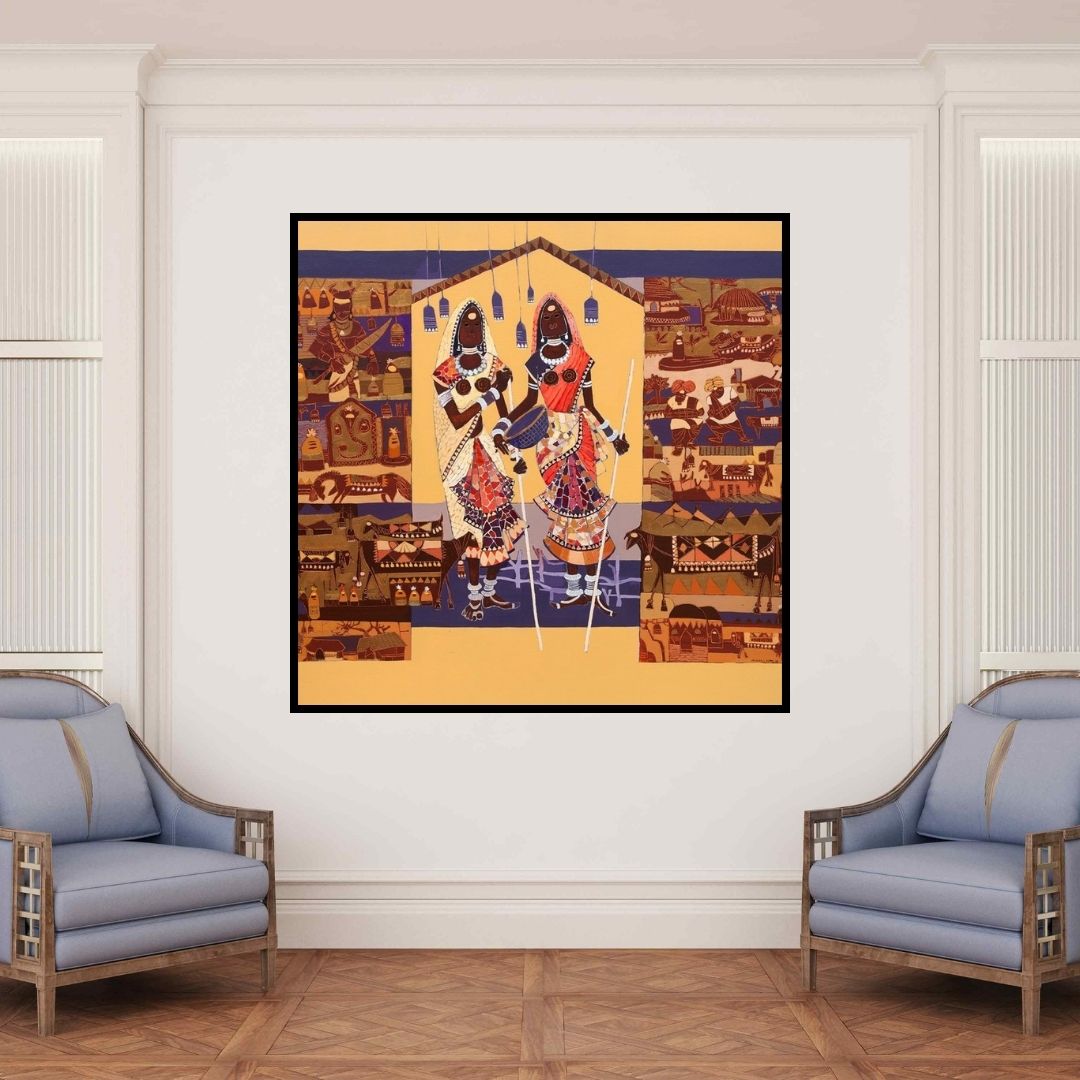
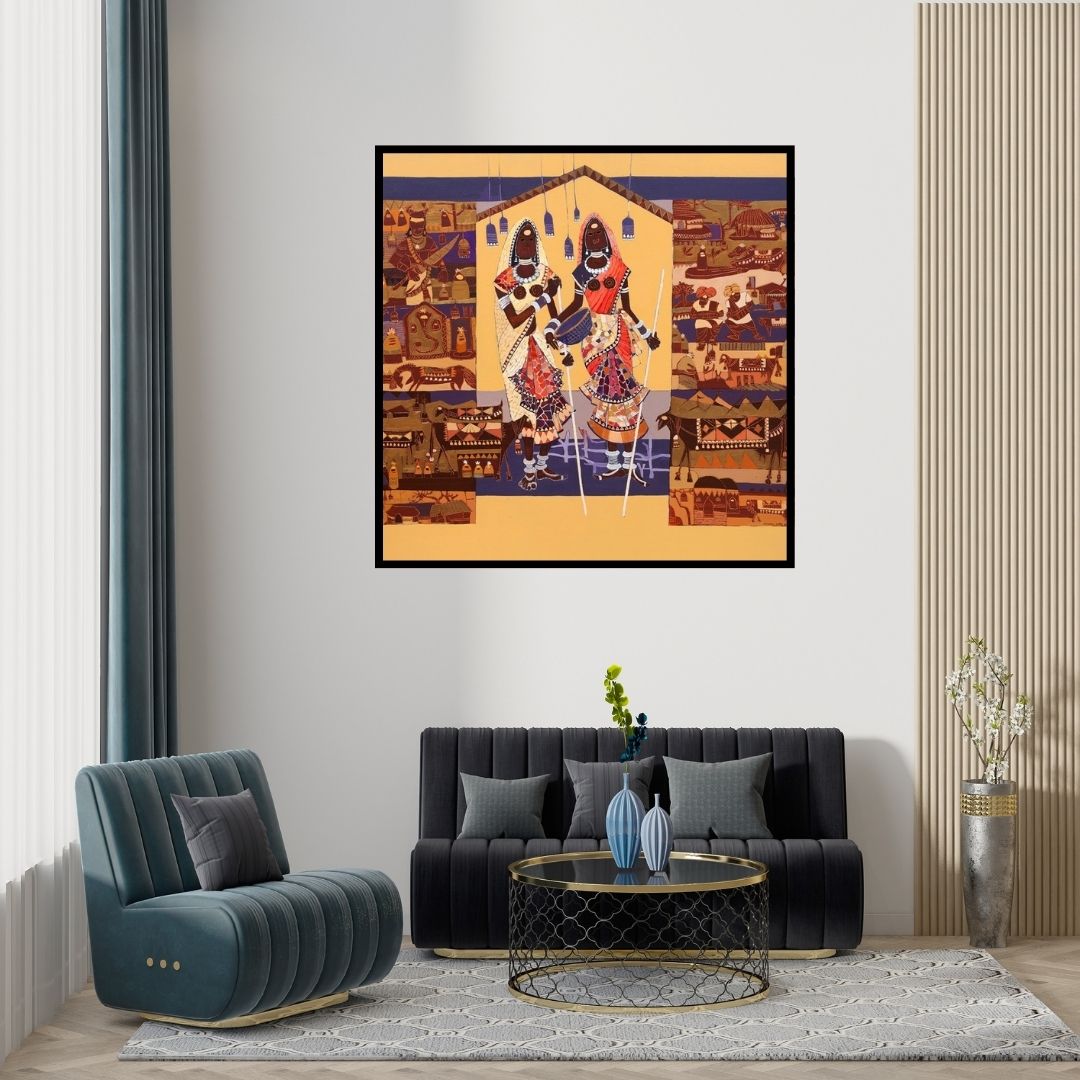
Untitled 13 (The Village Women)
₹100,000
● In stock · ★ 4.0 (13)checking live price…
Size
48x48Type
OriginalMaterial
CanvasFramed like a shrine or doorway, the central hut becomes a luminous stage where two adorned figures stand in poised reciprocity, their patterned garments tessellating into a mosaic of lived memory and ceremony. The palette—sun-baked ochres against deep indigo—creates a rhythmic pulse of heat and shadow, while repeated village vignettes around them read like a communal chorus that surrounds and legitimizes the pair. Suspended lamps and the ceremonial objects they hold suggest both protection and passage, turning daily life into ritual and ritual into an enduring map of identity. The composition balances intimacy with collective witness, implying that belonging is not singular but woven, tile by tile, through shared practice and myth.
Delivery
You may also like
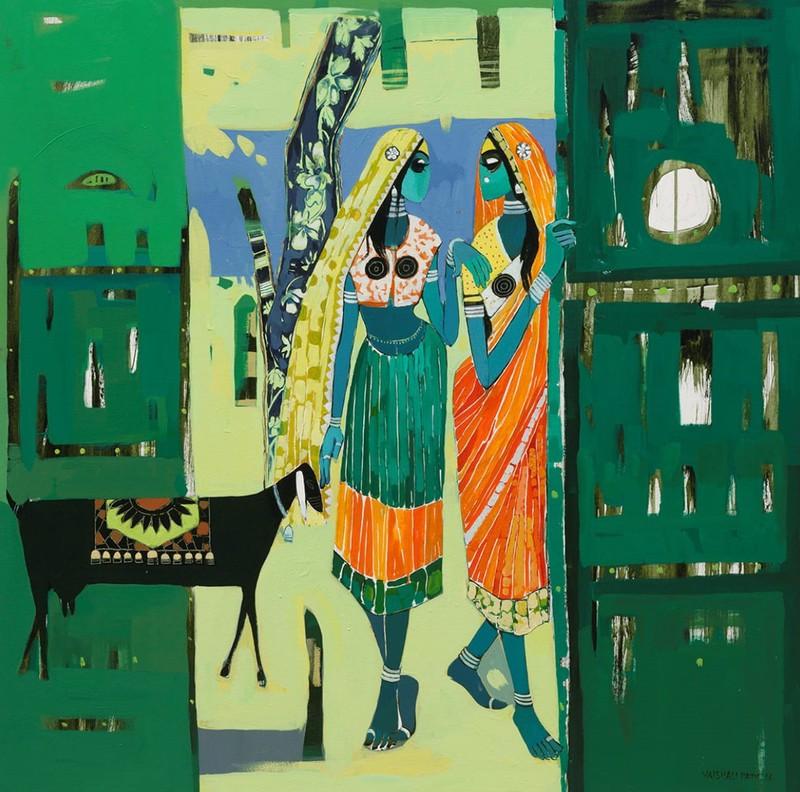
Untitled 11 (A Village Encounter)
Artzolo
₹100,000
★ 5.0 (10)
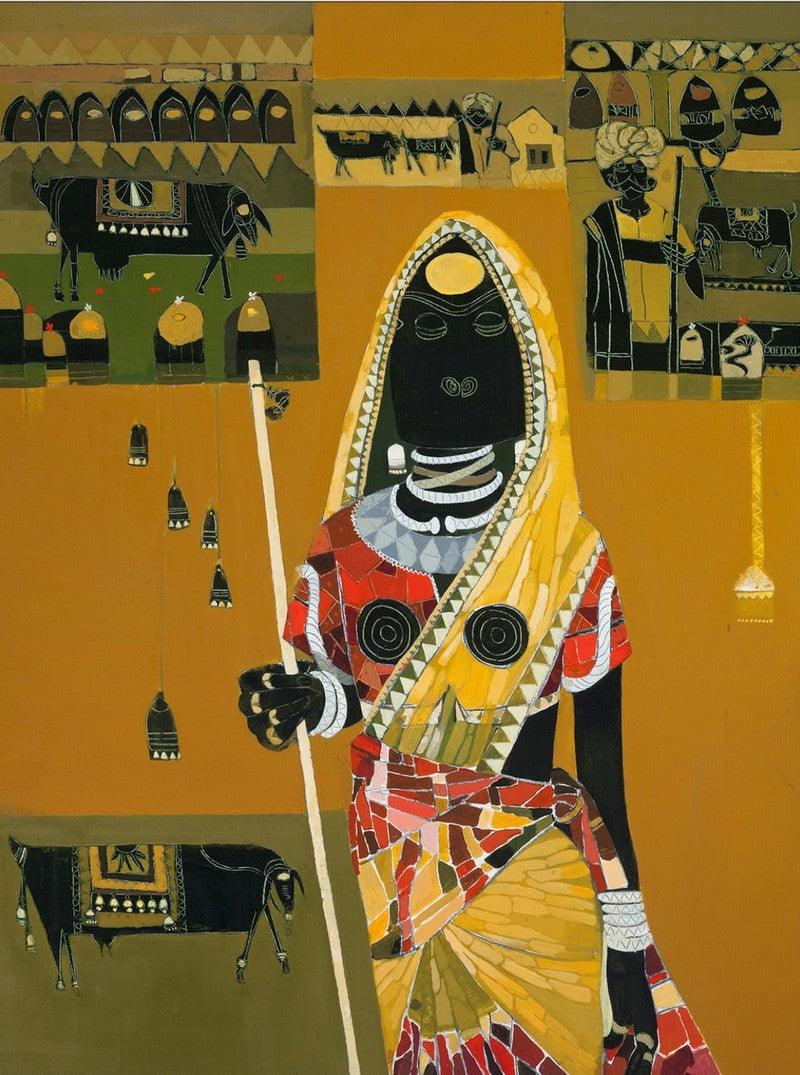
Untitled 1 (The Shepherdess)
Artzolo
₹100,000
★ 4.0 (8)
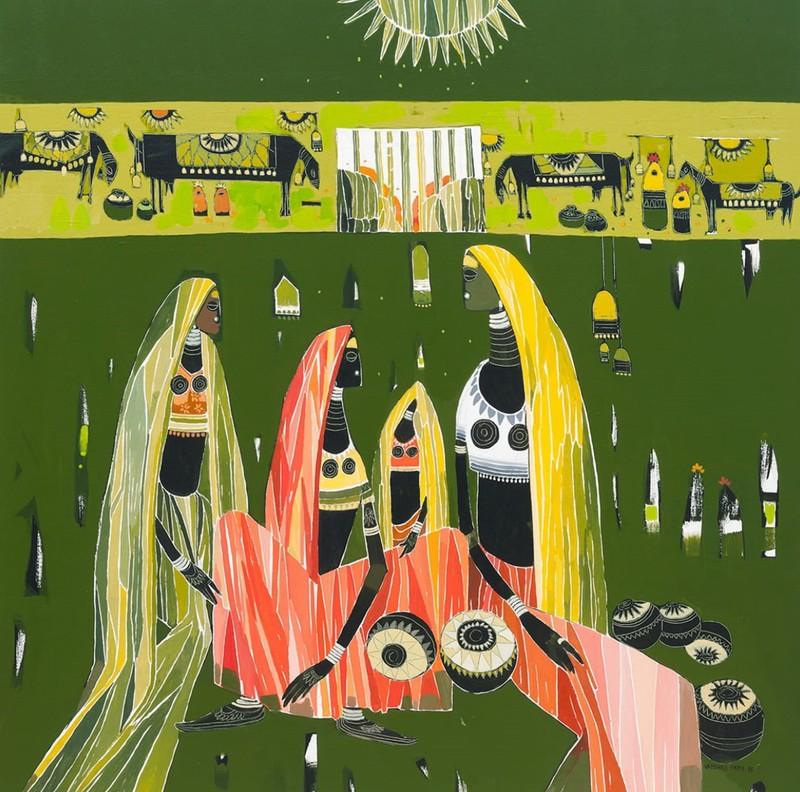
Untitled 15 (The Village Gathering)
Artzolo
₹100,000
★ 4.0 (8)
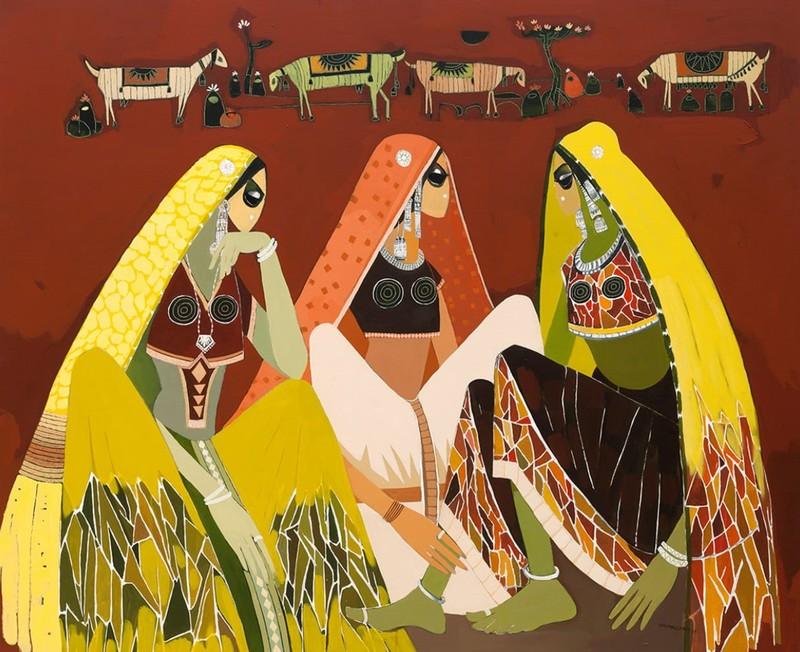
Untitled 6 (The Village Gathering)
Artzolo
₹110,000
★ 4.0 (8)
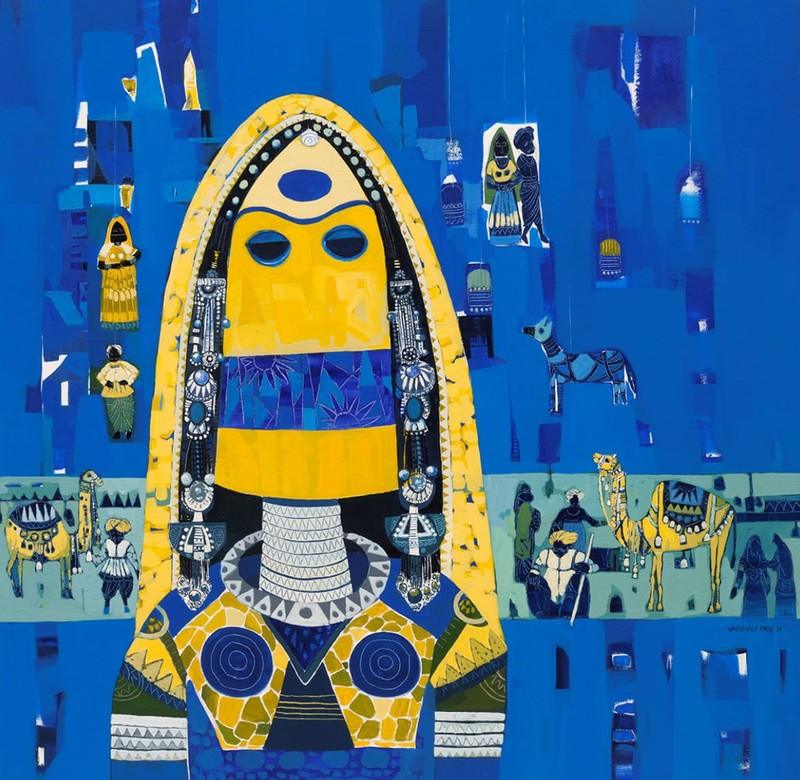
Untitled 10 (The Veiled Lady)
Artzolo
₹58,000
★ 4.0 (12)
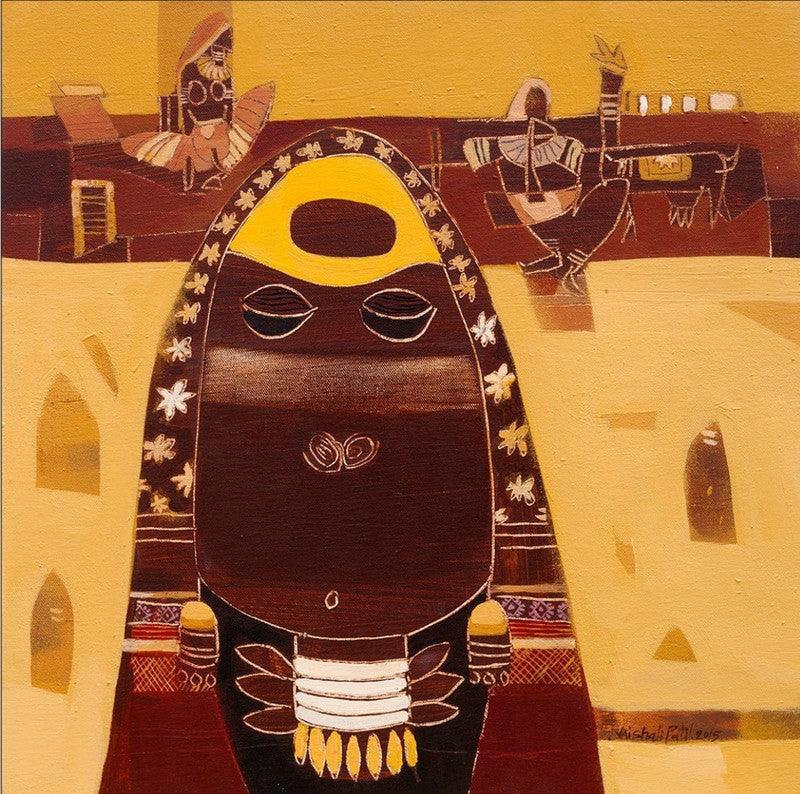
Untitled 3 (The Veiled Figure)
Artzolo
₹58,000
★ 5.0 (5)
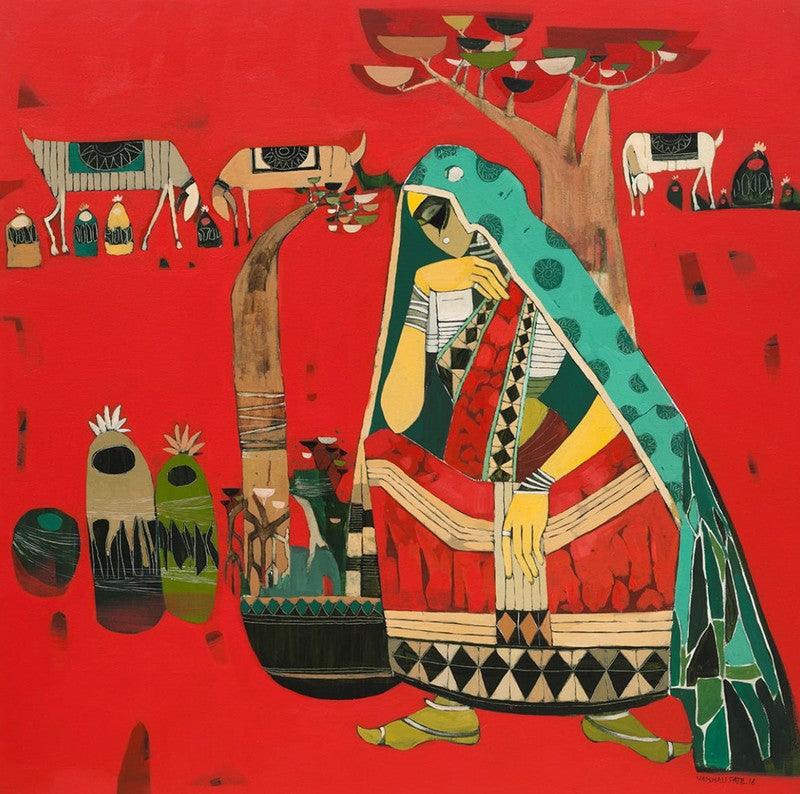
Untitled 12
Artzolo
₹100,000
★ 4.0 (11)
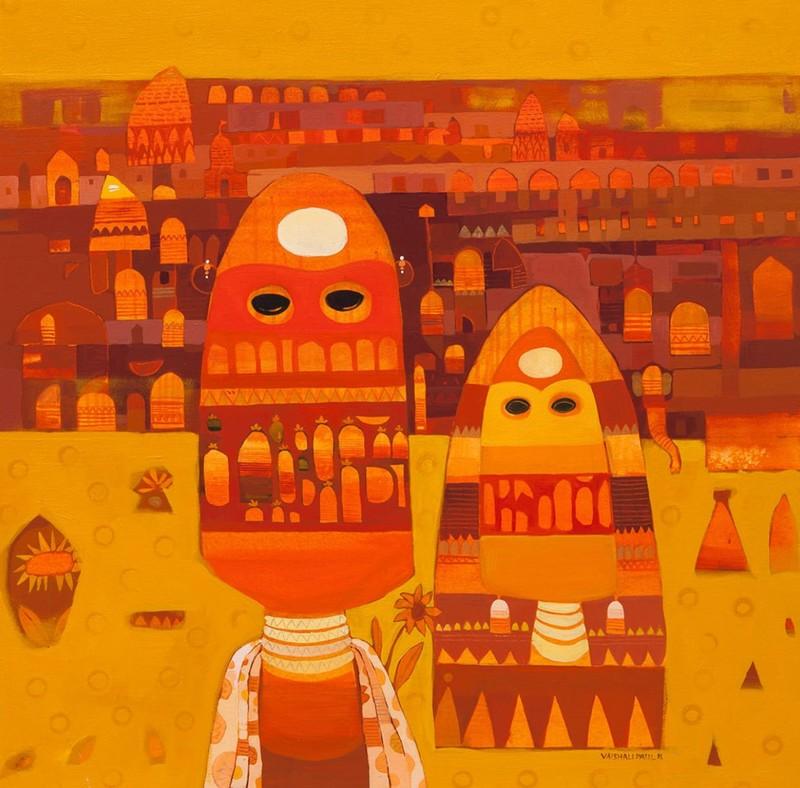
Untitled 18 (Guardians of the Village)
Artzolo
₹50,000
★ 4.0 (5)