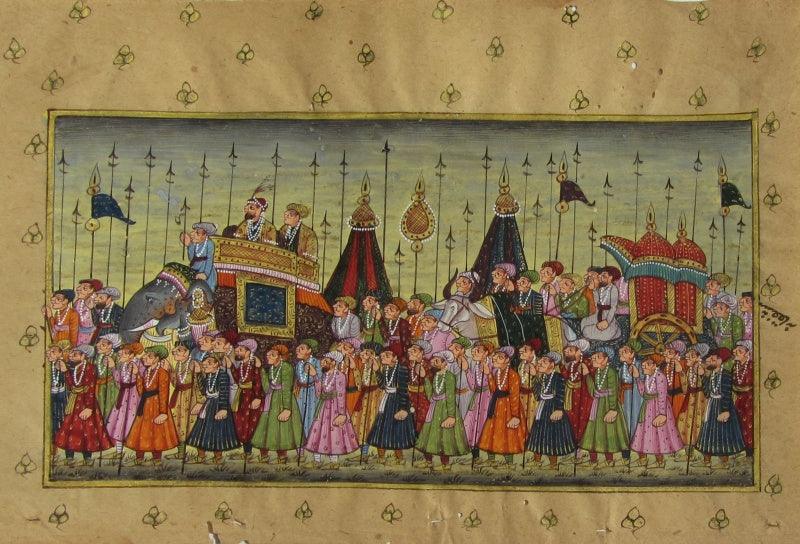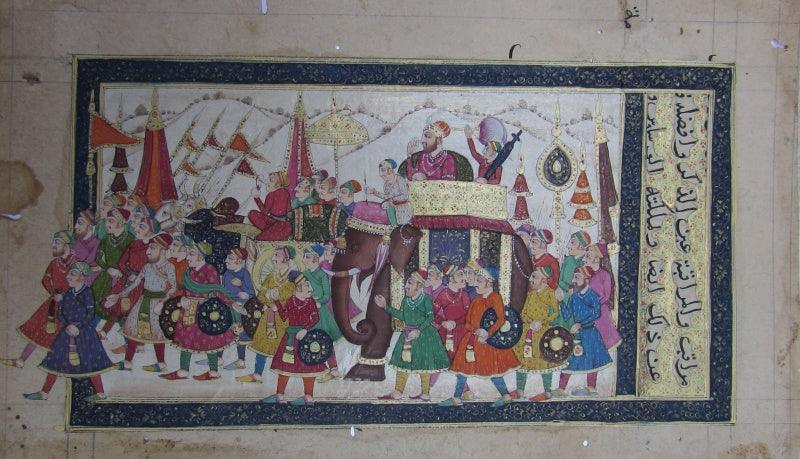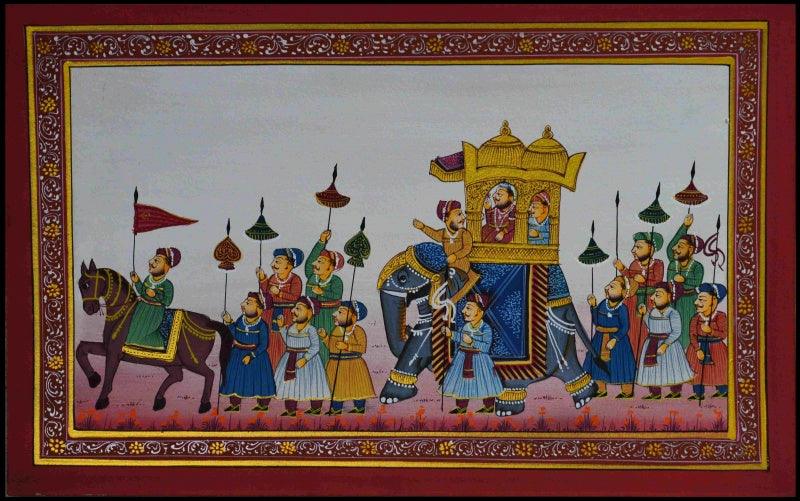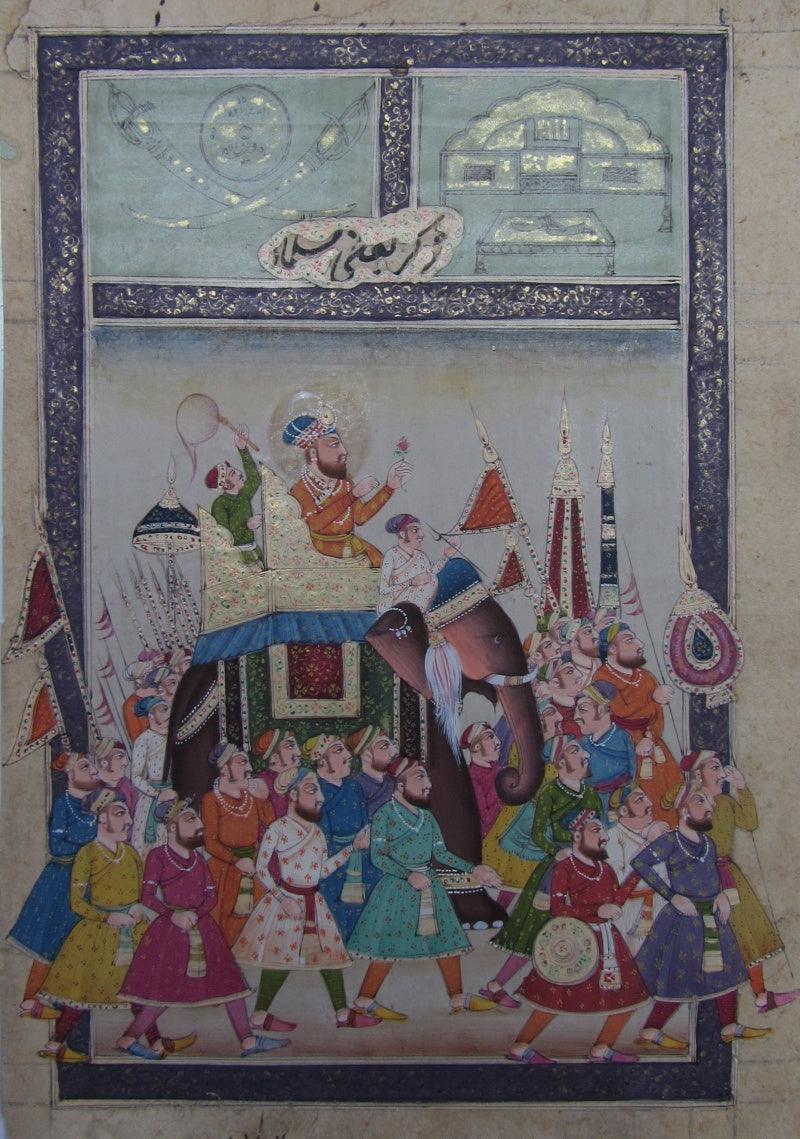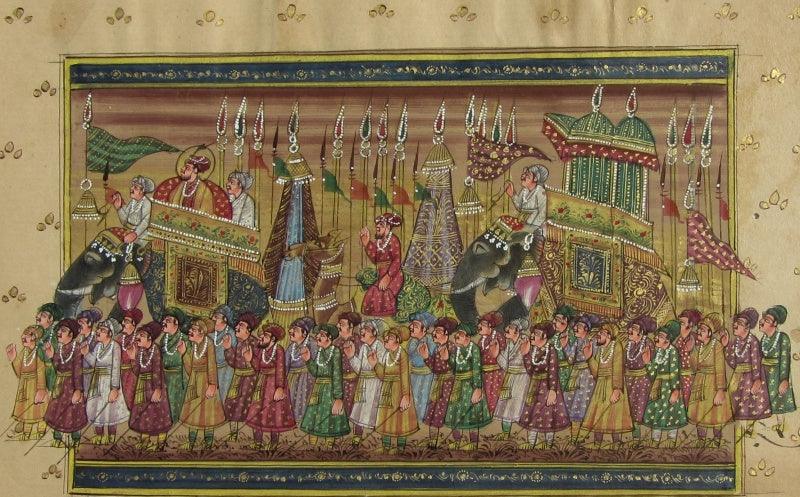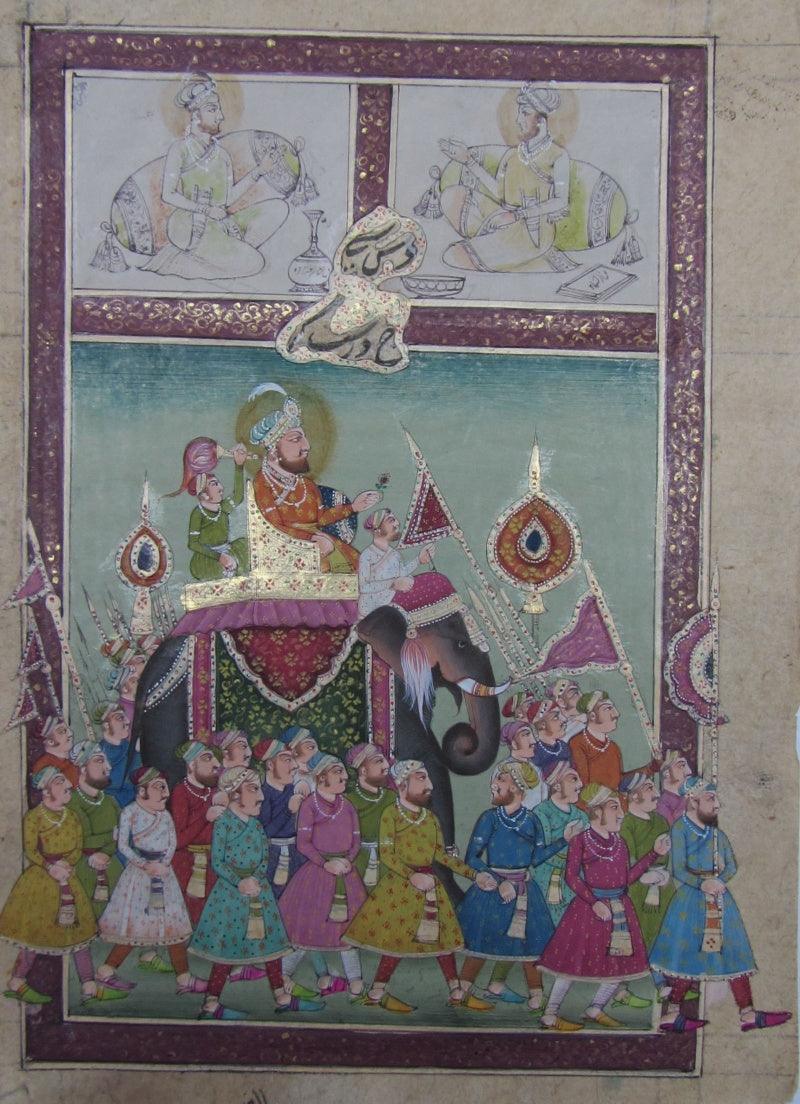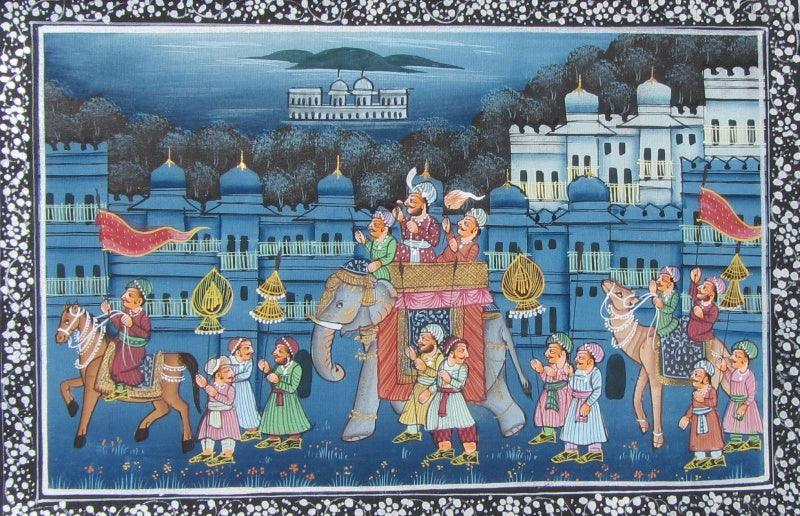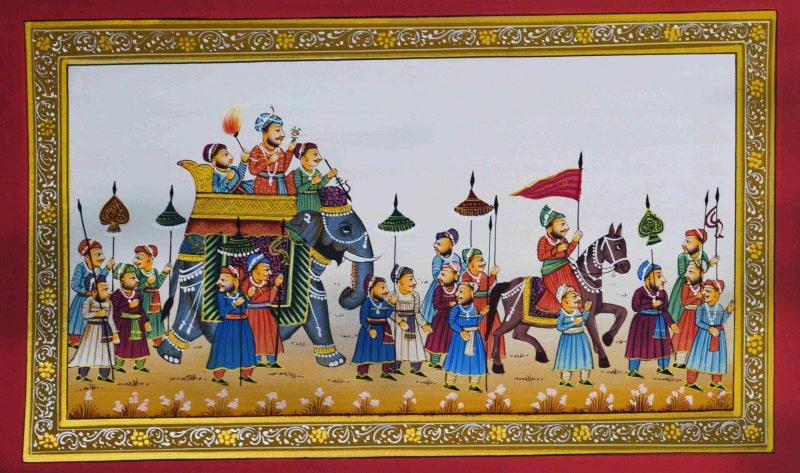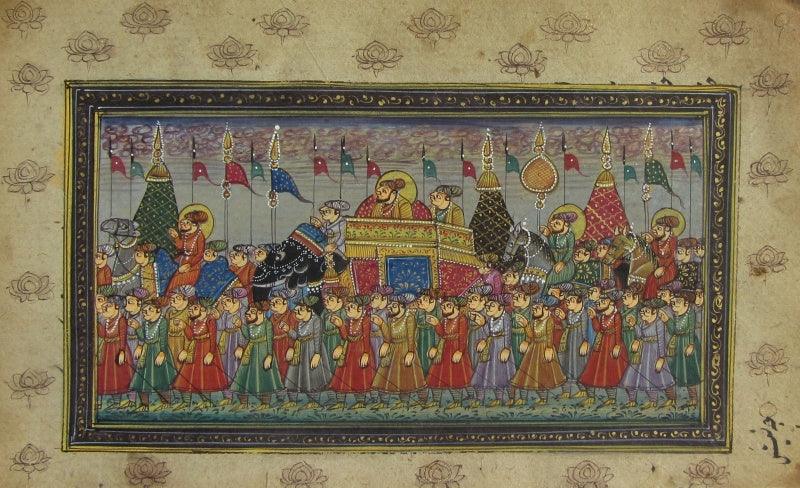
Mughal King On Elephant With Army (Mughal Royal Procession)
This miniature unfurls like a measured anthem of power, where the ruler’s elevated palanquin becomes a still axis around which the city’s breath—soldiers, attendants, horses, and banners—moves in disciplined rhythm. Jewel-toned reds, greens, and lapis accents compress depth into a ceremonial tapestry, transforming space into hierarchy: the closer the figure to the central canopy, the more luminous and sanctioned their presence feels. Repetition of faces and turbans reads less as sameness than as governance rendered visible—an ordered multitude whose individuality is willingly surrendered to the spectacle of state. Framed by ornamental margins, the scene doubles as a political icon, suggesting that authority is not only exercised but meticulously staged, carried forward on the collective body of ritual.
Delivery
You may also like