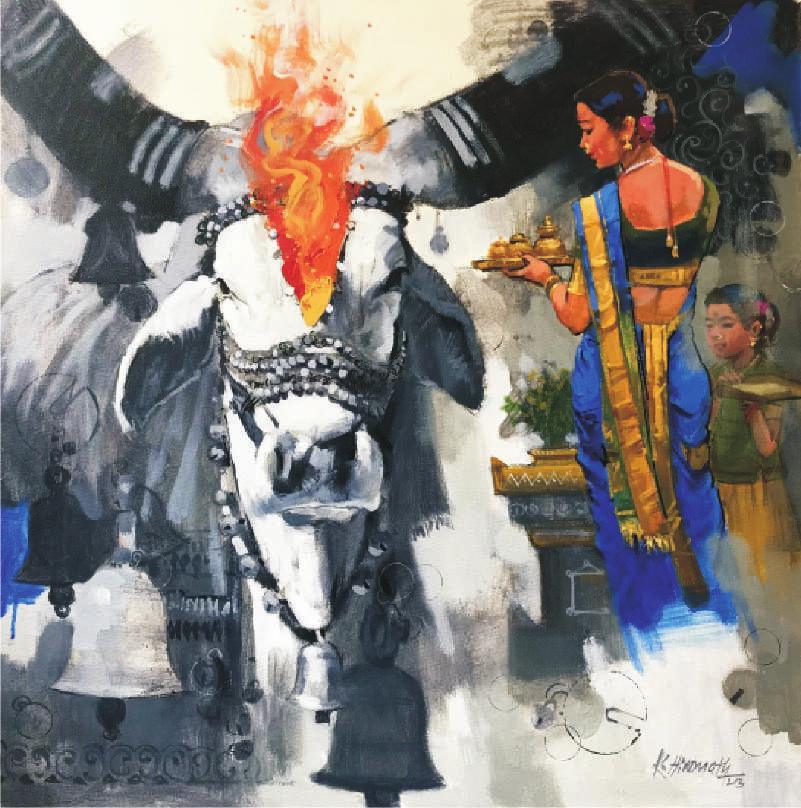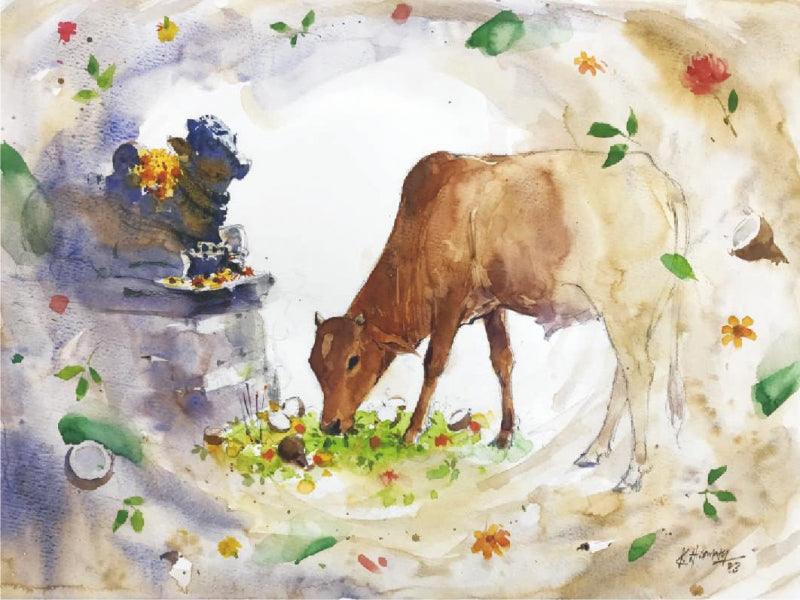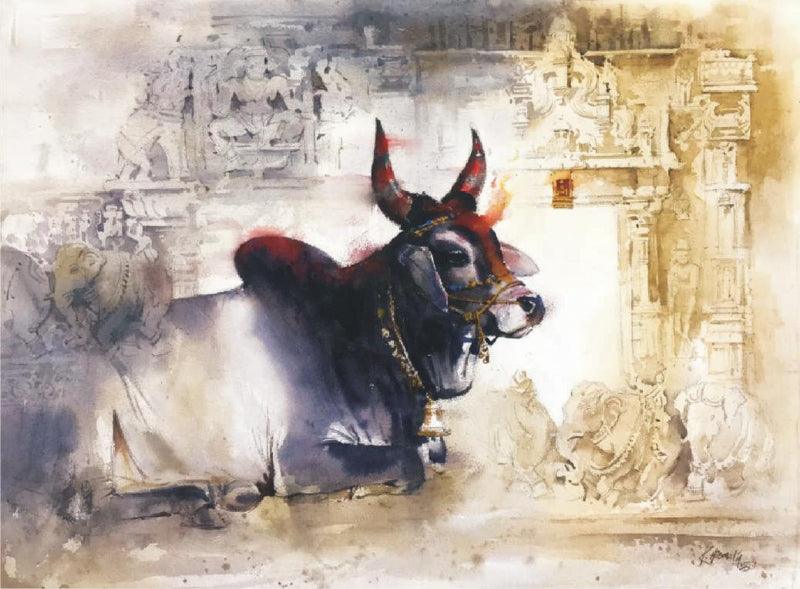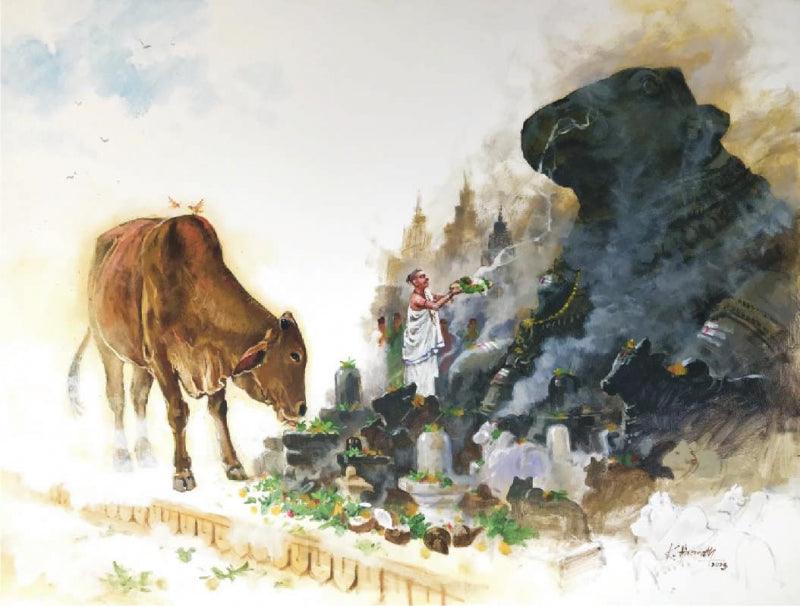
To The Idol (Sacred Cow and Temple Offering)
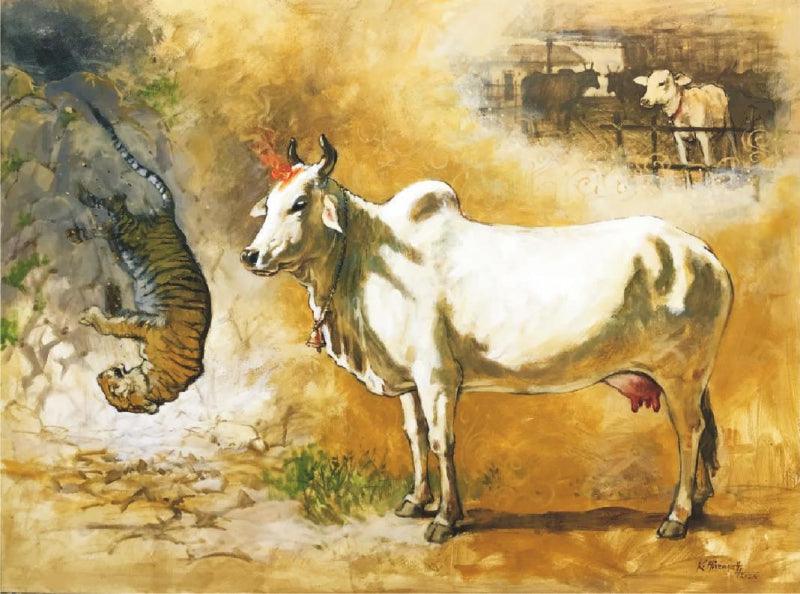
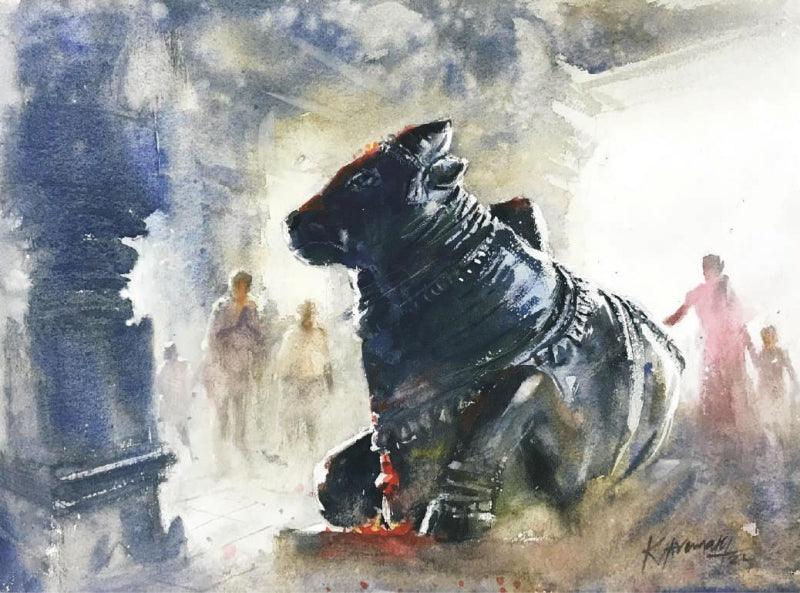
Set against a luminous wash of near-blank space, the cow and the monumental, smoke-dark shrine form a tender yet uneasy dialogue between nourishment and ruin, as if devotion is being asked to account for what it leaves behind. The composition hinges on contrasts—warm ochres and soft animal presence on the left, crushed blacks and ash-laden architecture on the right—where offerings and garlands cling to a form that feels both sacred and burdened. Light behaves like memory here: it does not simply illuminate, but erases and redeems, allowing small sprigs of green to puncture the gray debris with a quiet insistence on continuity. In this suspended landscape, ritual becomes an act of repair, and the humble body of the cow stands as a moral counterweight to the weight of stone, smoke, and history.
Delivery
You may also like