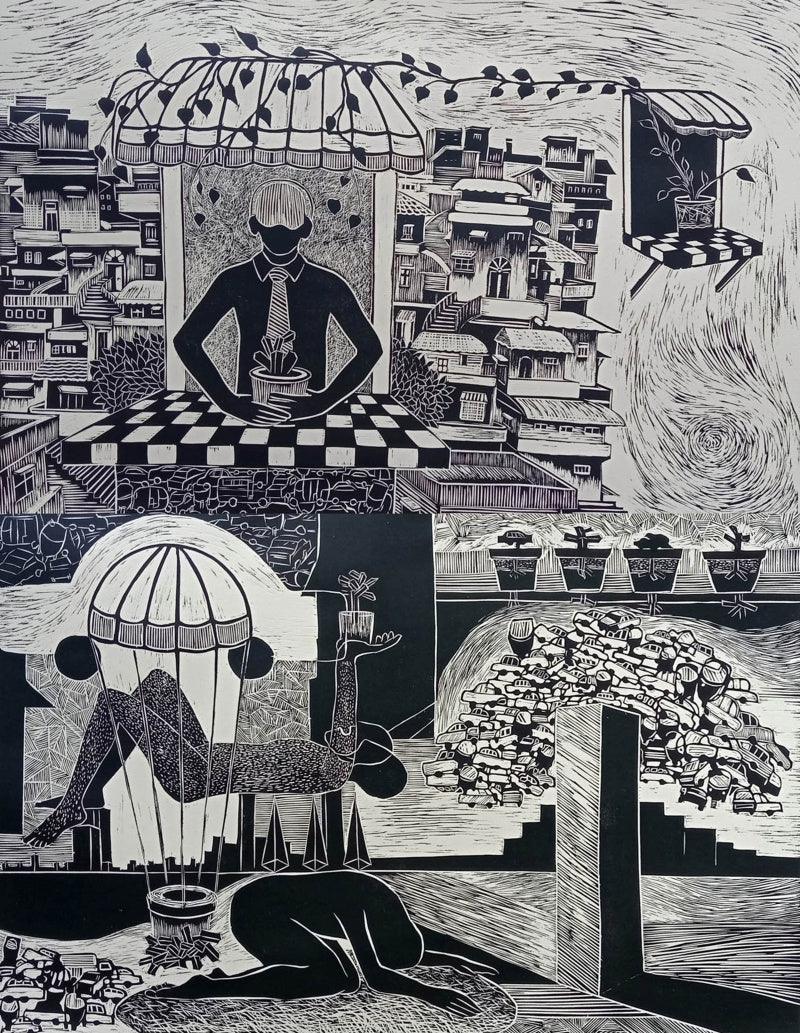
Life In Concrete (Dreams of Escape)
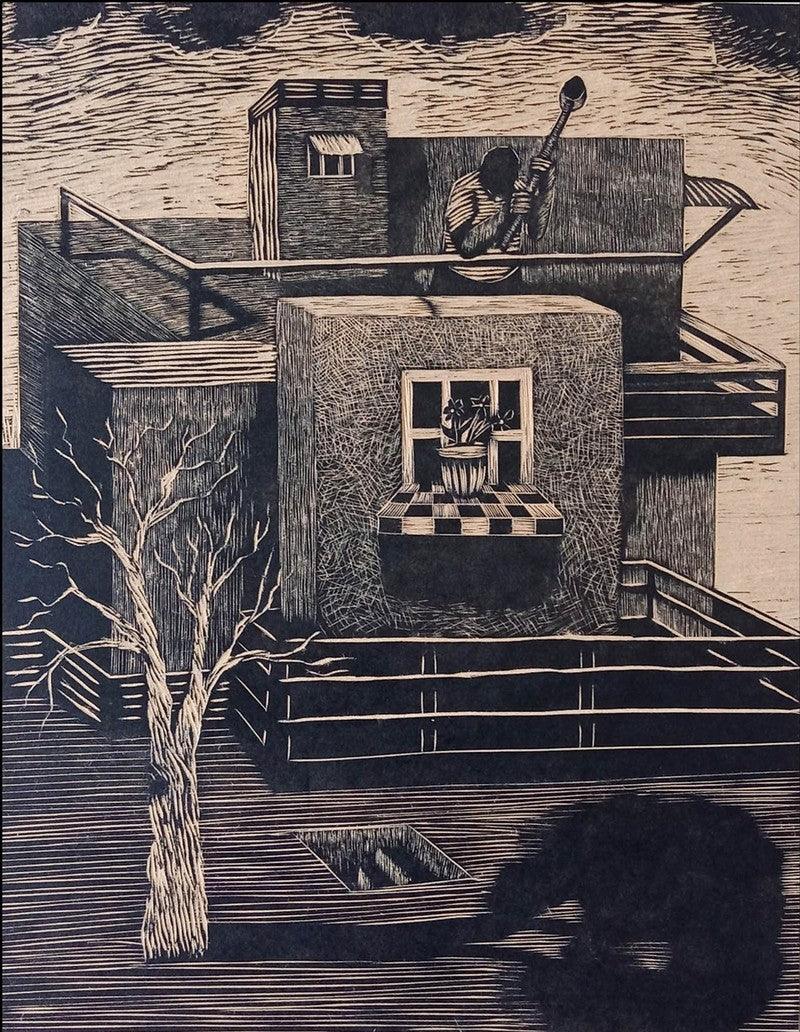
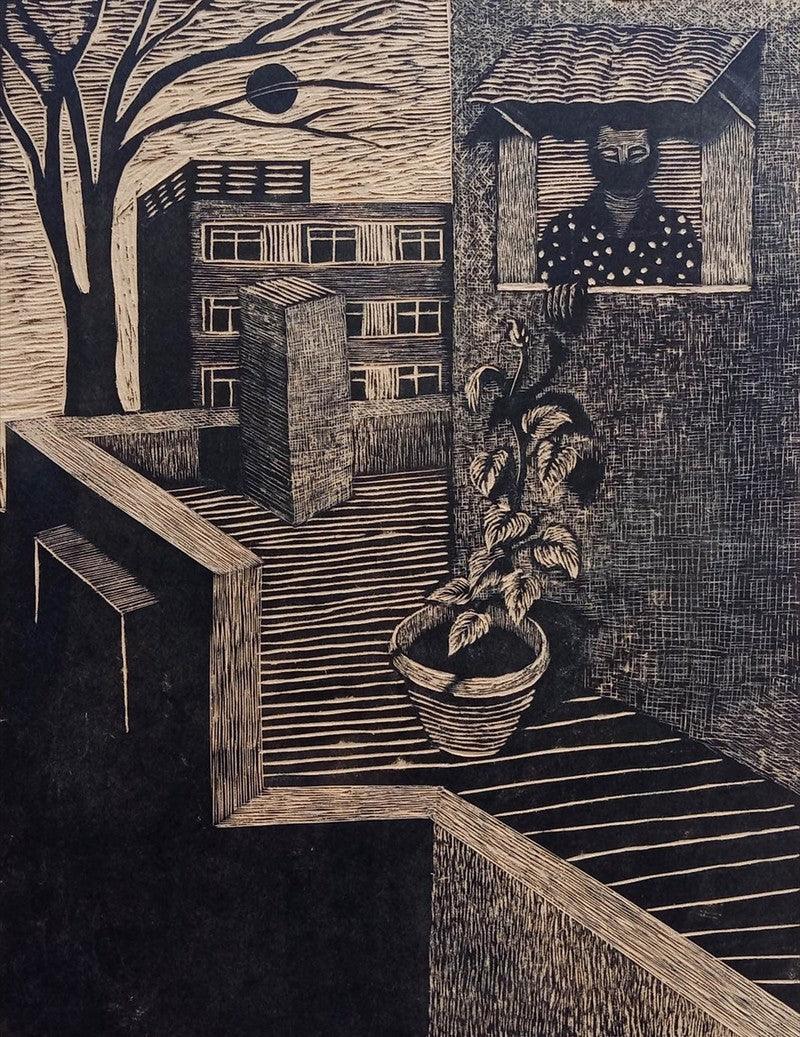
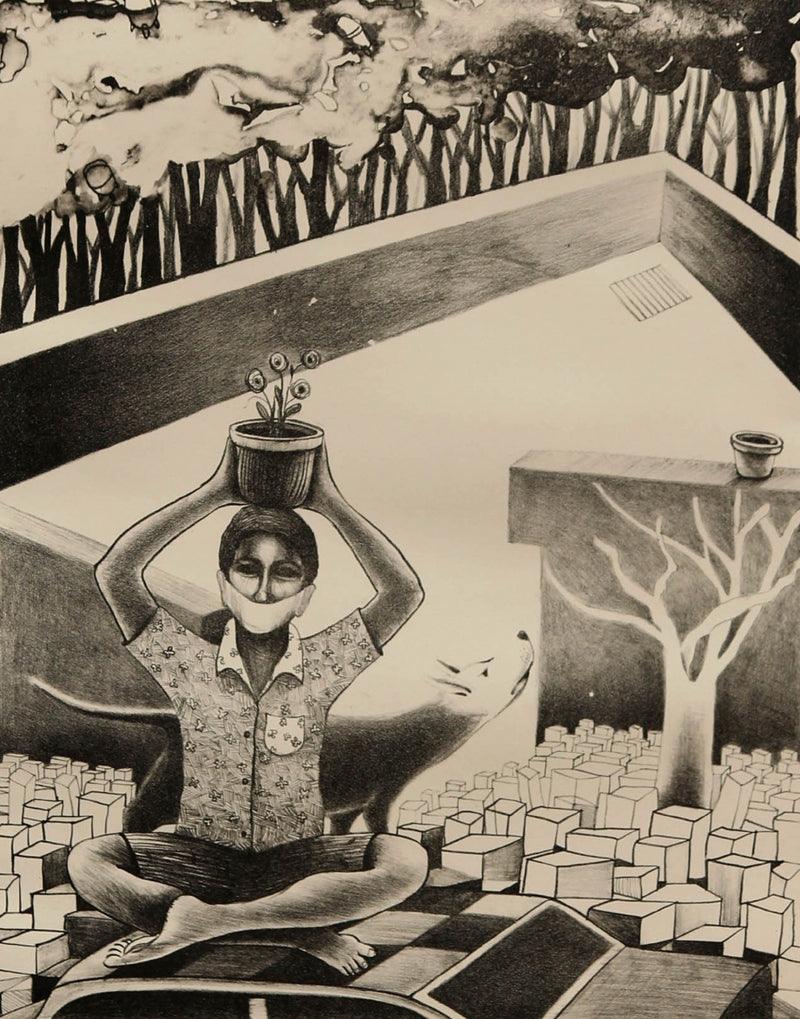
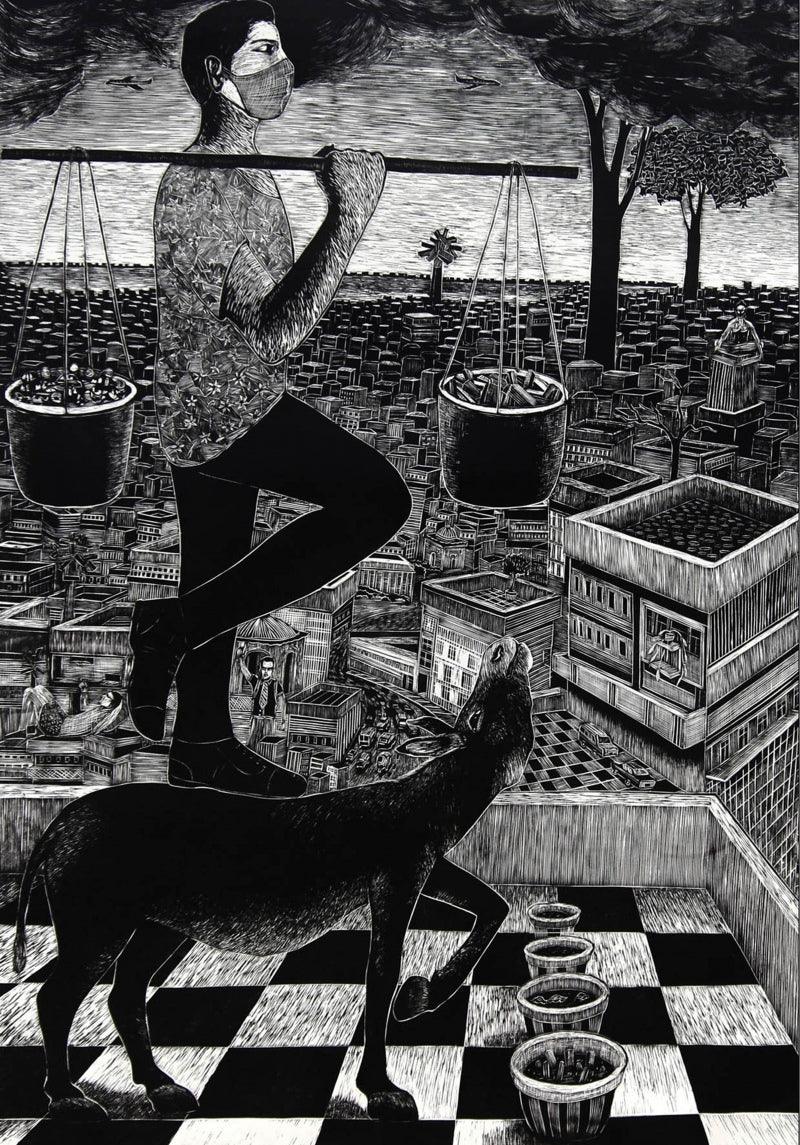
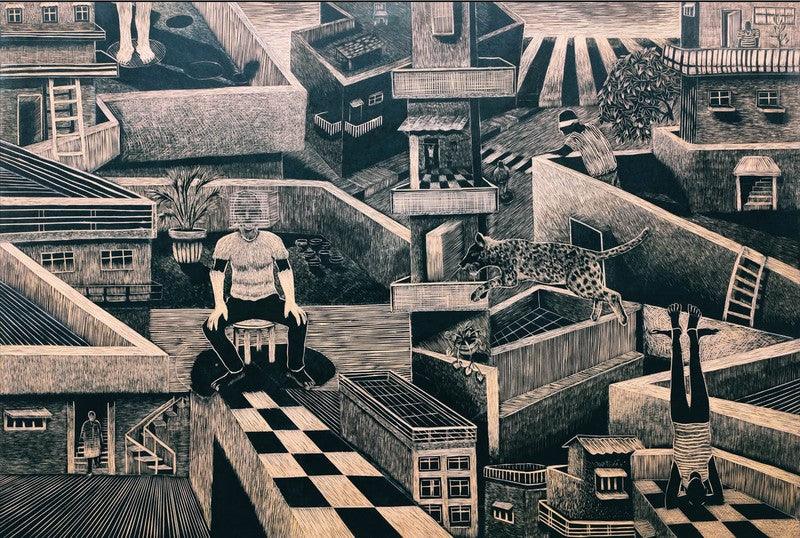
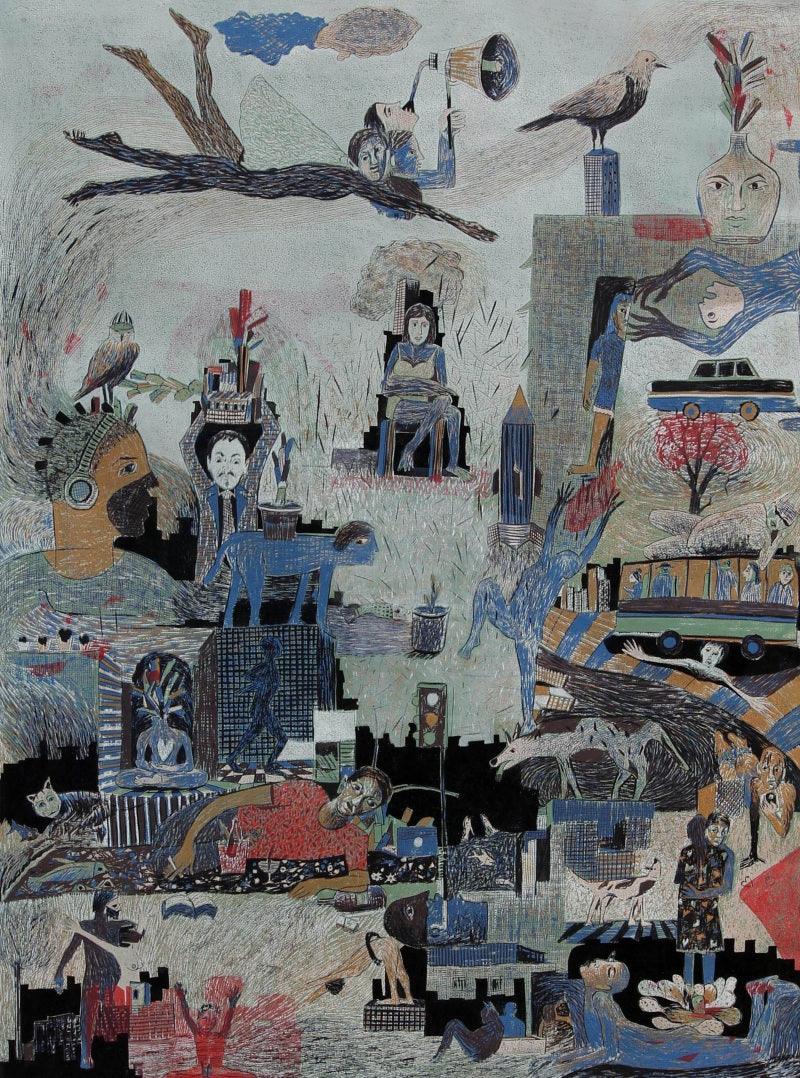
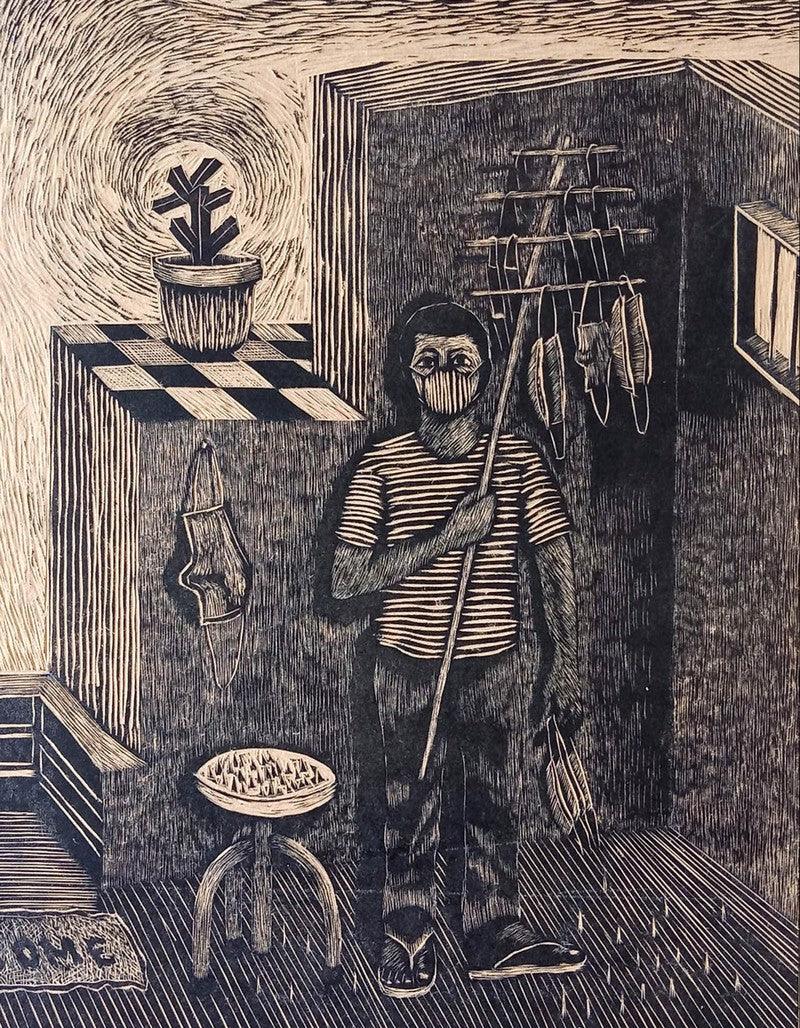
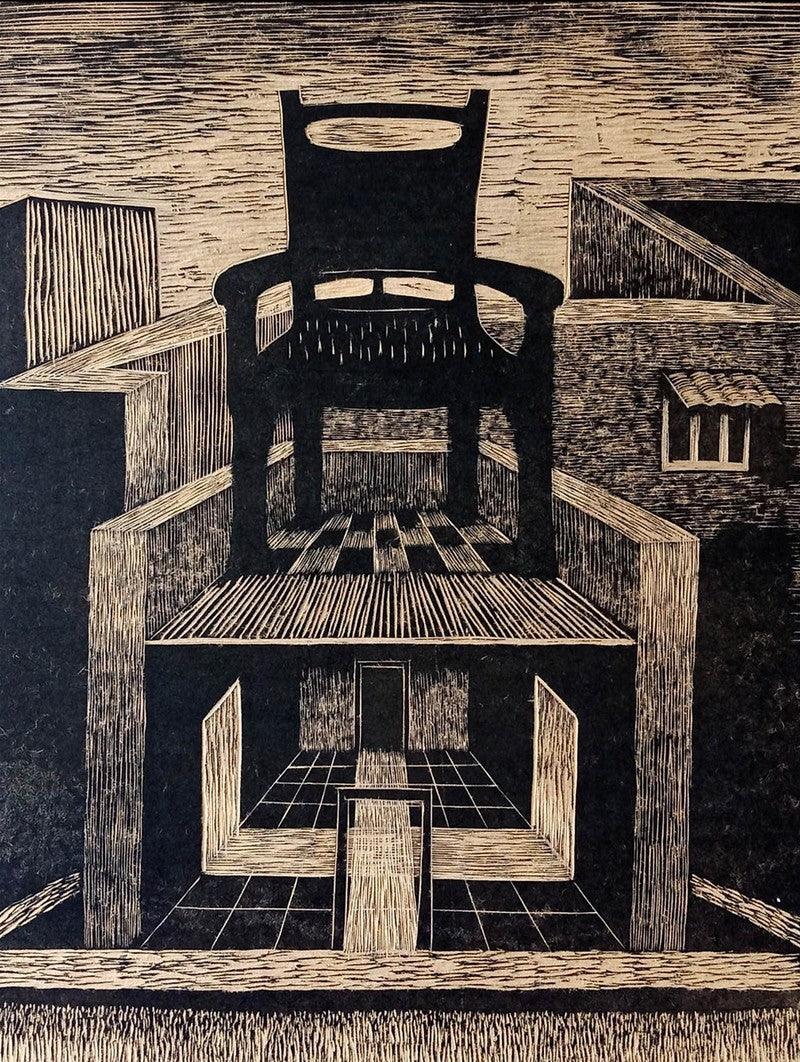
Rendered in stark black and white, the work builds a labyrinthine city from incision-like lines, where stacked houses and checkered planes compress space into a tense architecture of everyday survival. Masked figures—one poised at a market-like stall, another tethered to a ballooning, cage-like form—become emblems of anonymity and suspended aspiration, as if identity must be negotiated through labor, trade, and borrowed air. The drifting vine overhead and the repeated potted plants offer a fragile counterpoint: small, domestic gestures of care that persist against the city’s dense, almost claustrophobic rhythm. Across its shifting panels and swirling textures, the piece reads as a quiet allegory of urban life—order and improvisation interlocked—where hope appears not as escape, but as something cultivated in tight quarters.
Ingredients
Delivery
You may also like