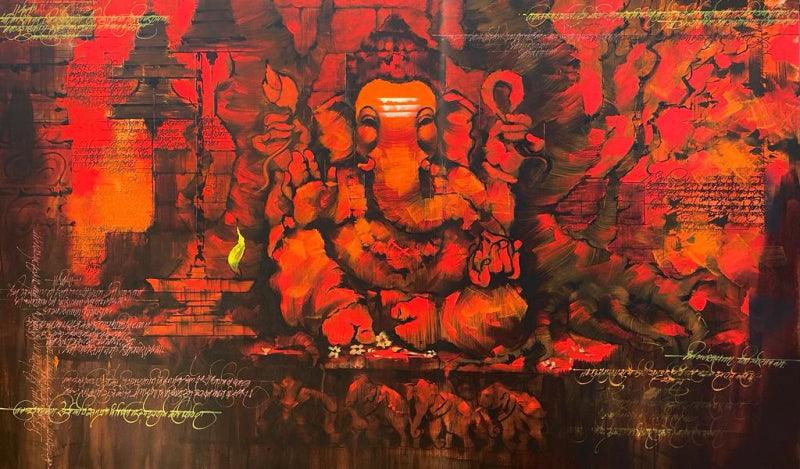
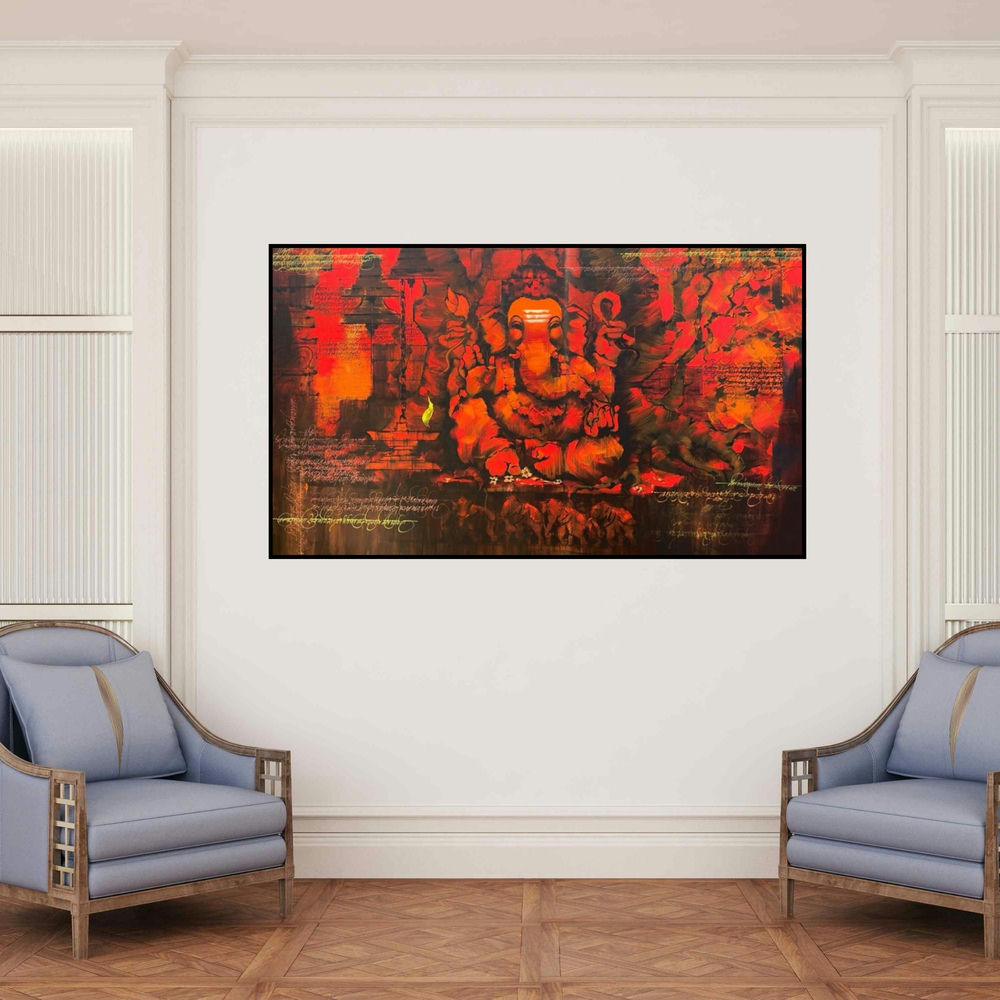
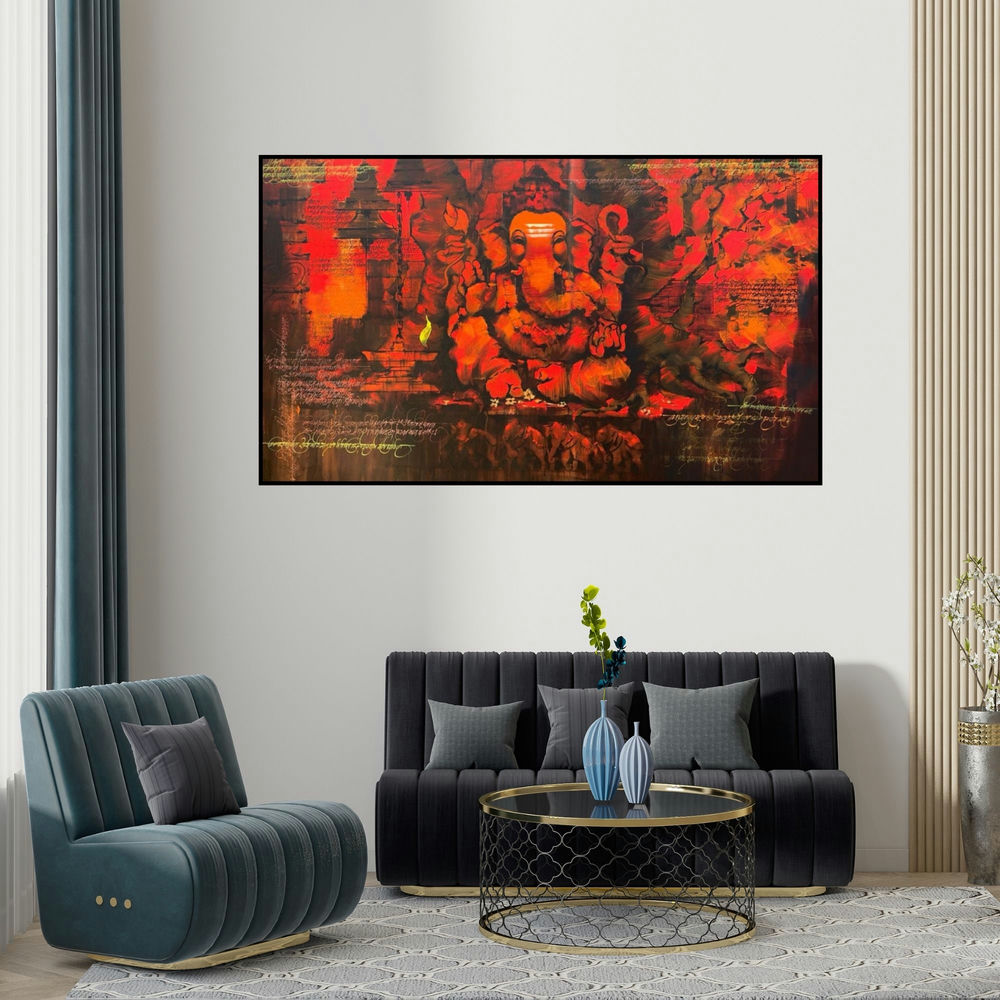
Lord Ganesha (Ganesha's Crimson Glow)
₹450,000
● In stock · ★ 4.0 (8)checking live price…
Size
36x60Type
OriginalMaterial
CanvasEmerging from a furnace of vermilion and ember, the figure of Ganesha is not rendered as a static icon but as a living presence—half-revealed through veils of smoke, script, and abrasion. The composition compresses space into a devotional chamber where layered textures and calligraphic traces function like murmured mantras, turning the surface into a palimpsest of memory and ritual. Light seems to pulse from within the form rather than fall upon it, suggesting an inward awakening that persists amid surrounding turbulence. In this tension between dissolution and clarity, the work proposes protection and renewal as acts of continual becoming rather than fixed certainty.
Delivery
You may also like
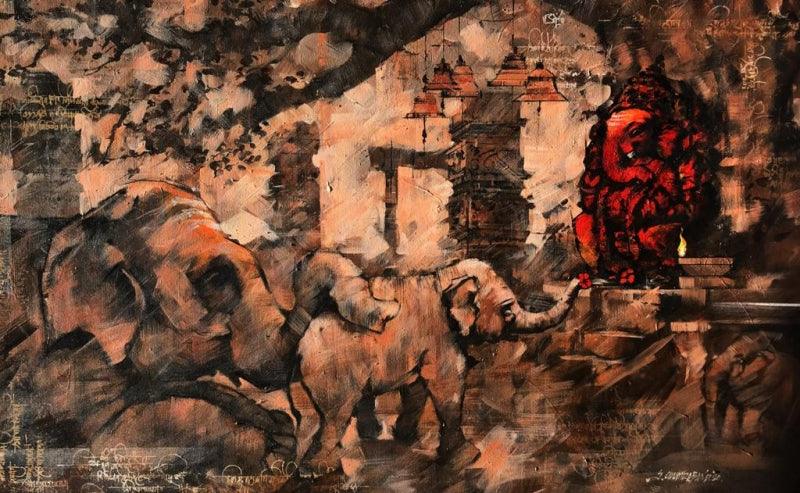
Ganesha
Artzolo
₹170,000
out of stock
★ 4.0 (13)
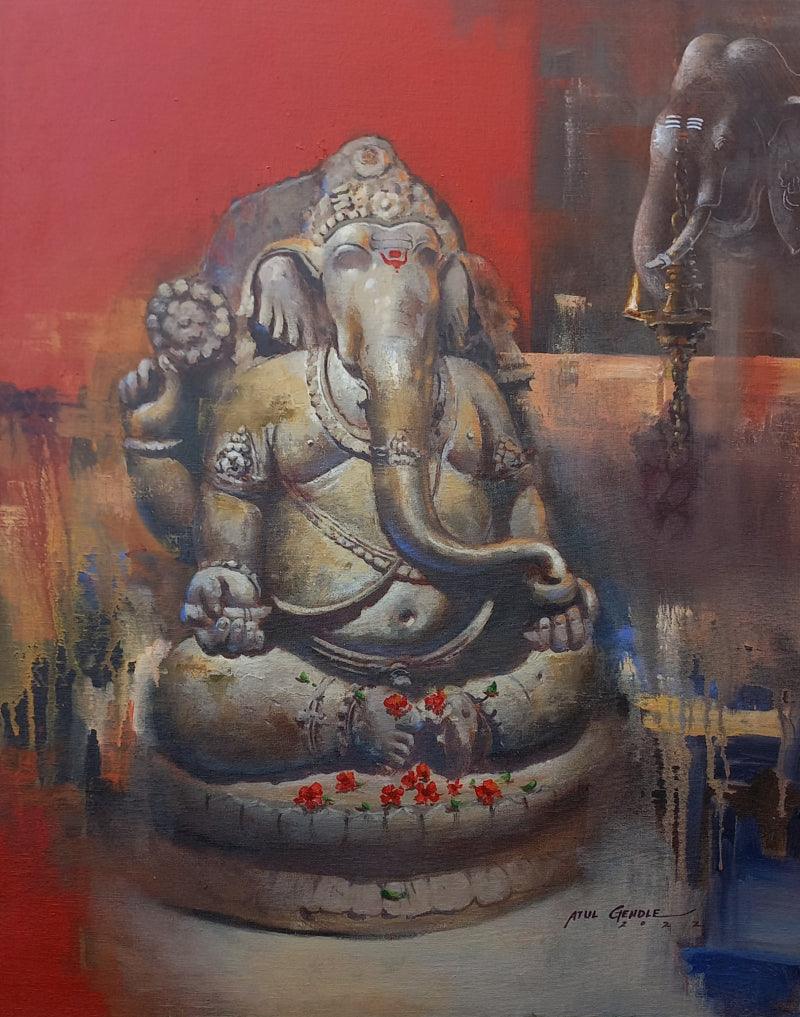
Lord Ganesha (Ganesha Idol) (Ganesha Crimson Sanctuary)
Artzolo
₹45,000
★ 4.0 (12)
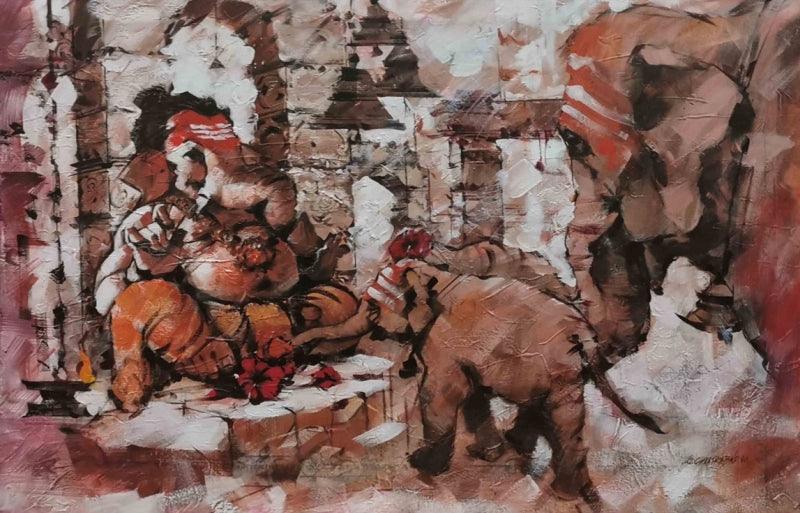
Lambodara (Ganesha with Elephant)
Artzolo
₹300,000
★ 4.0 (15)
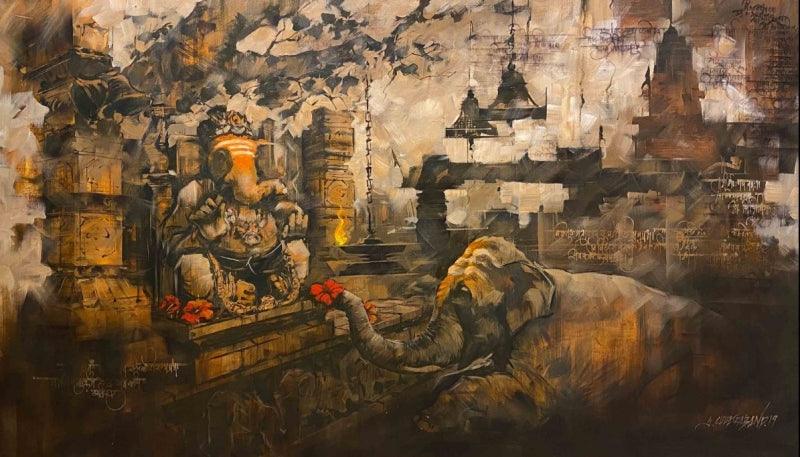
Ekdant (Divine Encounter)
Artzolo
₹315,000
out of stock
★ 4.0 (10)
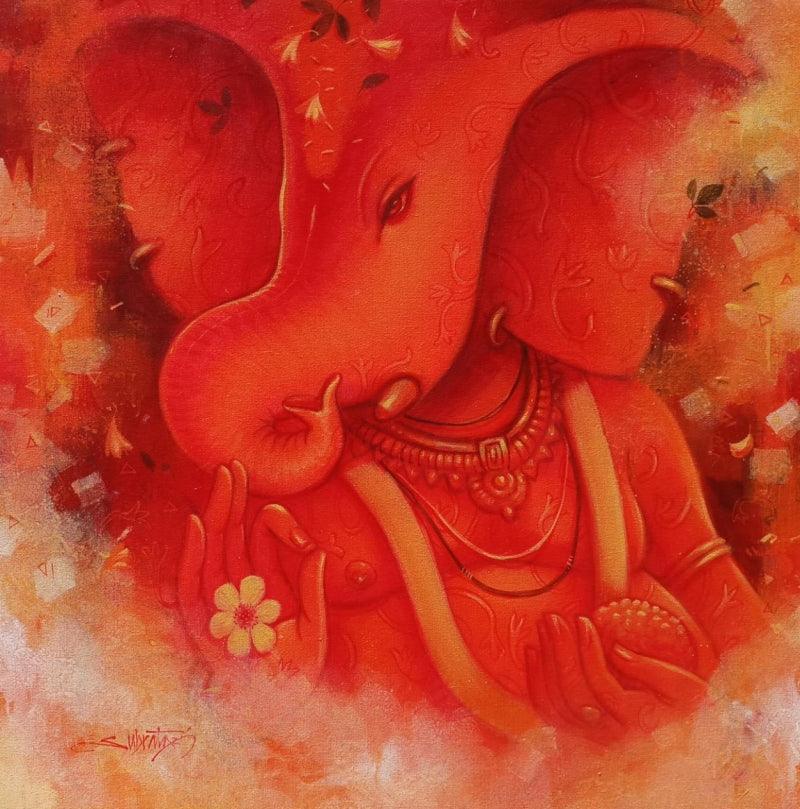
Lord Ganesha (The Red Ganesha)
Artzolo
₹70,000
out of stock
★ 5.0 (13)
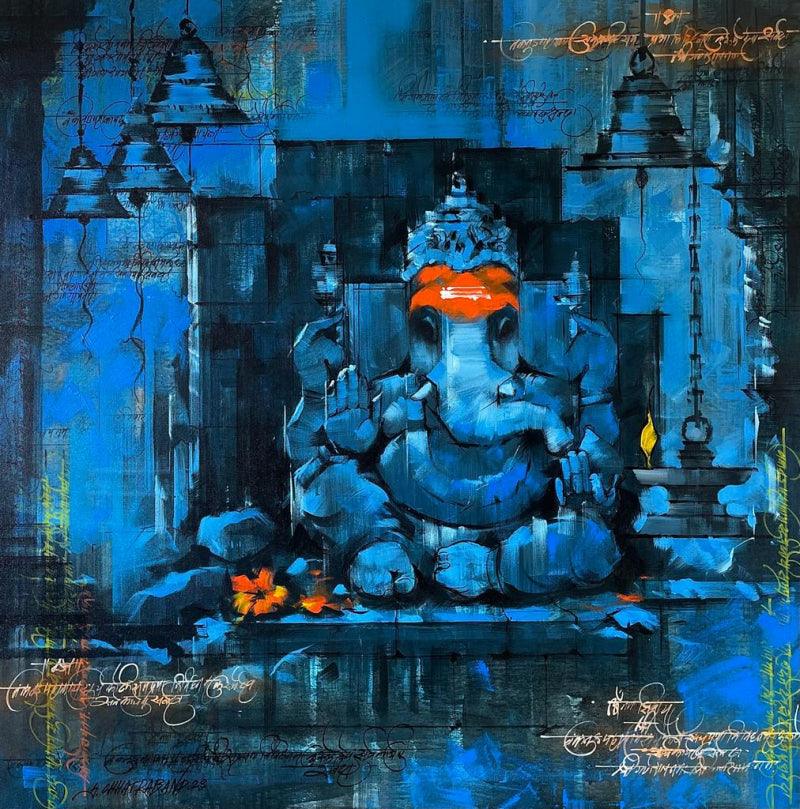
Ekdant (Ganesha's Blue Sanctuary)
Artzolo
₹270,000
★ 5.0 (11)
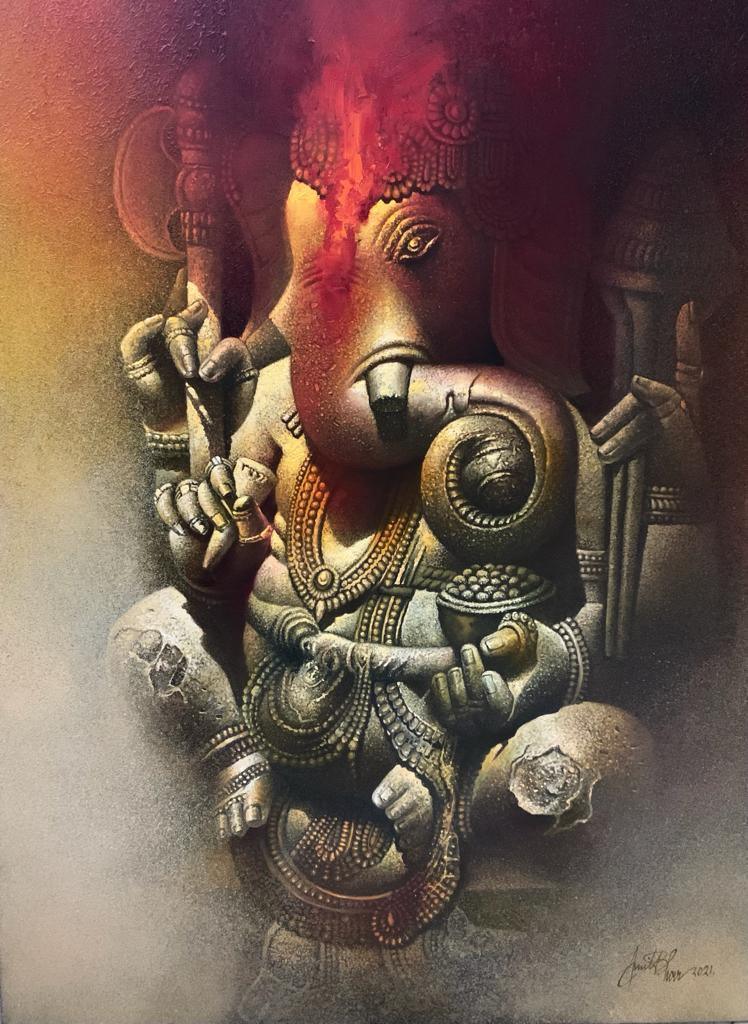
Lord Ganesha (Divine Radiance)
Artzolo
₹225,000
out of stock
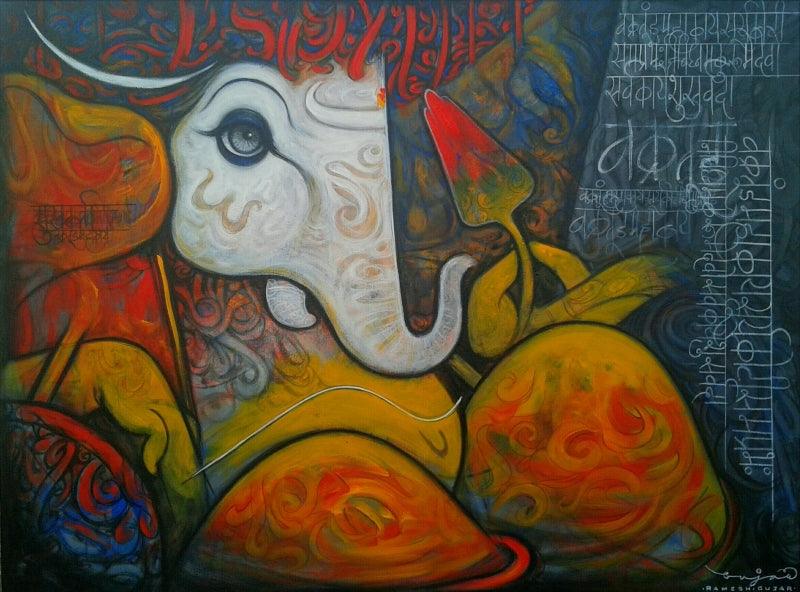
Ganesha (Divine Script)
Artzolo
₹180,000
★ 4.0 (5)