Naman
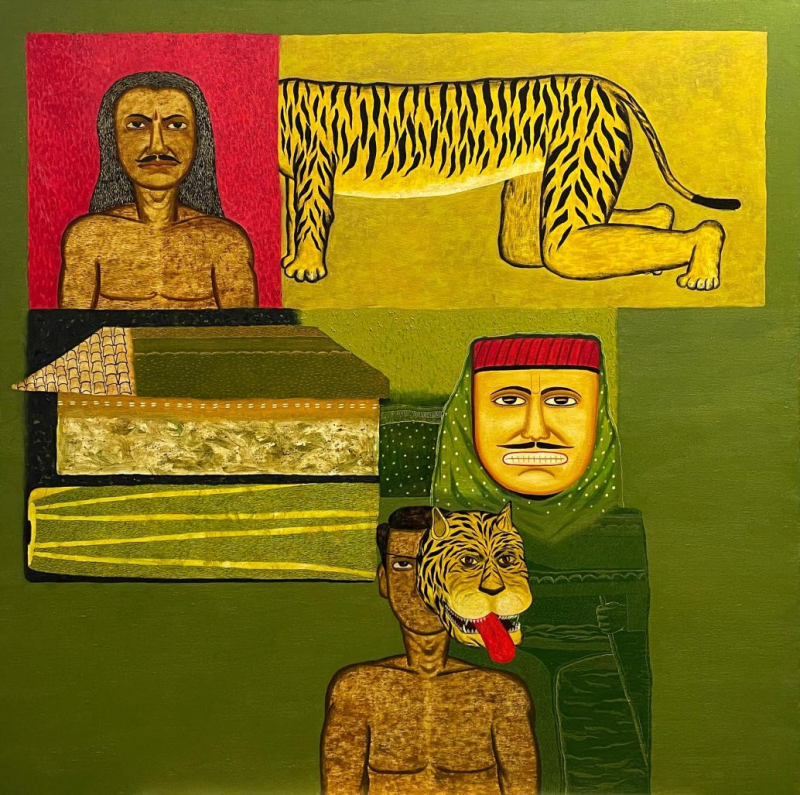
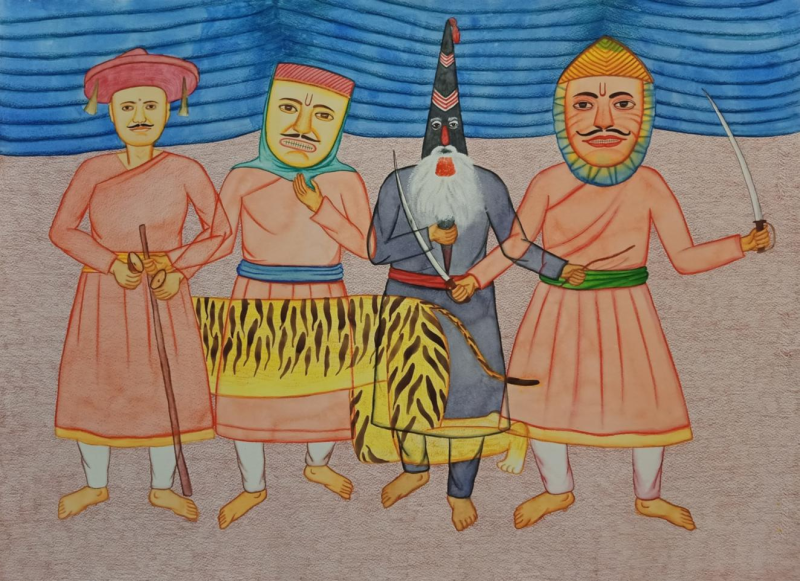
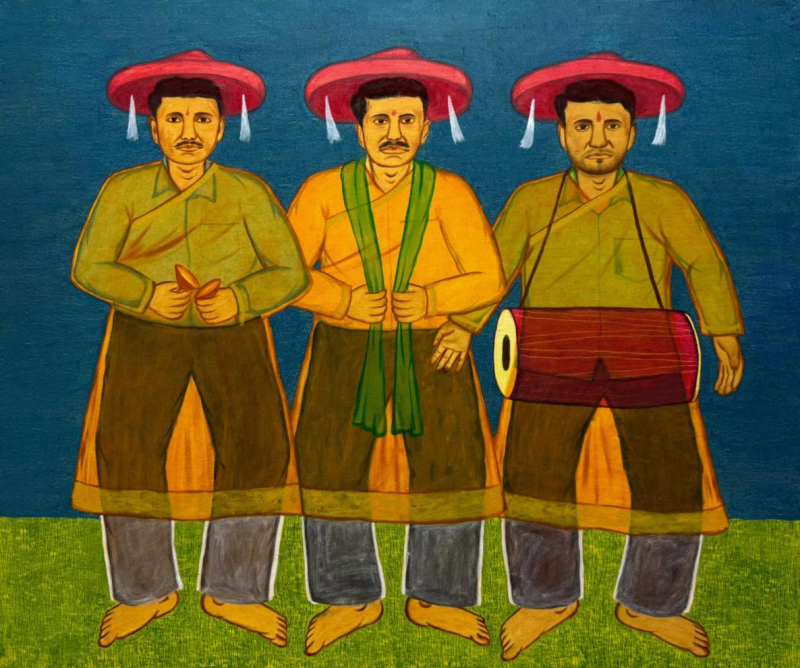
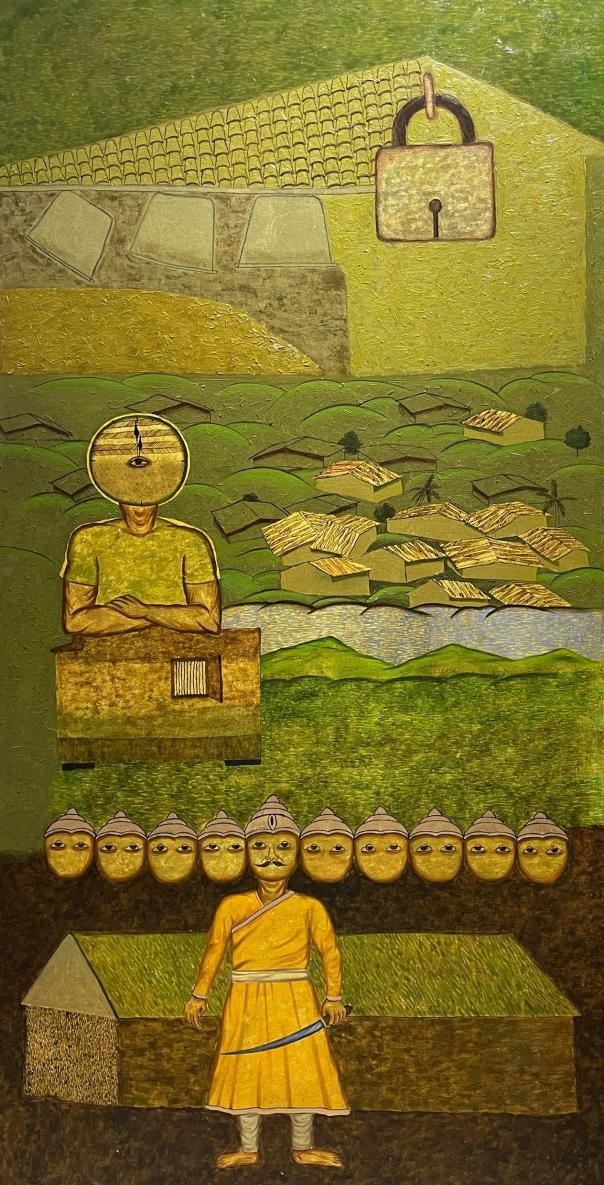
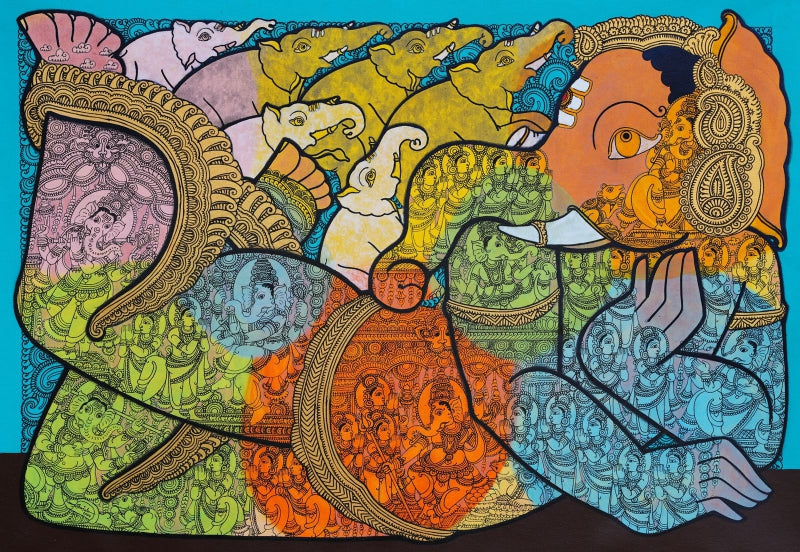
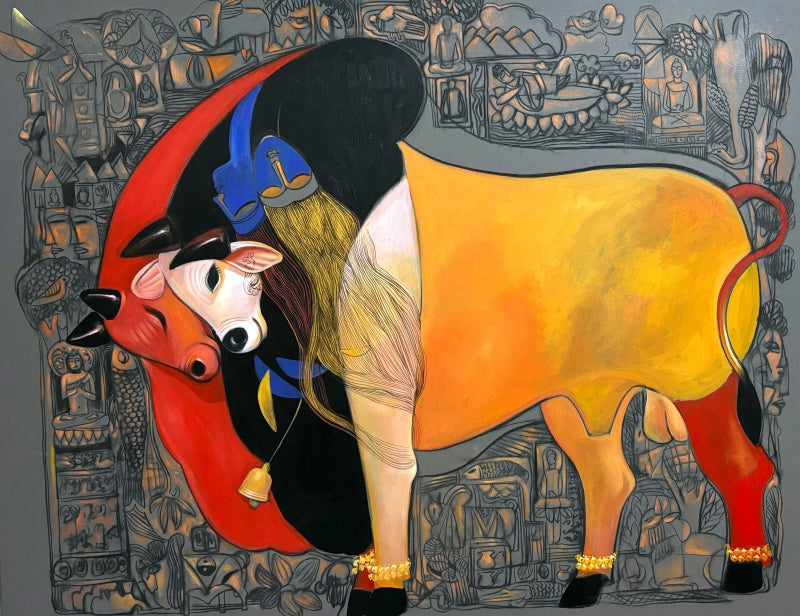
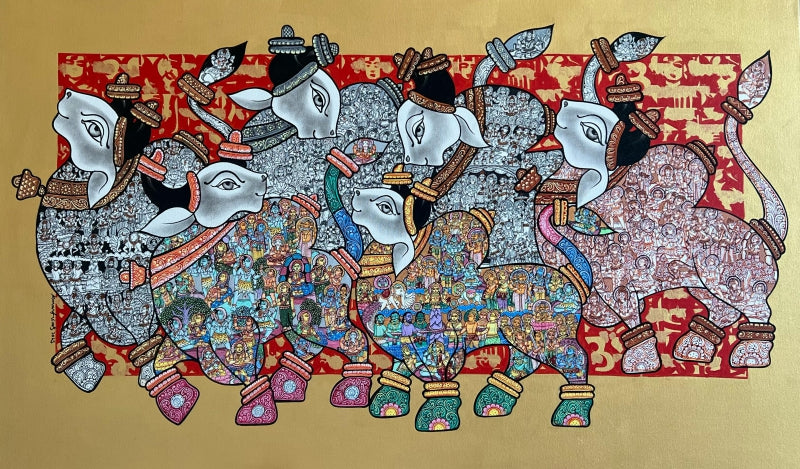
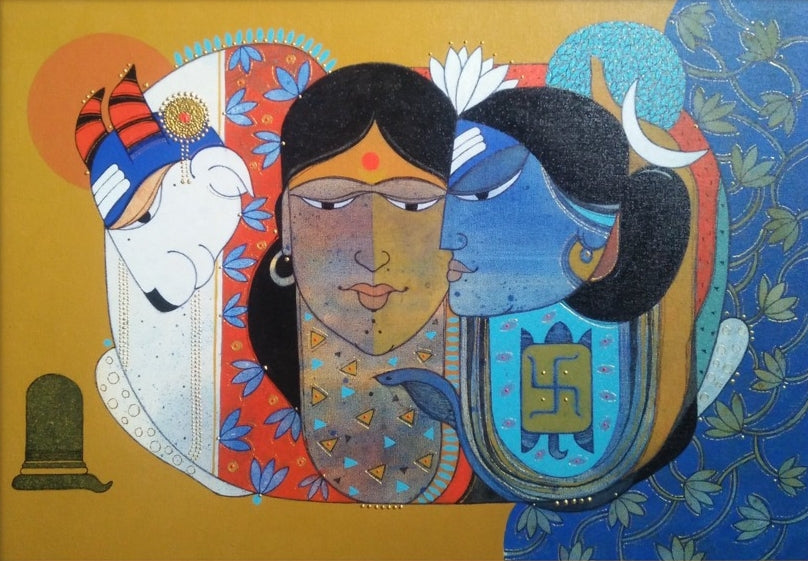
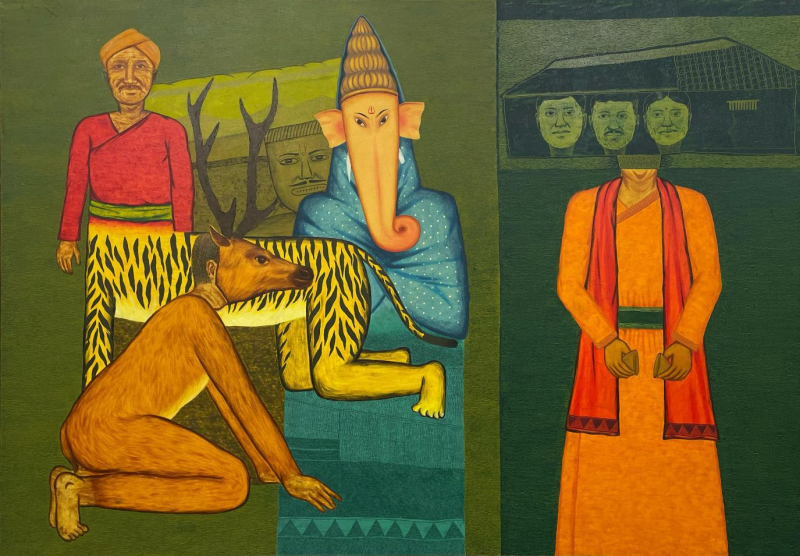
This tableau stages a quiet collision between devotion, labor, and the animal-self: Ganesha presides with an unnervingly calm, frontal gaze while human figures are flattened into emblematic presences, their faces echoed again as spectral masks within the architecture. The composition cleaves into two psychological rooms—an earthy, ochre-and-tiger-stripe realm of instinct and ritual on the left, and a cooler, shadowed domestic structure on the right—suggesting the way community identity is both lived and performed. Pattern becomes a kind of liturgy: repeated stripes, draped textiles, and the rigid geometry of the house turn bodies into symbols, implying a narrative where tradition shelters, but also obscures, the individual. Even the kneeling animal form reads as both offering and burden, a tender, uneasy hinge between the sacred icon and the human world that surrounds it.