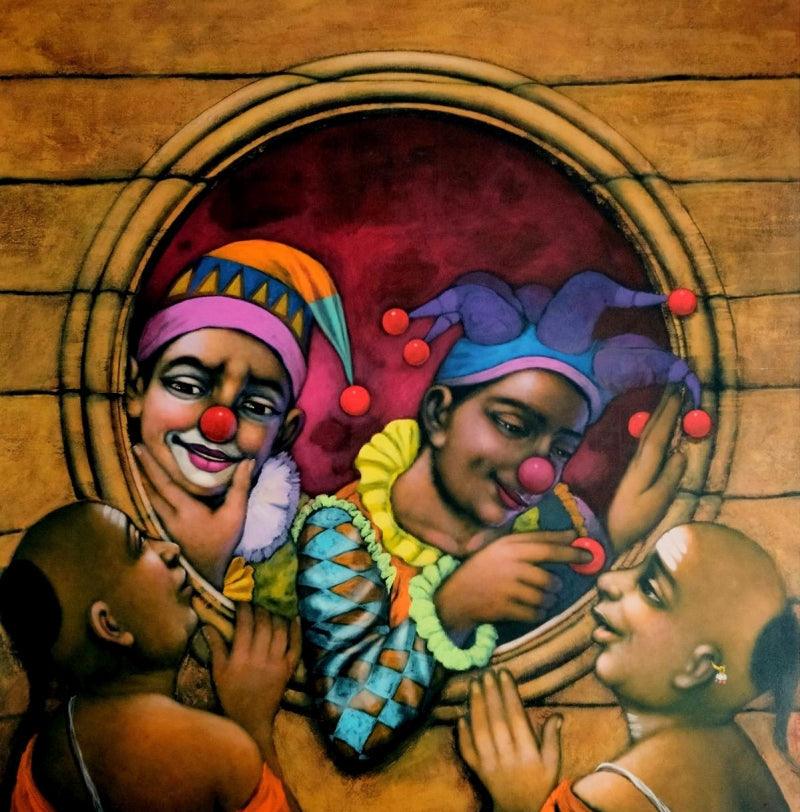
Friends 2
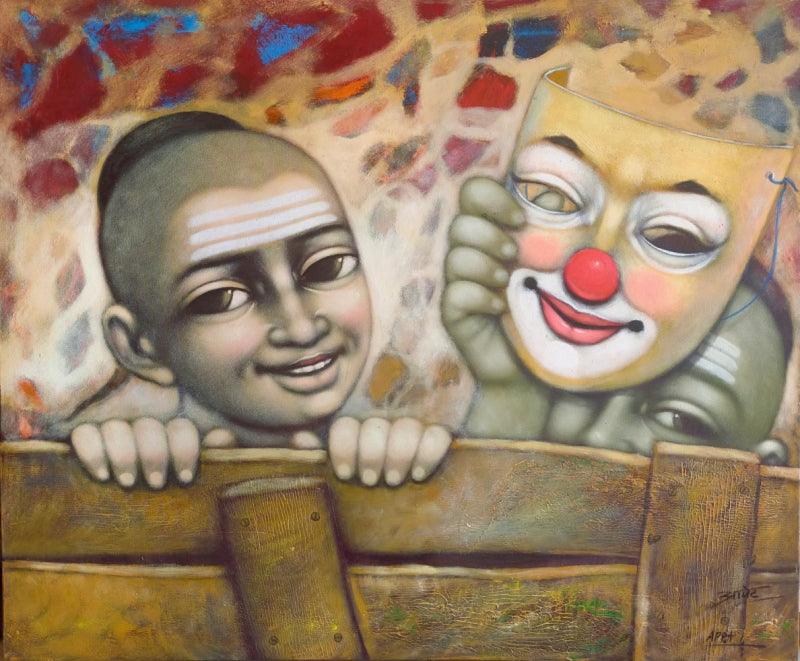
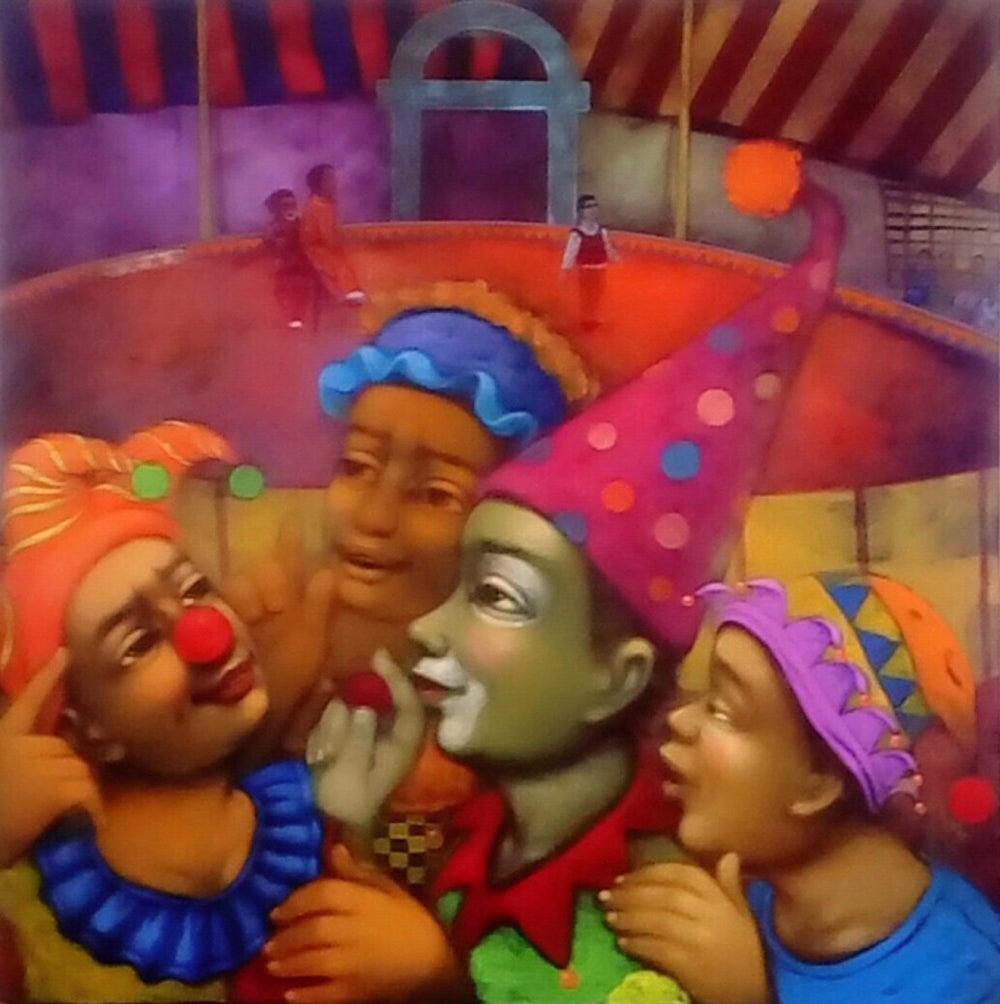
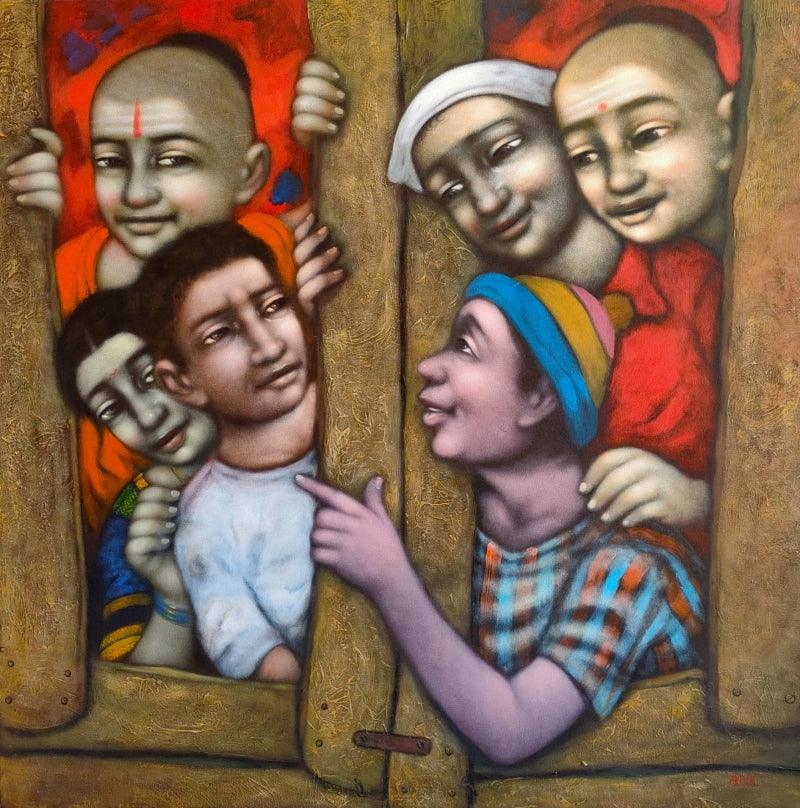
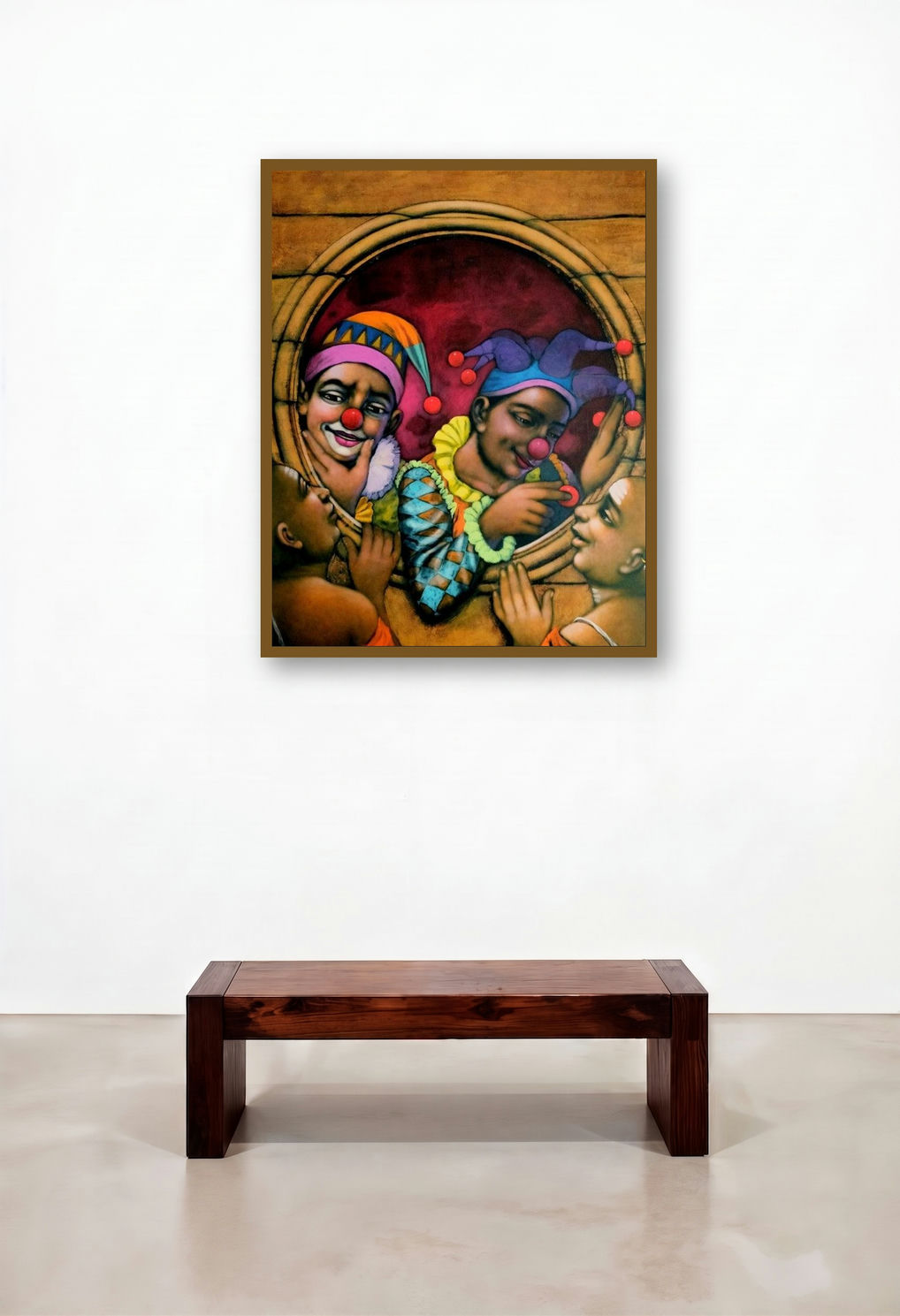
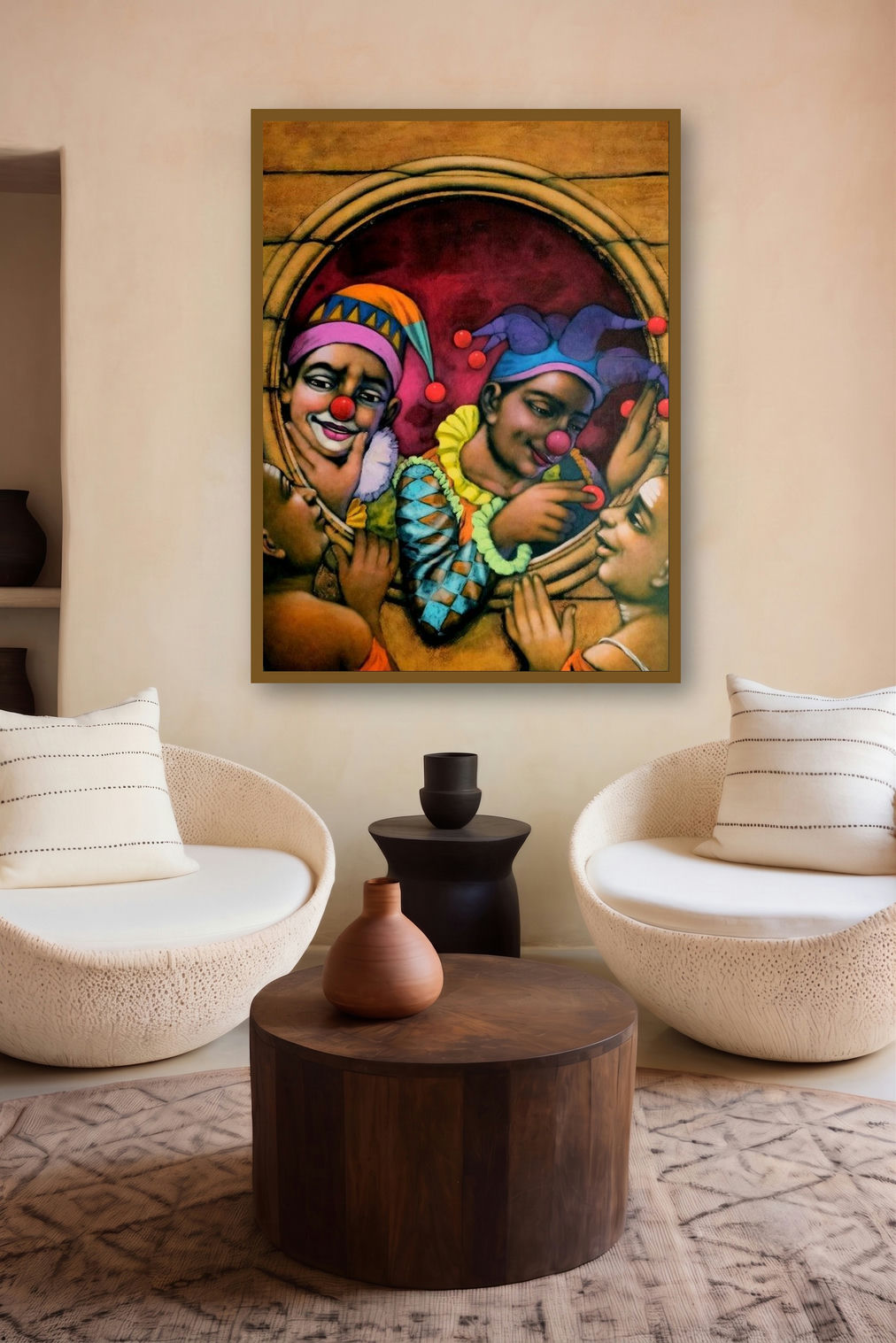
Framed within a stone-like oculus, two clowns hover between performance and confession, their vermilion noses acting like small, pulsing seals of identity—comic masks that cannot quite conceal tenderness. The composition choreographs a quiet triangle of intimacy: the jester-figures lean outward while the two onlookers press inward, hands and gazes meeting at the threshold as if the painting itself were a window into shared longing. Warm ochres and bruised burgundies deepen the scene into something theatrical yet hushed, where laughter becomes a language for vulnerability and the circular frame reads as both stage and sanctuary. In this suspended moment, spectacle dissolves into care, suggesting that the truest trick is how easily joy and melancholy trade places on a human face.