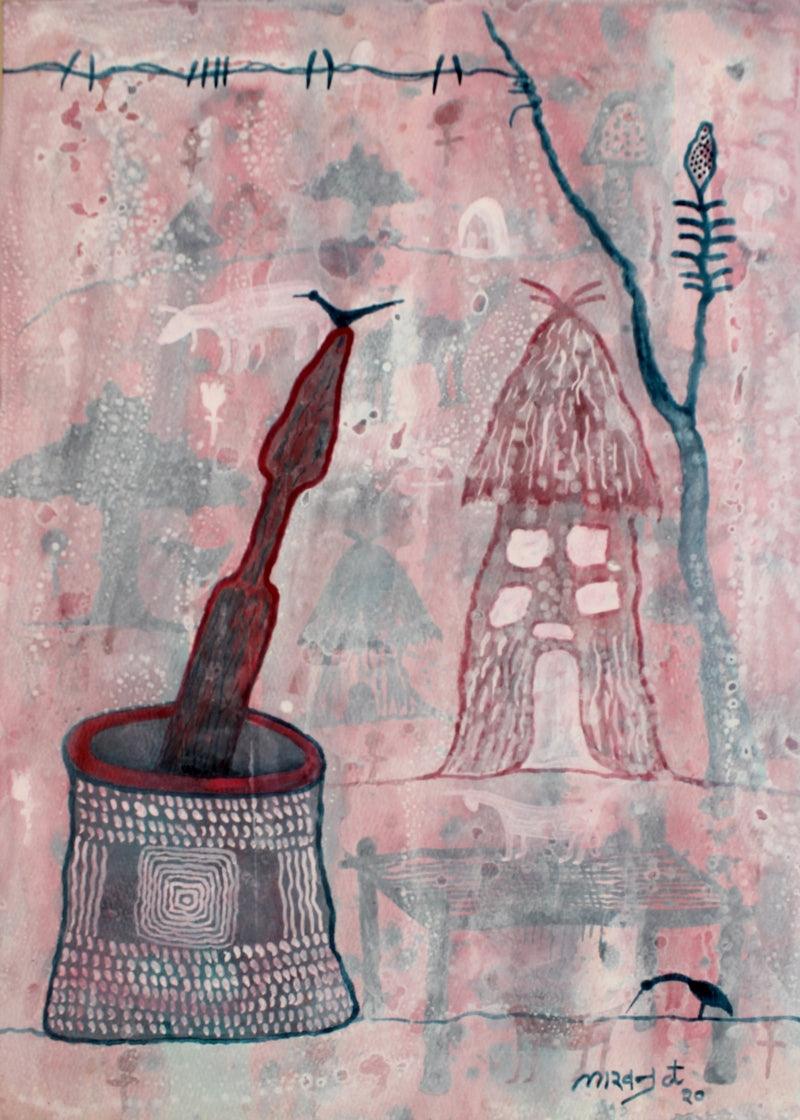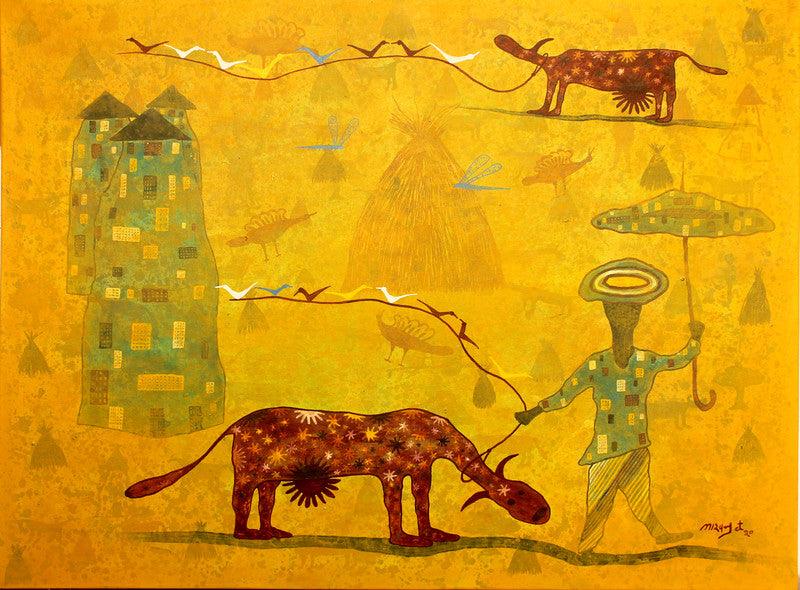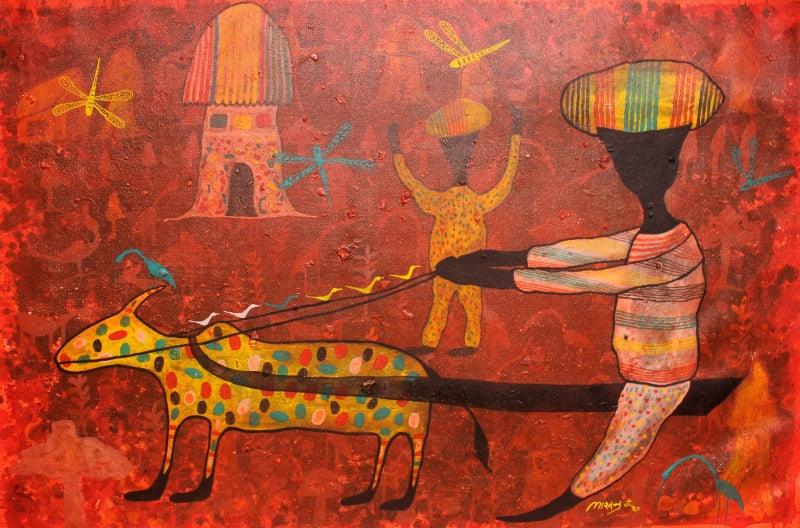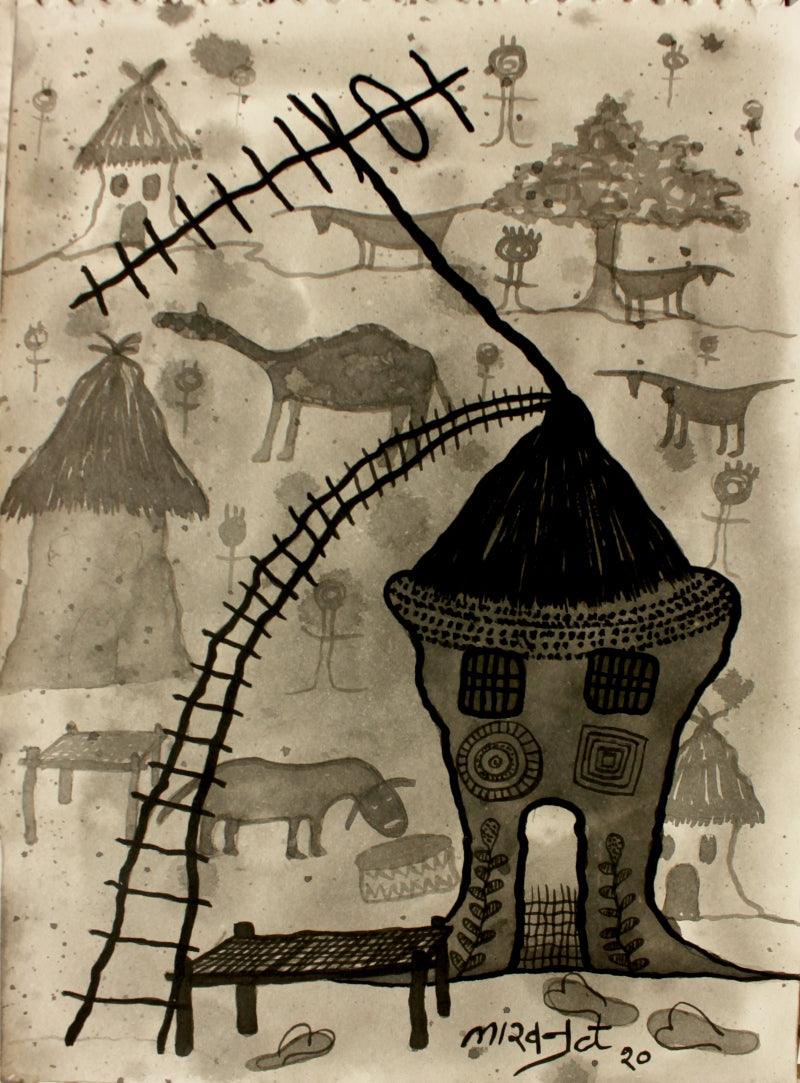
From Village To The Virtual World (Modernization in the Village)
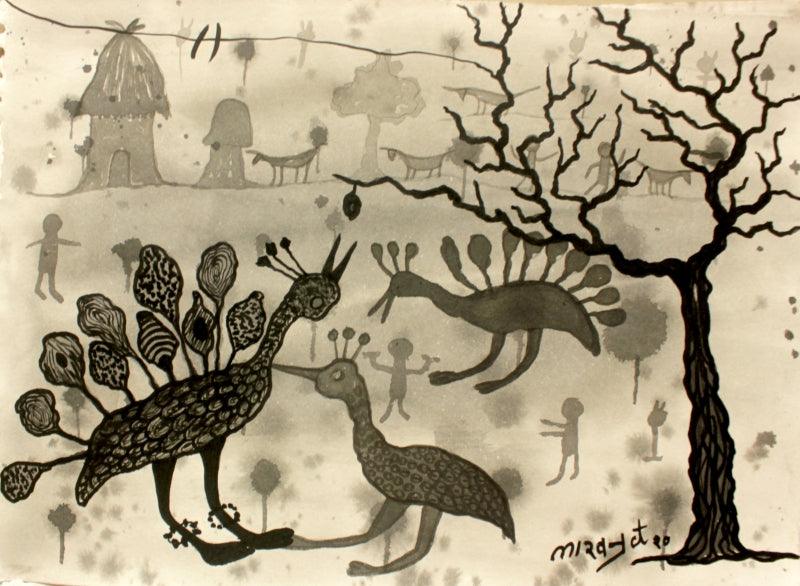
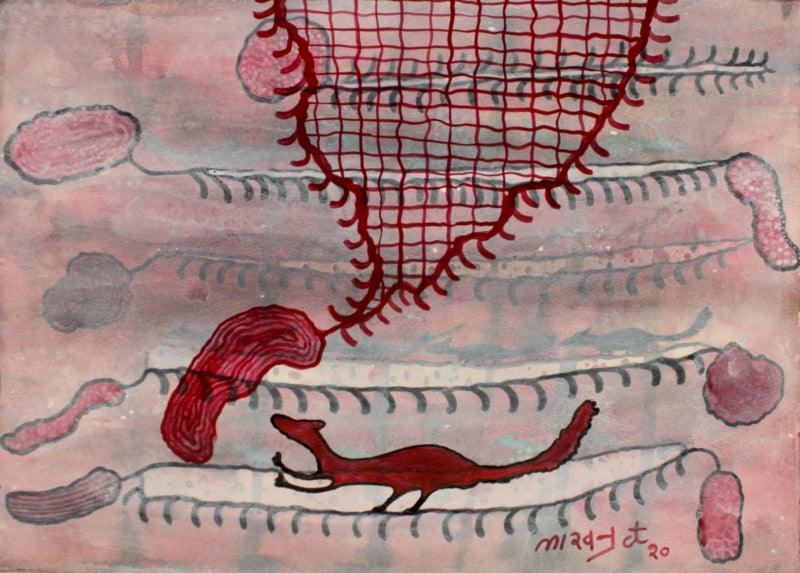
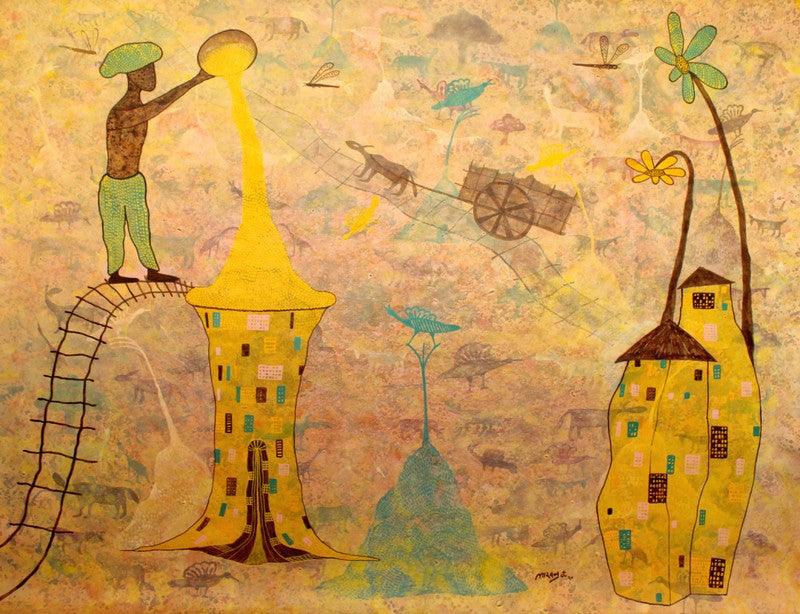
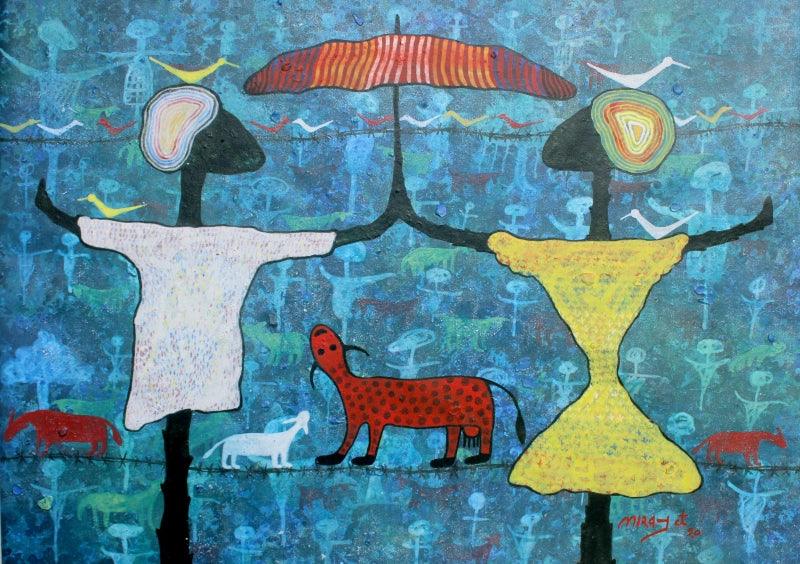
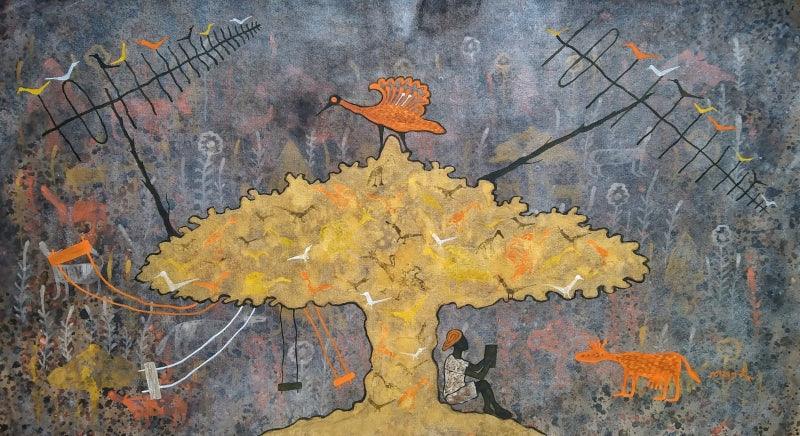
Rendered in a hushed wash of sepia and soot, the scene reads like a remembered village—part lullaby, part omen—where huts, animals, and small totemic figures hover in a porous, dreamlike space. A bold, laddered diagonal cleaves the composition, pulling the eye from ground to sky as if marking a passage between daily labor and mythic ascent, while the central house swells into an emblem: its patterned door and twin windows becoming a watchful face. The contrast between delicate, scattered marks and the thick black silhouette suggests a tension between communal fragility and the stubborn presence of shelter, memory, and ritual. What emerges is a narrative of belonging that is never purely pastoral—its innocence is threaded with symbols that hint at protection, surveillance, and the quiet magic of lived tradition.
Delivery
You may also like