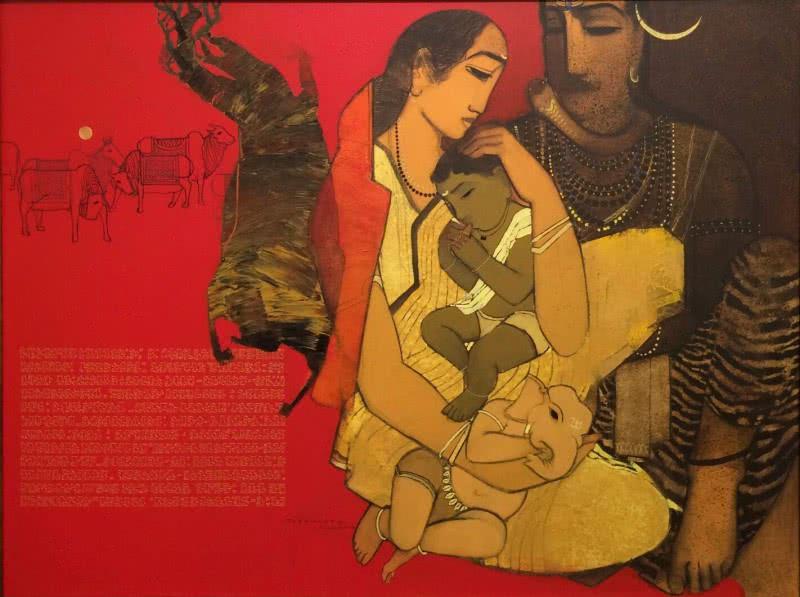
Shiv Parvati Iii
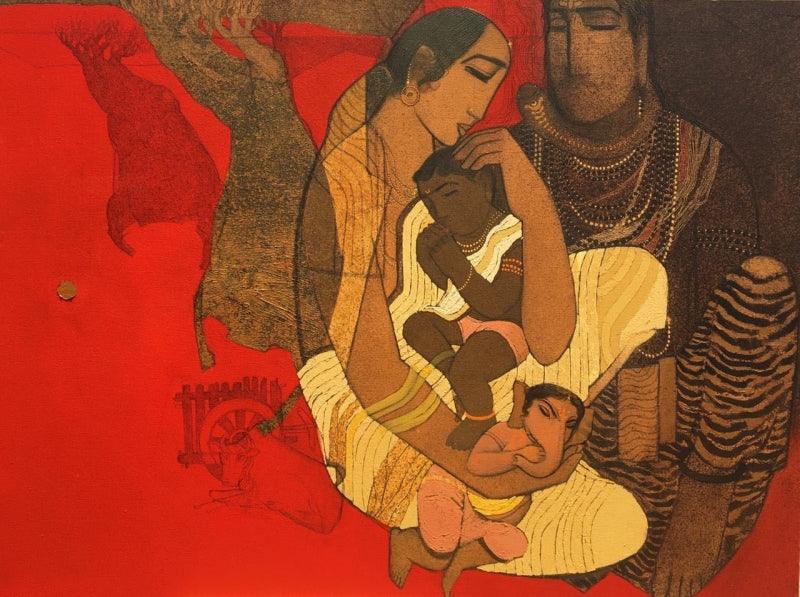
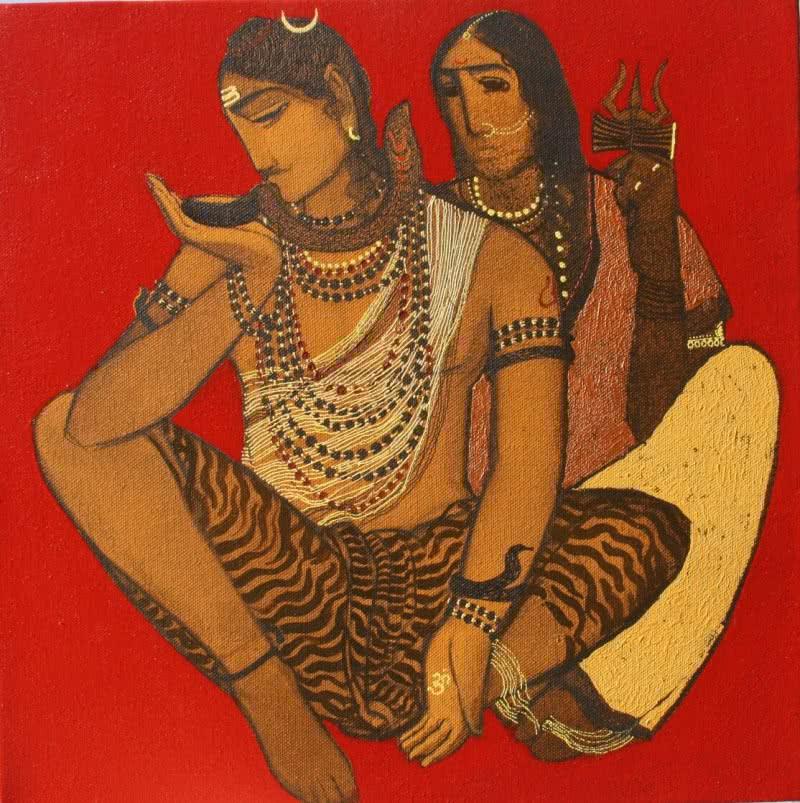
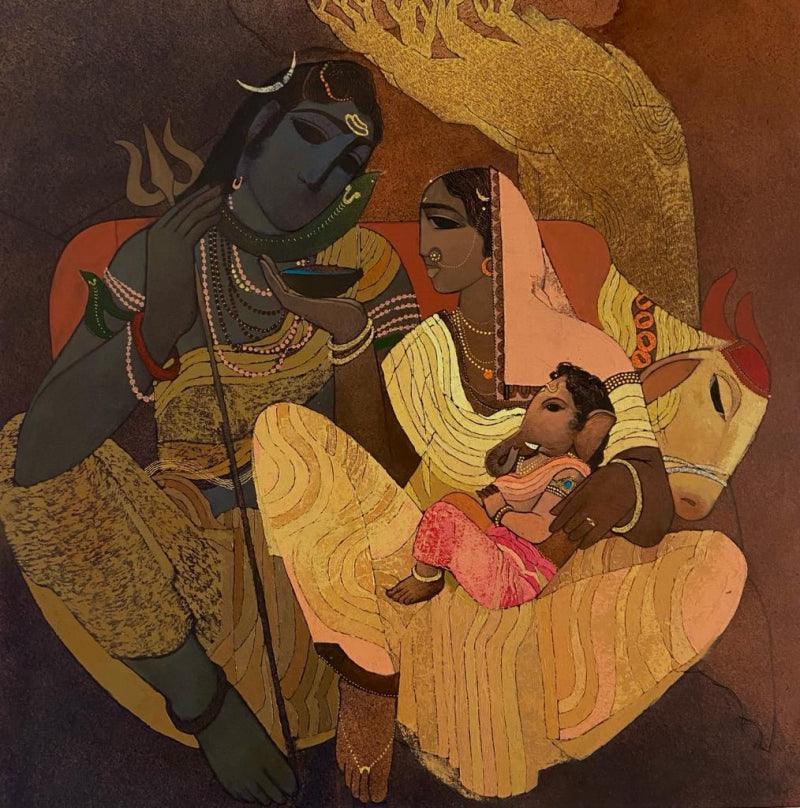
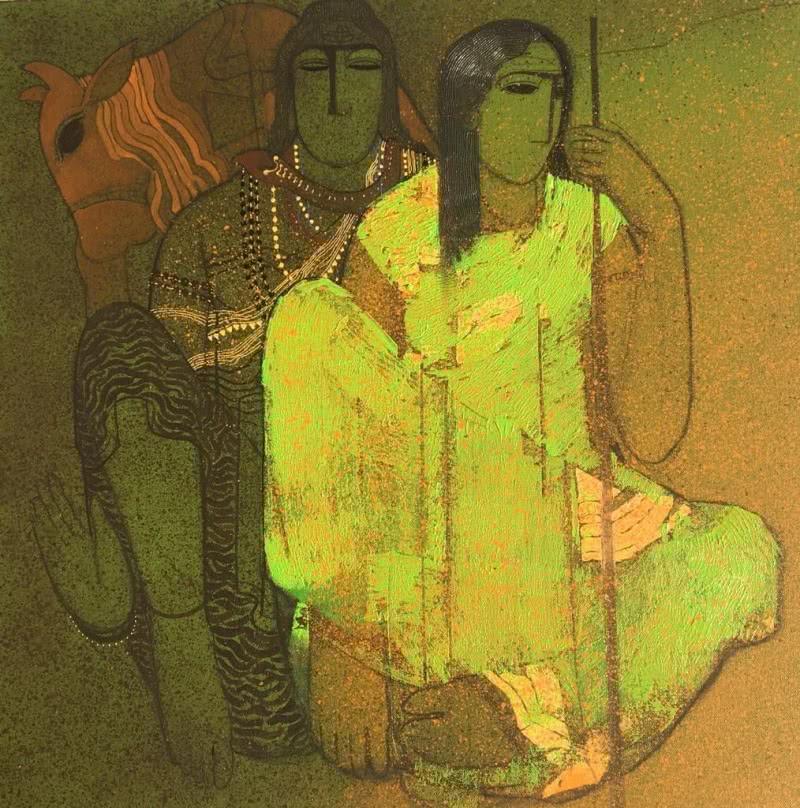
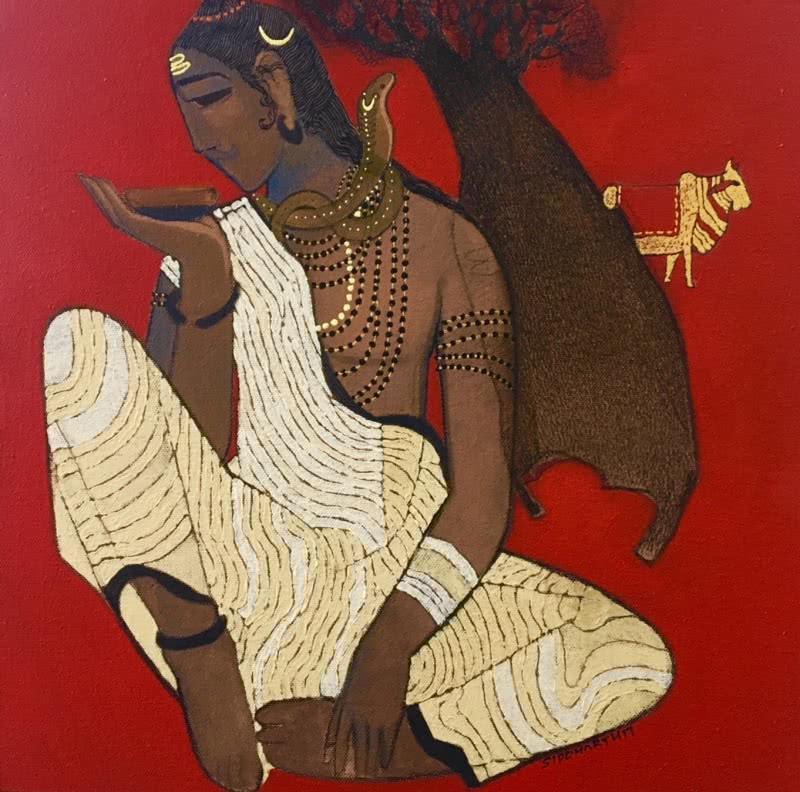
Set against a field of saturated vermilion that reads like both sacred pigment and historical memory, the composition gathers its figures into a single, sheltering arc—mother, child, and the monumental male presence behind them—where tenderness becomes the true architecture of the scene. The warm ochres and graphite-like contours soften the bodies into icons, while the crescent and layered adornments suggest a cosmology in which protection is both earthly and divine. At the left margin, the pared-down procession of cattle and cart, alongside a dark wing-like form, introduces the pressure of labor, migration, and fate—external forces held at bay by the intimate gravity of embrace. The work ultimately stages a quiet dialogue between vulnerability and guardianship, turning domestic care into a mythic threshold where the personal and the collective meet.
Delivery
You may also like