Pratiksha
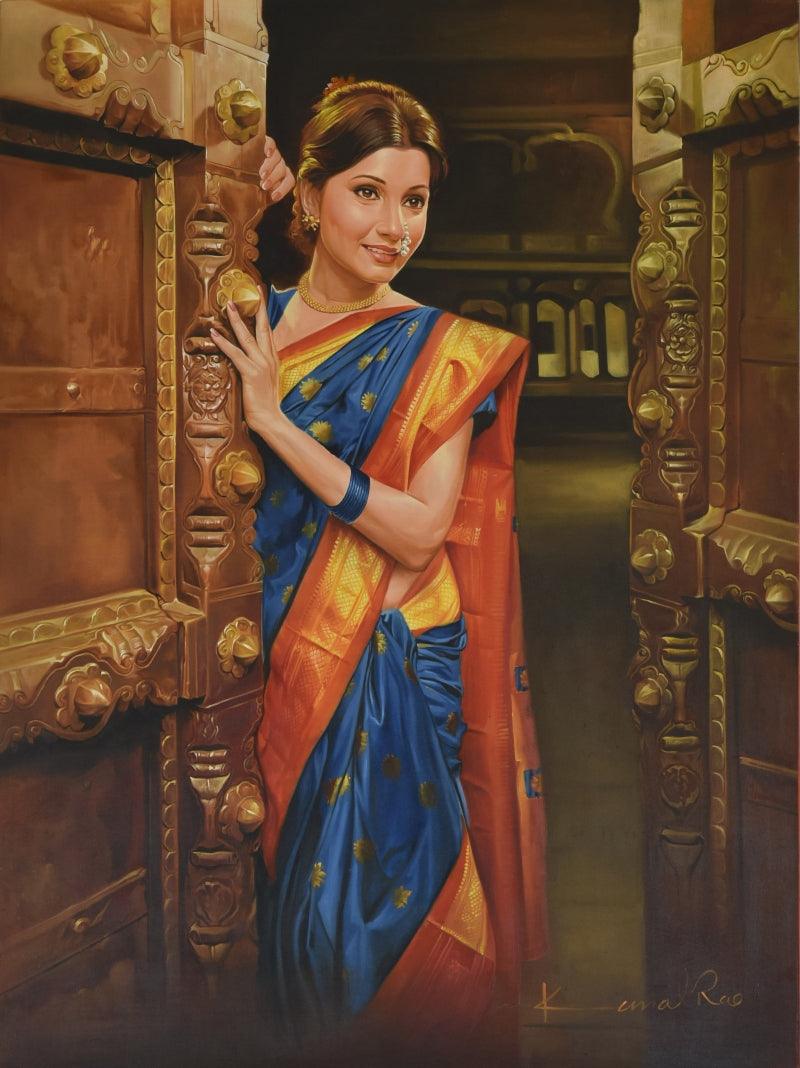
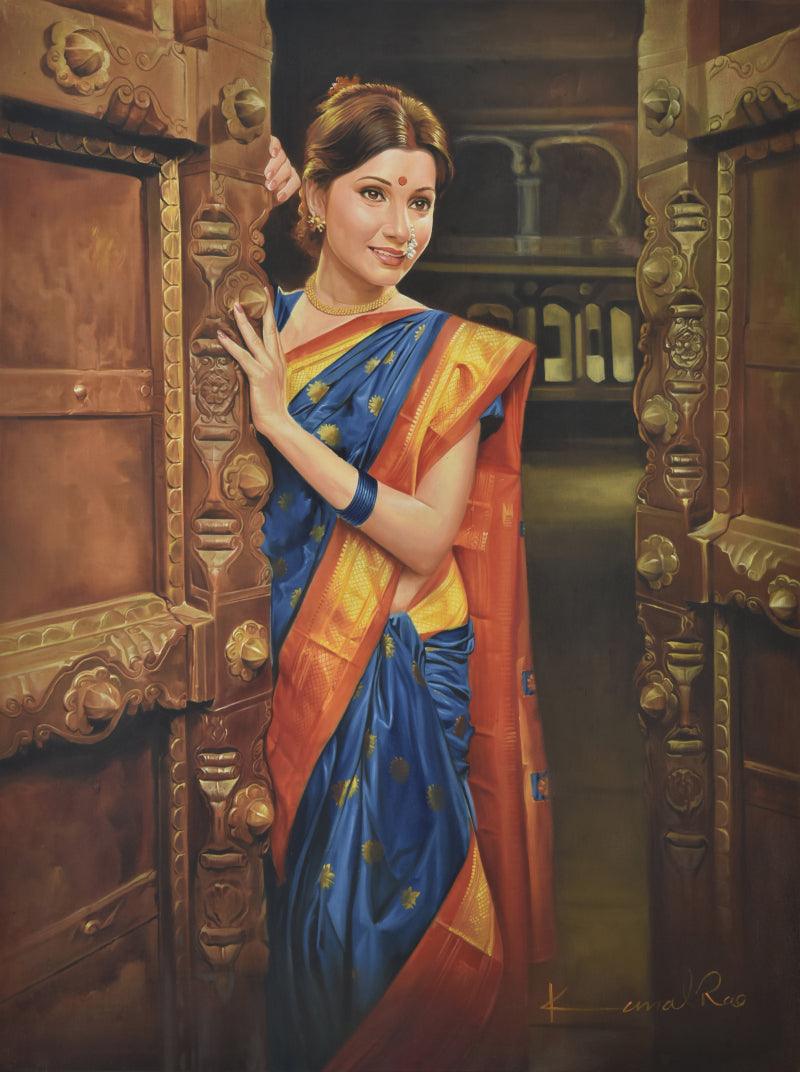
Framed by the weighty ornamentation of a carved doorway, the figure emerges as a quiet revelation—half within the sanctum of tradition, half leaning into the openness of the viewer’s world. The painter choreographs a dialogue between surfaces: burnished ochres and bronze reliefs hold their history in tactile shadow, while the sari’s saturated cobalt and saffron trim carries a ceremonial radiance that seems to breathe against the dark interior. Her poised hand and softened smile turn the threshold into a psychological space, suggesting not merely entrance or exit, but the intimate moment of choosing how much of oneself to disclose. In this suspended passage, femininity reads as both adornment and agency—an elegance that negotiates heritage without being contained by it.
Delivery
You may also like