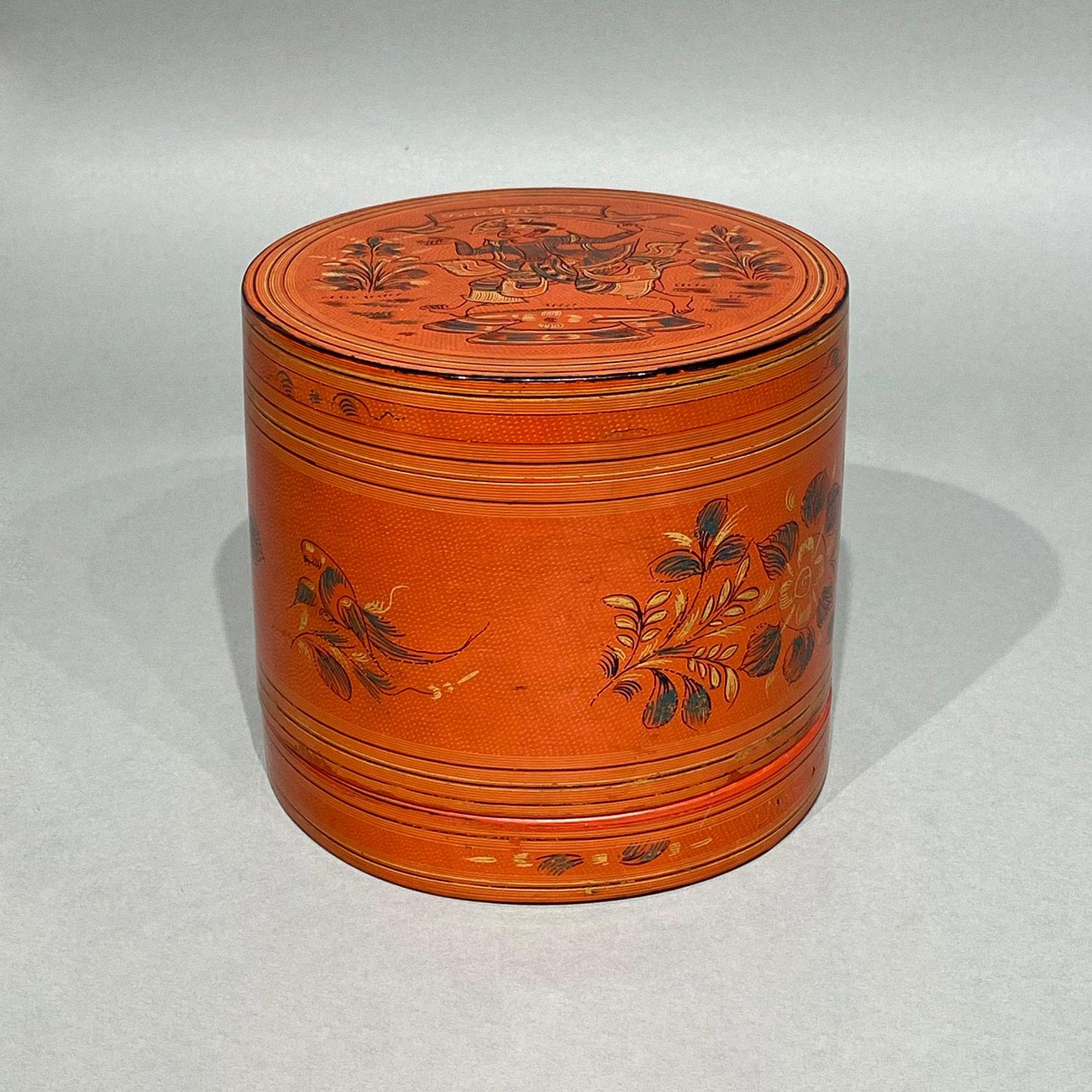
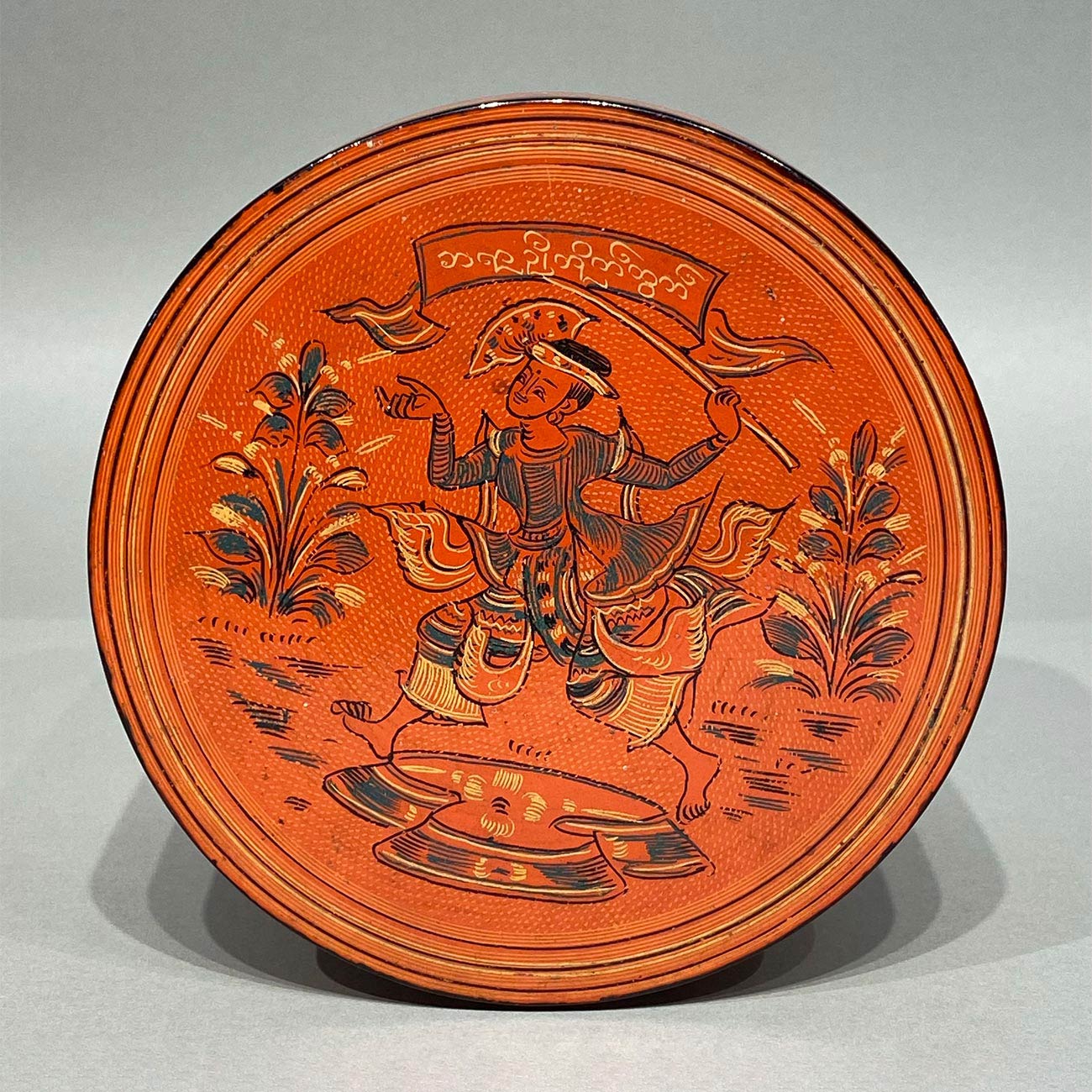
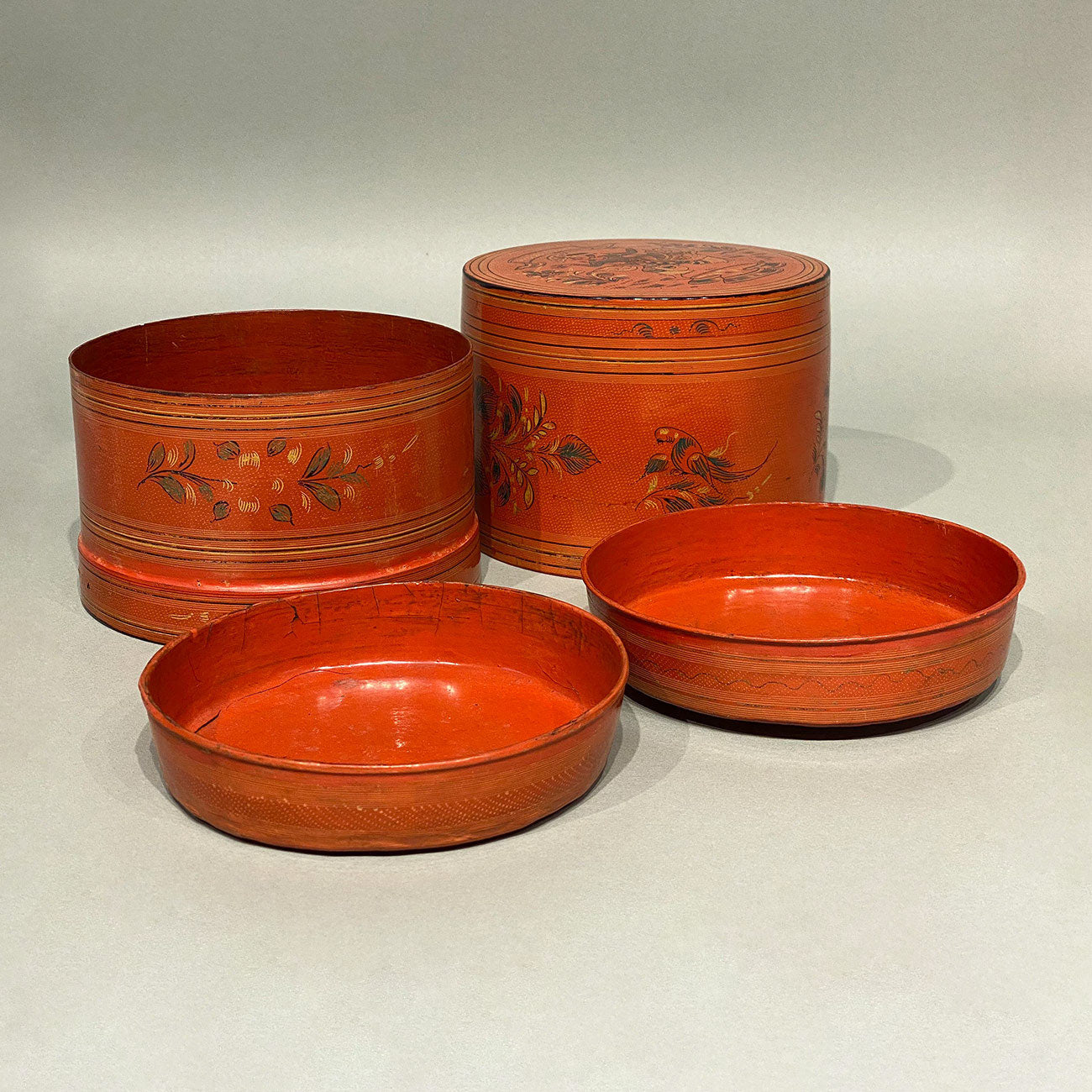
This is a Burmese red, black and green lacquerware paan or betel (kun-it) box - a traditional item of hospitality in Burmese homes used to offer to visitors. On the lid is engraved the figure of a man in traditional Burmese court dress. This maybe a representation of Zaw-gyi, the Burmese semi-immortal alchemist or magician. Flanking him are plants, and above him is a banner with Burmese script probably with the name of the master craftsman. Around the sides of the box are two large floral designs and two parakeets, which are symbols of love in Burma. Boxes like this were used to contain the ingredients to make paan, which in its basic form consists of slices of betel nut mixed with lime paste wrapped in betel leaf. The two trays in the box would contain these ingredients, or even coconut, saffron, fragrant spices or rose preserves for more special preprations of paan. “A maze of sumptuary laws decreed the size, the extent of decoration, and the material permitted for the betel boxes of the various grades of courtiers” says Sylvia Fraser-Lu. Similar Burmese paan boxes can be found in the Victoria and Albert Museum, London. (Ref: Pages 68, 69, and 92 of the book ‘Burmese Lacquerware’ by Sylvia Fraser-Lu.)
Ingredients
Pages 68, 69, and 92 of the book ‘Burmese Lacquerware’ by Sylvia Fraser-Lu.)
Delivery
You may also like
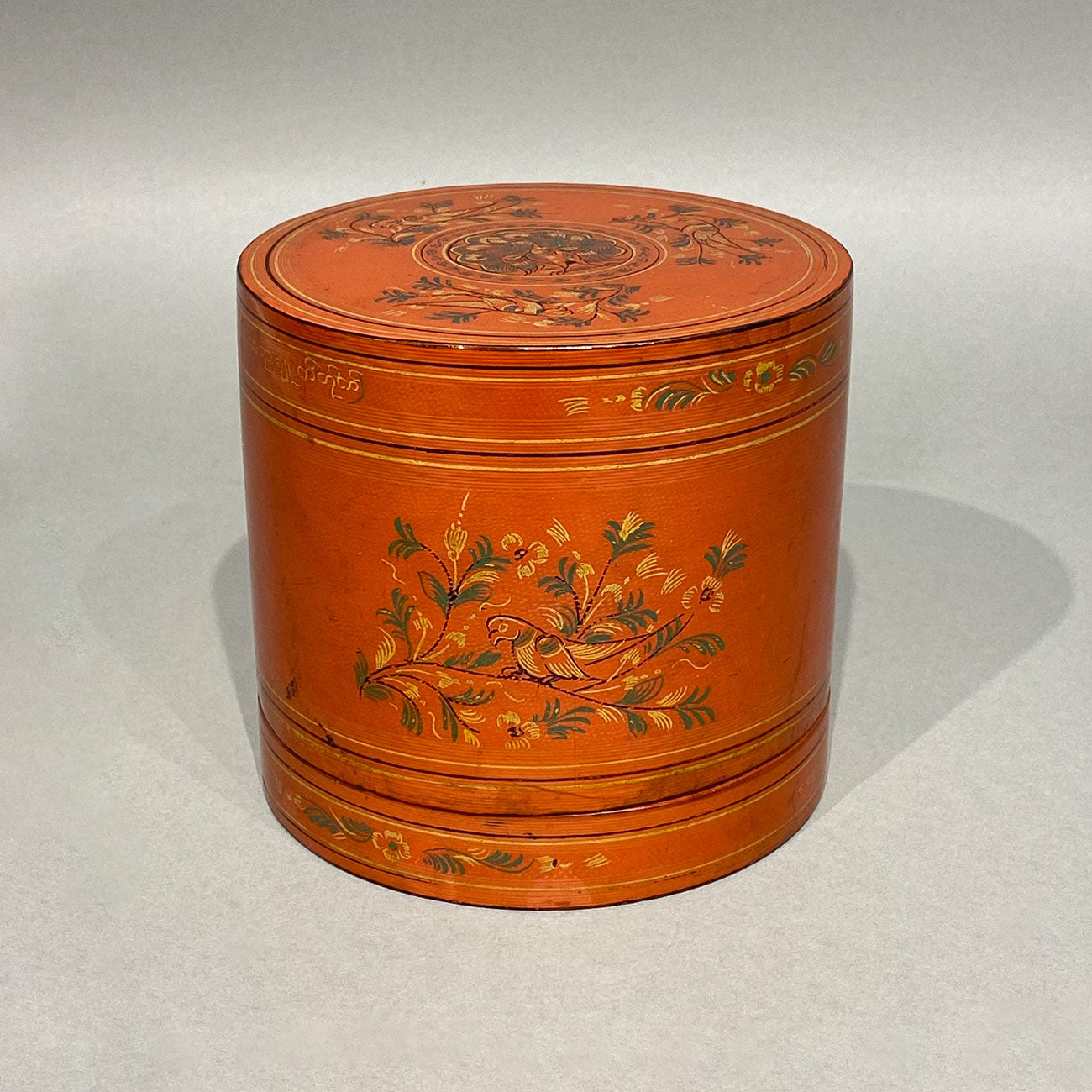
Burmese Lacquer Betel Box 01
Artisera
₹16,800
out of stock
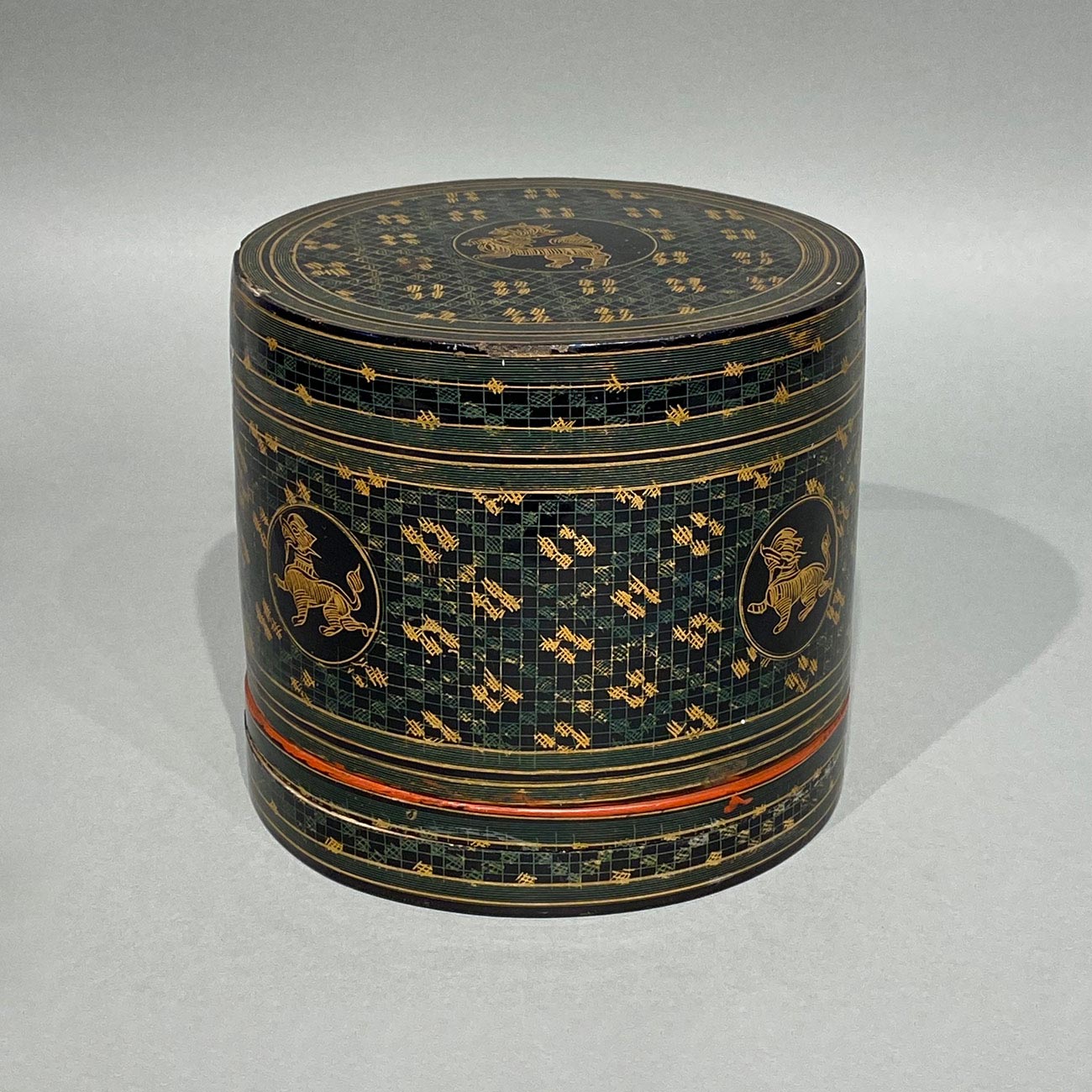
Burmese Lacquer Betel Box 03
Artisera
₹25,760
out of stock
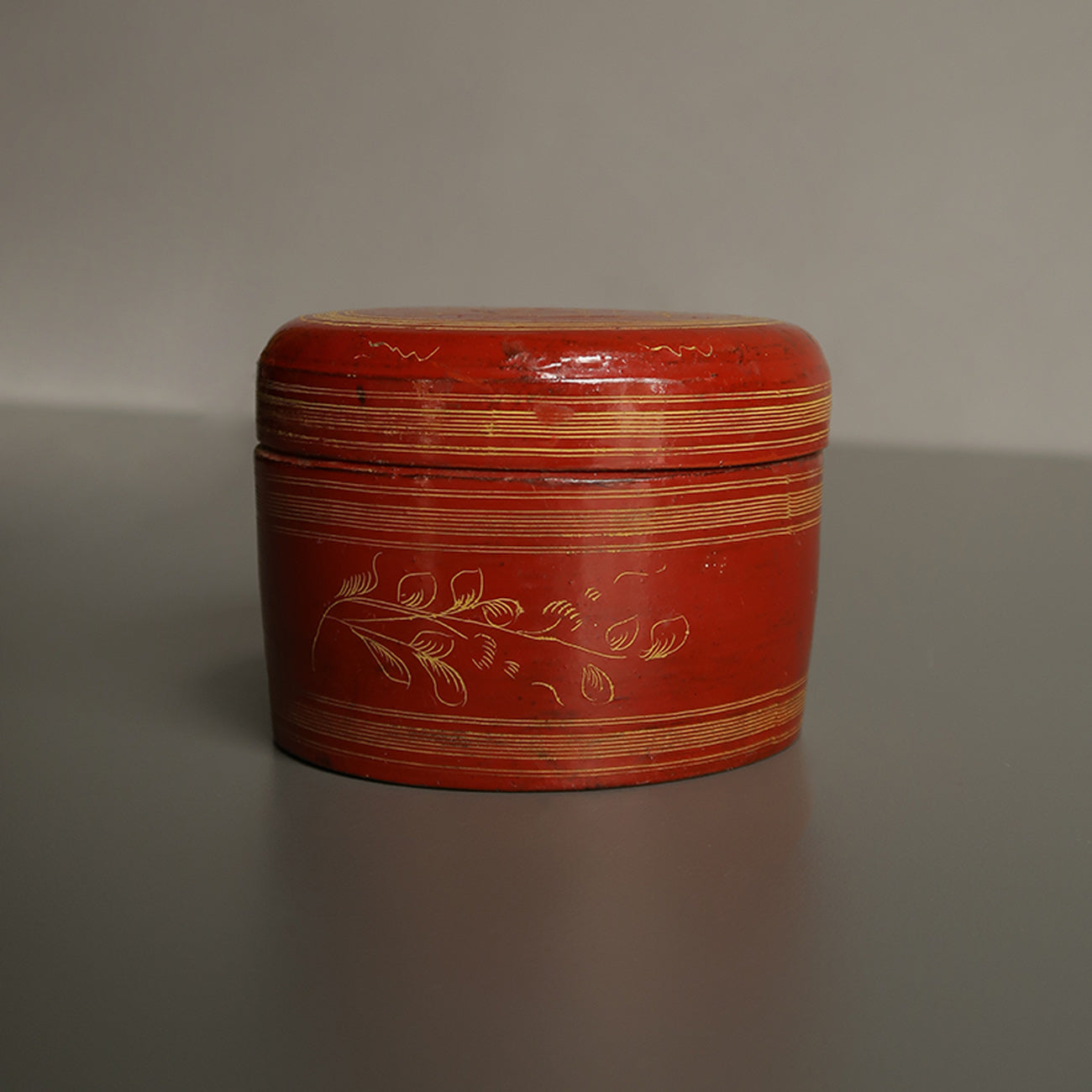
Burmese Lacquer Betel Box 05
Artisera
₹6,070
out of stock
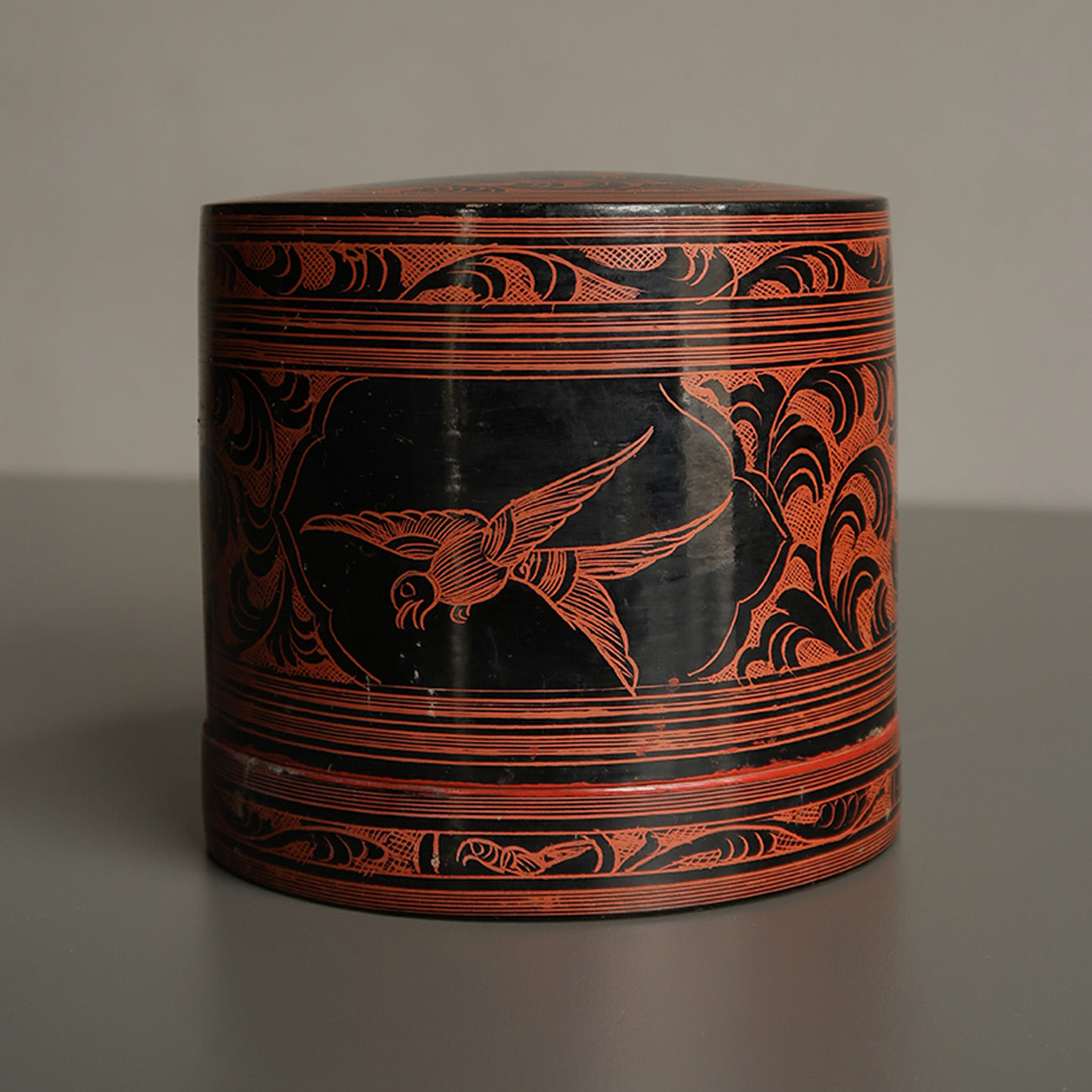
Burmese Lacquer Betel Box 06
Artisera
₹8,500
out of stock
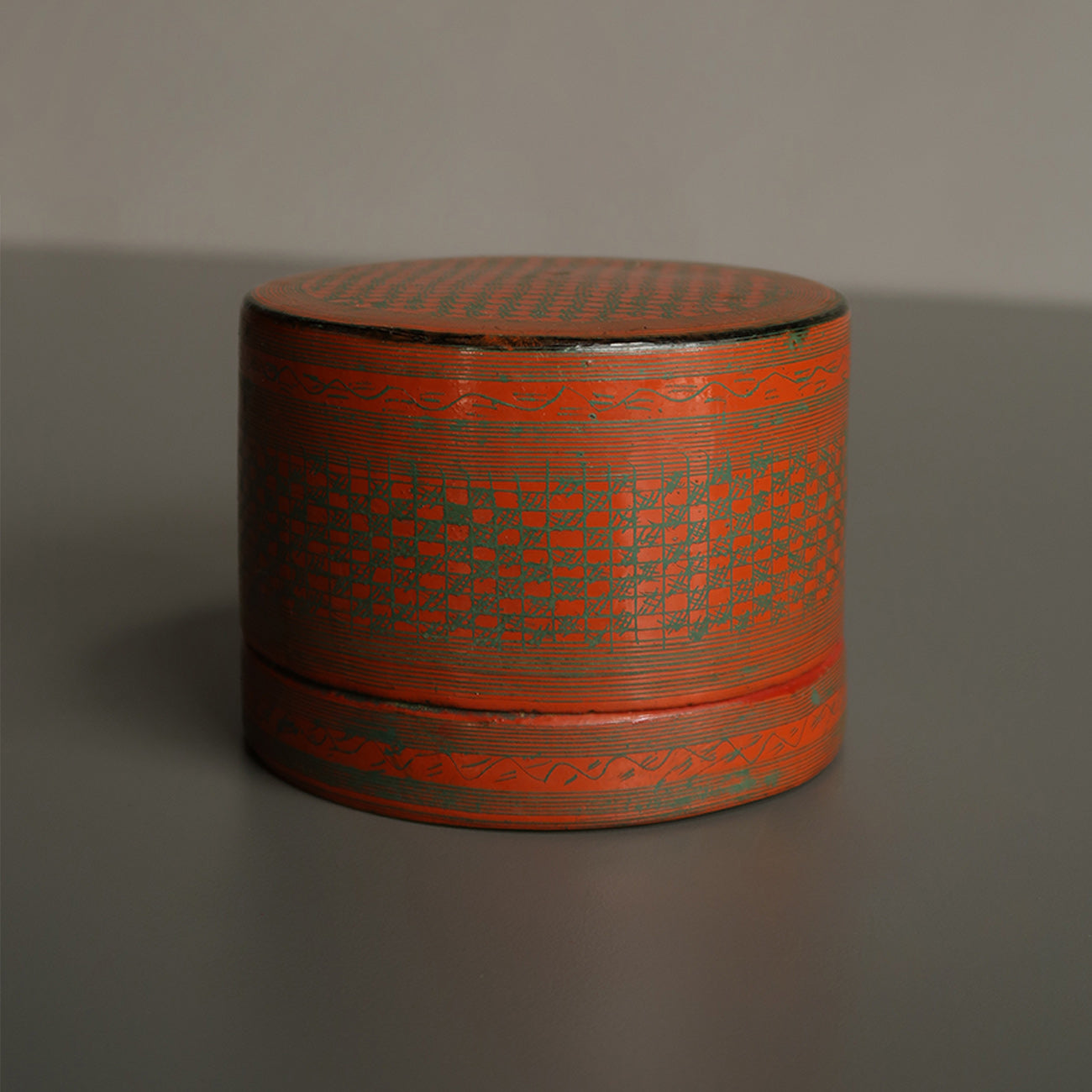
Burmese Lacquer Betel Box 07
Artisera
₹5,500
out of stock
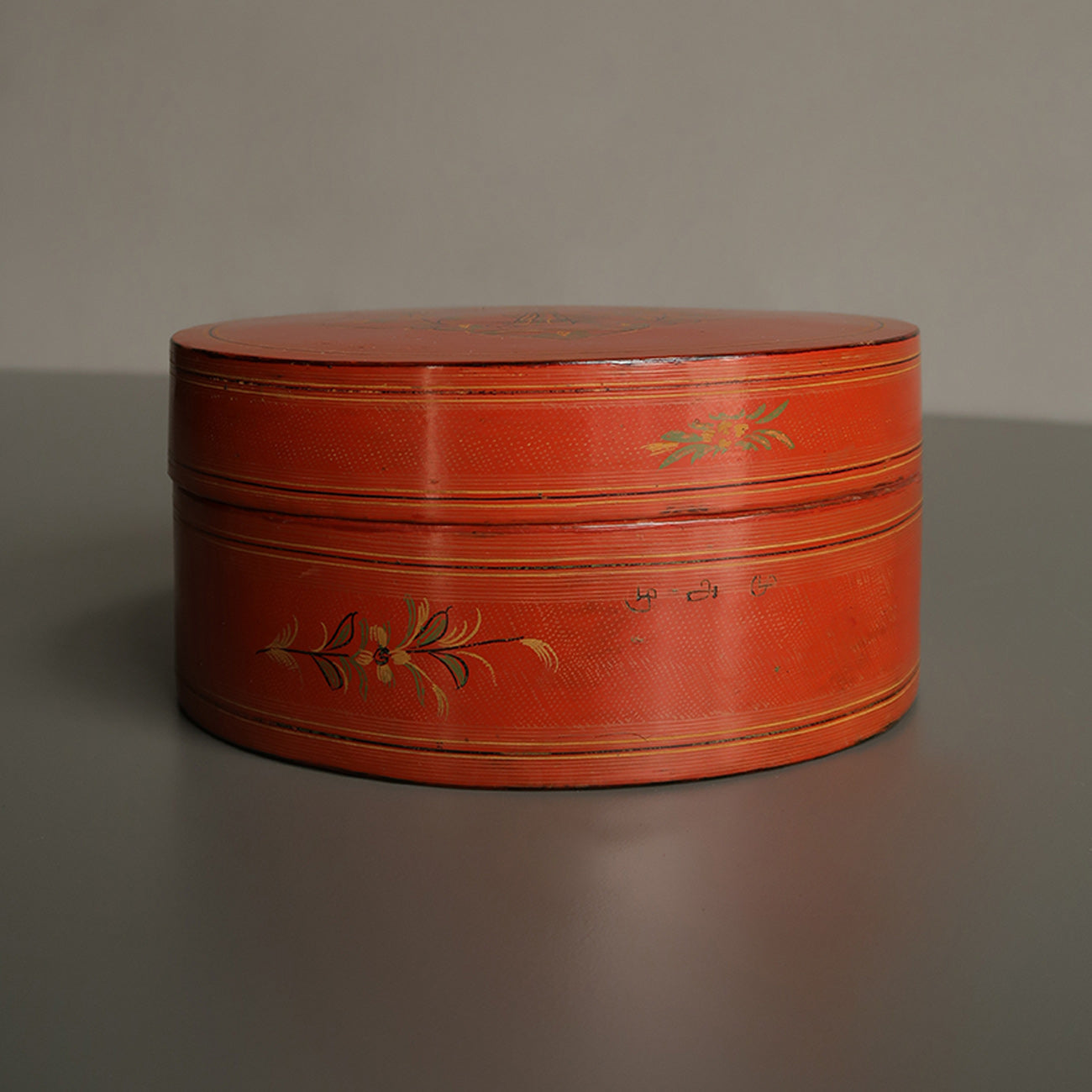
Burmese Lacquer Betel Box 08
Artisera
₹8,960
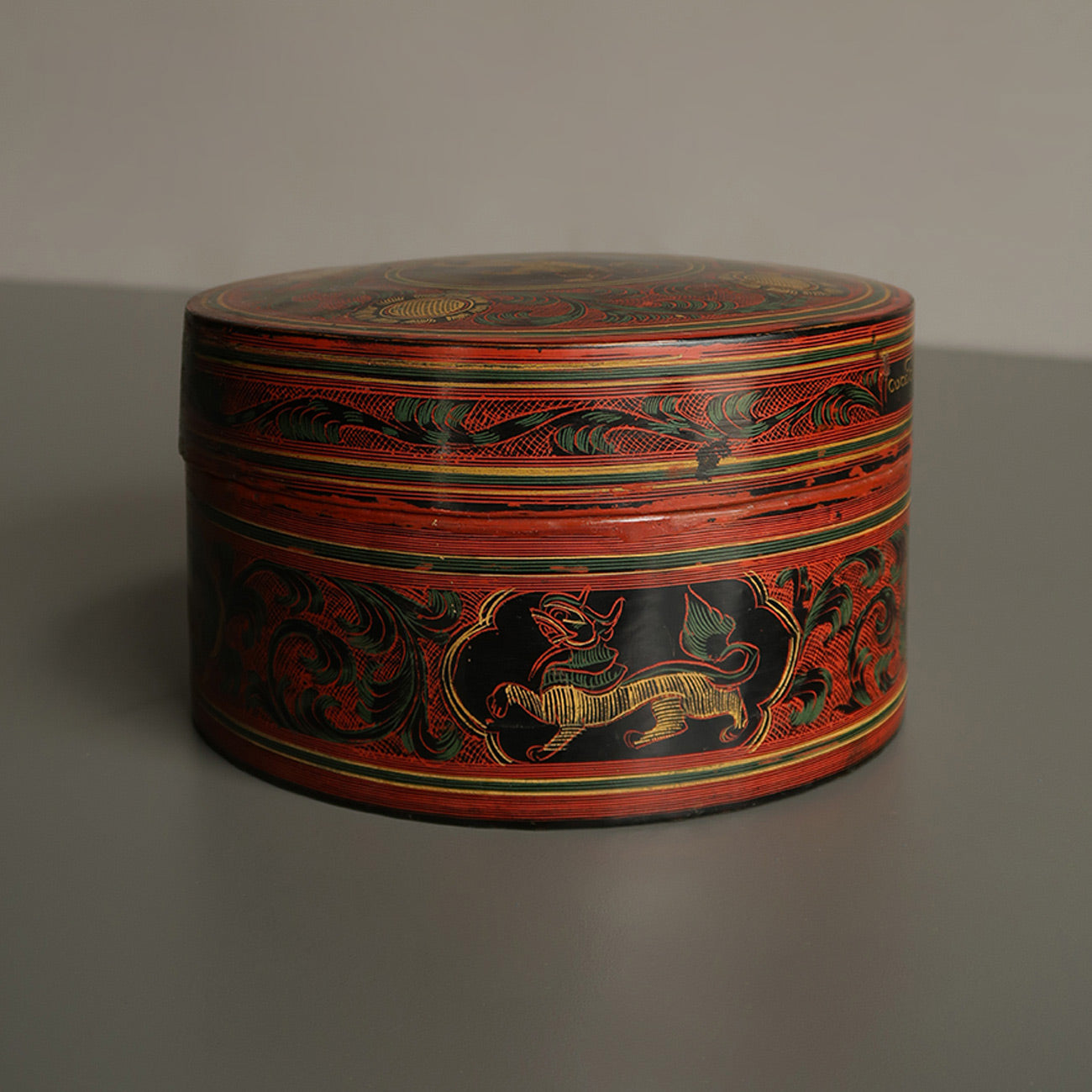
Burmese Lacquer Betel Box 09
Artisera
₹11,000
out of stock
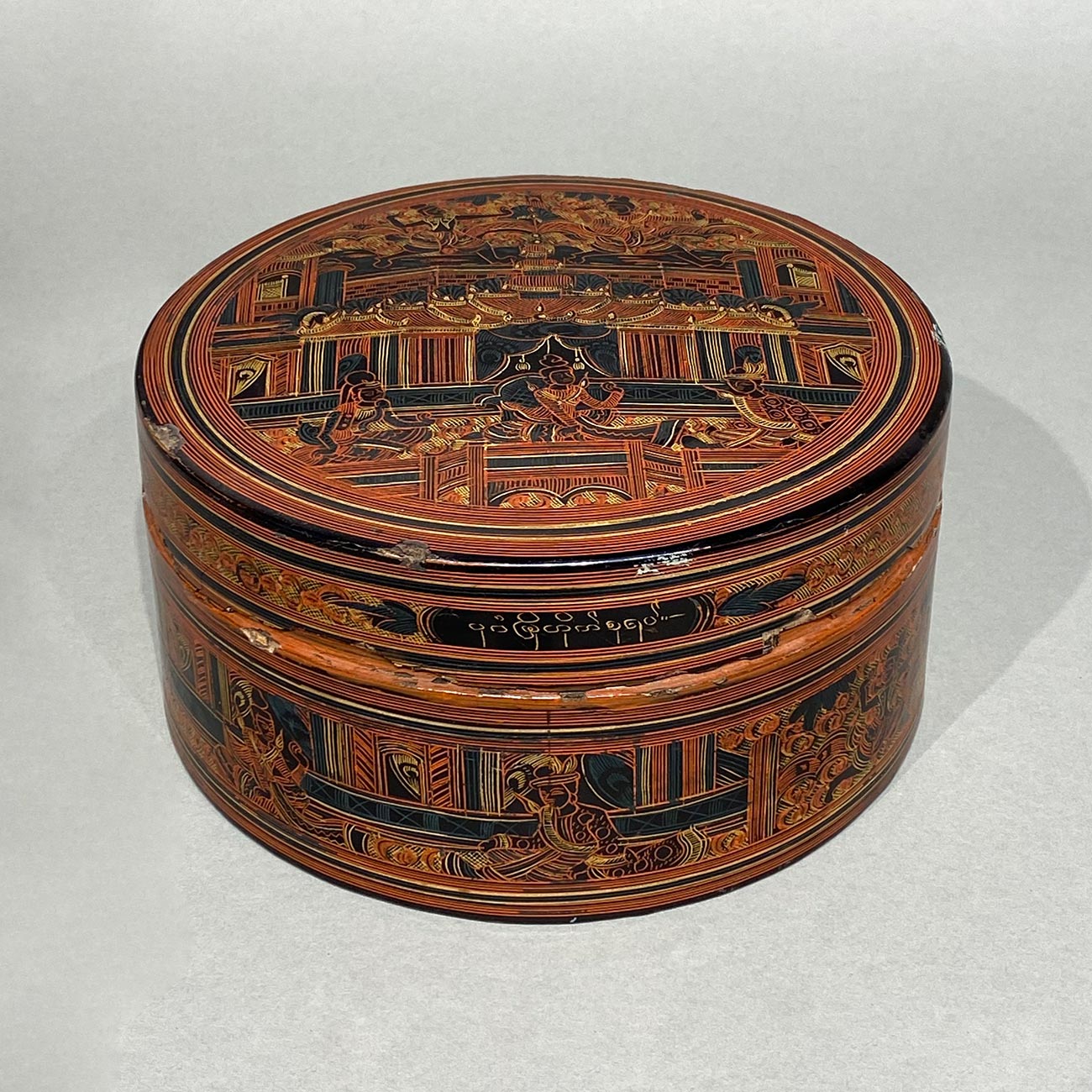
Burmese Lacquer Cosmetic Box
Artisera
₹26,320
out of stock