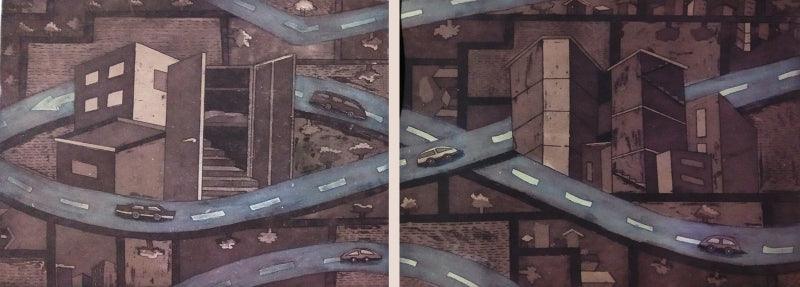
Dreamy World 1 (Urban Tapestry)
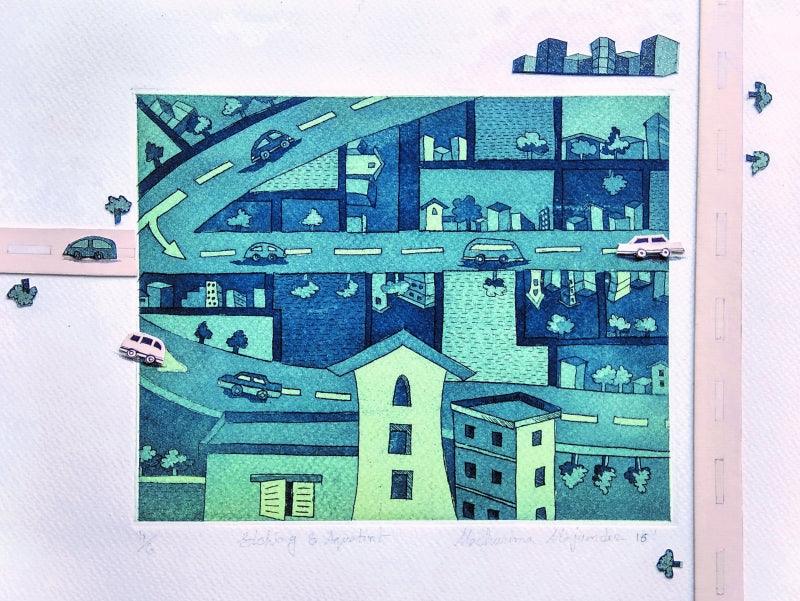
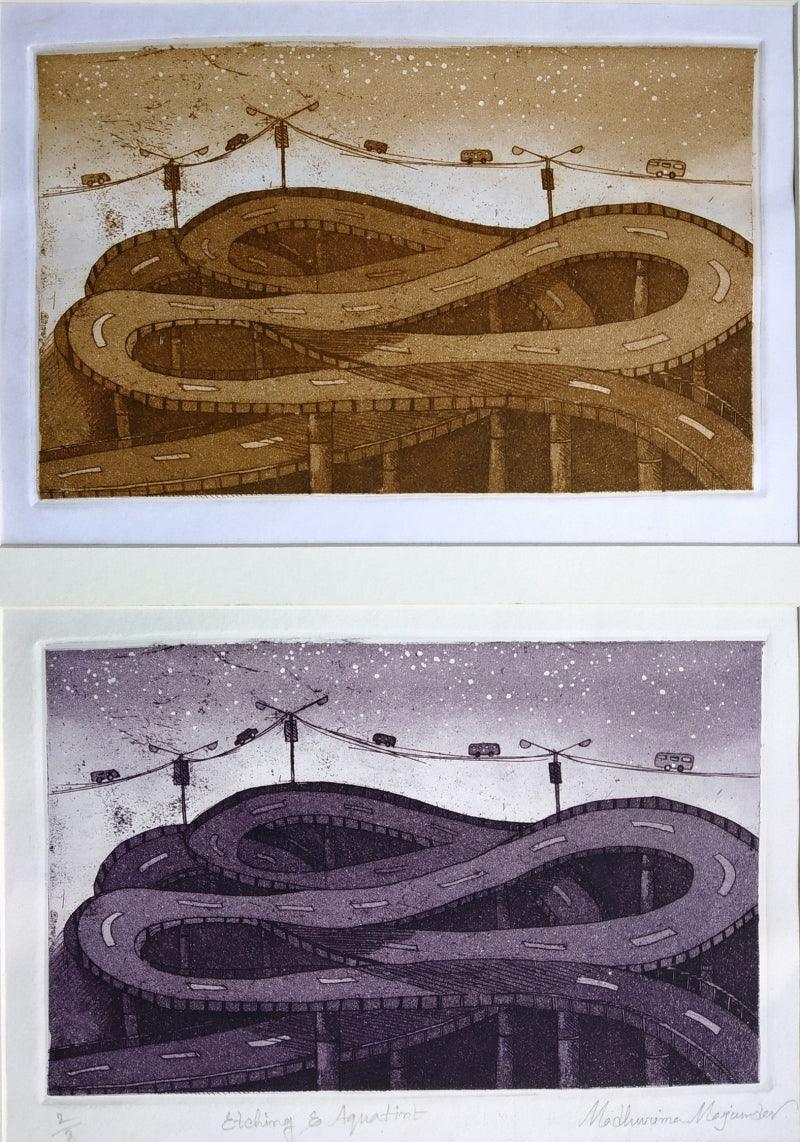
The work stages an urban labyrinth in muted violets and grays, where blocklike buildings rise like quiet monoliths and the sinuous ribbon of roadway becomes the true protagonist, looping through the scene with an almost tidal inevitability. Light is withheld rather than celebrated—reduced to pale windows and chalky lane markings—so that movement feels dreamlike, as if the city is operating on memory rather than daylight. The split-panel structure intensifies a sense of dislocation: two near-echoes of the same environment suggest repetition, surveillance, or the subtle shifts of perspective that accompany routine. Small cars drift through the geometry like passing thoughts, underscoring a narrative of solitude and controlled motion within an architecture that seems both protective and indifferent.
Delivery
You may also like