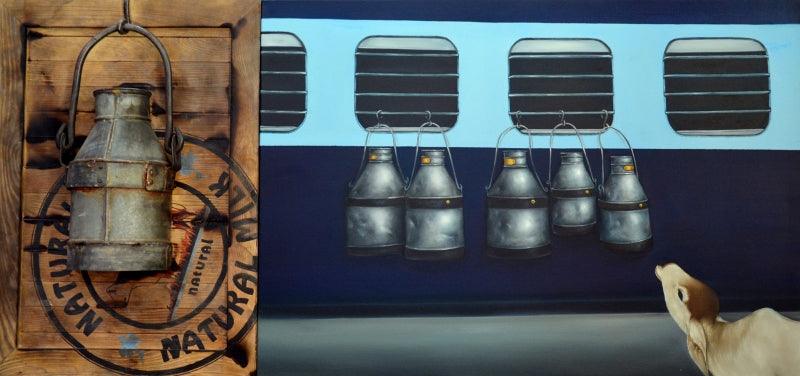
Natural Milk
₹130,000
Out of stock · ★ 4.0 (13)checking live price…
Size
27x57Type
OriginalMaterial
CanvasThe composition stages an encounter between the tactile honesty of the rural—aged wood, stamped markings, and a weathered milk can—and the cool, streamlined anonymity of a passing train, where identical metal vessels hover in a suspended rhythm like commuters without faces. Light behaves differently on each surface: it warms and clings to the grain at left, while on the right it turns metallic and clinical, flattening space into a corridor of transit and repetition. The small animal at the edge becomes a quiet witness, its gaze bridging two economies of belonging—place and passage—suggesting nostalgia not as comfort, but as a question about what gets carried forward and what is left behind.
Delivery
You may also like
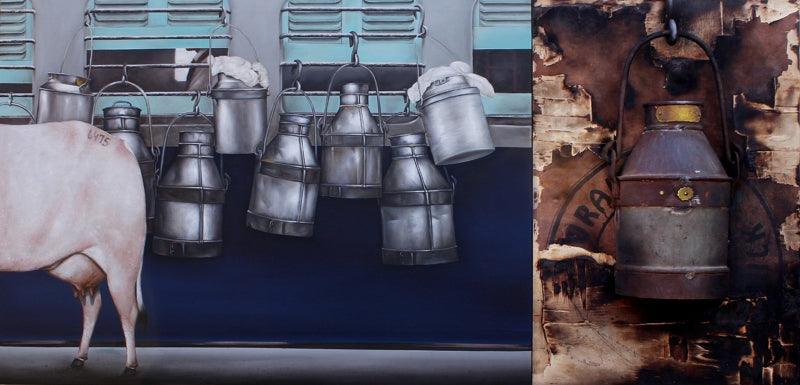
Transportation Of Cow 1
Artzolo
₹165,000
out of stock
★ 5.0 (6)
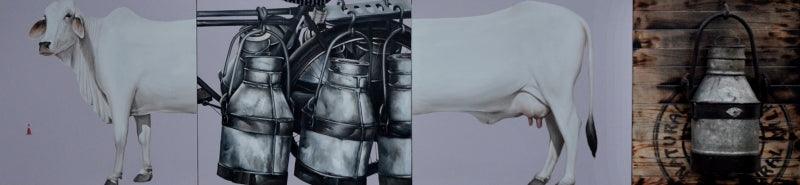
Journey Of Cow
Artzolo
₹110,000
out of stock
★ 4.0 (5)
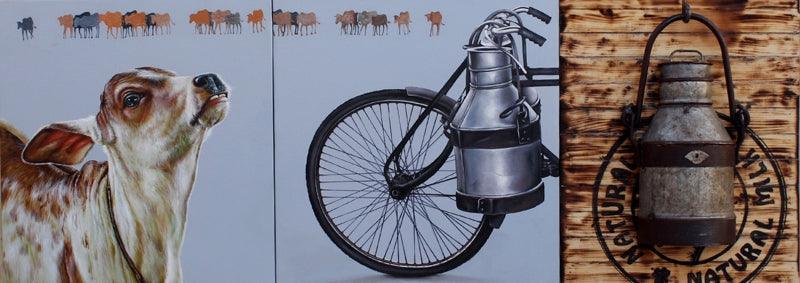
Searching For Food
Artzolo
₹110,000
out of stock
★ 4.0 (10)
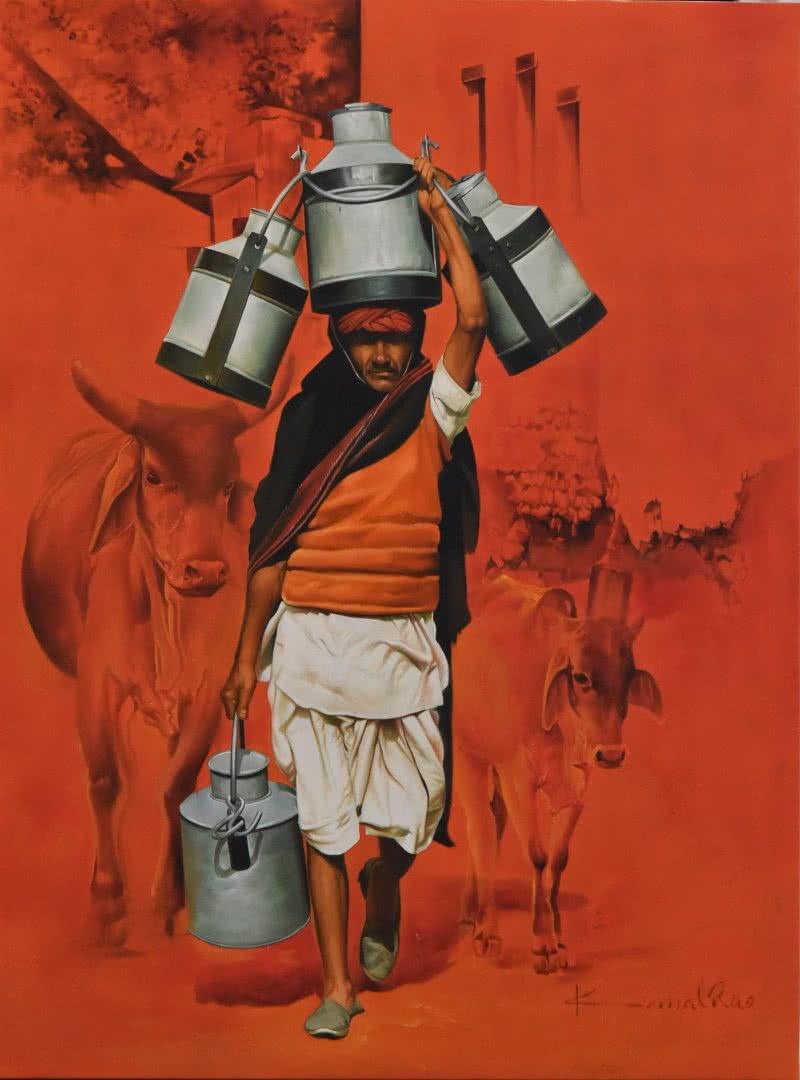
Milkman
Artzolo
₹110,000
out of stock
★ 5.0 (11)
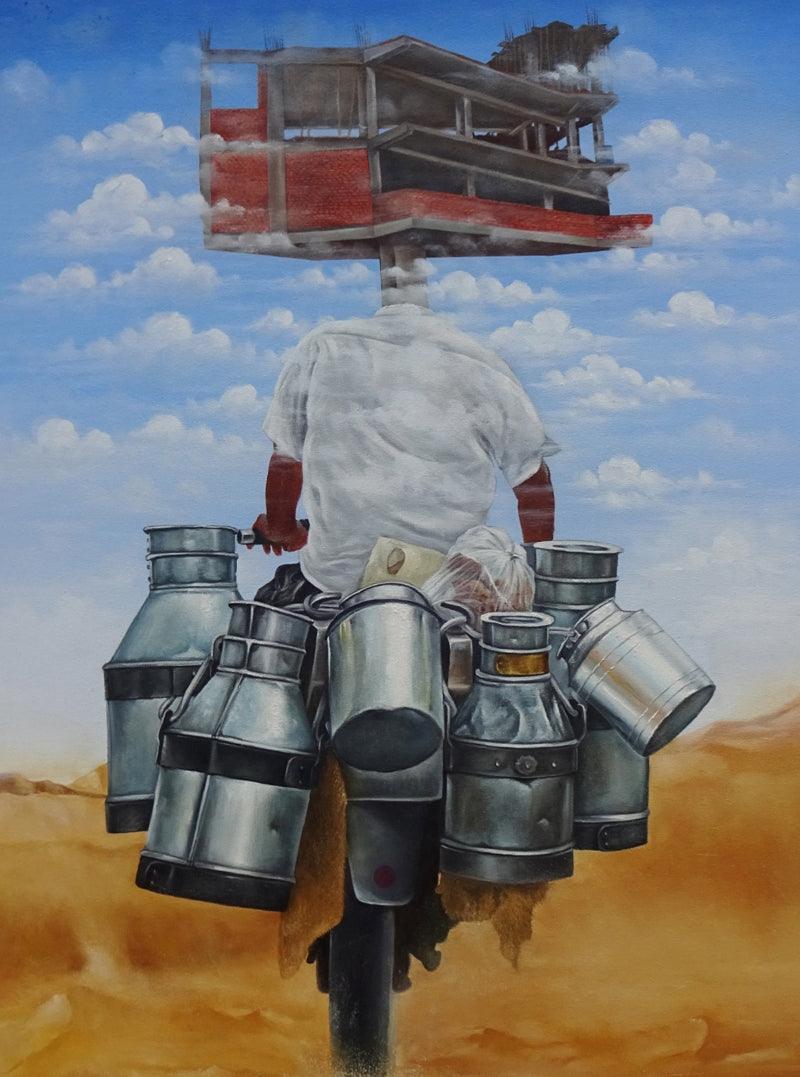
Dream
Artzolo
₹95,000
out of stock
★ 4.0 (8)
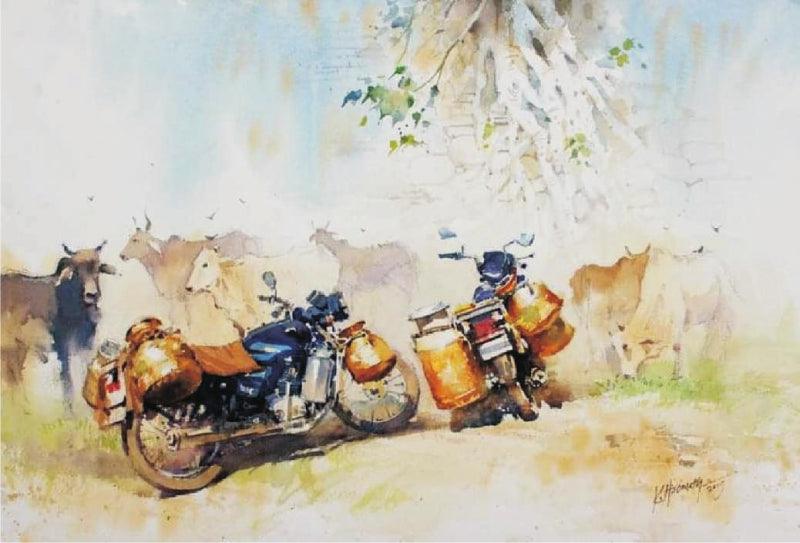
Cow Milk 1 (Milk Run)
Artzolo
₹35,000
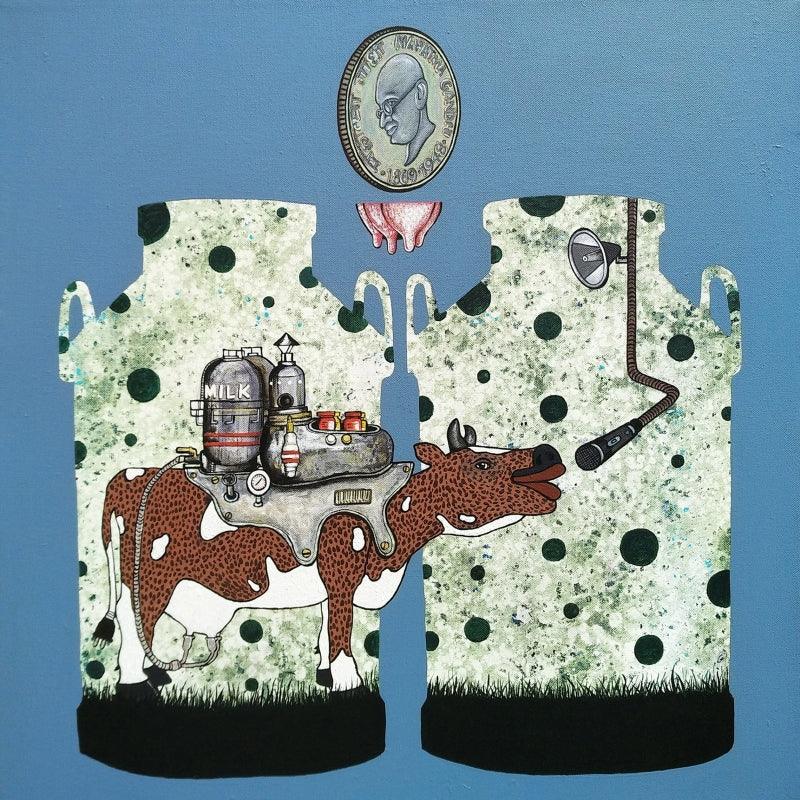
Technology (Dairy Innovation)
Artzolo
₹50,000
out of stock
★ 5.0 (7)
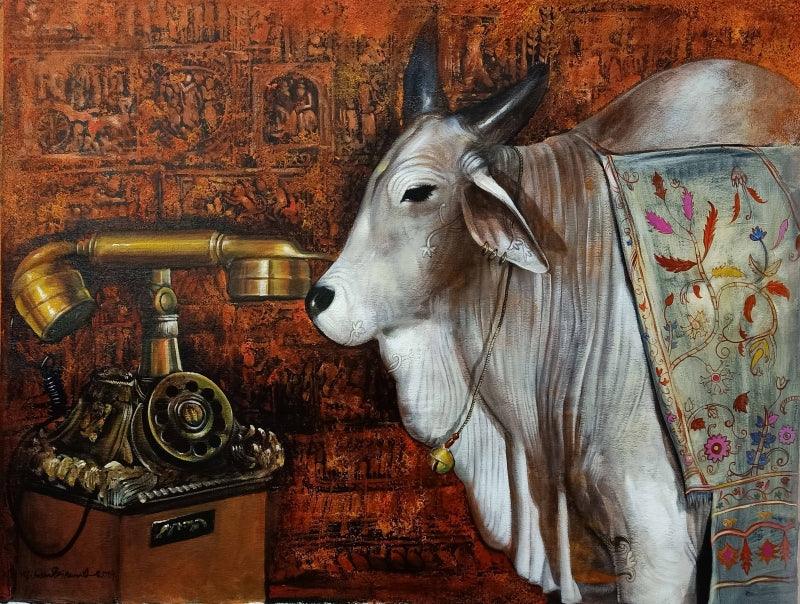
Nostalgia (The Unexpected Connection)
Artzolo
₹120,000
out of stock
★ 5.0 (7)