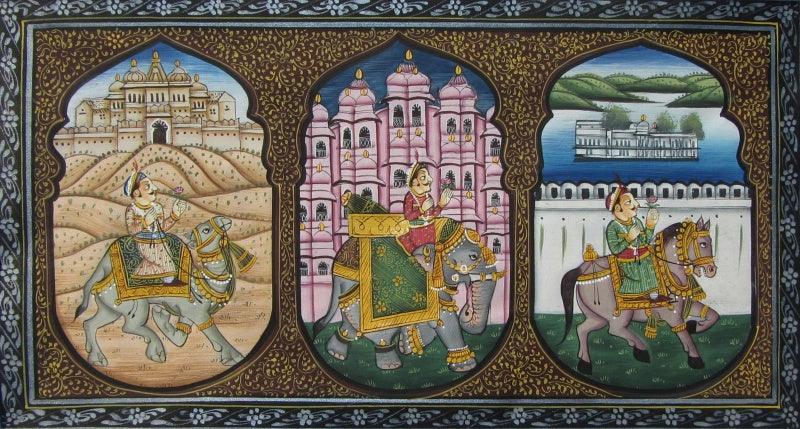
Mughal King On Animals 1
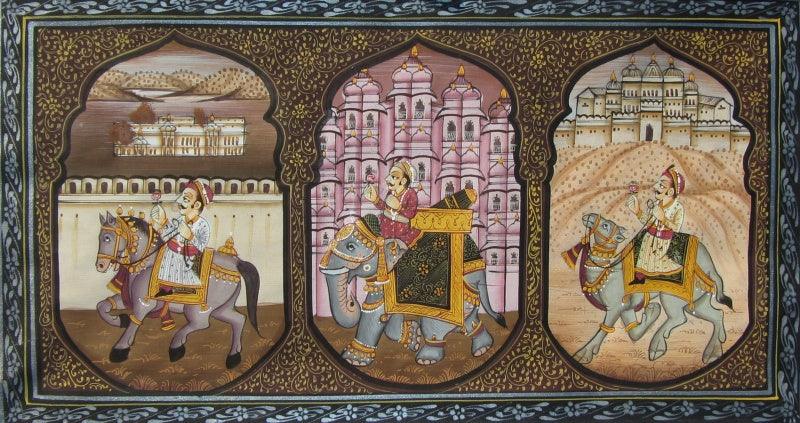
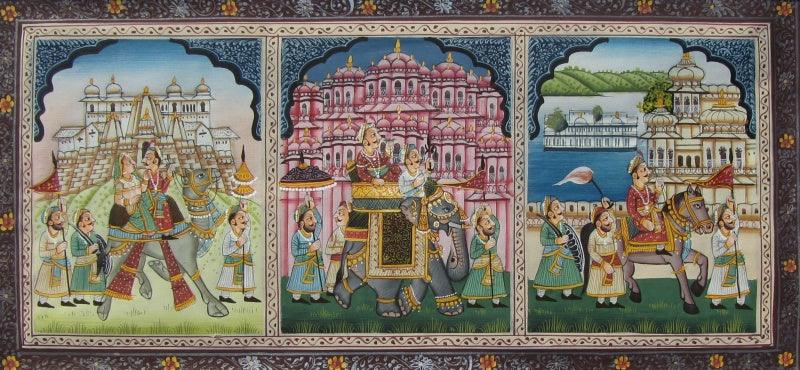
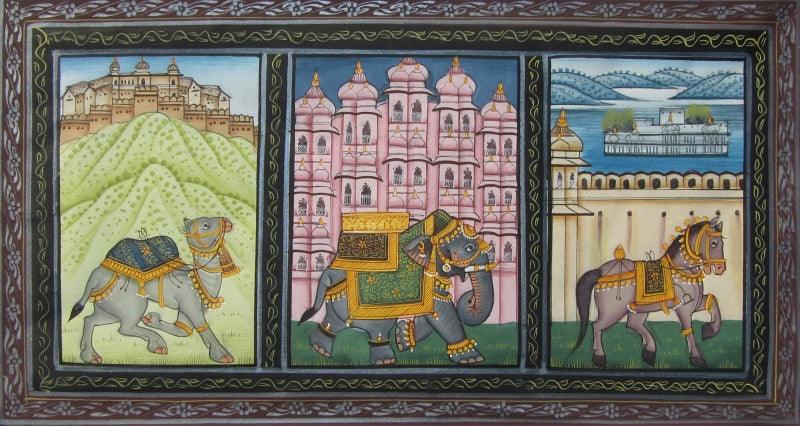
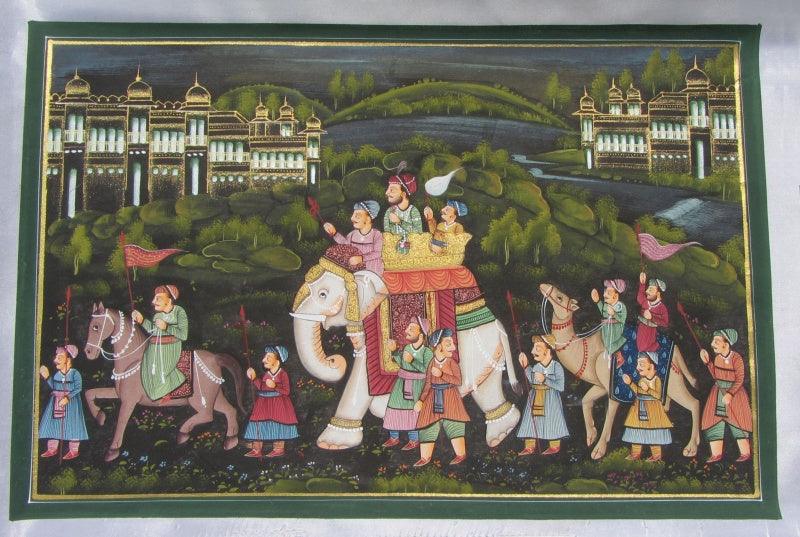
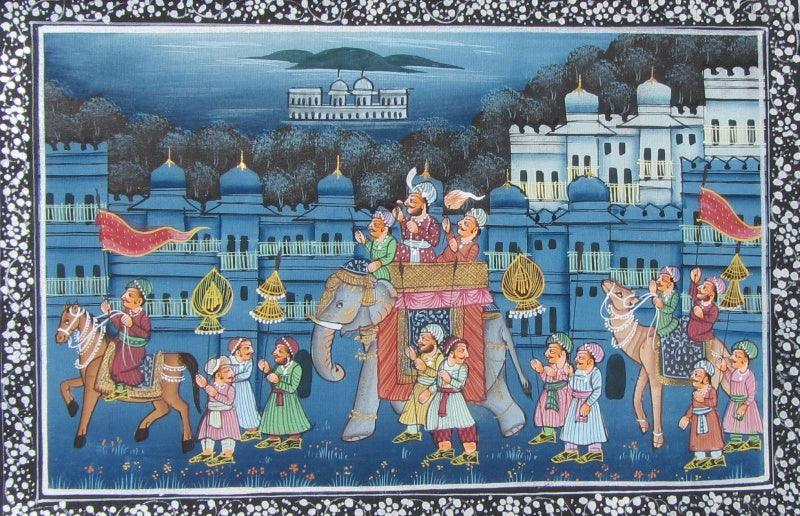
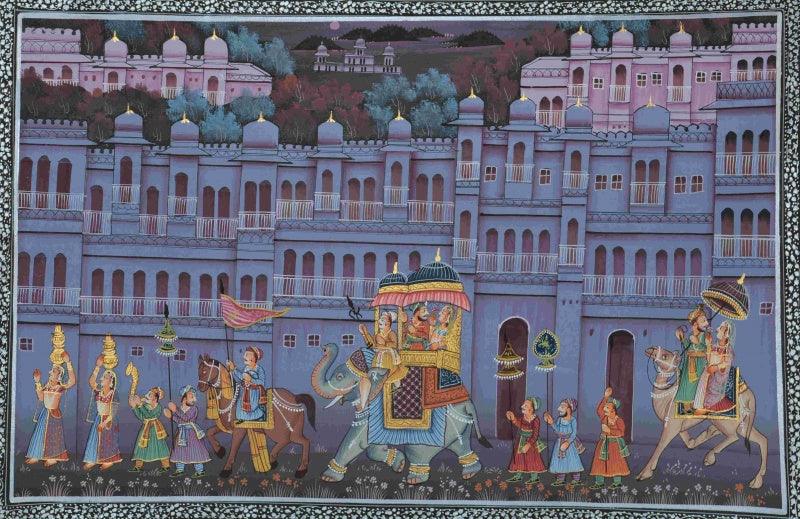
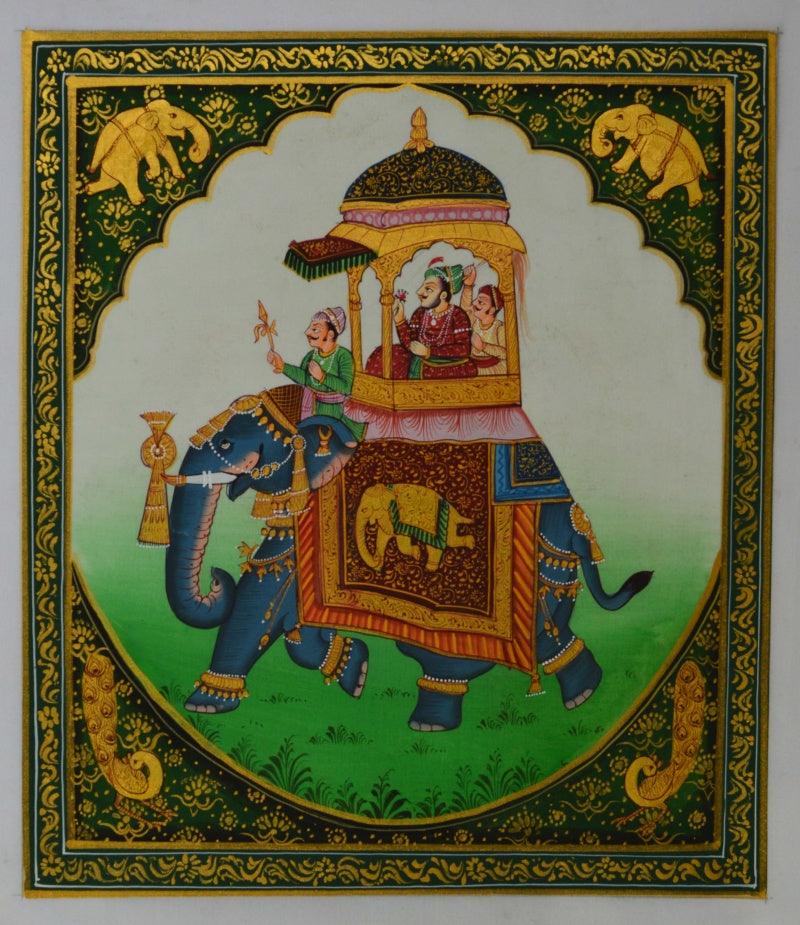
Framed within three arched portals like pages of an illuminated chronicle, the work stages a procession of royal feminine presence—mounted, poised, and unwavering—moving through desert fort, rose-palace façade, and riverine bastion as if time itself were a ceremonial route. The flattened perspective and meticulous ornamentation turn architecture into icon, where gold filigree and jewel-toned textiles elevate each scene from mere depiction into devotional spectacle. Across the triptych, the shifting landscapes read as states of power: solitude in the sands, sovereignty at the palace threshold, and public visibility along fortified waters, suggesting that authority is not a place but a practiced bearing. The horses and elephant become more than vehicles; they are rhythmic measures of dignity, carrying the figure through changing terrains while preserving a constant inner composure.
Delivery
You may also like