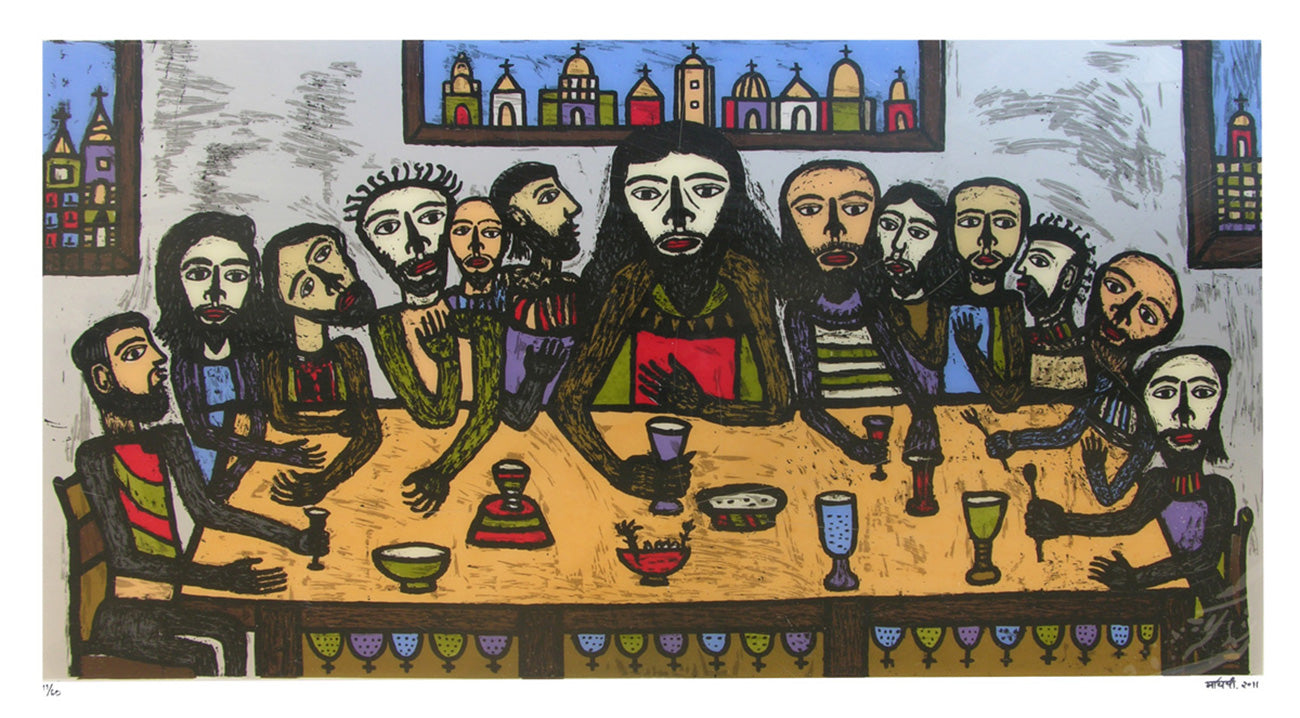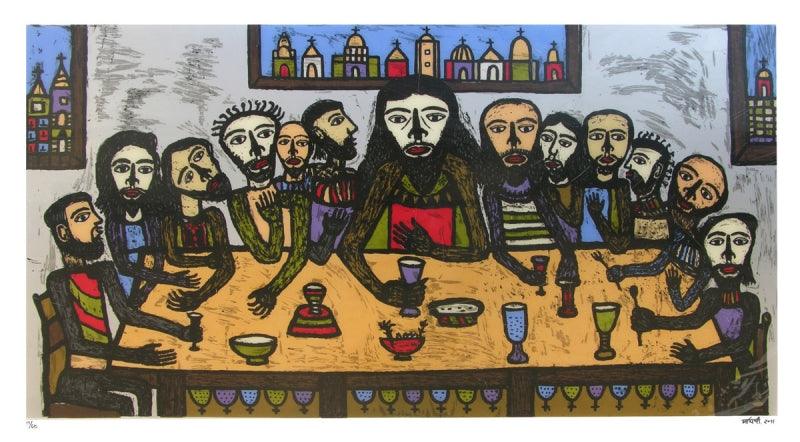
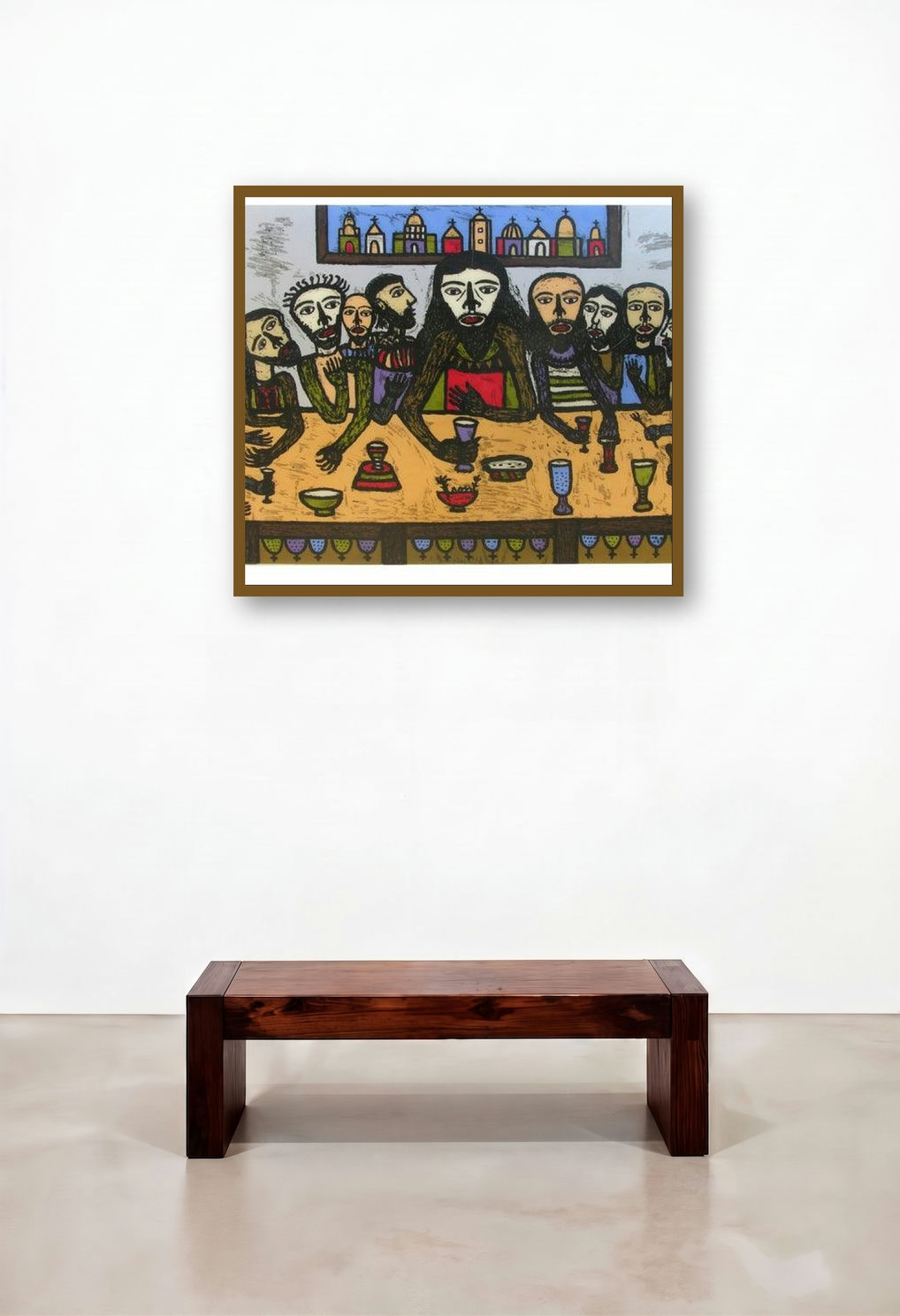
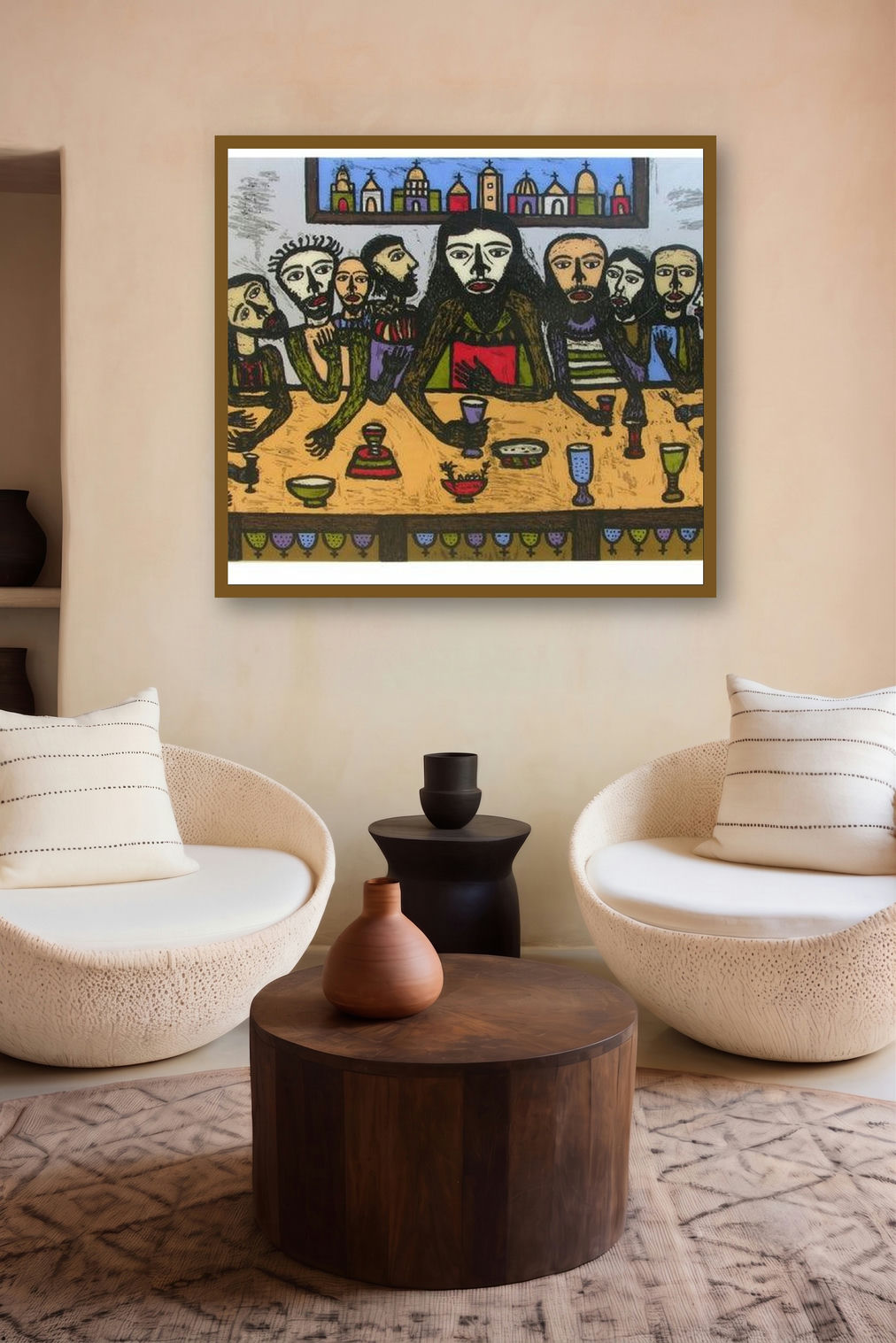
Last Supper (The Last Supper)
The scene reimagines a sacred gathering as a bluntly human chorus of faces, where wide, unblinking eyes and heavy outlines compress individuality into a shared, almost fated attention. A warm, ochre table becomes the emotional ground—both altar and domestic surface—its scattered cups and vessels quietly measuring intimacy, ritual, and the fragile negotiations of belonging. Behind them, the simplified city skyline reads like memory or doctrine: a distant architecture of belief that frames the group while their close-packed bodies insist on the immediacy of doubt, devotion, and companionship. The flattened space and insistent patterning turn narrative into icon, suggesting that communion is less a single miracle than a repeated, communal act of looking toward one another.
Delivery
You may also like