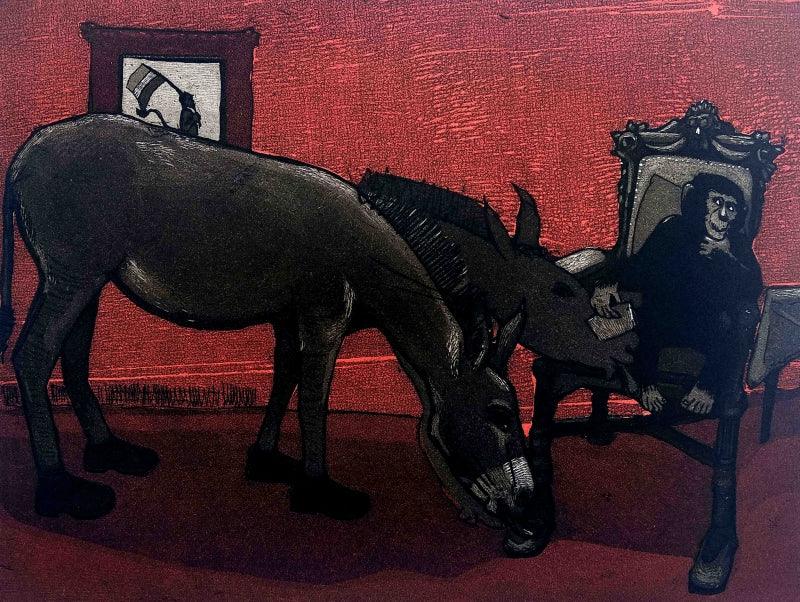
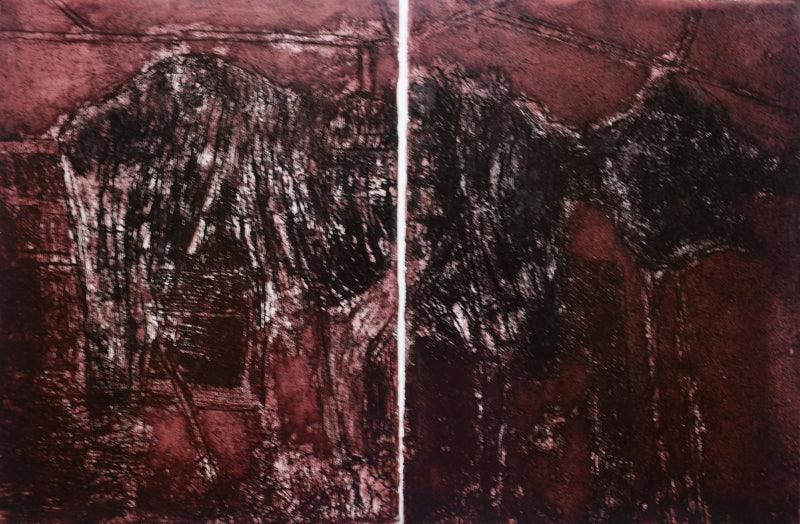
Story Of Pluralism 3 (The Throne of Ignorance)
₹5,000
● In stock · ★ 4.0 (13)checking live price…
Size
12x16Type
OriginalMaterial
PaperSet against a bruised, velvety red interior, the donkey’s bowed body becomes a heavy arc of submission, its dark mass swallowing the room’s shallow light and pressing the space into a hush. The seated primate, framed like a reluctant portrait in an ornate chair, reads as a surrogate for the viewer—present, observant, and unsettlingly powerless—while the compressed perspective turns domesticity into a stage for quiet domination. Black silhouettes and rough, tactile surfaces intensify the psychological charge, suggesting a parable of labor, hierarchy, and the thin civility of “home” where animal instinct and social order uneasily overlap.
Delivery
You may also like
Story Of Pluralism
Artzolo
₹5,000
★ 4.0 (5)
Untitled 1 (The Burden of Labor)
Artzolo
₹5,000
★ 4.0 (14)
Contemporary Ravana (The Voice of Many)
Artzolo
₹15,000
★ 4.0 (13)
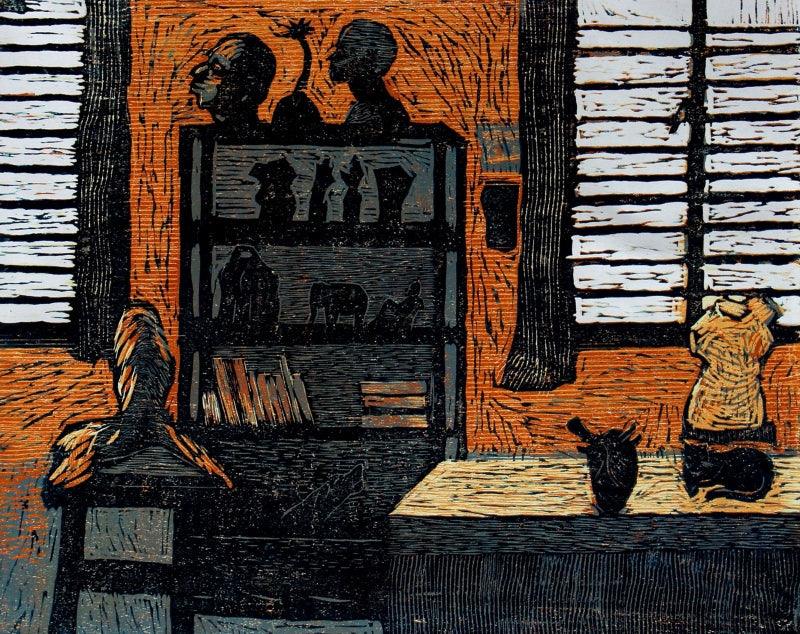
Studio (The Artist's Studio)
Artzolo
₹10,000
★ 5.0 (11)
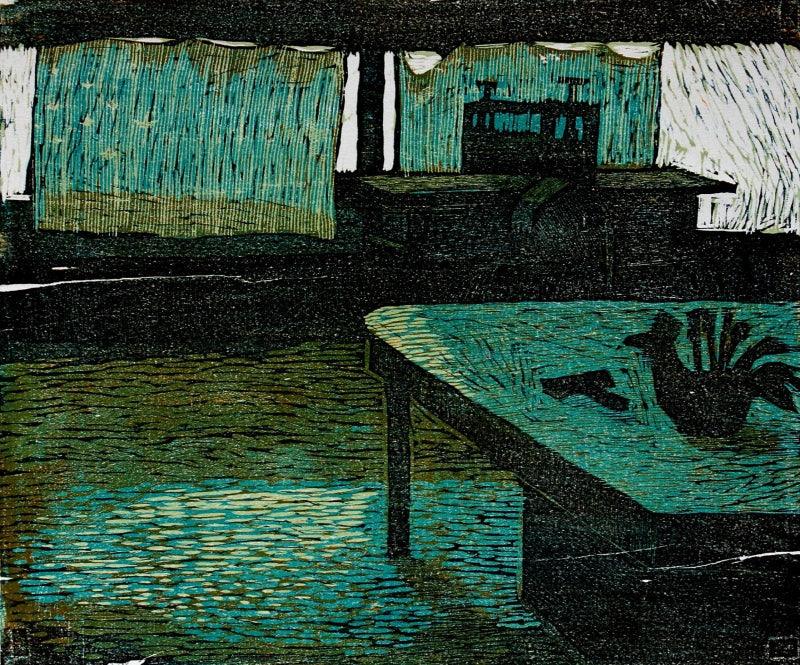
Studio 3 (The Waiting Room)
Artzolo
₹10,000
★ 5.0 (7)
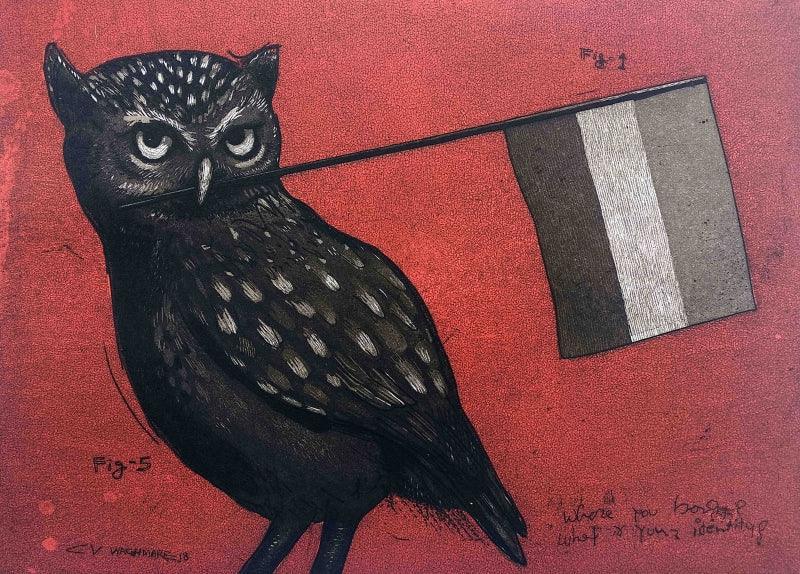
Where You Born What Is Your Identity (The Patriotic Owl)
Artzolo
₹5,000
★ 4.0 (11)
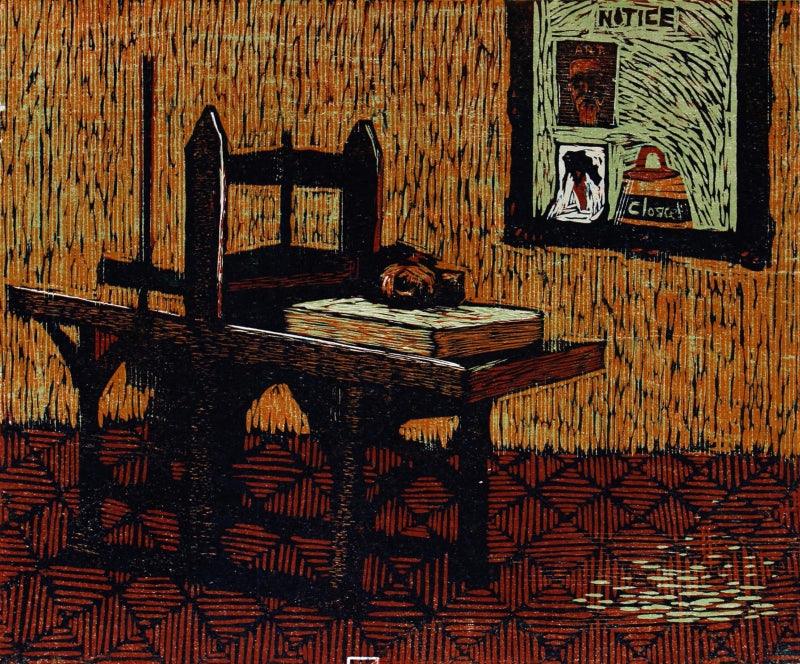
Studio 1 (The Press)
Artzolo
₹10,000
★ 5.0 (9)
Our Elephant (The Depths of Desire)
Artzolo
₹30,000
★ 4.0 (10)