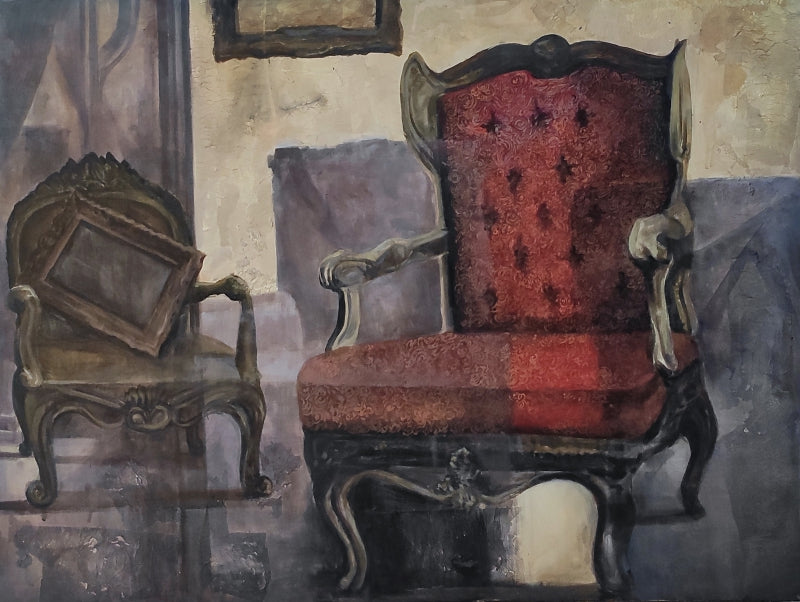
Memory
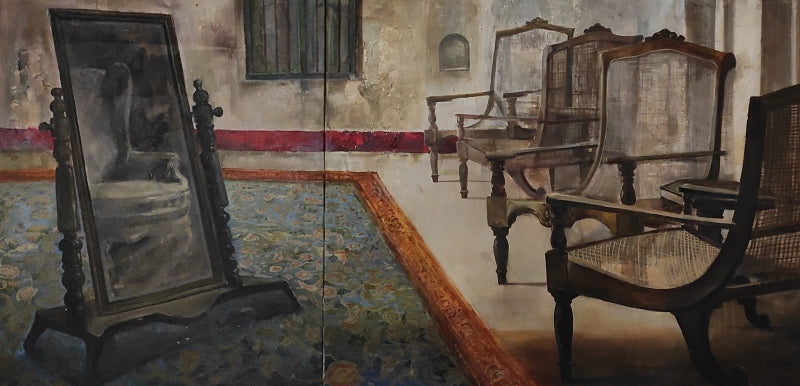
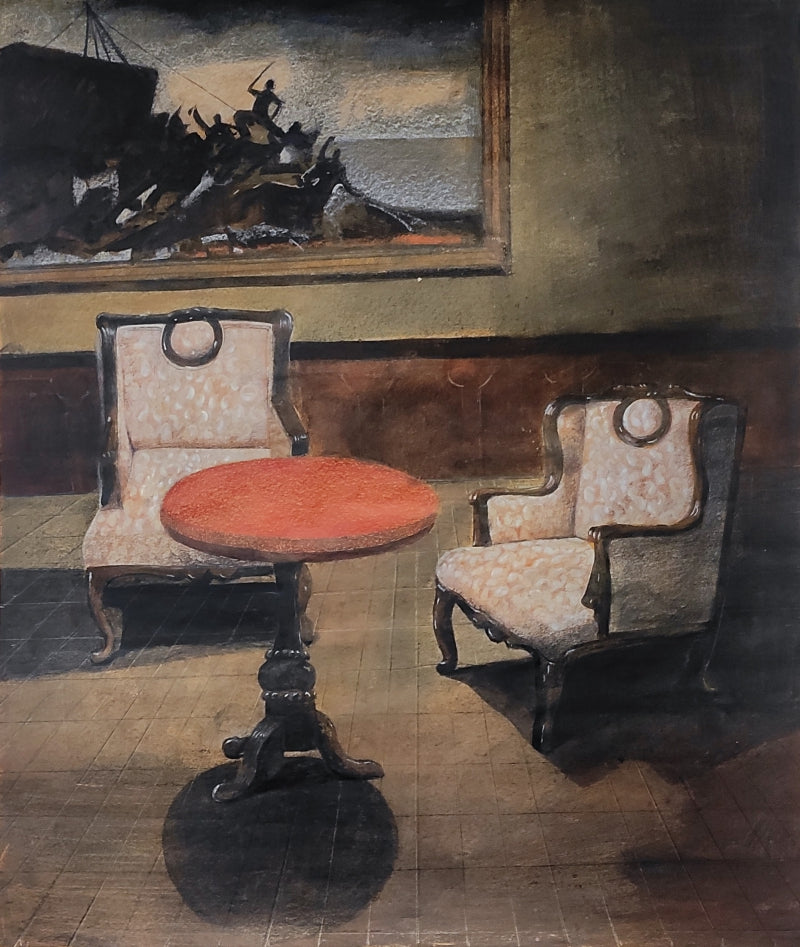
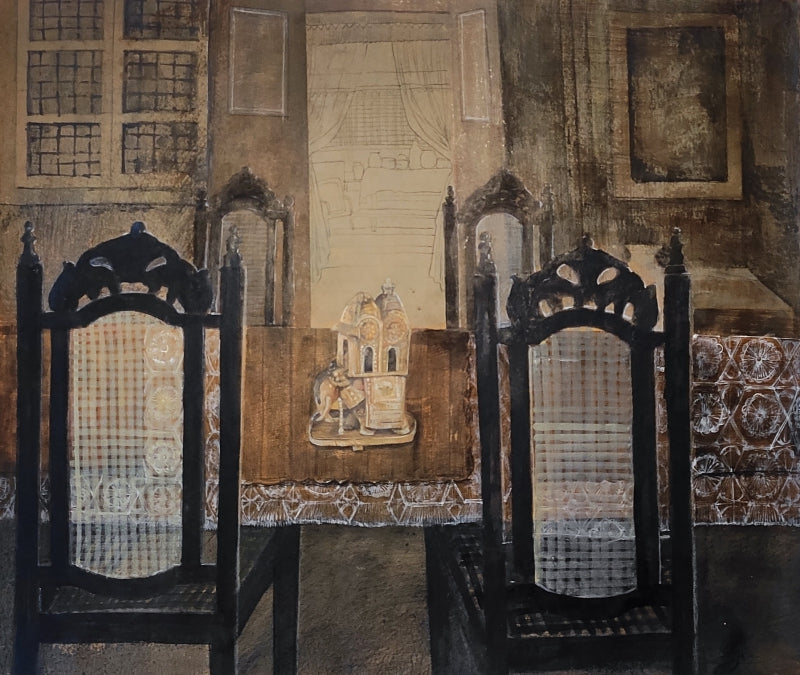
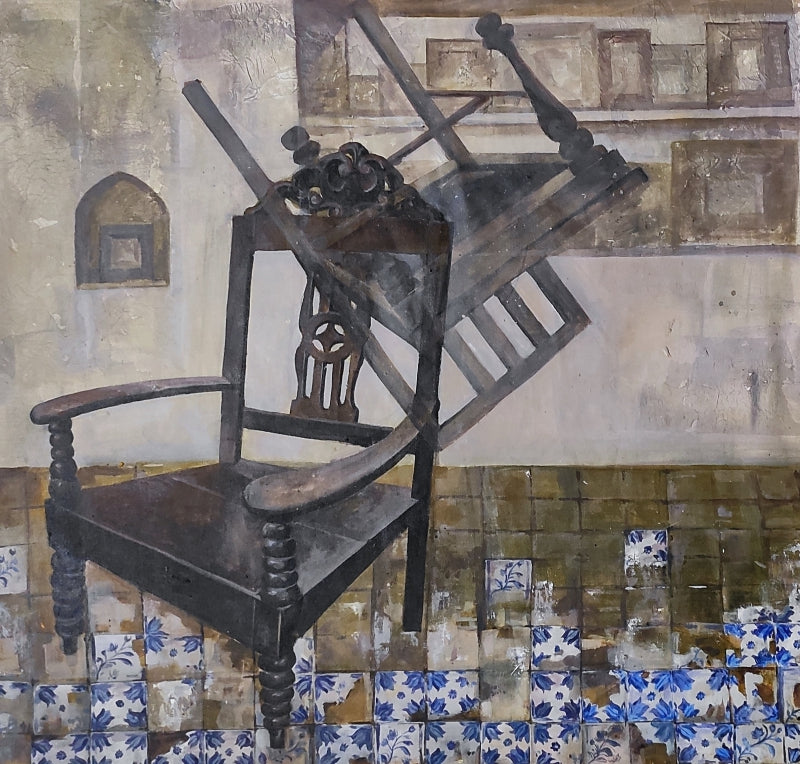
This interior scene stages absence as its true protagonist: two ornate chairs, one upright and one collapsing into a tilted frame, become stand-ins for memory and authority quietly losing their certainty. A restrained, dusty palette of greys and muted violets presses against the bruised red upholstery, letting the crimson seat read like a lingering pulse within an otherwise airless room. The composition’s asymmetry—weighty throne to the right, uneasy, half-fallen companion to the left—creates a psychological tension between permanence and surrender, as if the space itself is rehearsing the slow erosion of status. Light is not celebratory here but investigative, revealing scuffs, softened edges, and the delicate theatricality of objects that outlast the lives that once animated them.