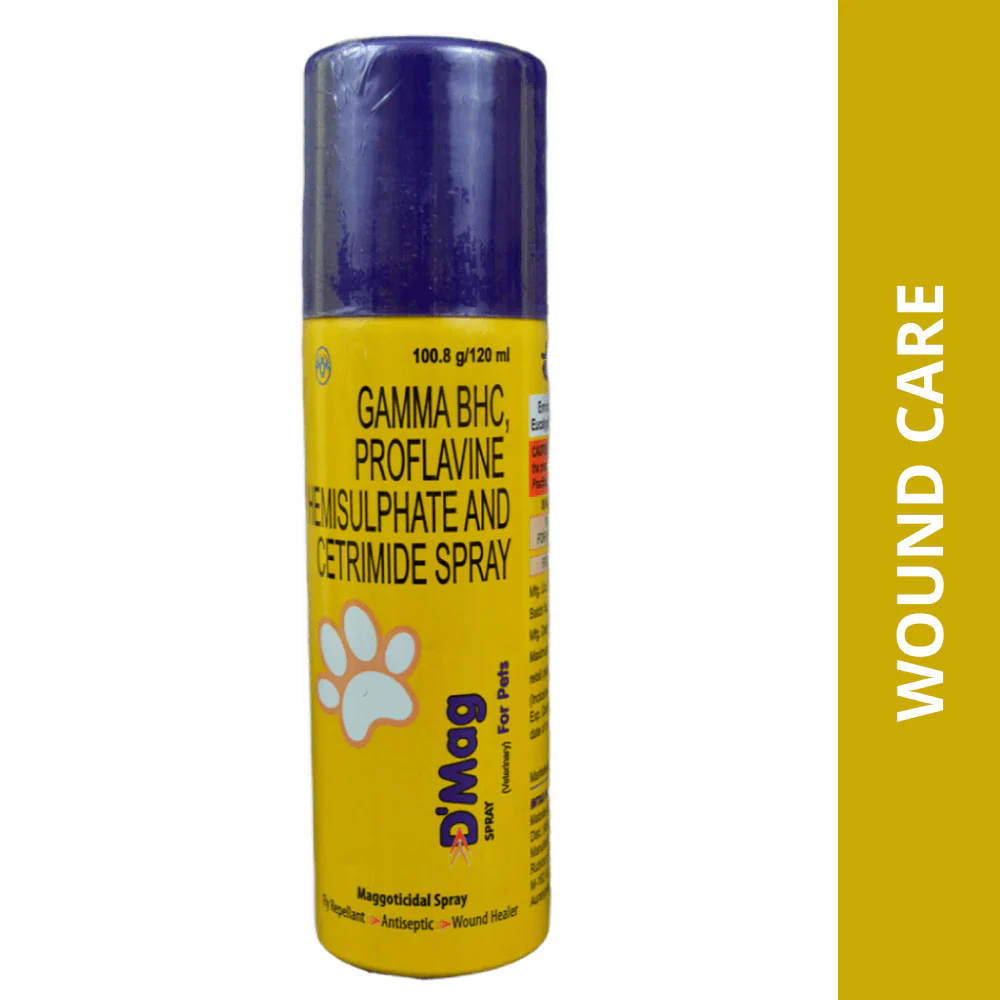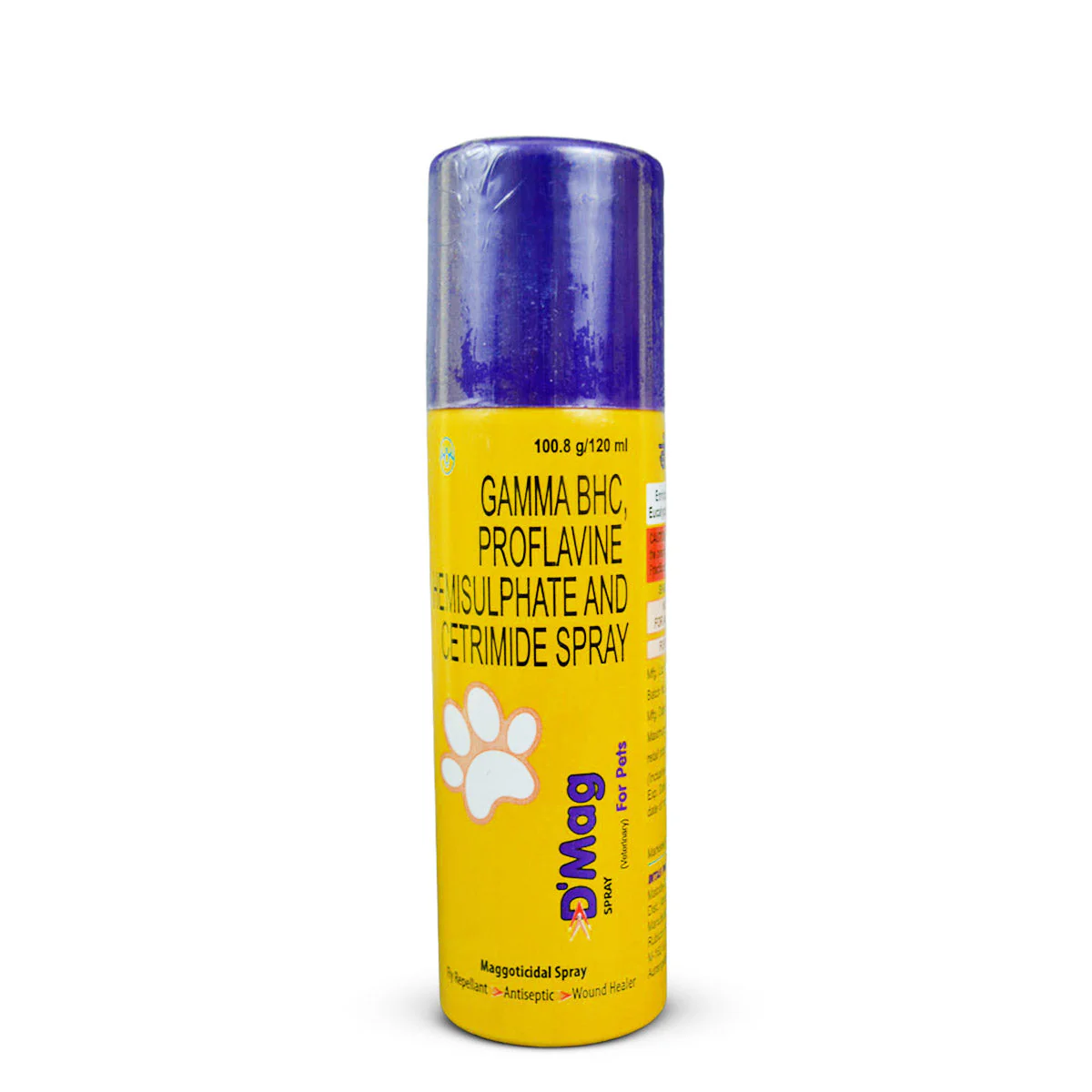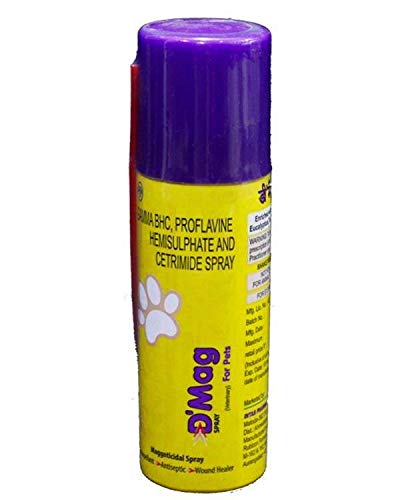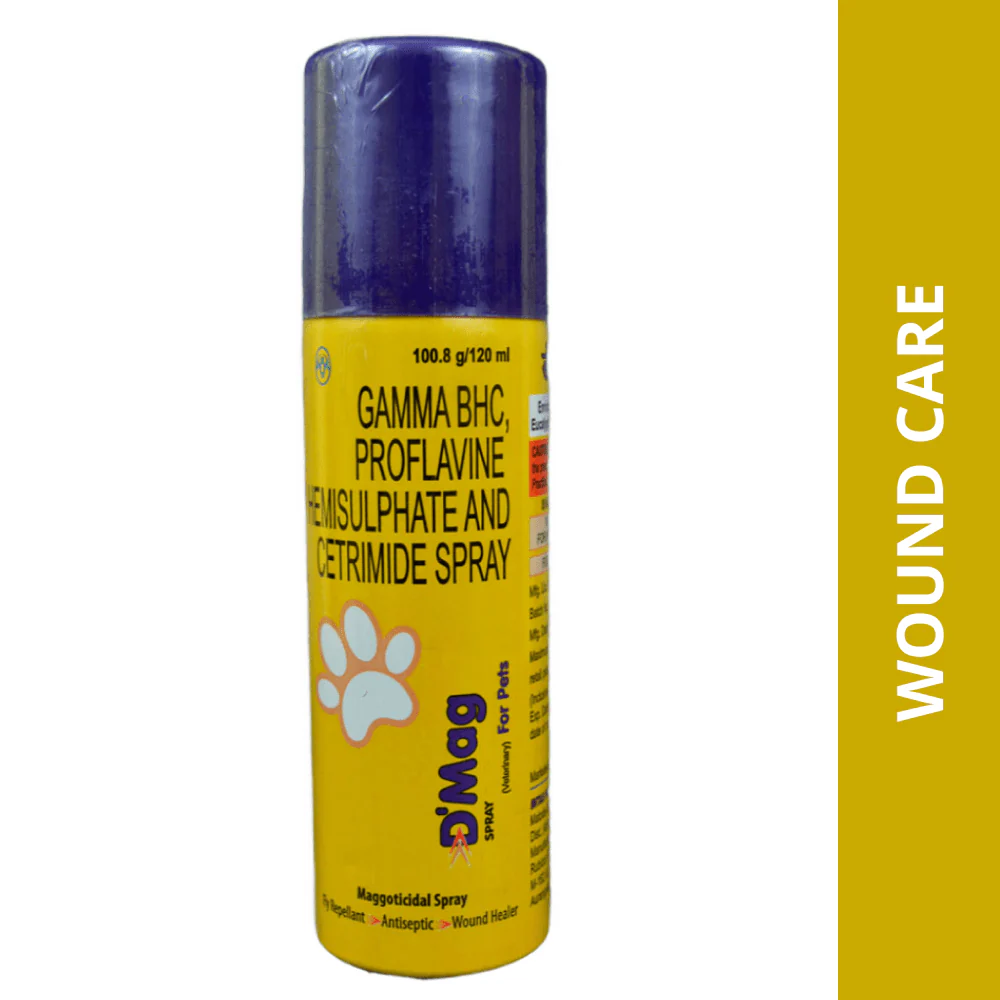
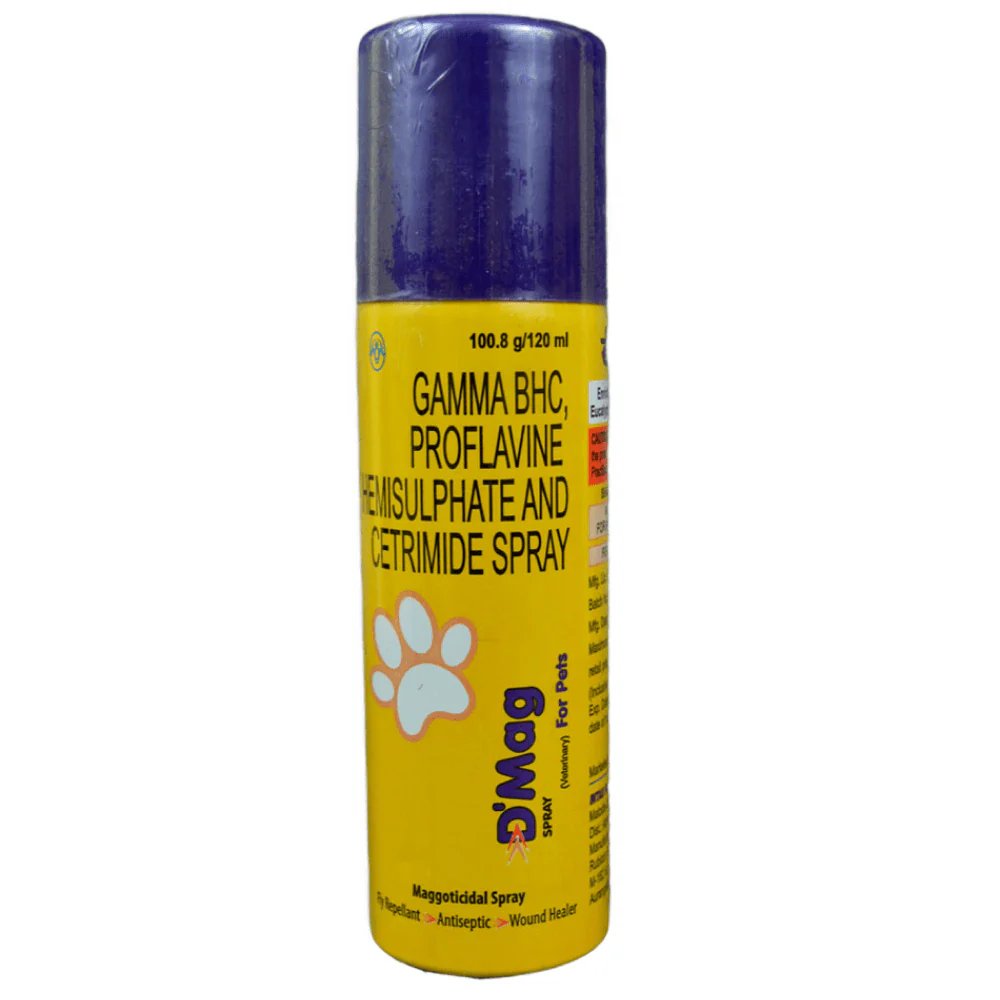
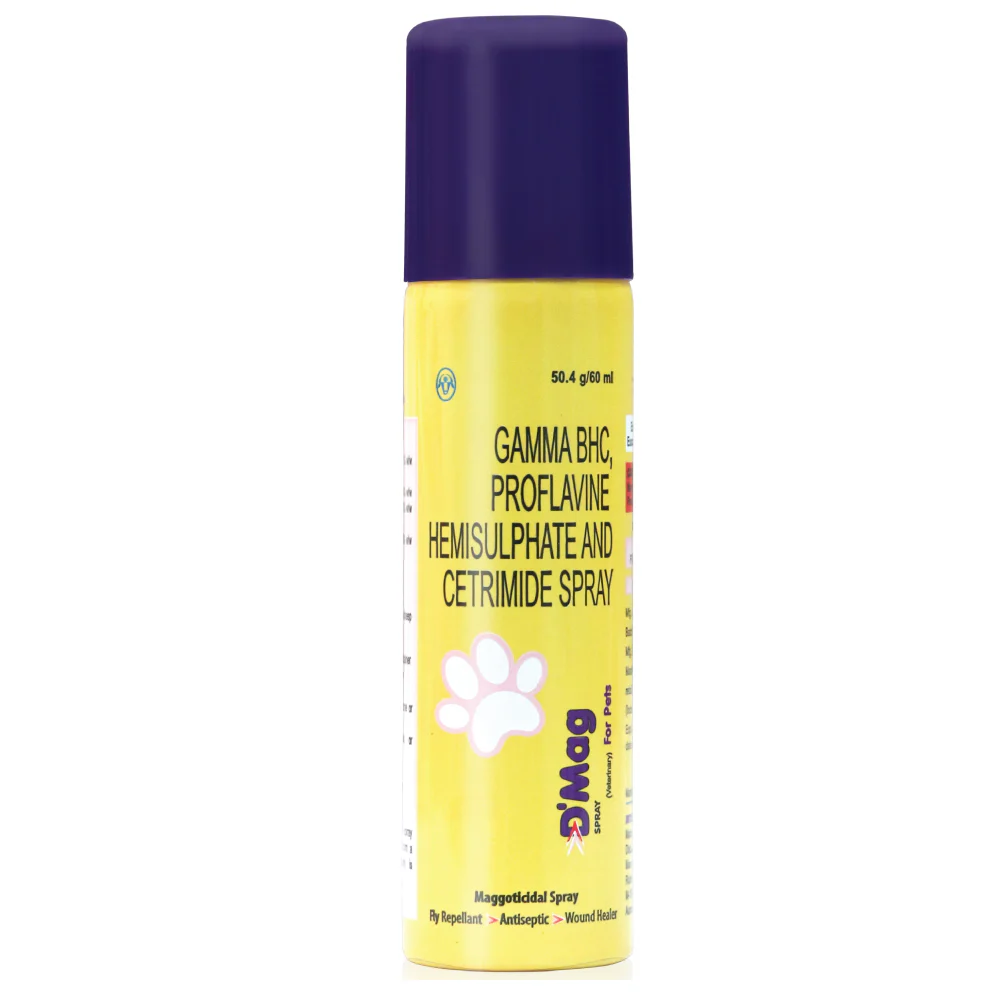
Intas D Mag Wound Care Spray for Dogs
Intas D Mag Wound Care Spray for Dogs: Uses, Benefits, Dosage & More
If you've ever come home to find your dog has scraped a paw on the evening walk, or you've taken in a street dog with an open, fly-infested wound, you already know how quickly things can go from "minor injury" to "this needs urgent care." Intas D Mag Wound Care Spray for dogs is exactly the kind of product every pet parent should have within arm's reach for moments like these. It's a topical, easy-to-use spray designed to clean wounds, repel flies, and stop maggot infestations before they turn into something far more serious.
For pet parents who treat their dogs as family, even a small cut feels like a big deal. This spray is meant to give you a way to act fast, at home, while you figure out the next steps with your vet. Intas D Mag Wound Care Spray is a topical antiseptic and maggoticidal spray formulated for dogs, used to manage open wounds, cuts, abrasions, and especially maggot-infested injuries. It combines antimicrobial action with a fly-repellent effect, so the wound stays cleaner for longer and is less likely to attract flies that lay eggs and cause maggot infestations in the first place.
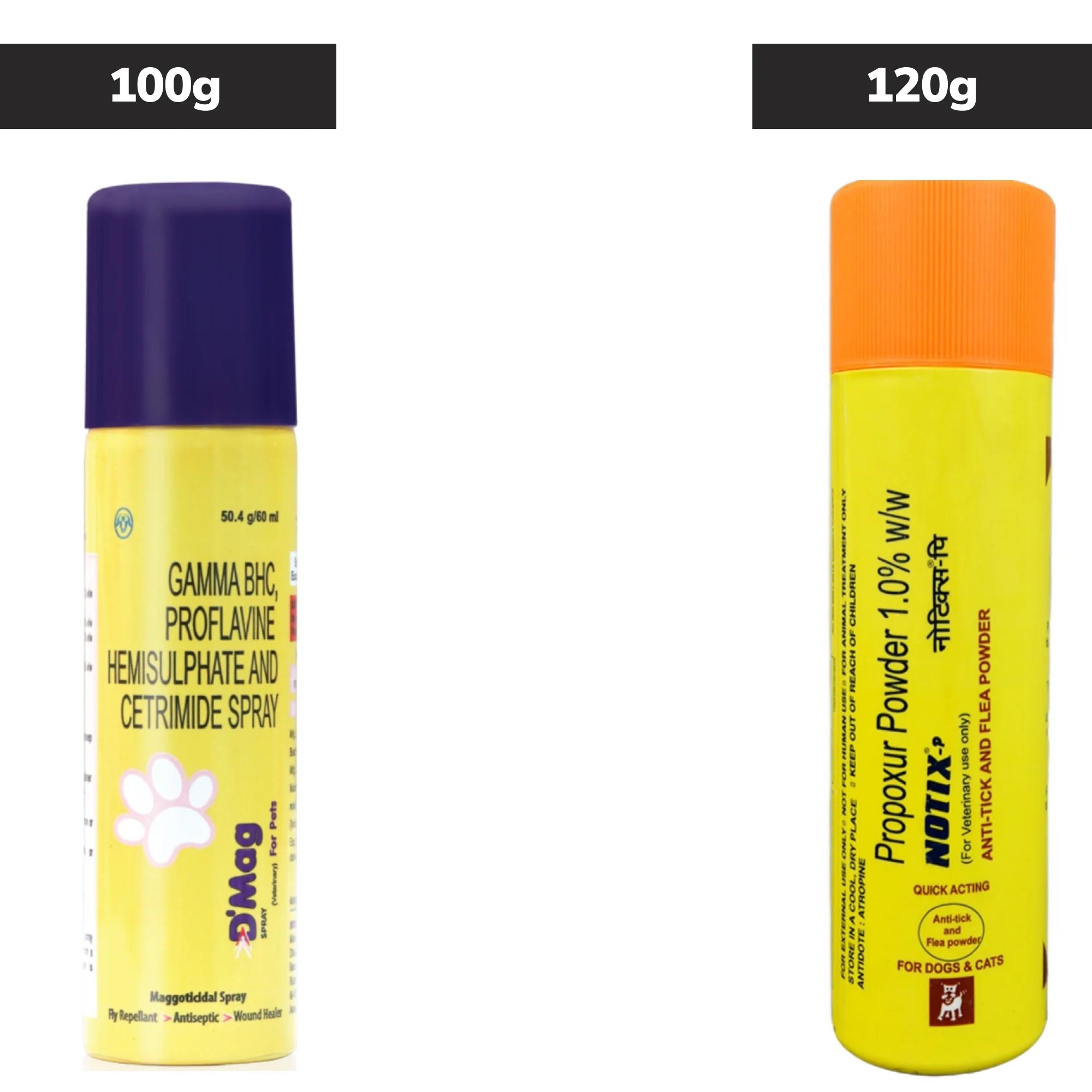
It's a touch-free, easy-to-apply spray, which matters a lot when you're dealing with an anxious or in-pain dog who doesn't want to be poked and prodded. You simply spray it directly onto the affected area, and it gets to work. The product comes in two pack sizes - 60mL and 120mL - so you can pick what suits your dog's needs, whether it's a single small wound or ongoing wound management for a larger injury.
Uses and Benefits
This wound care spray for dogs is primarily used to:
- Treat and prevent maggot infestation in open wounds
- Repel flies from settling on injured or healing skin
- Clean and disinfect minor cuts, scrapes, and abrasions
- Support faster wound healing by keeping the area free of secondary infection
- Provide quick relief for street dogs or rescues with neglected wounds
The biggest benefit here is prevention as much as treatment. Once flies lay eggs in an open wound, maggots can develop within hours in India's warm climate, making the injury far worse very quickly. Spraying D Mag on a fresh wound helps create a barrier that keeps flies away, so you're treating the cause, not just managing the aftermath.
For pet parents who foster or feed community dogs, this is often one of the first products recommended for wound care, since it's effective even in wounds that have already developed early-stage maggot activity.
Side Effects
- Intas D Mag Wound Care Spray is generally well tolerated by dogs when used as directed. Some dogs may experience mild, temporary irritation, redness, or a slight stinging sensation at the application site, especially if the wound is fresh or particularly raw. This typically settles on its own.
- If you notice excessive licking, swelling, unusual discharge, or your dog seems distressed after application, stop use and speak with your vet. Every dog reacts a little differently to topical products, so keep an eye on the area for the first day or two after you start using it.
How to Use The Product?
Using this wound spray correctly makes a real difference to how well it works:
- If there's hair around the wound, gently clip it back so the spray can reach the skin directly.
- Clean the wound first with a diluted antiseptic solution, like povidone iodine, to remove dirt and debris.
- Hold the bottle a few centimetres away from the wound and spray evenly across the affected area.
- Apply 3 to 4 times a day, or as advised by your vet, until the wound shows clear signs of healing.
- Keep your dog from licking the area immediately after application; an Elizabethan collar can help if needed.
Consistency is key with this one. Skipping applications gives flies and maggots a window to return, so try to stick to a routine, especially in the first few days.
How Does The Drug Work?
D Mag works through three active ingredients, each playing a distinct role. Gamma Benzene Hexachloride (Lindane) and Proflavine Hemisulphate together have a maggoticidal action, meaning they target and kill maggots that may already be present in the wound. Cetrimide acts as an antiseptic, helping to clean the wound and reduce the risk of bacterial infection. The formulation also includes eucalyptus, turpentine, and neem oil in its base, which contribute to the fly-repellent effect, discouraging flies from landing on the wound and laying eggs in the first place.
Together, this combination doesn't just treat an existing maggot problem; it actively works to prevent a new one from starting while the wound heals.
Safety Advice
- For external, topical use on dogs only. Always check with your vet before using on puppies, pregnant or nursing dogs.
- Avoid spraying near your dog's eyes, nose, or mouth.
- Use in a well-ventilated area, since this is an aerosol spray.
- Keep your dog from licking the treated area until the spray has dried.
- Store away from direct sunlight and out of reach of children and pets.
- Do not use on deep wounds, puncture wounds, or wounds near the eyes without your vet's guidance, as these may need more intensive treatment.
Vet Tip:
"With maggot wounds, pet parents often stop the spray the moment they can't see visible maggots anymore. But maggots can burrow deep into tissue layers that aren't visible on the surface. I always advise continuing the spray for at least 2 to 3 days after the wound looks clean, and getting the wound physically checked by a vet if it doesn't fully close within a week, since deep tissue damage from prolonged infestation isn't always obvious from the outside."
- Dr Rinu Thomas, MVSc, 8+ years of experience
What To Do If You Miss A Dose?
If you happen to miss an application, simply spray the wound as soon as you remember and continue with the regular 3 to 4 times a day schedule. There's no need to double up on the next application. If you've missed doses for more than a day, monitor the wound closely for any return of flies or fresh maggot activity, and resume regular use immediately.
Quick Tips
- Always clip away fur before spraying so the medicine reaches the skin directly
- Reapply consistently, missing doses gives flies and maggots a chance to return
- Pair this spray with a cone or Elizabethan collar so your dog can't lick it off
- Keep wounds covered or shaded from direct flies during the day, especially outdoors
- If the wound smells foul, looks deeper than skin level, or your dog seems unwell, see a vet immediately rather than relying on home treatment alone
Vets Also Recommend...
- You can explore Skin Care products for dogs, Antibiotics for Dogs for deeper infections, and Tick & Flea solutions to reduce the chances of wounds attracting pests in the first place.
- If you're caring for a street dog or rescue, our blog on how to clean and dress your dog's wound at home and our guide to first aid kit essentials for your pet are great places to start.
Disclaimer: Supertails' sole intention is to ensure that its consumers get information that is expert-reviewed, accurate, and trustworthy. However, the information contained herein should NOT be used as a substitute for the advice of a qualified physician. The information provided here is for informational purposes only. This may not cover everything about particular health conditions, lab tests, medicines, all possible side effects, drug interactions, warnings, alerts, etc. Please consult your doctor and discuss all your queries related to any disease or medicine. We intend to support, not replace, the doctor-patient relationship.
Help Your Dog Recover Quickly with Intas D Mag Wound Care!
A wound, however small, can spiral quickly if it's left unattended, especially in India's heat and humidity, where flies and maggots move fast. Intas D Mag Wound Care Spray gives pet parents a simple, vet-recommended way to step in early, clean the wound, kill existing maggots, and keep flies away while healing takes its course. Whether it's your own dog or a street dog you've taken under your wing, having this spray ready at home means you're never caught off guard.
Order Intas D Mag Wound Care Spray for Dogs today on Supertails and keep your furry family member's wound care sorted, fast, reliable, and just a spray away.
FAQs
What is Intas D Mag Wound Care Spray used for?
It's used to treat and prevent maggot infestations in dog wounds, repel flies, and clean cuts and abrasions. It combines antiseptic and maggoticidal action to support faster, infection-free wound healing in dogs of all breeds and sizes.
How often should I apply D Mag spray on my dog's wound?
Apply the spray 3 to 4 times a day, or as directed by your vet, until the wound shows clear signs of healing. Consistency matters here, as skipping applications can allow flies and maggots to return to the wound.
Is Intas D Mag safe for puppies?
This spray is formulated for dogs, but puppies, pregnant, and nursing dogs require extra caution with any topical medication. It's best to consult your vet before using it on a puppy to confirm the right approach for their age and weight.
Can I use D Mag spray on cats?
No, this spray contains Gamma Benzene Hexachloride (Lindane), which can be toxic to cats. It's formulated specifically for dogs. If your cat has a wound, speak with your vet about a cat-safe alternative instead.
How do I clean a wound before applying the spray?
Gently clip away surrounding fur, then clean the wound using a diluted povidone iodine solution to remove dirt and debris. Once the area is clean, spray D Mag evenly over the wound, holding the bottle a few centimetres away.
What if my dog licks the spray off the wound?
Try to prevent licking using an Elizabethan collar, as excessive licking can delay healing and reduce the spray's effectiveness. If your dog has already licked a small amount, monitor for vomiting or unusual behaviour and consult your vet if concerned.
You may also like