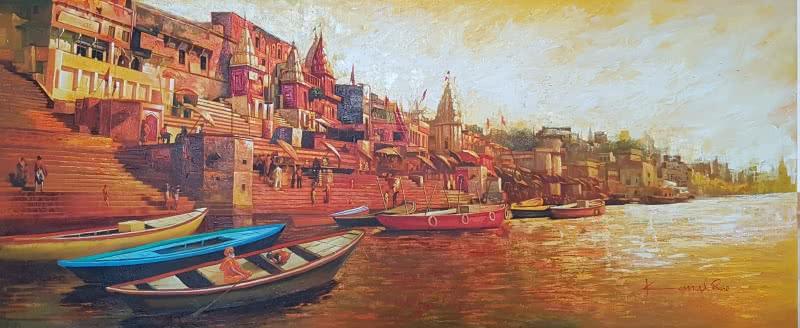
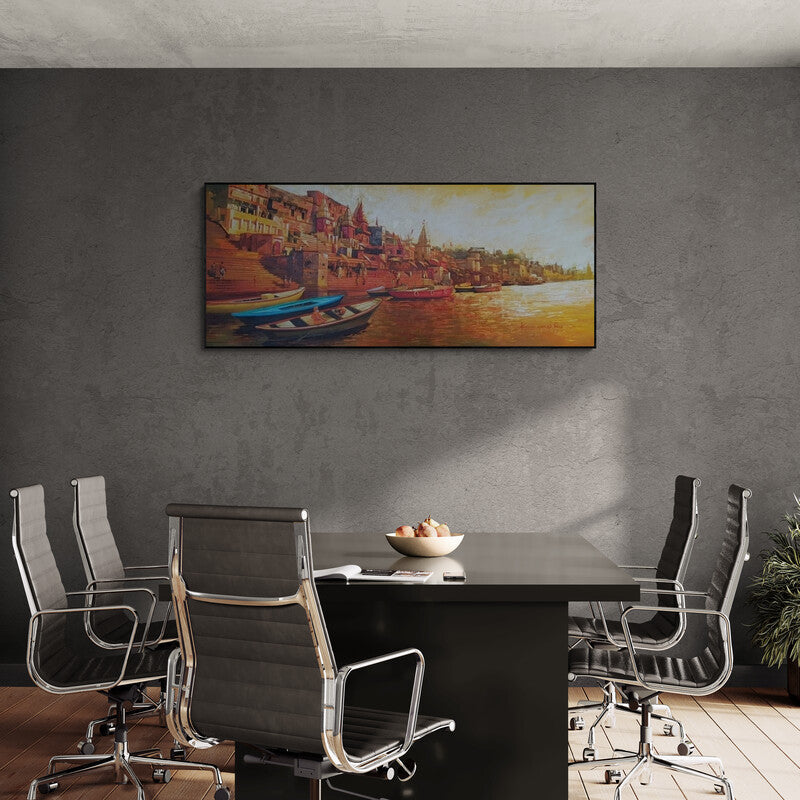
Banaras Ghat
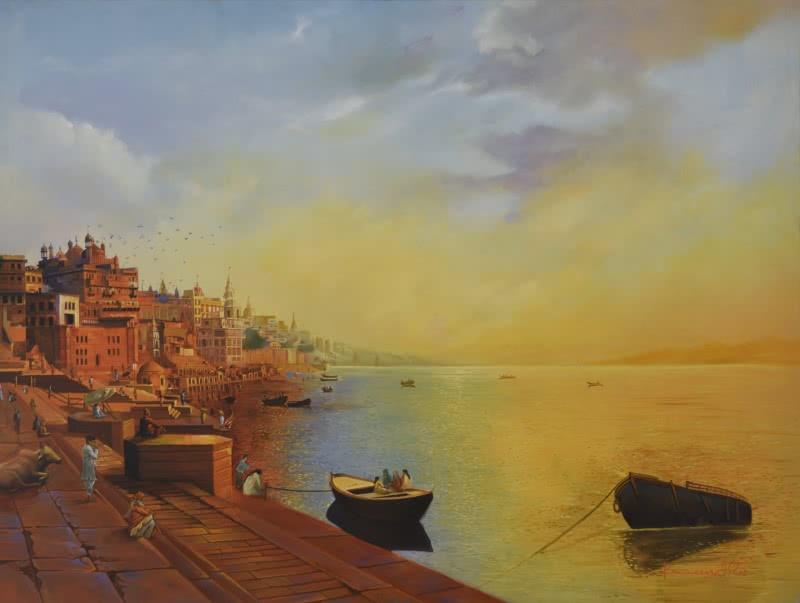
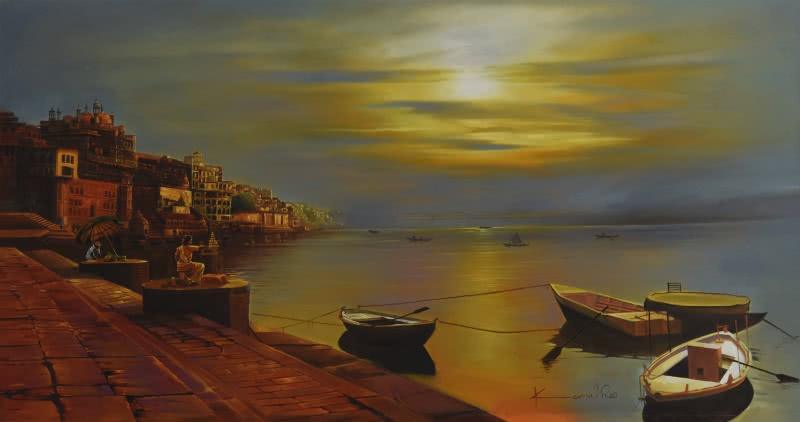
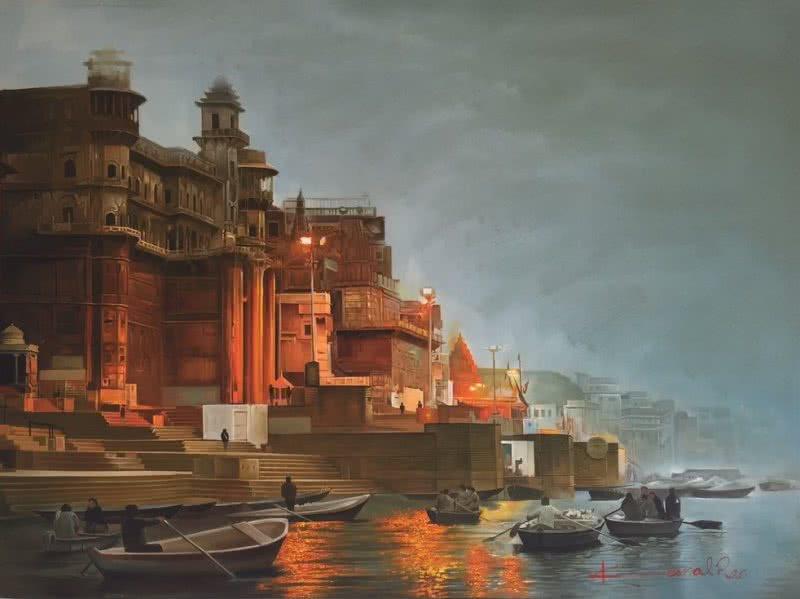
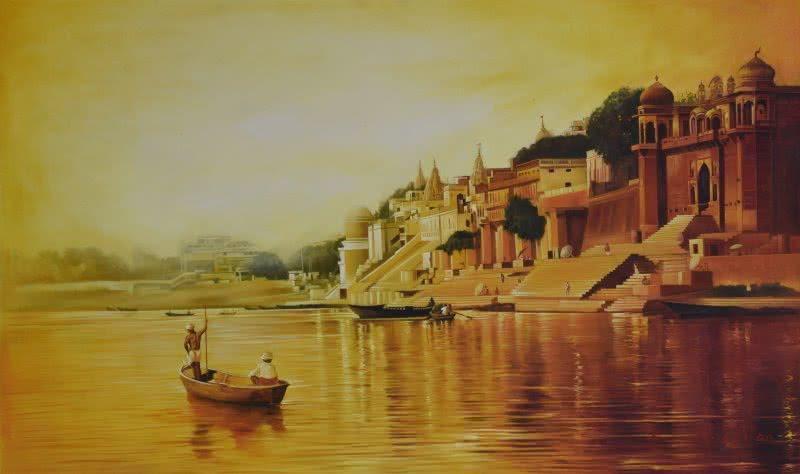
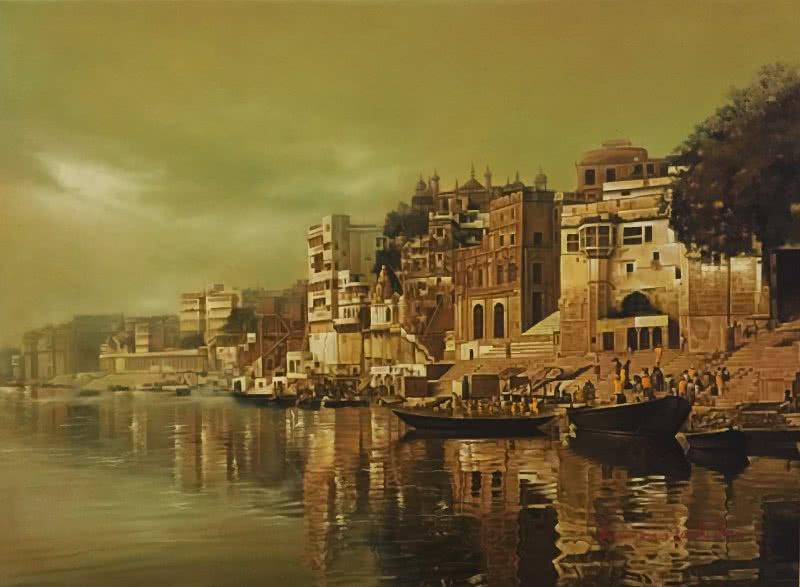
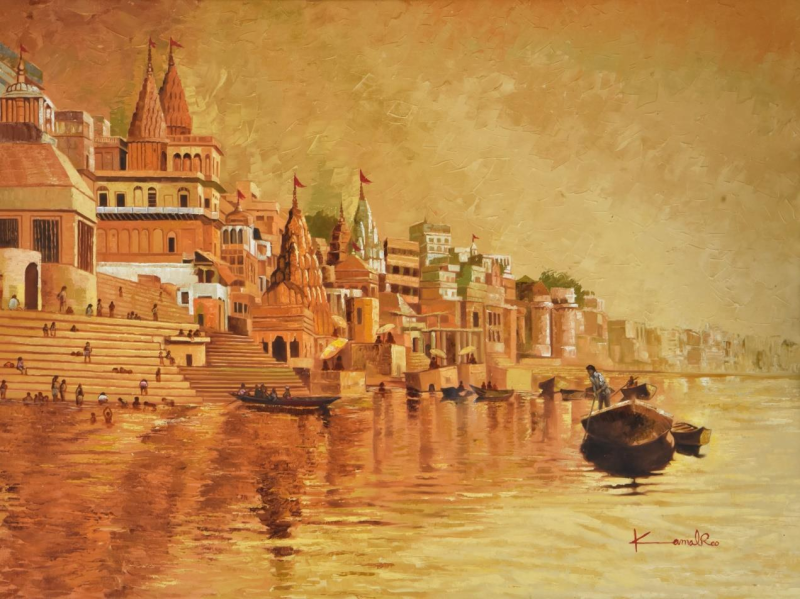
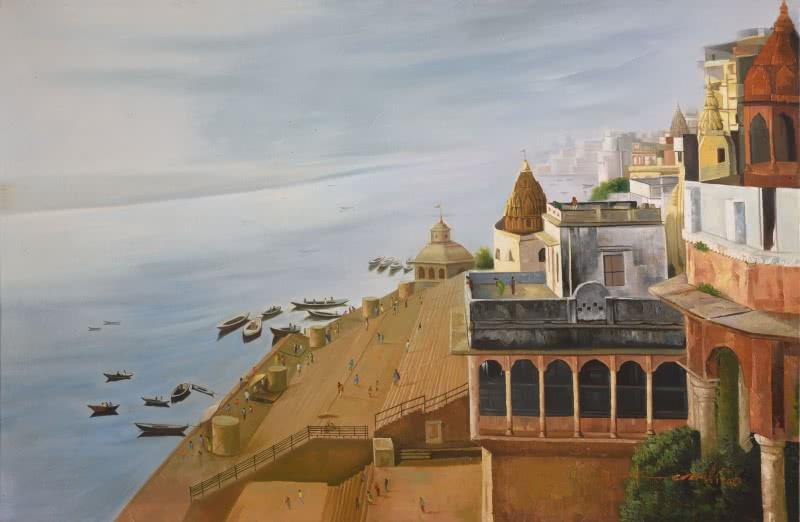
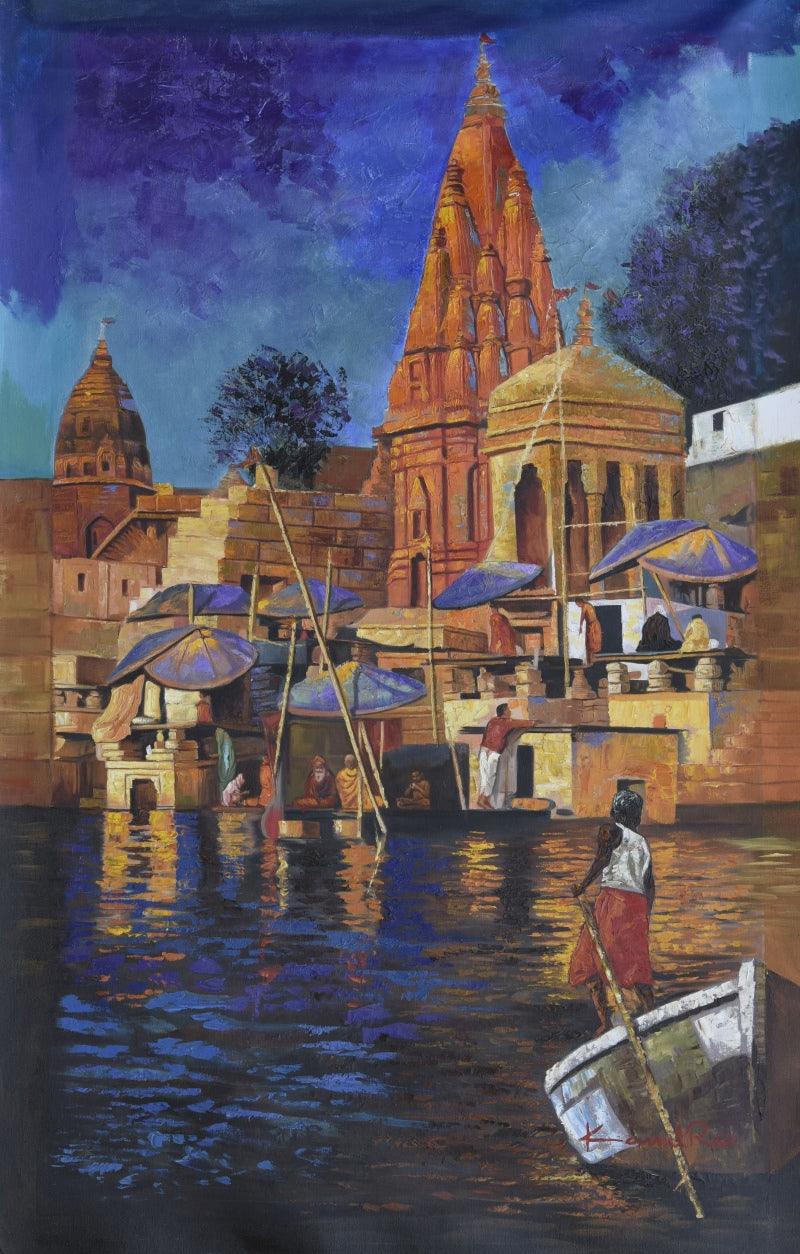
The painting unfurls a riverfront city as a living amphitheater, where stepped ghats and stacked facades rise in warm ochres and vermilions, compressing human activity into a rhythmic, almost liturgical procession of forms. A luminous wash of late-day light drifts across the water, turning the surface into a molten mirror that softens the boundary between architecture and atmosphere, between permanence and flow. The small boats in the foreground act as quiet counterpoints—intimate, transient vessels set against the monumental city—suggesting the tenderness of daily passage within an ancient, enduring continuum. In this balance of density and breath, the scene becomes less a literal place than a meditation on memory, devotion, and time carried downstream.
Delivery
You may also like