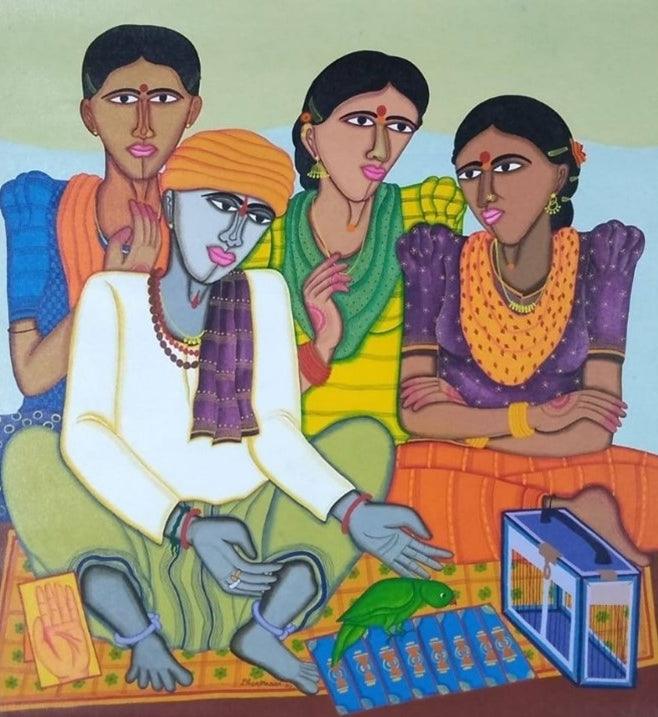
Fortune Teller
This intimate tableau stages a triangular conversation of glances and gestures, where the figures’ elongated eyes and poised hands turn a domestic moment into a quiet drama of persuasion, doubt, and listening. Saturated reds, greens, and blues—laid in clean, flattened planes—deny atmospheric depth, instead pressing the bodies forward so that emotion becomes the primary space the viewer inhabits. The central hand clutching currency functions as a small, potent symbol: an everyday object elevated into a moral hinge, suggesting how affection, obligation, and survival negotiate within the family circle. Even the parrot-like presence at the threshold reads as a witness to unspoken truths, lending the scene a folklore-inflected sense that judgment may arrive not from outside, but from within.
Delivery
You may also like