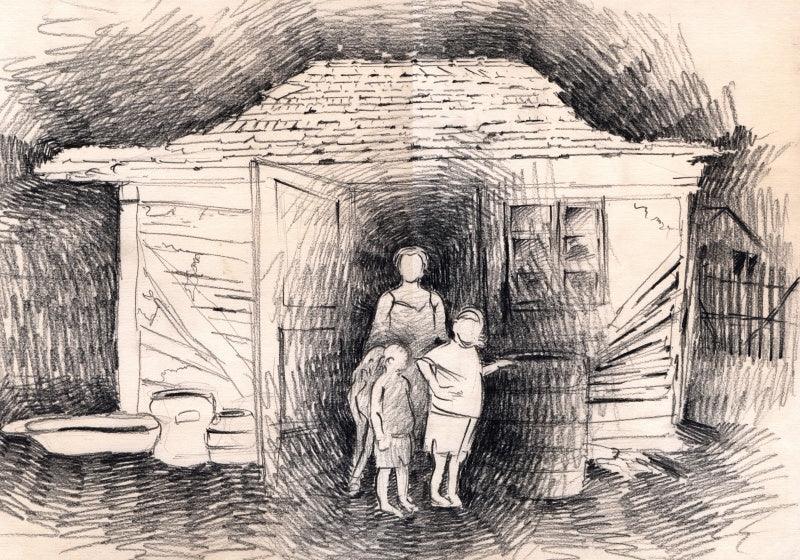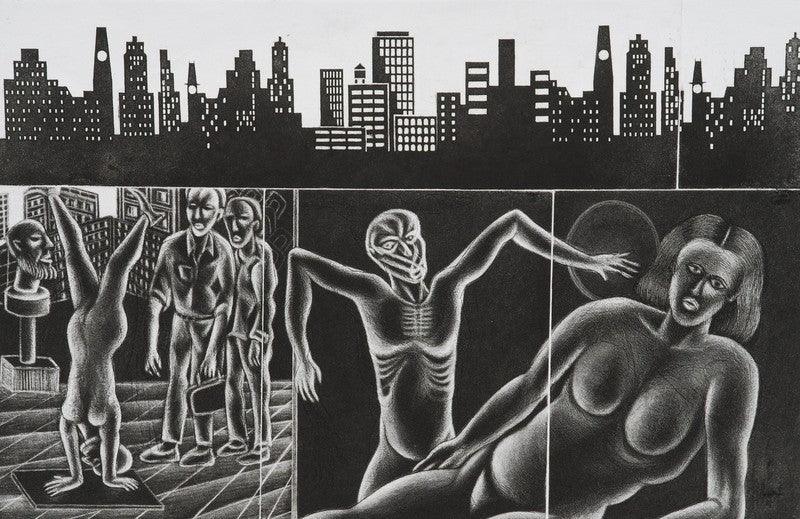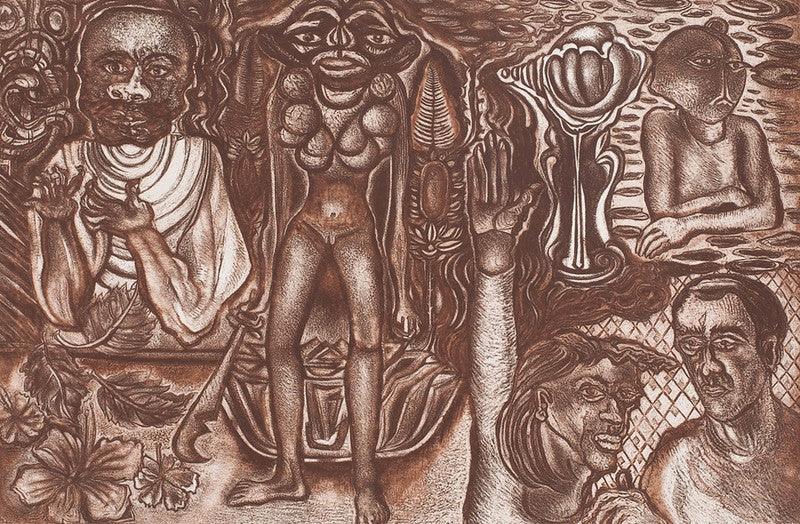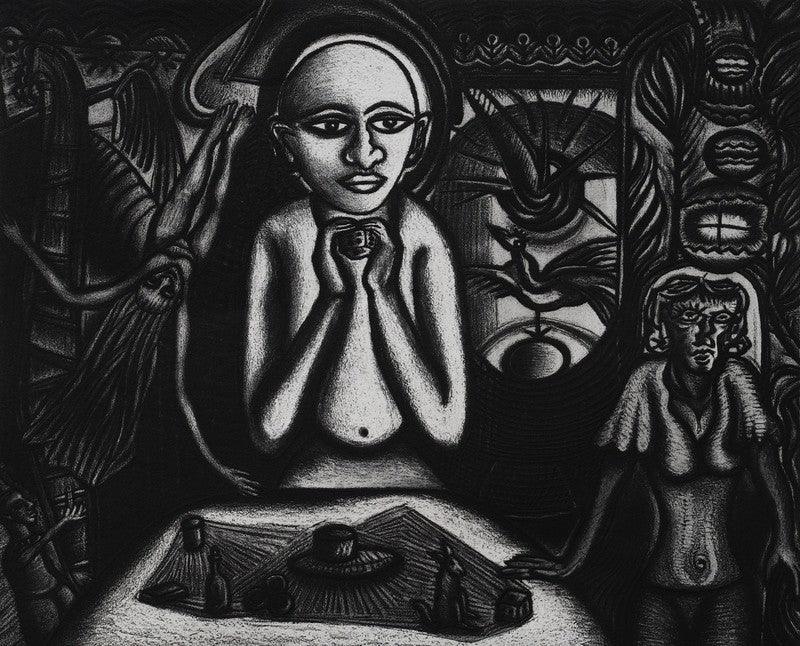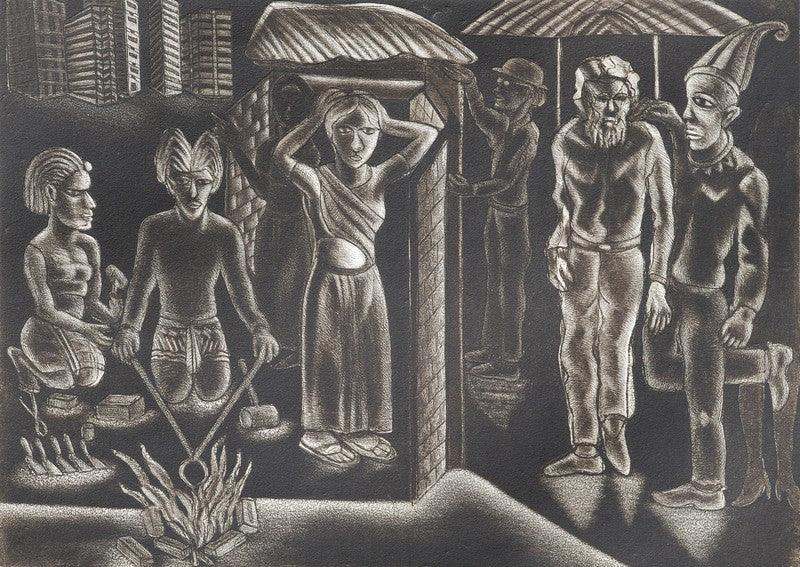
Gipsy Family 2 (Night Scene)
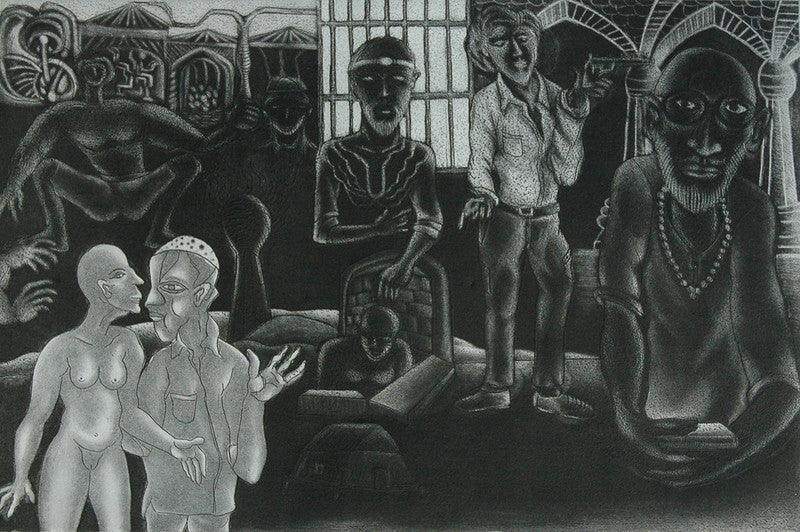
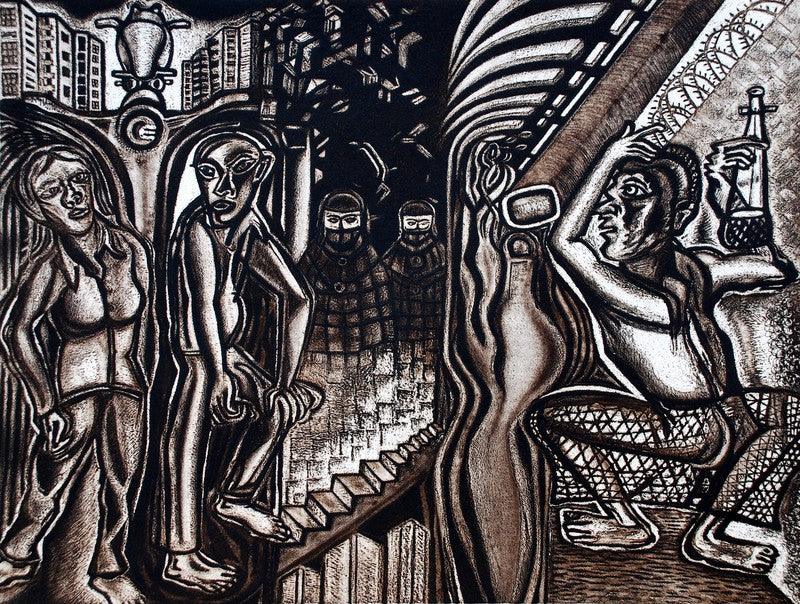
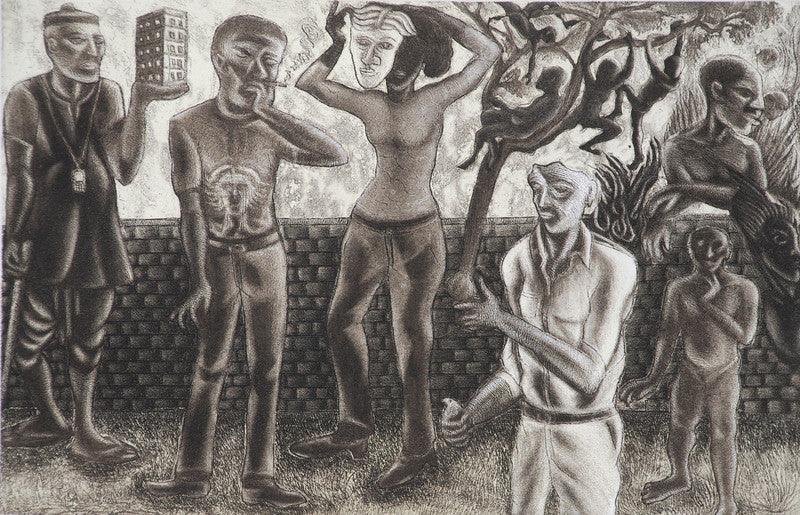
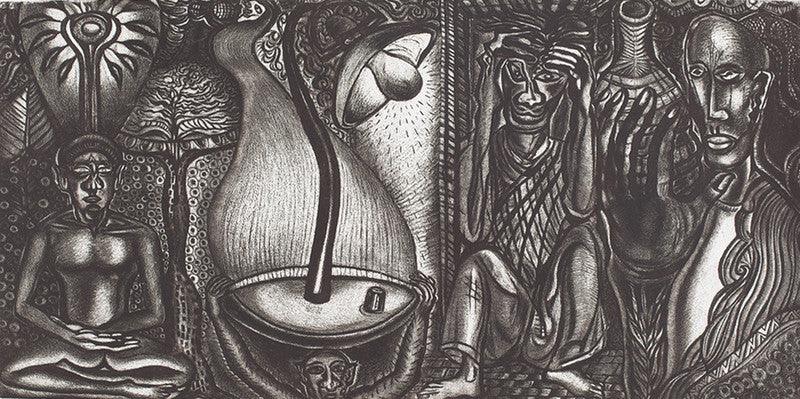
In a stark monochrome world, the scene stages a quiet theater of labor and masquerade: figures with clownish caps and weathered faces orbit a central woman whose raised arms read as both surrender and self-protection. The drawing’s chalky highlights carve bodies out of darkness like relief sculptures, while the rigid doorway and distant high-rises impose a geometry of confinement that turns “progress” into a looming backdrop rather than a promise. Firelight and shadow split the space into zones of warmth and threat, suggesting that survival, performance, and exploitation are braided together in the same nightly ritual. What emerges is a parable of the urban margin—where identity becomes costume, and the human form is pressured into roles by unseen economies.
Delivery
You may also like