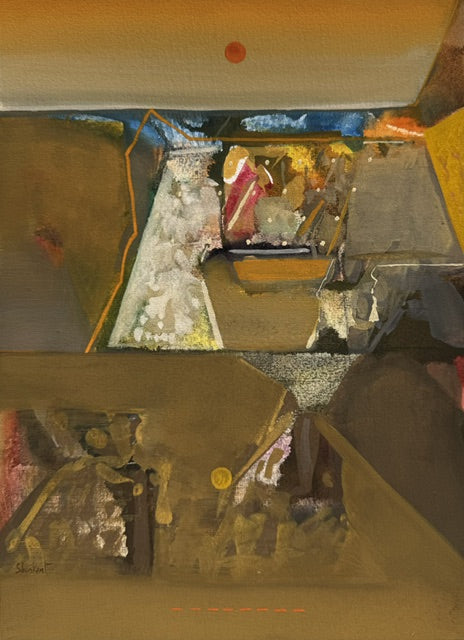
Untitled 510
₹0
● In stockchecking live price…
Size
12x9Type
OriginalMaterial
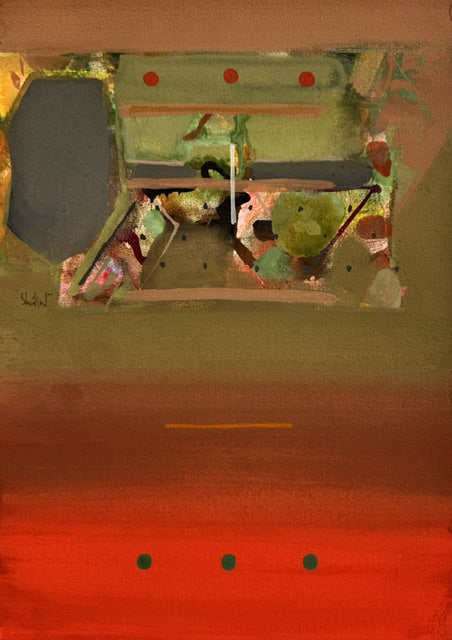
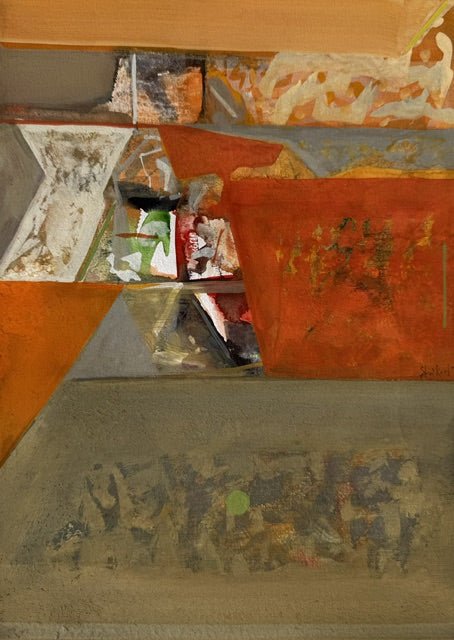
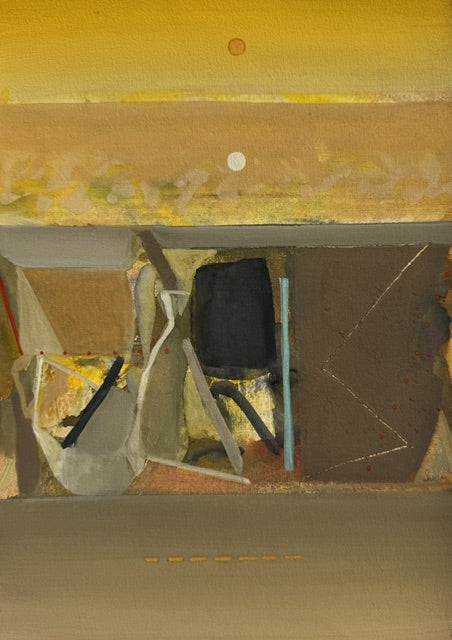
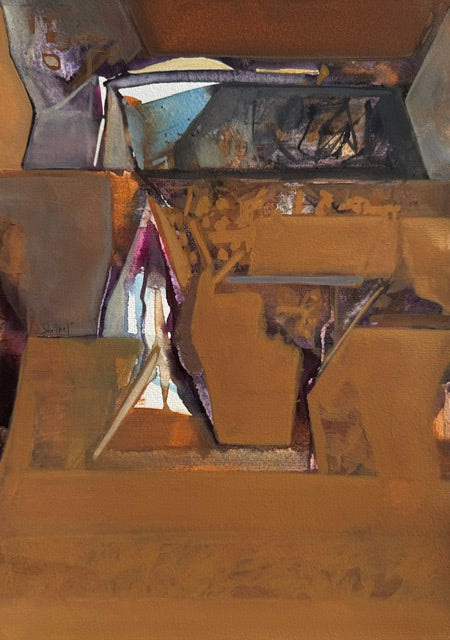
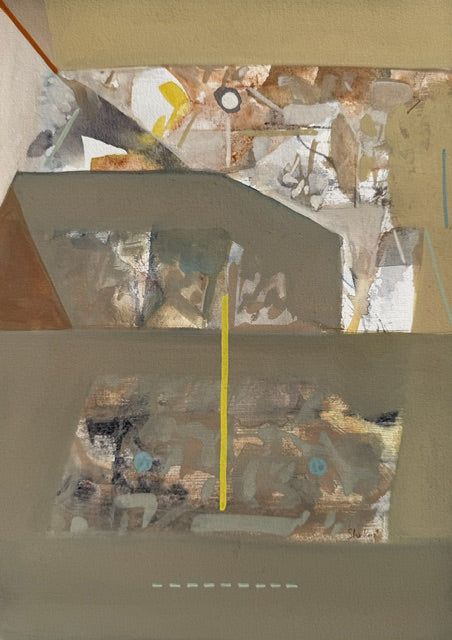
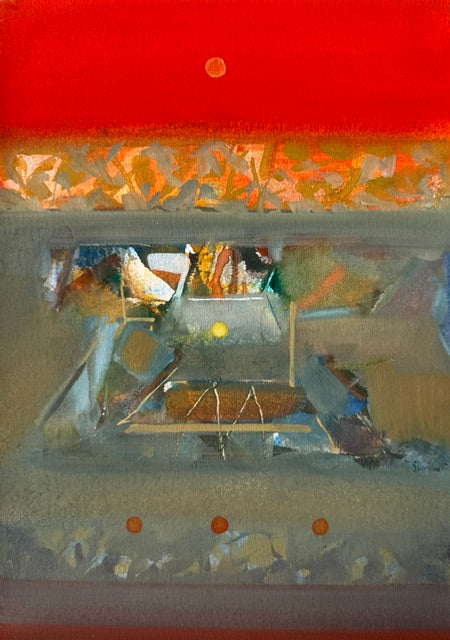
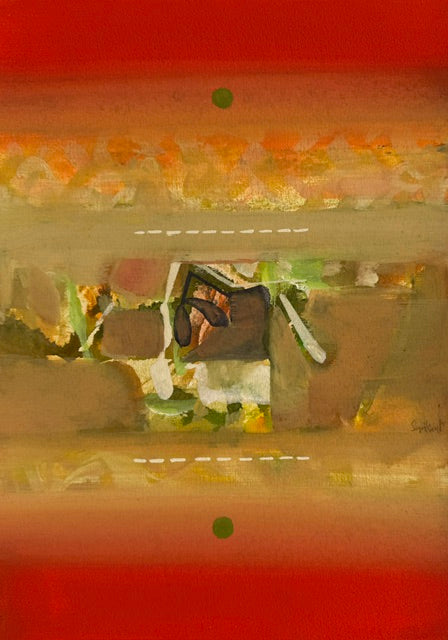
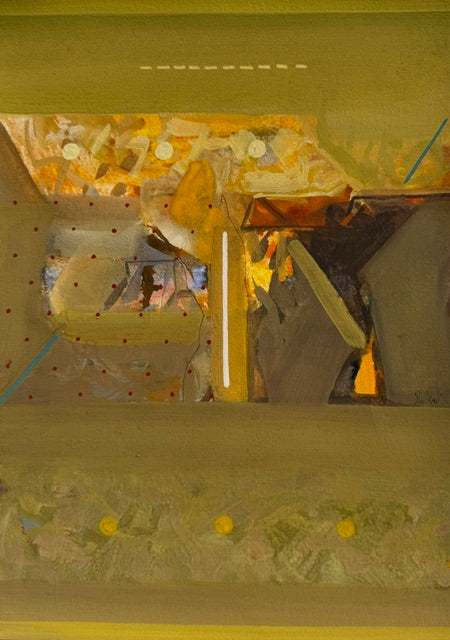
PaperThe painting stages a quiet dramaturgy of thresholds—angled planes and fractured compartments compress the scene into a psychological interior where memory feels filed, revisited, and partially obscured. Earthy browns and umbers establish a weight of lived time, while sudden slivers of crimson, gold, and chalky whites flare like fleeting certainties, guiding the eye through a corridor of withheld narratives. Light behaves less as illumination than as residue, dusting surfaces and edges to suggest what has been handled, erased, and reassembled. In this suspended architecture, space becomes a metaphor for consciousness: layered, provisional, and haunted by small, insistent marks of presence.