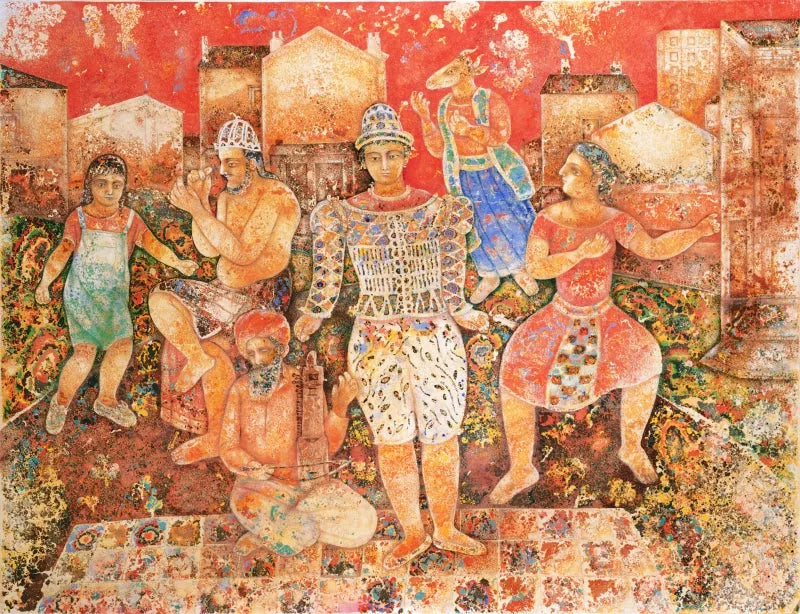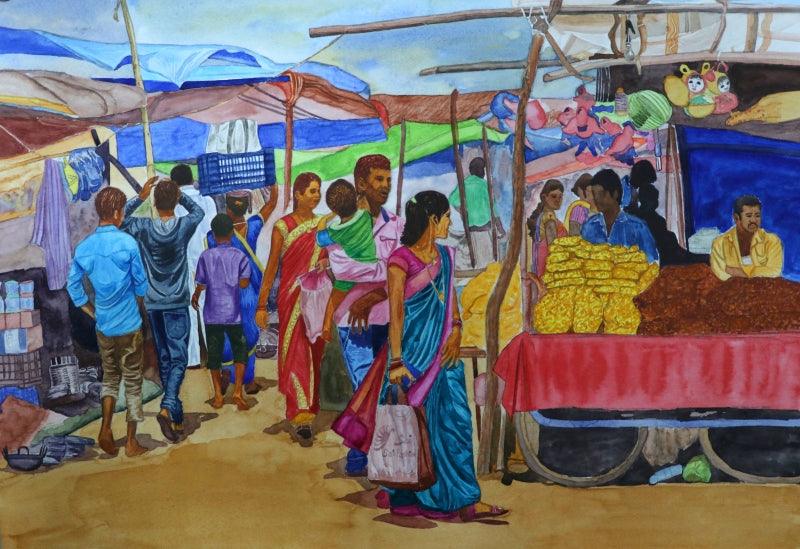
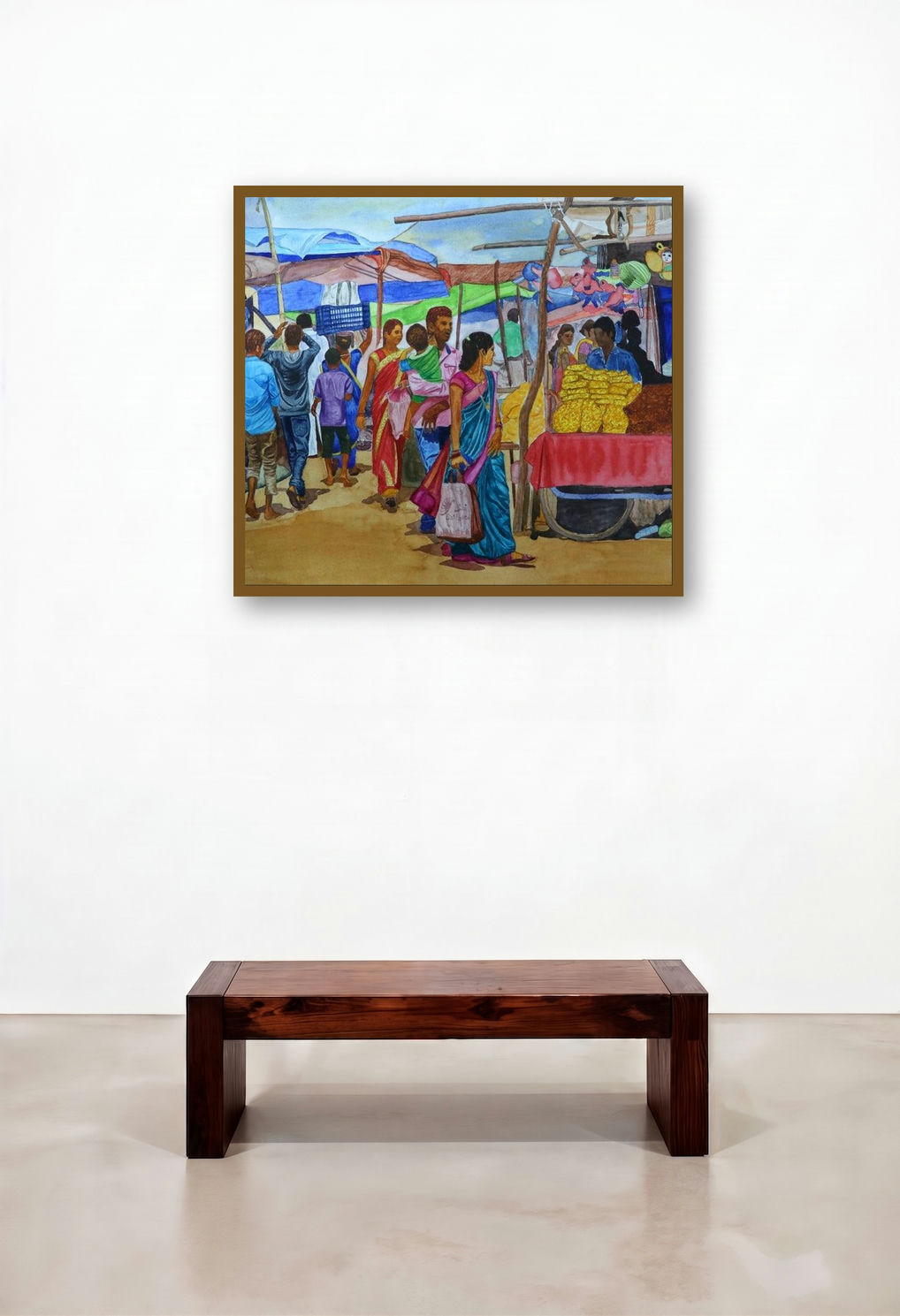
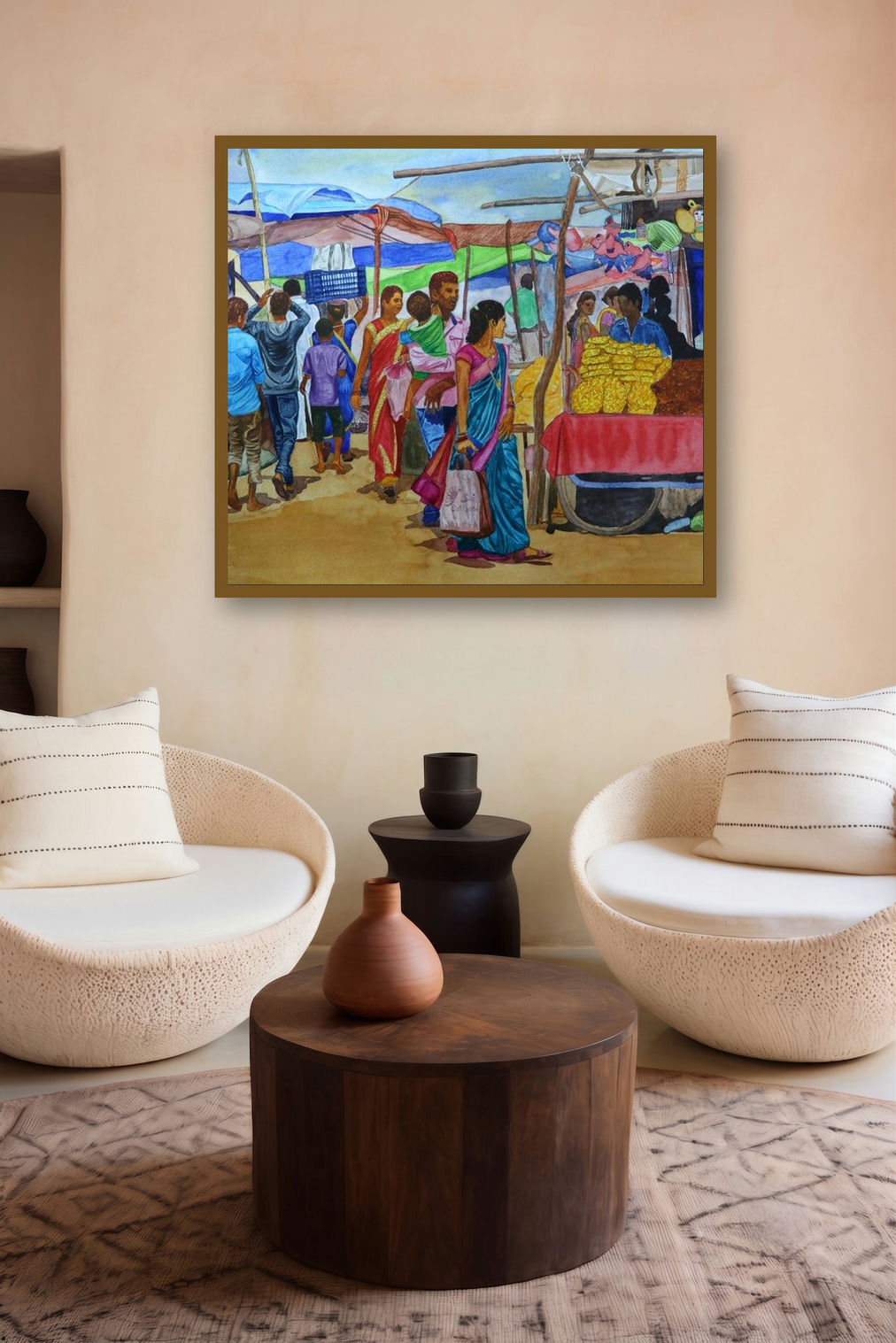
Festival (Festive Dance)
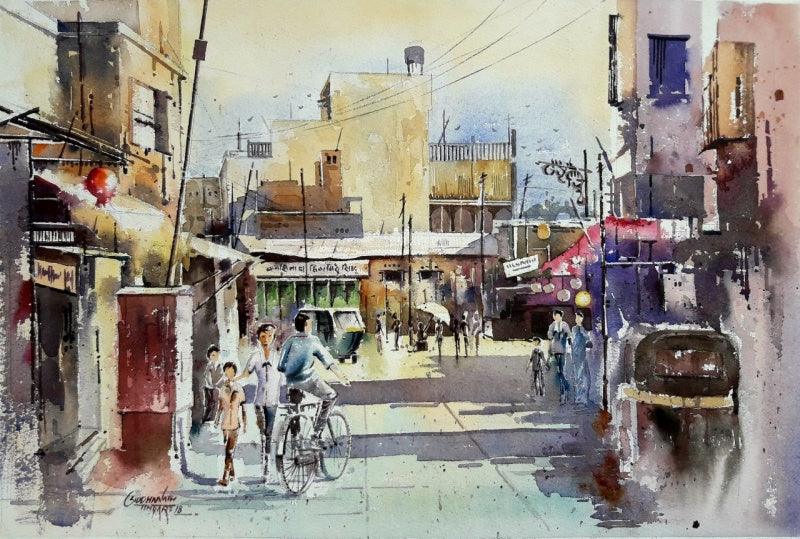
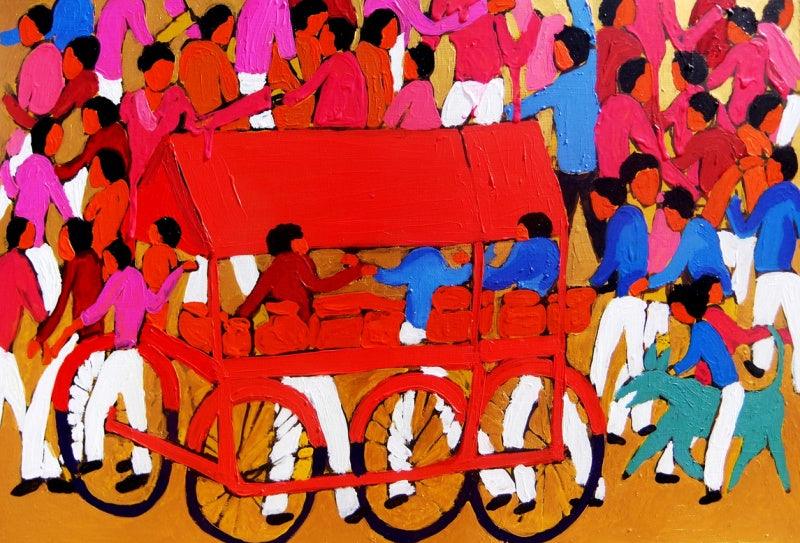
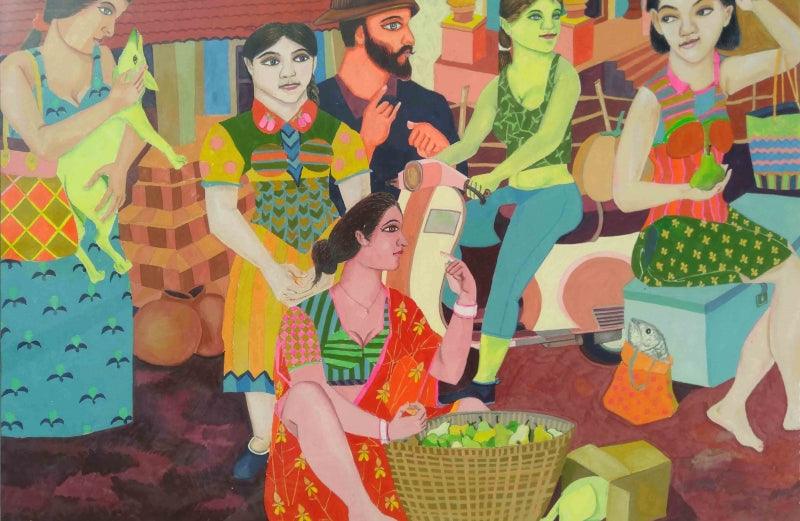
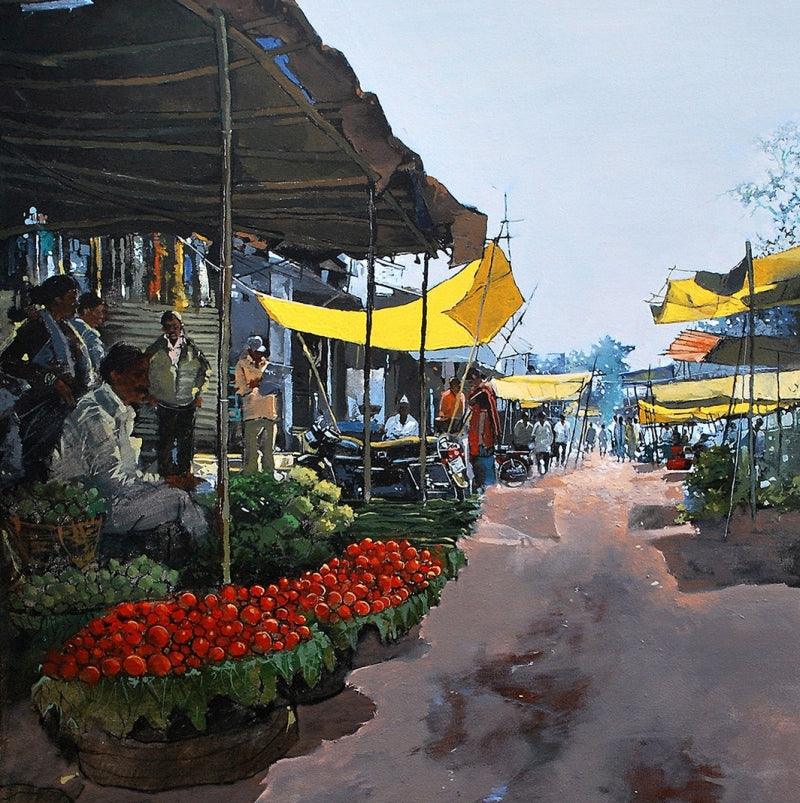
This bustling market scene stages everyday life as a choreography of bodies and color, where saturated saris and tarpaulin canopies form a moving mosaic against the dusty ground. The composition funnels the eye through a central corridor of figures, while the vendor’s golden heap of goods glows like a secular altar—an emblem of desire, livelihood, and negotiation. Light is diffused and democratic, flattening hierarchy and inviting each passerby into equal visibility, yet the dense overlaps of limbs and stalls hint at the quiet pressure of survival beneath communal vibrancy. In this shared corridor of commerce, intimacy and anonymity coexist, suggesting a city’s pulse measured not in monuments but in transactions, glances, and continual passage.
Delivery
You may also like