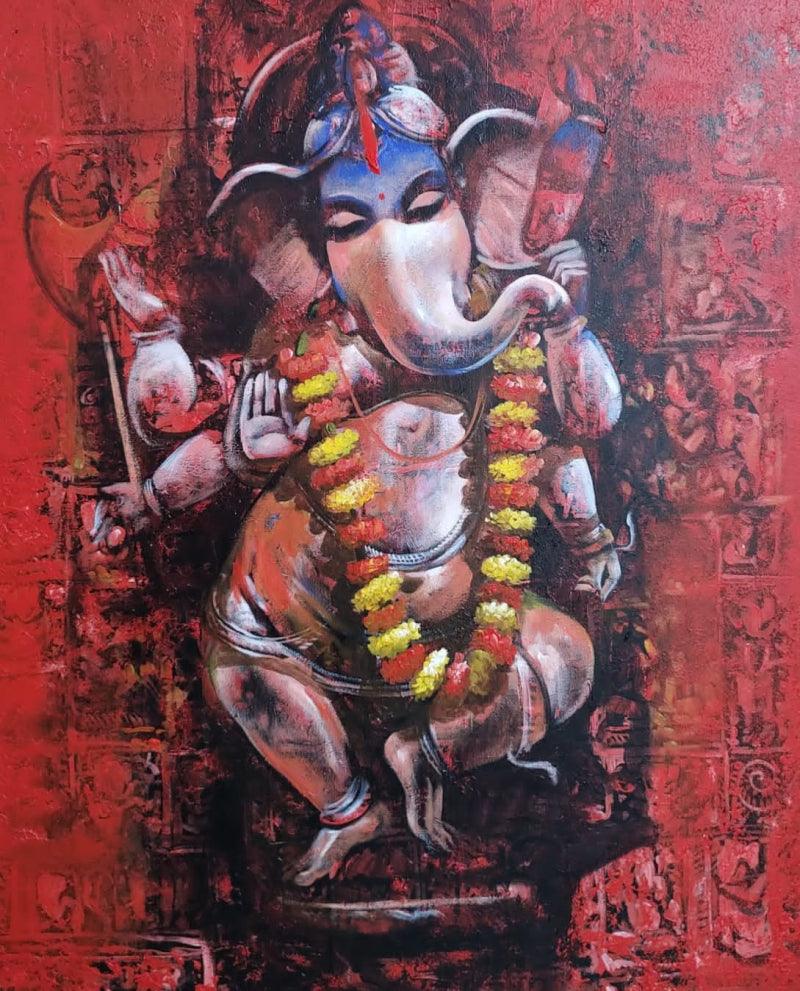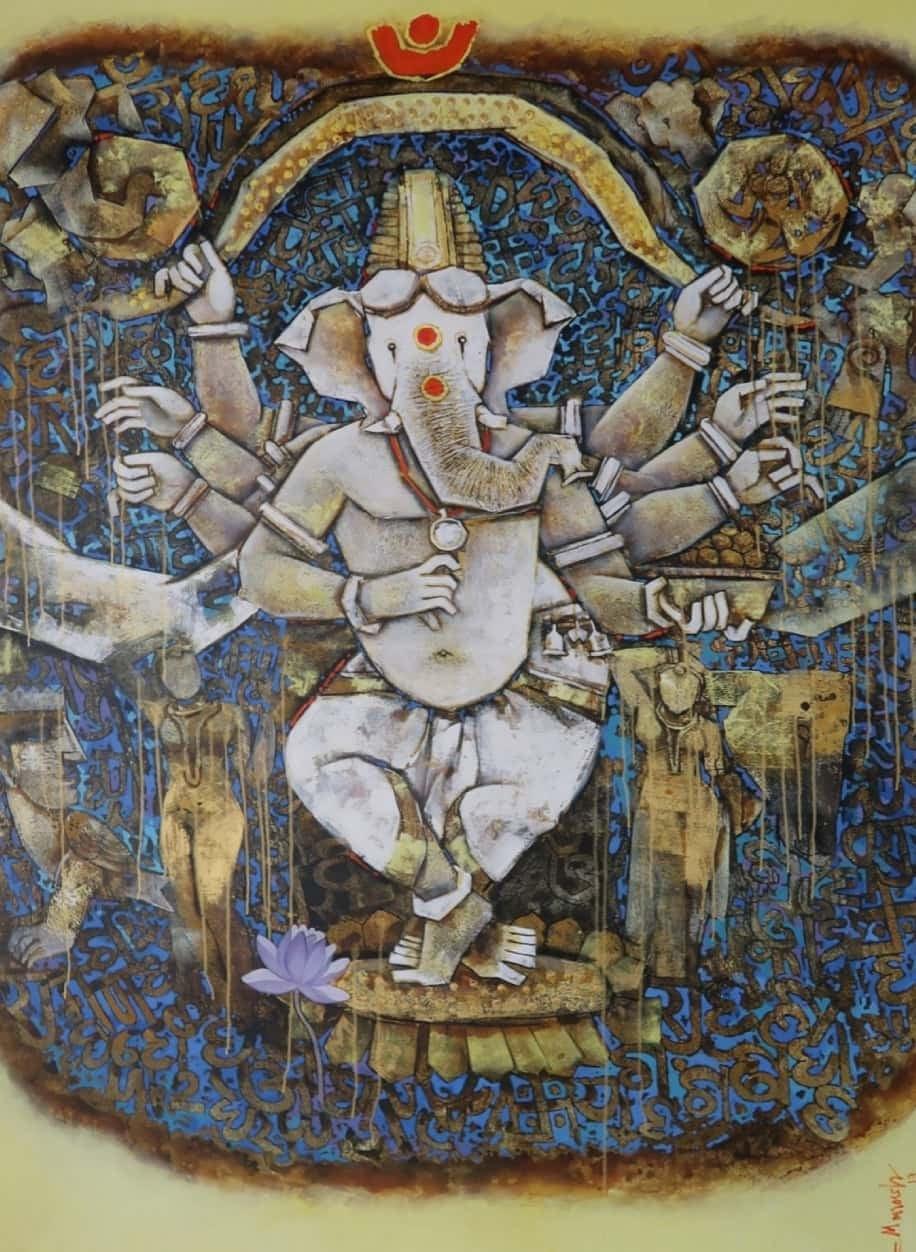
Tantra Ganesha (Dancing Ganesha)
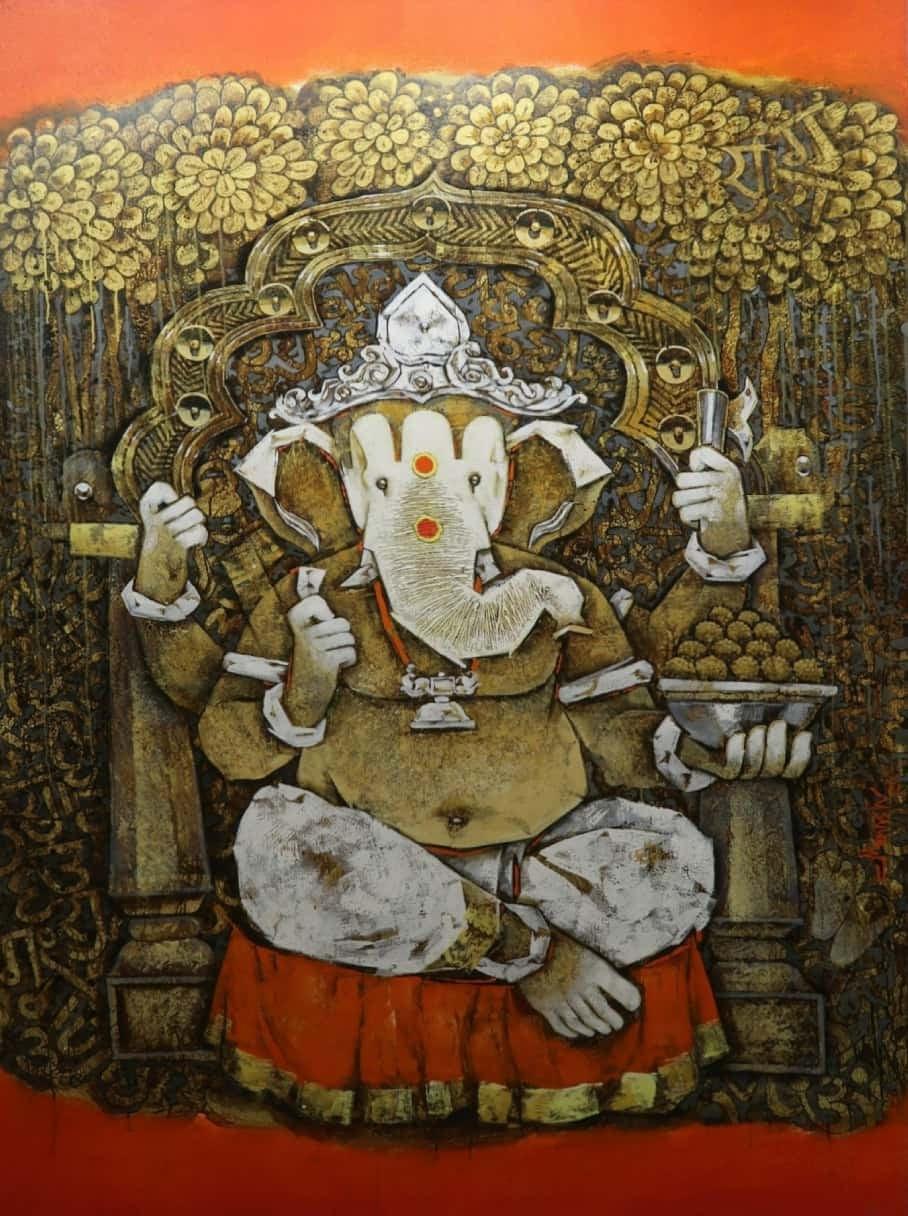
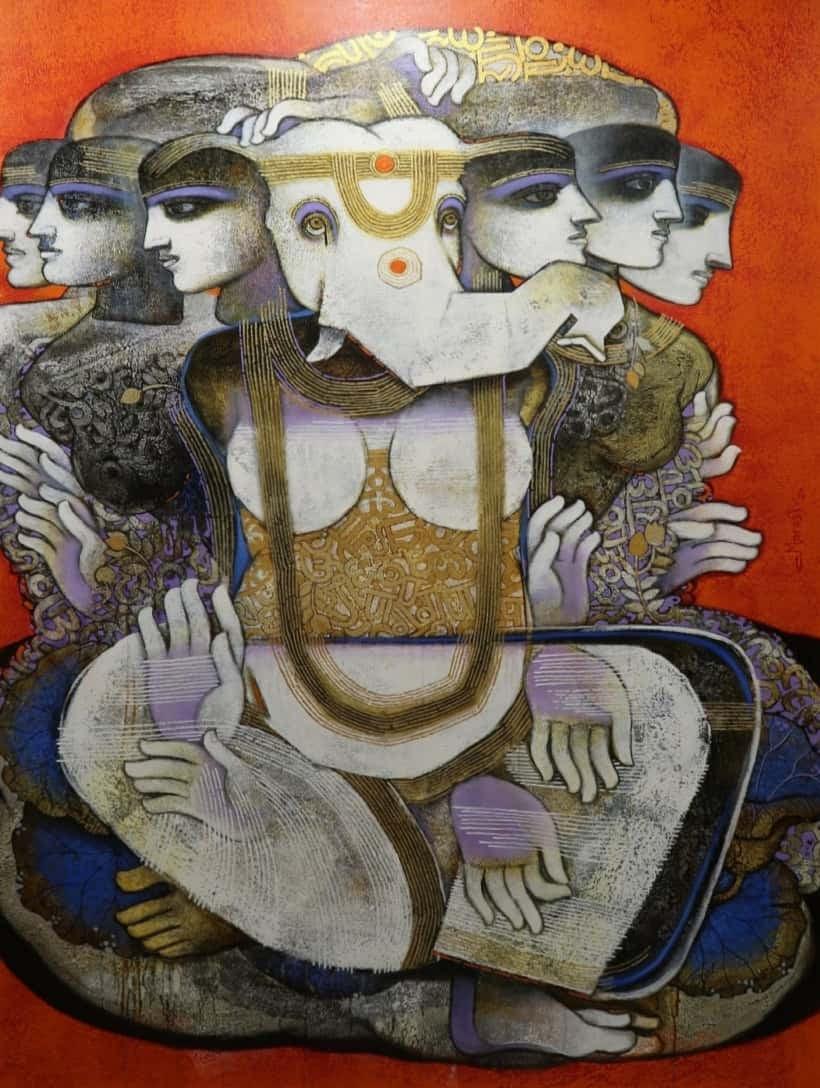
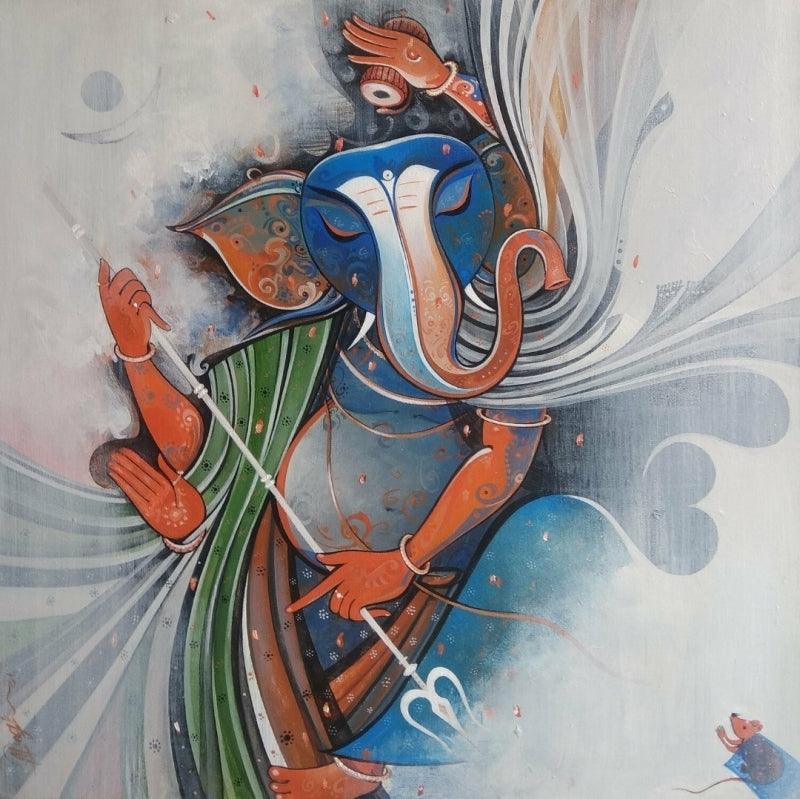
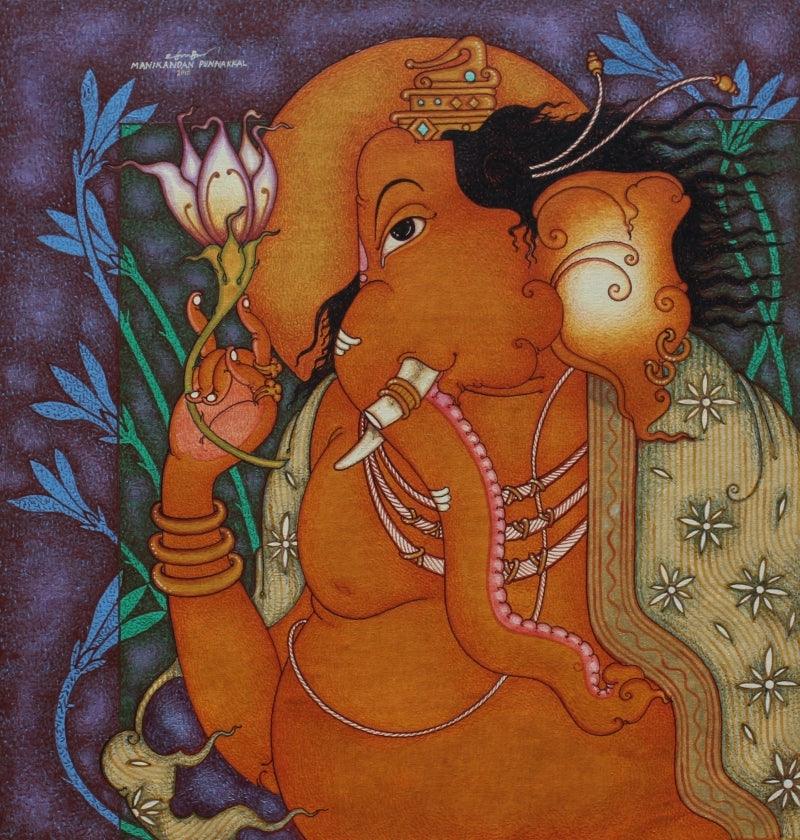
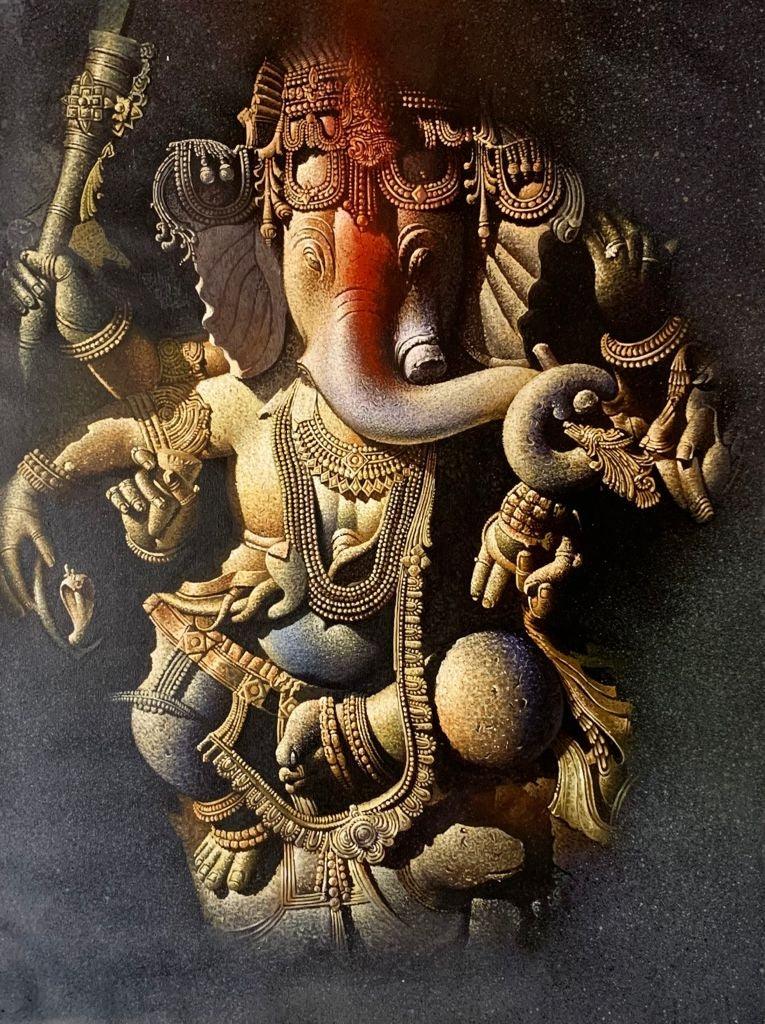
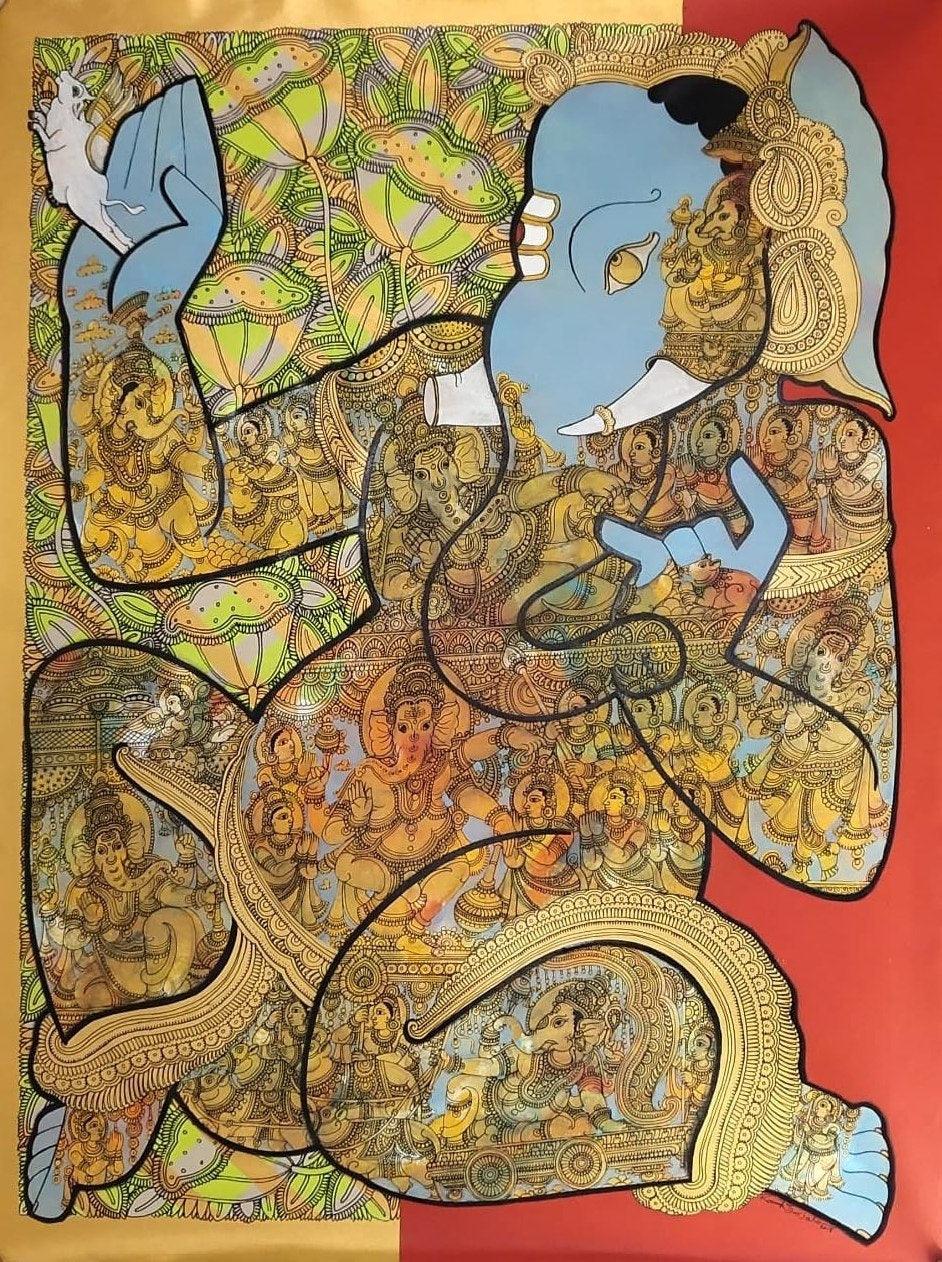
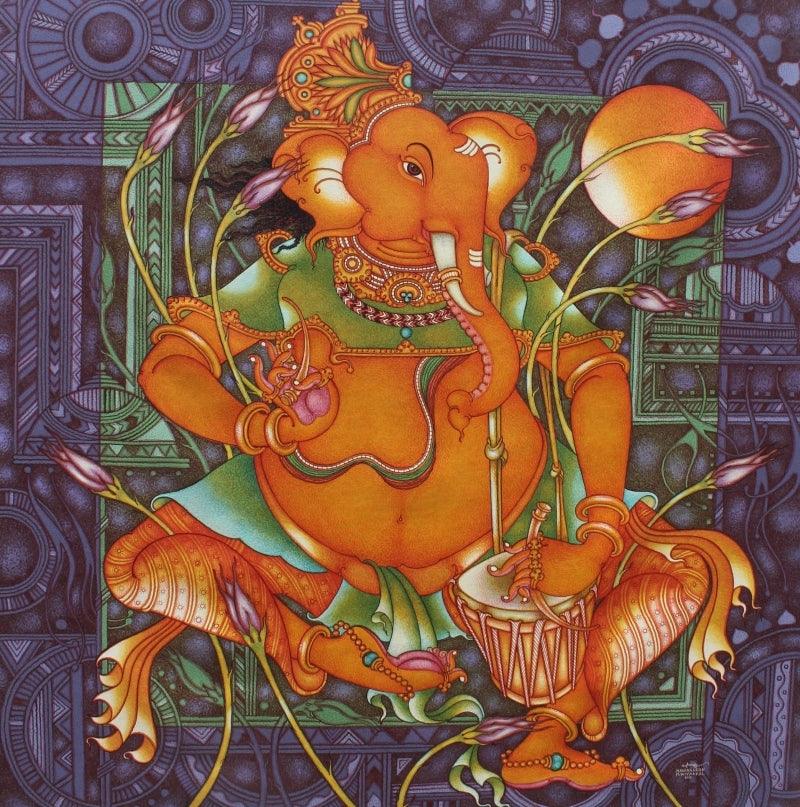
Centered in a halo of indigo script and weathered gold, Ganesha appears not as a static idol but as a living axis where creation’s many tasks converge—each arm a different cadence of protection, offering, and resolve. The muted, chalky whites of the body catch the light like worn stone, while the dripping pigments and layered textures suggest time, ritual, and the slow staining of devotion into matter. A crescent-like arc crowns the figure as both threshold and shelter, turning the composition into a ceremonial doorway through which the viewer senses removal of obstacles as an inner, psychological passage. The lotus at the base steadies the turbulence of marks and symbols, proposing that clarity is earned through complexity rather than despite it.
Delivery
You may also like