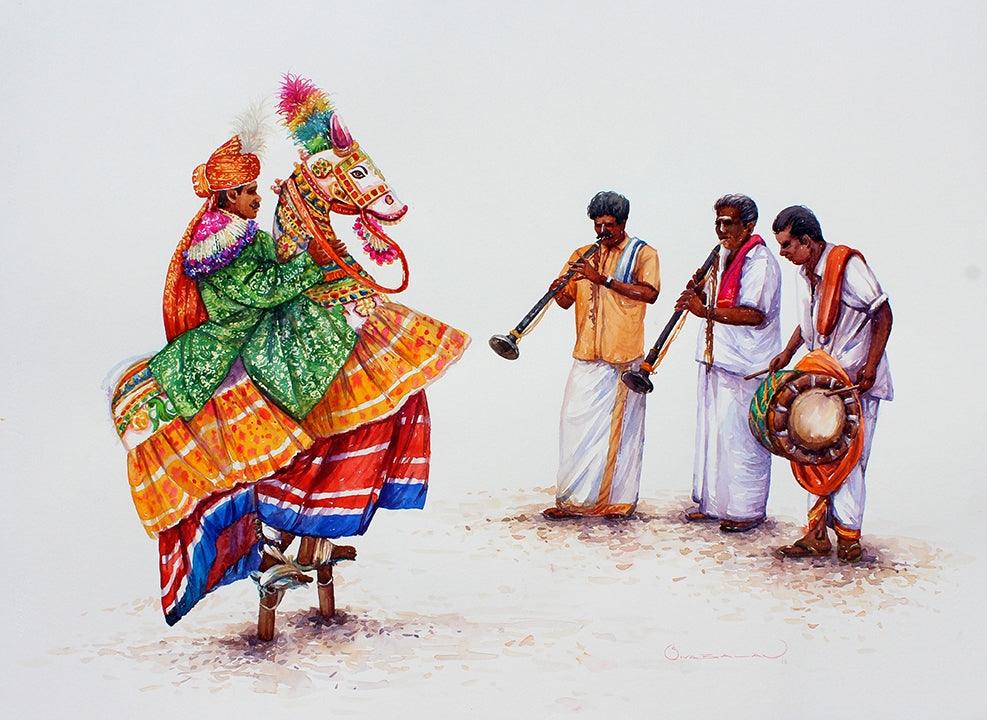
Untitled 5
₹0
Out of stock · ★ 5.0 (14)checking live price…
Size
20x30Type
OriginalMaterial
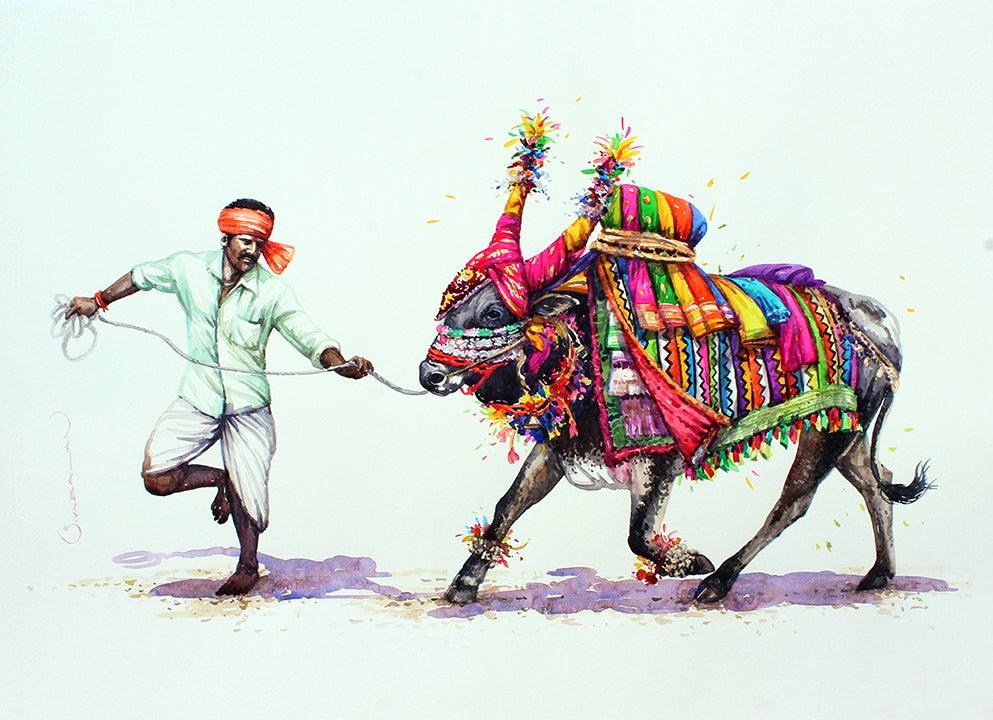
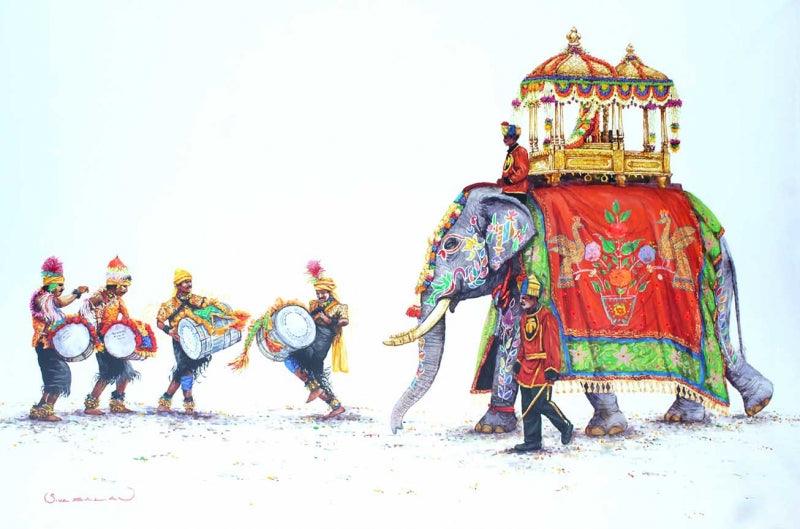
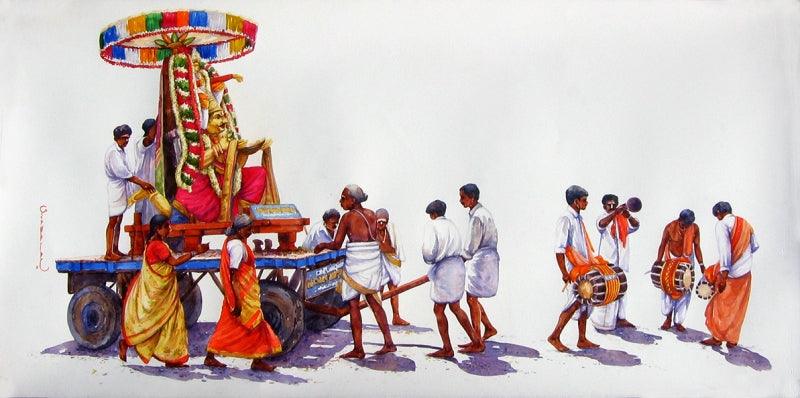
CanvasSet against an expanse of quiet white, the ceremonial horse and rider erupt like a moving tapestry—layered brocades, tassels, and saturated bands of color turning tradition into pure kinetic spectacle. Opposite, the musicians in restrained earth-and-white garments anchor the composition with a grounded cadence, their instruments forming a visual counter-rhythm to the horse’s flamboyant curve. The generous negative space becomes a kind of breath between sound and motion, suggesting that celebration is not only noise and ornament but also the reverent interval that holds a community’s memory. In this poised exchange, pageantry reads as devotion—an embodied ritual where identity is performed, preserved, and renewed.
Delivery
You may also like
Untitled 11
Artzolo
₹0
out of stock
★ 5.0 (11)
Untitled 8
Artzolo
₹0
out of stock
★ 4.0 (6)
Untitled 13
Artzolo
₹0
out of stock
★ 5.0 (8)
Untitled 21
Artzolo
₹0
out of stock
★ 5.0 (13)
Untitled 19
Artzolo
₹0
out of stock
★ 5.0 (13)
Untitled 10
Artzolo
₹0
out of stock
★ 4.0 (13)
Untitled 6
Artzolo
₹0
out of stock
★ 5.0 (10)
Untitled 7
Artzolo
₹0
out of stock
★ 4.0 (12)