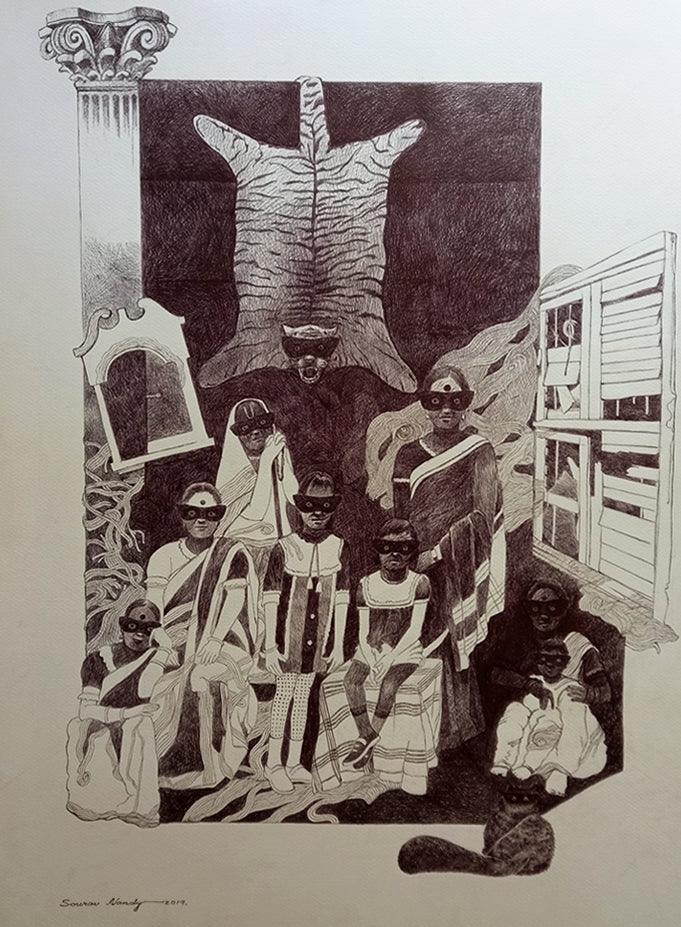
Family Album (The Veiled Truth)
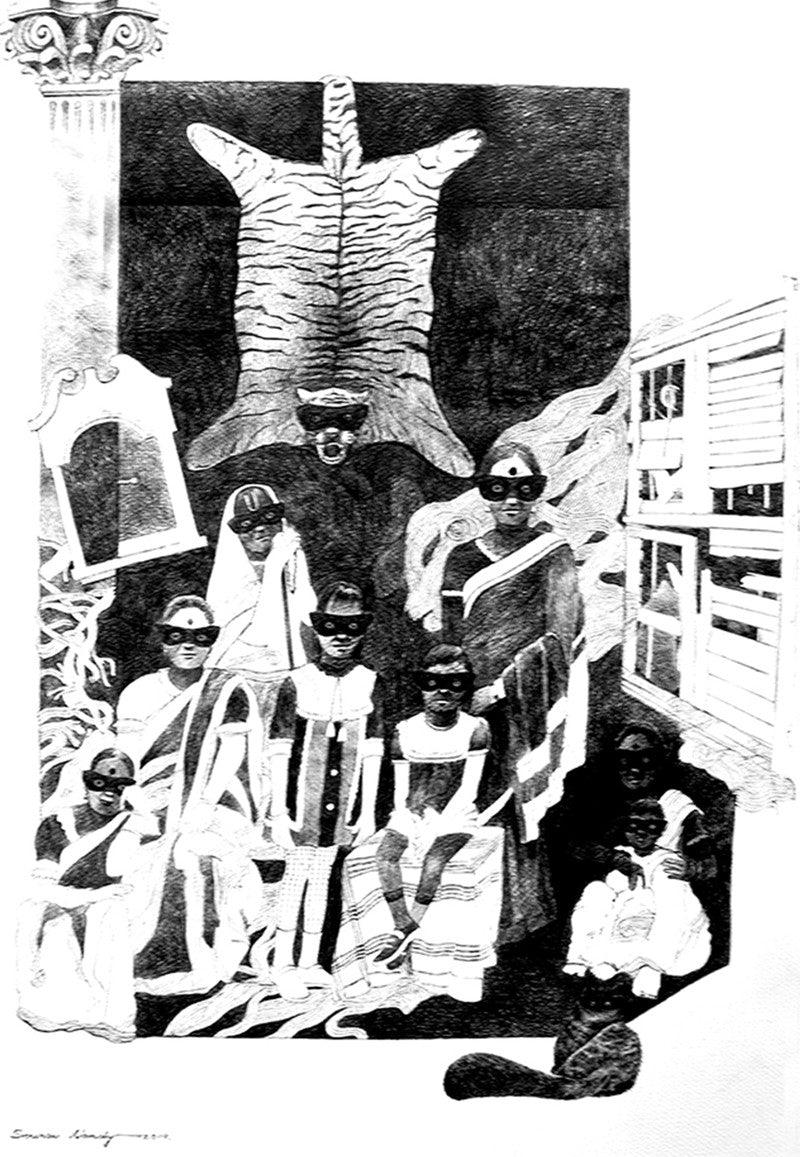
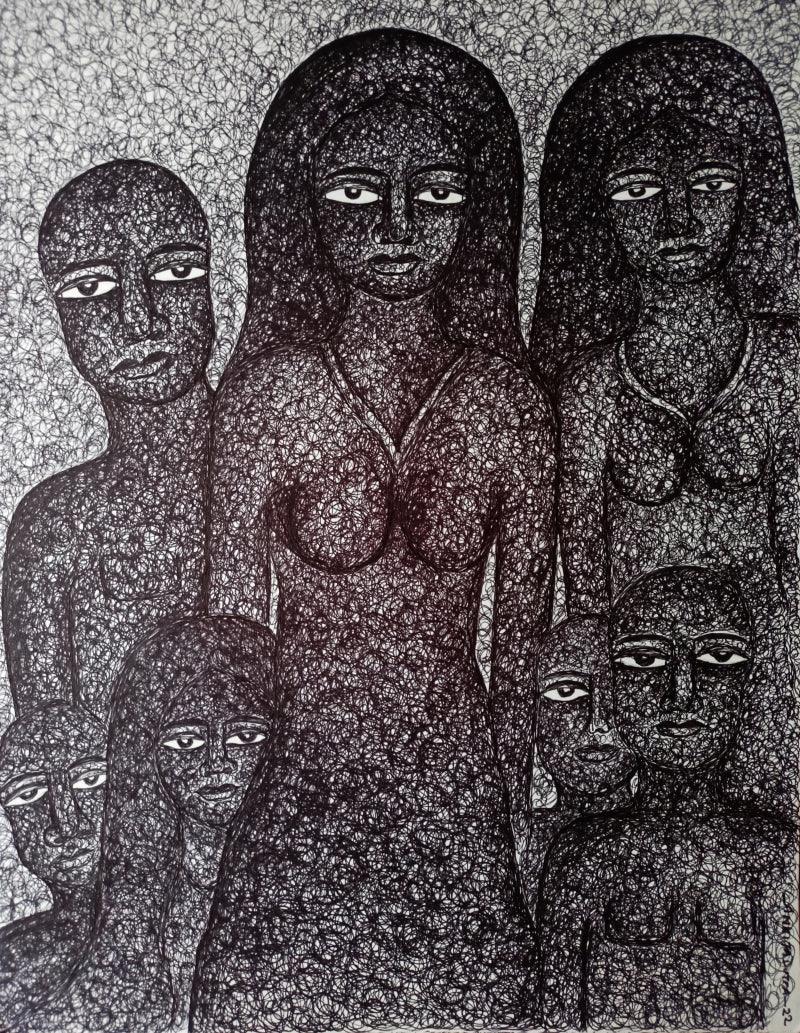
Rendered in a restrained monochrome that feels both archival and accusatory, the scene stages a family portrait as a kind of tribunal—figures arranged with ceremonial stillness, their eyes occluded by dark masks that turn individuality into a collective witness. Around them, domestic objects and architectural fragments—column, mirror, shuttered façade—read like props of inheritance, while the looming pelt-like form behind them becomes an ominous banner of what has been taken, worn, and displayed. The composition tightens into a stark tableau where light is withheld rather than offered, suggesting that visibility itself is negotiated, and that the home can be simultaneously refuge and exhibit. In this tension between intimacy and spectacle, the work speaks to histories of gaze, power, and survival—how identity is preserved, concealed, and performed under scrutiny.
You may also like